Geeking Science: Planet of Mystery

Logo from the Planet of Mystery GoFundMe

I am lucky enough to live in a small city with a planetarium – one which had an amazing astronomer named Jim Craig running its programming for over 20 years. This guy geeks science so hard he would go to writer’s conventions state-wide and be on science panel after science panel on his weekends off, because science. He has a tattoo of NASA. When he was let go from the day job, he immediately pounded feet to his computer and started making those astronomy videos he used to make for the planetarium and local school system at home. He named his new production company “Planet of Mystery” and started creating its first program “Red Planet Rising”. The aim is to have low-cost videos available to planetariums, science centers, schools, and other people and entities interested in life, the universe, and everything.

I think if you cut Mr. Craig, he would bleed starlight.

Unfortunately starlight doesn’t pay the bills, or, more specifically the computing power to crunch the videos in any meaningful time frame. If you’re interested in helping out a proven educator provide low-cost quality videos, please consider the Planet of Mystery GoFundMe campaign. Even $10 can make a difference.

The link for the GoFundMe campaign is: https://www.gofundme.com/planetofmystery

Geeking Science: Solar Eclipse on Monday August 21

Solar Eclipse

Image courtesy of zirconicusso at FreeDigitalPhotos.net

Oh, no – The Dragon is Coming!!!

On Monday August 21st, a solar eclipse will be visible coast-to-coast. North Carolina will be covered from 1 pm to 4 pm with the height about 2:45

NASA has a website dedicated to Solar Eclipses – find out more about what is coming here: https://eclipse.gsfc.nasa.gov/solar.html

Geeking Science: Edible Cutlery

From the Manufacturer’s Website: http://www.bakeys.com (note: site often has bandwidth problems)

Soon I will be starting my annual trip where I work for a non-profit. Nearly three weeks of camping and in that time I will use a lot of plastic one-shot stuff because of limited ability to clean things safely. My “vacation” will produce a trash/carbon footprint more than three months of my normal life. I hate choosing personal health over planetary health, but a girl’s gotta live – I mean that literally and figuratively. Between lack of refrigeration, lack of running water, and lack of sleep, I have few options.

Bread Bowl from pillsbury.com

But soon I may have a different option for my breakfast spoon and dinner fork while traveling. I have always loved bread bowls, where a small loaf is carved out and filled with fabulous soups or satisfying sauce-covered meatballs. Now a company has developed a spoon which can be eaten when done – made from millet, rice, and wheat plus some spicing. Located in India Bakey’s Edible Cutlery has already made over 1 million spoons since 2011.

I repeat – the company has been in business and making this stuff since 2011. This is not science fiction. This is not even waiting on testing like many of the medical marvels I geek about. THIS.IS.REAL!

Geeking.O.U.T!

Oh, drat. A huge mucking ocean is in the way.

The India-based company is still growing its providers, getting rice farmers to switch to millet, developing its manufacturing base, and all that other stuff which businesses must have and us writers tend to skip in science-fiction. Someone wanting to distribute in America even did Kickstarter after reaching an agreement with the manufacturer; only problem the Kickstarter ended up being 10 times more successful than planned. After over a year the spoons have not shipped from India to America and then distributed to the backers. Fulfillment was promised April 2016; it’s now July 2017. The Kickstarter website shows some minor zings happening between the distributor and the manufacturer.

I hope this gets settled soon, because I really, really want this product. In every flavor.

Geeking Science: Recycling

RECYCLING – SAY NO TO SHRED

I noticed my town asked for the shredding to not go into single-stream recycling bin. What’s up with that? They want us to take it to shred day. Really,  who has time for that?

Turns out they have great reasons: 
(1) Shredding breaks up the paper into very short fibers which downgrades the quality of the paper and they get less money for it. Since it is mixed in and clings with all the other paper, any bundle with shredded paper now is the lowest quality. Towns are trying to lower taxes through recycling, and so the shredding is money out of the taxpayer pocket, out of your pocket.
(2) Remember I just mention shred clings? Yeah, it clings to the machinery doing the separation of all the single-stream recycling, breaking them down more often, kicking paper dust in the air as an environmental (and fire) hazard to workers, and really screwing up everything the minute it gets wet. All this means the machinery is stopped more often for maintenance and needs replacing more often. Where does the maintenance and replacement money come from – well, hopefully the selling of the recycling materials. But it also means that less money gets put back into the tax bucket so the bucket has to be filled by other means, like property taxes. Again, money out of your pocket.

We all have learned plastic bags don’t go into recycling – for the same reasons as shred. Now I need to add shred to the list of “no-go’s” in my head and take it to the special shred day.

A really good video on recycling is below. It taught me crushing cans and plastic bottles is also undesirable. 

Geeking Science: Faster

Fast, Faster, Fastest

Unless faster-than-light travel becomes a reality, the true reality of space will be very long voyages.

Those who ply humanity’s trade routes have pulled long transients for time immemorial. Christopher Columbus took two months on his voyage and faced mutiny. The silk road from China to Rome took two long years out of a merchant’s life. The longest regularly schedule plane flight of today takes seventeen hours as of February 2017 (from Doha, Qatar to Auckland, New Zealand). Cargo ships can take nearly 30 days to go across the Pacific, and one traveling from Europe to Australia can push 40 days.

The closest exo-planet humanity has found at this time is 4.25 light years away. Traveling at half the speed of light, without speed up or slow down taking into consideration, would take eight and a half years, one way. Just reflect on how much you have accomplished in the last eight and a half years, how far you traveled, matured, learned, and changed. Now imagine doing all that with other people in the space of a space shuttle’s crew module, 2,325 cubic feet. Allowing for a 8-foot ceiling that is 291 square feet. Putting that in perspective, RVs run about 400 square feet.

Fast – 0.0037% the speed of light

Half the speed of light is generous, when one considers the fastest humans ever traveled occurred during Nasa’s Apollo 10 mission that topped out at 24,790 mph – 0.0037% the speed of light. Plans exist for developing technology capable of reaching up to 10% the speed of light. (See “How Fast Could Humans Travel Safely Through Space?” published by BBC in 2015.) At 10% the speed of light, not counting acceleration and deceleration, Proxima Centauri’s system, including one very special rocky planet in the Goldilocks zone, is just 44 short years away.

Faster – 0.0246% the speed of light

Before humanity arranges for some of its members to take The Big Trip, unmanned space craft will be sent. At this time, Juno holds the speed record for spacecraft when she rushed to see what her husband Jupiter was doing with all his moon affairs. She pushed 165,000 mph – 0.0246% the speed of light (seven times faster than humans ever moved in a sustained manner). Plans are in the making to get an unmanned spacecraft up to nearly 3 times that, within the next two years. (See “What’s the Fastest Spacecraft Ever?” published by LiveScience.) Two years feels like tomorrow when thinking about the fifty-year plan for getting humans up to 10%.

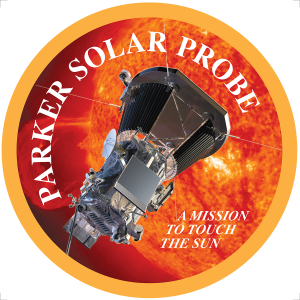
Fastest – 0.0671% the speed of light

And that two-year plans has a countdown. See more about the Parker Solar Probe here: http://parkersolarprobe.jhuapl.edu/


Bibliography

“Astronomers have found the closest exoplanet to Earth” – (Last viewed 11/17/2017) – https://techcrunch.com/2016/08/24/astronomers-have-found-the-closest-exoplanet-to-earth/

“How fast could humans travel safely through space?” – (Last viewed 10/31/2022) – https://www.bbc.com/future/article/20150809-how-fast-could-humans-travel-safely-through-space

“Space Shuttle Basics” – specifically for the crew module on the space shuttle – (Last viewed 11/17/2017) – https://spaceflight.nasa.gov/shuttle/reference/basics/orbiter/index.html

“What’s the Fastest Spacecraft Ever?” – (Last viewed 11/17/2017) – https://www.livescience.com/32655-whats-the-fastest-spacecraft-ever.html