Geeking Science: Faster

Fast, Faster, Fastest

Unless faster-than-light travel becomes a reality, the true reality of space will be very long voyages.

Those who ply humanity’s trade routes have pulled long transients for time immemorial. Christopher Columbus took two months on his voyage and faced mutiny. The silk road from China to Rome took two long years out of a merchant’s life. The longest regularly schedule plane flight of today takes seventeen hours as of February 2017 (from Doha, Qatar to Auckland, New Zealand). Cargo ships can take nearly 30 days to go across the Pacific, and one traveling from Europe to Australia can push 40 days.

The closest exo-planet humanity has found at this time is 4.25 light years away. Traveling at half the speed of light, without speed up or slow down taking into consideration, would take eight and a half years, one way. Just reflect on how much you have accomplished in the last eight and a half years, how far you traveled, matured, learned, and changed. Now imagine doing all that with other people in the space of a space shuttle’s crew module, 2,325 cubic feet. Allowing for a 8-foot ceiling that is 291 square feet. Putting that in perspective, RVs run about 400 square feet.

Fast – 0.0037% the speed of light

Half the speed of light is generous, when one considers the fastest humans ever traveled occurred during Nasa’s Apollo 10 mission that topped out at 24,790 mph – 0.0037% the speed of light. Plans exist for developing technology capable of reaching up to 10% the speed of light. (See “How Fast Could Humans Travel Safely Through Space?” published by BBC in 2015.) At 10% the speed of light, not counting acceleration and deceleration, Proxima Centauri’s system, including one very special rocky planet in the Goldilocks zone, is just 44 short years away.

Faster – 0.0246% the speed of light

Before humanity arranges for some of its members to take The Big Trip, unmanned space craft will be sent. At this time, Juno holds the speed record for spacecraft when she rushed to see what her husband Jupiter was doing with all his moon affairs. She pushed 165,000 mph – 0.0246% the speed of light (seven times faster than humans ever moved in a sustained manner). Plans are in the making to get an unmanned spacecraft up to nearly 3 times that, within the next two years. (See “What’s the Fastest Spacecraft Ever?” published by LiveScience.) Two years feels like tomorrow when thinking about the fifty-year plan for getting humans up to 10%.

Fastest – 0.0671% the speed of light

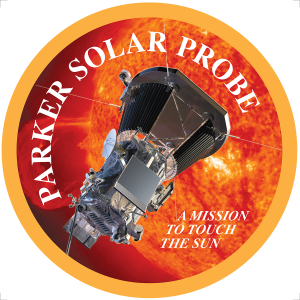
And that two-year plans has a countdown. See more about the Parker Solar Probe here: http://parkersolarprobe.jhuapl.edu/


Bibliography

“Astronomers have found the closest exoplanet to Earth” – (Last viewed 11/17/2017) – https://techcrunch.com/2016/08/24/astronomers-have-found-the-closest-exoplanet-to-earth/

“How fast could humans travel safely through space?” – (Last viewed 10/31/2022) – https://www.bbc.com/future/article/20150809-how-fast-could-humans-travel-safely-through-space

“Space Shuttle Basics” – specifically for the crew module on the space shuttle – (Last viewed 11/17/2017) – https://spaceflight.nasa.gov/shuttle/reference/basics/orbiter/index.html

“What’s the Fastest Spacecraft Ever?” – (Last viewed 11/17/2017) – https://www.livescience.com/32655-whats-the-fastest-spacecraft-ever.html

Geeking Science: Red Changes Everything

Geeking language today – how language is developed.

Language is the first tool humans learn to use – it’s necessary to control the parents. Instead of a cry for I hurt, I bored, I hungry, and I working on my lungs – suddenly you can say “nana” to get the yellow sweet thing and “down” frees you from Aunt Kissy-Duck-Face. Such power.

But how did this technological tool develop? How difficult is it? I mean a baby can learn it.

If I was creating a language for science fiction or fantasy, what limitations should I put on the color words? Is there an order to them. Dark and light is obviously. Then I would have assumed blue or green since they are so prevalent in the world. Turns out, for humans at least, the next word is Red. Blue as water and the sky is fairly far down on the list.

All bets are off for aliens and fantasy creatures, but if my worldbuilding goes down this path – figuring how what they see, how they see it, and how they group it can help me understand the culture which the sentient beings will develop.

Language is the bomb!

Geeking Science: Hydrophobic

Image courtesy of namakuki at FreeDigitalPhotos.net

Have you ever considered the power of water? It’s enough to make one hydrophobic.

H2O, with its free ions, can act as an acid or a base. We live on a planet where the molecule can exist as gas, liquid, and solid – sometimes all within inches of each other. Plus it has a weird property of getting larger when changing from liquid to solid instead of condensing. Liquid water molecules glom onto neighbors with both “hands” if no one else is near creating a surface tension few substances can beat. All the while being anywhere from transparent to translucent – meaning light can pass through it in both liquid and solid forms, as well as gas. More about its properties can be found at the USGS Water Science School.

Water is amazing.

Taking all these amazing abilities and combining them is what sends a shiver down my spine. 

“Water finds a way.” Sun Tzu, the Art of War

Water vapor is everywhere. Getting a little cold it become water liquid and slips deep into cracks. The water freezes as the temperature drops even more, say a desert at night, and the crack expands. Water beats rock, every single time, fragmenting those hearty souls which traveled from the center of the earth to the surface. Eventually water will take the rock out like a ninja warrior, quiet and deadly. By crack, or acid, or base. Steel rusts. Clothing rots. Stone crumbles. Water allows us to create but also erases everything we make.

Water is scary.

In humanity’s constant search to improve, we are developing techniques of hydrophobic – making our creations throw off water. You may be familiar with some early examples of this field – polytetrafluoroethylene (telfon), stainless steel, and waxed coats. Telfon’s makes a corrosive resistant surface through its molecular bonds; basically water’s friendly ions can’t break into the carbon-fluorine party and start bonding to the surface – hence the non-stick surface. Similarly the process of making stainless steel alloy keeps water ions at bay and make the steel unrustable – but the nickel and chromium costs a lot more than carbon steel so large amounts aren’t practical. And waxed coats are made from cotton dipped in wax making them practical for working near seashores and on boats.

I remember once being in a car with no floor. Seeing the road rush by under your feet at 50 miles per hour is an experience. Younger readers may not remember cars with holes rusting at the doors and around the wheel beds from the combination of salt and water during the winter. Switching to plastic-based materials not only made the cars lighter, so saving gas in trying to move mass, and safer, steel sheets no longer bend into the human compartment during a crash, but the plastic also makes the car body stay together better in northern climates.

But that is then, what am I geeking about now?

Laser technology, chemical technology, nano technology. Scientists are developing other means to keep water from bullying other materials into rust. Why are we going through all this trouble? What possible results are worth this effort?

The field of hydropobics makes incredible practical items – as we previously seen with cutlery which won’t rust, kitchen pans no longer needing to be scrubbed after every use, car staying intact through winter slush, and clothing not getting soaked when working around water. Can we change the substance property? Should it be an alloy, a coating, or maybe just modifying the shape can make something hydropobic?

You may have already seen one of the recent applications, hydrophobic paint. Some cities have started painting the outside of the first floor of buildings near the bar district. Now let the peeing person beware – draining the drink can bounce back at ya. Cool, right?

Anyone who travels by plane during the winter – when water really shows off its ability to go from liquid to solid and back again – is well familiar with the wait for the deicing preparation of wings. Nasty chemicals are sprayed on the wings.

A new technology of laser technology changes the surface of the metal wings so water surface tension is shrugged off. No liquid water on wings means no ice forming from the liquid as the temperature drops. No deicing steps are needed, ever again – saving time, chemicals, and my holiday schedule. Totally geeking about this application.

Initially they were trying the paint, but that didn’t work. (MIT 2010) Instead a complicated pattern surface was recommended, something like what the University of Rochester has been working on. 

The deicing technology is important for food shipment, electrical wires, the car windshield in winter, sidewalks, as well as the previous mentioned planes.

And who wouldn’t want clothes which won’t stain. Liquid repel right off. Okay, taking water out of the equation will make washing them more difficult, but how often will you need to wash them, really? No sweat, mud, no food stains, no drinks down your back when someone bumps into you by “accident”. Sounds like Science Fiction – but it’s real. Available right now – not truly practical as clothing in price or application as yet unless you are one of those who can live in multi-million dollar homes.

I predict in a decade we will go crazy about this fabric just like we did with wrinkle free polyester in the sixties. It will last for about a year, just like the chainmetal cloth of the eighties. Why? Because one of the most important properties of clothing is wicking moisture (sweat) away from the body in a cooling action. The quote of “Your scientists were so preoccupied with whether they could, they didn’t stop to think if they should.” (Jurassic Park screenwriter) applies to hydrophobic clothing.

On the other hand, gloves able to shrug off concrete and tar and boots able to walk through mud are already an industrial application in use today.

Applications will continue to grow for hydrophobic technology, whether the long-imagined un-iceable plane or the unexpected application against nocturnal urination.

“Water finds a way.”

But humanity is going to make it really, really tough for water to win.

Geeking Science: Baen Book Teacher Guides

Image courtesy of imagerymajestic at FreeDigitalPhotos.net

One of the cool things about living in North Carolina is Baen Books headquarters is here, not New York. Yes, that Baen Books with David Weber, Margaret Ball, Eric Flint, Sharon Lee, etc. So a writing convention in these parts will have at least one Baen representative, maybe even the big lady herself, Toni Weisskopf. At one of the conventions I attended Ms. Weisskopf told us about a thing. Baen Books offers teachers’ guides FOR FREE to some of its young adult (YA) oriented materials – guides good for the classroom or homeschooling.

I know last month’s geeking science was on “The Sell”, and make no mistake Baen Books is not doing this exclusively out of their hearts. The teachers’ guides are free, the books themselves – sometimes – are not. On the other hand this particular sell dovetails well into their core business while also having beneficial results. The teachers’ guides not only support reading (and every publisher supports reading), but also encourages students to use the science fiction as a jumping point to learn history and science. Where someone might go “who care how prize money was awarded by England during the wars?”, reading about the prize money collected by the Manticore Navy in Basilisk Station by David Weber raises an interest – then the rabbit hole shows a student what money meant (economics), how money was divided (math), which wars had the most money given (history) and a dozen other interests. By the way, Basilisk Station is a free book just like the teachers’ guide.

Is this “The Sell” or a publishing company giving back to their customers? The creation of the teachers’ guides did cost money – proofing, adding to the website, etc. Having met Ms. Weisskopf and Mr. Weber and the other authors participating in this program, I know its a bunch of people geeking out about how to get people involved in education by using the carrot instead of the stick. These are people who pour over research to get the covers right – did that uniform in 1637 have four or five pockets? Information and words are their life!

And they want to pass on that passion.

The Young Adult list at Baen Books ( http://www.baen.com/bookdata/ya ) contains a vetted list by Ms. Weisskopf. The ones with little books beside them contain teachers’ guides. Over twenty are available.

(9/15/2020 update – looks like the list has been removed for now. You can search on teacher guides here: https://www.baen.com/allbooks?q=teacher+guides)

Teaching through science fiction – man, I wish this was around when I was a kid.

WRITING EXERCISE: Create a small guide for a reading group based on your work in-progress (WIP). Put together at least six questions.

READING EXERCISE: Pick one of the teachers’ guides and work your way through it. Which book did you pick and what did you learn from the guide?

Geeking Science: Advertising

We Sell It – You Buy It

Advertising is a big business – forget multi-million or even multi-billion. If you are in business, you advertise by word-of-mouth, by business card, by video, by social media, – every means humans take in information to their brains is tapped. It is studied by scientists and con men alike, by people selling you breakfast cereals to the person asking you for a date.

And the Sell factor goes way beyond the simple advertising of putting the word on the street. The Sell encompasses a wide range of tactics including market studies, public relations, customer support, and media planning. Marketing – the creating and sustaining of a Market for the product is every business.

Writers are in business and not only have to sell their product through advertising, but market themselves. I market me, “Erin Penn”, through the website (erinpenn.com), through a blog (erinpenn.blogspot.com), through my Facebook page (https://www.facebook.com/ErinPennBooks/), by going to conventions (events) and attending a writer’s group, by talking to people and helping people get their writing started with advice and connections, by learning editing, and dozens of other ways so people not only know about my books but also about me and my reputation.

One of the easiest ways to connect to people is making the advertising fun. Look at the back of all the children cereal boxes, each has a game reiterating the name and logos of the cereal over and over again – this over and above the toy inside. Fast food puts in play areas and offer fun packages for children, setting up long-term associations with happy times and their food in people’s minds. Beer companies host parties and support sports.

And the military has found the movies. It’s fictional depiction of the perfect propaganda recruiting tool.

If you have read my book (Honestly), you find I both support the military with all my heart but do not turn my eye away from the dangers. The injuries, both physical and mental, sustained by the Troy Nguyen were inspired by like issues from friends who have served, including the loss of leg. I don’t do platitudes of “Thank you for serving”; I sit beside my friends during the Fourth of July and hold their hands while fireworks light the sky and deafen the present they are in with the noise of bombs exploding in their past. I believe in the military and support it; I also know the cost of freedom must be paid with every generation and I will not cheapen it by glossing over the cost. You will find characters from the military appearing again and again in my flashes and published works. And, I promise, they will always be human – good, bad, hero or villain – at the end of the day, they are human.

That being said, and remembering this is a Geeking Science Post, one of the ways the military tapped into the science of marketing and advertising last year is Wicked Cool. This cross-branding method is up there with the Heroes television show-comics-mobile-app-social-media mix. Goosebumps covered my arms when I first watched this video from the Pop Culture Detective. Science is Wicked Cool and this Geek’ed me out!

The ending is something every writer should inscribe in their minds, for this is a tremendous power and responsibility.

“Fiction can be a very powerful and very effective way to influence people’s actions and attitudes.” – Jonathan McIntosh, Sept. 28, 2016 (Pop Culture Detective: Military Recruitment and Science Fiction Movies)