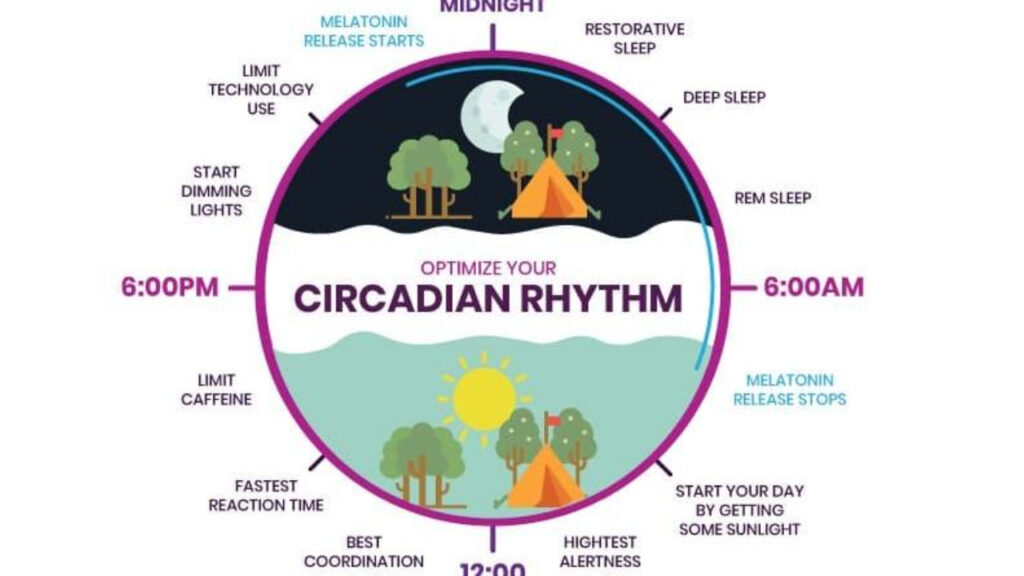
I’ve previously touched base on Circadian Rhythm in Geeking Science: Internal Clocks (Oct 18, 2018). The rhythm of our planet, the heartbeat of our existence, driven by the turn of the planet and how and when sunlight hits us. Will we be able to function on any other planet? And if so, how?
In answer to that, scientists have been looking to the sea, deep into the sea where the sun doesn’t shine. How do creatures without light keep track of time? Can we learn how to use their chemistry and genetics to help us? The biological rhythms of deep-sea mussels seem to be related to tides (Mat), which won’t help us much on planets without a sister planet providing a gravity-driven clock alternative. Other deep-sea beasties seem to react to seasonal water changes between heat and cold, modifying feeding behavior to match availability of food sources. Many water animals combine diurnal (light) and tidal (gravity) cycles.
Humans work on a 24.15 hour clock, with some people having rhythms shorter and some longer, but the average is a little longer than 24 hours and resets with sunlight. (Naked Scientists) The longer-than-24-hours allow humans to adjust to the slow increase of the day during the spring and summer, when we need to function well to gather food, and “more recently” (by evolutional standards) to plant and maintain crops. Though based on circadian studies, fighting the natural lengthening of day our bodies are built for likely increased immunity issues during the winter, but the evolutionary trade-off for better and quicker access to food, providing weight gain in preparation of winter, won the day on average for humanity. The outliers provide bonuses other ways as they always do. Even so, SUNLIGHT resets the clock with precision daily so the slight difference either way from the cycle impact is minimal (but enough to have created a genetic preference over the entire species).
But in space, sunlight won’t be guaranteed, so we need information about how to survive without our special Sol-provided sunlight. The problem is most of the creatures and plants available for us to study here on Earth evolved from the same single-celled creatures billions of years ago which lived on light flowing into the waters. To answer our questions, scientists must find creatures which didn’t derive from this united genetic line or creatures which have managed somehow to mutate away from it.
Japanese scientists recently found a species of jellyfish which work on what looks like to be a 20-hour cycle. (Starling) They do have a diurnal component related to sunrise, but in the absence of a day-night cycle, the species functions on a 20-hour cycle. (Like when humans don’t have access to a light reset, we slowly move off a perfect 24 hours since we are set up to run slightly longer.) They are studying the hormonal differences between this species and other closely related species which operate much more strongly on the day-night cycle.
The more we learn about other creatures, the more we understand ourselves. The blue light keeping us up at night. How food and gravity interact with hormones to support the normal rhythm, or oppose it, creating health problems. How it controls our sleep and our body temperature. How time of day impacts the effectiveness of medications and our ability to perform physical activities on the job and during recreation.
Some people do much better with night jobs than others. Others have serious issues with seasonal depression as light fades. Closer to the equator, where day-night cycle varies little (and matches where humans originally evolved), the circadian rhythm functions like…clockwork. Toward the poles where the sun might not rise or set for days, humans function less well, mentally and physically.
The rhythms of day-night, moon gravity position, seasons all impact us making us happy and grumpy, awake and tired, healthy and ill. Our internal clocks change as we age from birth through old age. And we must learn how these cycles work if we are going to recreate them elsewhere without our sun, moon, and Earth spinning through our solar system.
In the meantime, if it is late, whoever is reading this, turn off the lights and give yourself a couple hours off-screen to let your sleeping cycle kick in properly.
Bibliography
Cleveland Clinic. “Circadian Rhythm.” 2024 March 14. https://my.clevelandclinic.org/health/articles/circadian-rhythm – last viewed 5/11/2026.
Louis, Victoria and Patrick Emery. “Biological rhythms: In the sea, two clocks are better than one. 2025 June 23. – last viewed 5/11/2026.
Mat, Audrey M. et al. “Biological rhythms in the deep-sea hydrothermal mussel Bathymodiolus azoricus” nature communications. 2020 July 10. https://www.nature.com/articles/s41467-020-17284-4 – last viewed 5/11/2026.
Naked Scientists, The. “Why is our circadian rhythm not 24 hours?” 2017 August 8. https://www.thenakedscientists.com/articles/questions/why-our-circadian-rhythm-not-24-hours – last viewed 5/11/2026.
Starling, Marlowe. “The Jellies That Evolved a Different Way to Keep Time.” Quantamagazine. 2026 March 20. https://www.quantamagazine.org/the-jellies-that-evolved-a-different-way-to-keep-time-20260320/ – last viewed 5/11/2026.