Other Cool Blogs: Magical Words June 16, 2016

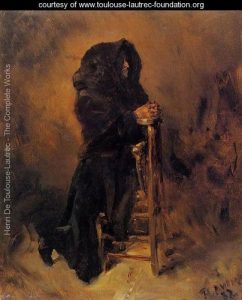
Woman-in-Prayer

Painting entitled: Woman in Prayer
Shared under the Creative Commons attribution

Worldbuilding: Gods

Everywhere we look religious is steeped into our culture. How the days of the weeks play out, the days off, holidays, how people dress, quotes, country boundaries, and dozen of other expectations. To write a world without religion, whether horror, science fiction, or fantasy creates an unreal world.

I loved how steeped Babylon 5 was in religion: Stephen Franklin’s Foundationism, Susan Ivanova’s Judaism, the Mimbari government being lead partially by their priesthood, and G’Kar’s fanaticism. Every character is on Bab 5 was driven partially by belief in something greater, including Londo’s ties to his people. Without the religious overtones, Babylon 5 would have been the typical bland sci-fi we normally see. Instead it constantly was asking questions.

Magical word’s Diana Pharaoh Francis covered the topic in “God-Fearing Woman”. The list of questions to ask when creating a religion are especially important. I lightly touched on religion in the flash Joelie and Sarah’s Last Day last month. Joelie is an ongoing character for me; I especially love the religion I created for him. The Tester is neither good or evil, benevolent or petty, but a smith shaping materials to be the best they can be – sometimes the hard hammer and sometimes the gentle hands.

WRITING EXERCISE: Pick three characters from your present work-in-progress. Create one prayer for each they might say at the beginning or end of a day.

READING EXERCISE: Think of your present read-in-progress. How does religion impact one of the characters? Does their beliefs drive any of their goals?

Writing Exercise: POV and Scene

Bar Code People Stock Photo

Image Courtesy of Vlado at FreeDigitalPhotos.net

POV & Scene

WRITING EXERCISE: Write of scene of two people; by the end of the scene the following features should be defined: (1) gender, (2) age, (3) cultural status and/or educational status. 200 words or less (with two people, a few extra words might be needed).

Switch it up now. Write the scene again, but switch the people in the roles. Keep the same person’s POV.

Example of combinations: Older doctor with young intern – becomes young doctor with older intern (maybe on second career); Male boss with female secretary.

****

Rating: Mature (Language)

Dixon and the Distracted Mother (Version 1)

“Joshua, please just sit still a moment.” The mother hissed at her child as she juggled her purse, a diaper bag, and the loaded the last of her cart’s items onto the conveyor belt. She smiled weakly at the people behind her as she dug out her wallet from the bottom of the pile, and finally focused on the cashier who monotonously been pushing items through the scanner to the steady sound of the beep.

Dixon, numb from three college finals that week, couldn’t manage a smile back after watching the woman yell at her kid throughout the line, when she wasn’t on the phone. Once more the senior debated his choice of becoming a teacher. If parents weren’t involved with the children before school, what was the point? “Your total is $127.32.”

“Oh, wait. I got coupons.” The woman said as she pulled a fistful out of her purse, dropping her wallet in the process. “Fuck!”

“Fuck, fuck, fuck,” echoed the child. (words 163)

****

Dixon and the Distracted Mother (Version 2)

Three cans of ground coffee, one pack of white coffee filters, a couple new memory cards, several six-packs of highly caffeinated soda, and a bag of chips hit the conveyor belt, while Dixon swayed from exhaustion. Three finals down and two to go and he would be done with college. The monotonous beeps hypnotized him until the cashier said, “Your total is $42.60.”

He blinked a few times focusing on the middle-aged woman across from him. “Oh, wait. I got coupons.” He started digging through his pockets, first the jacket, then the jeans, finally finding the papers in the shirt pocket. He smiled at the people behind him in apology before turning back to the cashier who had been glancing at a phone placed next to the register, biting her lip. “Problem?” he asked, not really expecting an answer.

“Just not sure I am going to be able to pick up my kid from daycare before closing time. They charge extra if you are late.” She said, scanning the coupons.

“Getting off soon then?”

The cashier shook her head. “Two people didn’t show today, and I am the one low on hours.”

Opening his wallet to get out his credit card, the worn, overextended stitches broke from the cracked leather, dropping half of his life onto the floor. “Fuck,” Dixon said weakly before bending down. (words 225)

Other Cool Blogs: Magical Words May 9, 2016

Hand Of Woman Is Pulling Fire Alarm On The Brick Wall

Image Courtesy of num_skyman at FreeDigitalPhotos.net

Inciting Events

 ConCarolinas starts tomorrow; the convention which was my inciting event to stop thinking about writing and start actually doing it. Going through life you may have several inciting events – times when the phrase “So things continued as they had been until such time as they no longer did” would appear in your autobiography.

Two major events may occur in a story – the inciting event sets to story in motion while the key event draws the character into the story. In many genre fiction stories these two events overlap. In my recent “The Telling of the Myth of Hariti“, the inciting event is when all the villages in all the world no longer could handle the loss of their children. The key event is when the elders approach the Buddha, drawing him into the story. Until he entered the story, no permanent change took place.

To learn more about inciting events, read the May 9, 2016 Magical Post by Faith Hunter: The Inciting Event.

Other good posts on this subject include:

WRITING EXERCISE: For your present work in-progress (WIP), define your inciting event and your key event. Do you have both, are they the same event, and where are they located in your book?

READING EXERCISE: For your present read in-progress, can you figure out where the incident and/or key event in the book occurred? Did you become more or less engaged when the event milestone occurred?

Writing Exercise: Sharpen the Beginning

Hay Stock Photo

Photo courtesy of FreeDigitalPhotos.net

Sharpen the beginning.

So the problem with editing, I’ve been told, is over time you start having problems reading for enjoyment. Today was my first powerful example. Reading a (free) book from Kindle. The first three sentences are:

The great beast slid through tall, dead grass. The wind had led him here. It wanted to show him something.

And in my head is my inner-editor screams “a major editor of anthologies told me he often doesn’t make it past the first sentence.” Where did the first question begin – not, “what is the great beast” but “what did the wind want to show him.” That was the hook to encourage a reader to read the next sentence – and it is the third sentence. For the anthology editor and others, this manuscript has already been tossed aside.

So remember, make the first question which draws the person to the next sentence be immediate. Or at least make the first sentence interesting. Do you want your work tossed aside after just a sentence is read? An anthology editor has 14 slots and gets 400 submissions; s/he doesn’t have time to read everything to the end.

WRITING EXERCISE: How would you change these first three sentences to bring more punch?

My example:

Sliding through the dead grass, the great beast followed the wind. It wanted to show him something.

What is yours?

An alternative challenge is take your present work in progress and rewrite the first sentence or paragraph so the reader has an immediate question to answer – Who is this person, what are they doing, what are they running from, etc.

Other Cool Blogs: Privilege

Magic the Gathering Cards

MagicCards From Ebay

Many people recently have been talking about Privilege. I ran into two very good examples which helped me grasped the topic better.

One in visual form, “What is Privilege?” , a YouTube video available here: https://www.youtube.com/watch?v=hD5f8GuNuGQ

And the other a blog by Liana Brooks, which she basically broke it down into gamer card game rules like Magic the Gathering, Pokemon, or Munchkin: http://www.lianabrooks.com/playing-the-privilege-game/.

And if you have spent anytime on the Internet, you likely have run into this example of how to teach privilege in a classroom setting: http://www.buzzfeed.com/nathanwpyle/this-teacher-taught-his-class-a-powerful-lesson-about-privil#.bkJvG22VK.

I think what I liked most about Ms. Brooks example is it meets the last instruction of the classroom setting – to use your privileges to achieve all you are capable of while still advocating for those behind you. The challenge, of course, is doing it in a constructive manner.

WRITING & READING EXERCISE
I often leave writer and reader exercises. Today I have a different challenge. 

First, write down your privilege cards. For example: Internet Access, Ability to Read, etc. Use the above links to get a feel for them. Maybe include bonuses you have worked on (read above middle school level). Then sometime this upcoming weekend consciously use one of your privilege cards (as described by Ms. Brooks here)  to help someone whose deck is stacked against them in a situation. (Basically a “one good deed” challenge on steroids.)

ACTUAL WRITING EXERCISE
Take you present work-in-progress main character and create a list of the character’s privilege and bonus cards. Then create a situation where his/her privileges would make them fail to win the “hand” (situation) being played.
… If you are unable to do so, you character may be too powerful. Just something to think about. You may need to switch genres to get this to work – for example your character is a superhero, but you put them in a urban noir situation.