Other Cool Blogs: Magical Words May 9, 2016

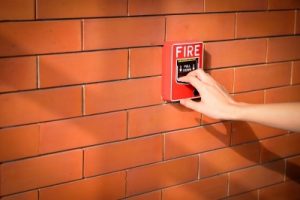
Hand Of Woman Is Pulling Fire Alarm On The Brick Wall

Image Courtesy of num_skyman at FreeDigitalPhotos.net

Inciting Events

 ConCarolinas starts tomorrow; the convention which was my inciting event to stop thinking about writing and start actually doing it. Going through life you may have several inciting events – times when the phrase “So things continued as they had been until such time as they no longer did” would appear in your autobiography.

Two major events may occur in a story – the inciting event sets to story in motion while the key event draws the character into the story. In many genre fiction stories these two events overlap. In my recent “The Telling of the Myth of Hariti“, the inciting event is when all the villages in all the world no longer could handle the loss of their children. The key event is when the elders approach the Buddha, drawing him into the story. Until he entered the story, no permanent change took place.

To learn more about inciting events, read the May 9, 2016 Magical Post by Faith Hunter: The Inciting Event.

Other good posts on this subject include:

WRITING EXERCISE: For your present work in-progress (WIP), define your inciting event and your key event. Do you have both, are they the same event, and where are they located in your book?

READING EXERCISE: For your present read in-progress, can you figure out where the incident and/or key event in the book occurred? Did you become more or less engaged when the event milestone occurred?

Writing Exercise: Sharpen the Beginning

Hay Stock Photo

Photo courtesy of FreeDigitalPhotos.net

Sharpen the beginning.

So the problem with editing, I’ve been told, is over time you start having problems reading for enjoyment. Today was my first powerful example. Reading a (free) book from Kindle. The first three sentences are:

The great beast slid through tall, dead grass. The wind had led him here. It wanted to show him something.

And in my head is my inner-editor screams “a major editor of anthologies told me he often doesn’t make it past the first sentence.” Where did the first question begin – not, “what is the great beast” but “what did the wind want to show him.” That was the hook to encourage a reader to read the next sentence – and it is the third sentence. For the anthology editor and others, this manuscript has already been tossed aside.

So remember, make the first question which draws the person to the next sentence be immediate. Or at least make the first sentence interesting. Do you want your work tossed aside after just a sentence is read? An anthology editor has 14 slots and gets 400 submissions; s/he doesn’t have time to read everything to the end.

WRITING EXERCISE: How would you change these first three sentences to bring more punch?

My example:

Sliding through the dead grass, the great beast followed the wind. It wanted to show him something.

What is yours?

An alternative challenge is take your present work in progress and rewrite the first sentence or paragraph so the reader has an immediate question to answer – Who is this person, what are they doing, what are they running from, etc.

Other Cool Blogs: Privilege

Magic the Gathering Cards

MagicCards From Ebay

Many people recently have been talking about Privilege. I ran into two very good examples which helped me grasped the topic better.

One in visual form, “What is Privilege?” , a YouTube video available here: https://www.youtube.com/watch?v=hD5f8GuNuGQ

And the other a blog by Liana Brooks, which she basically broke it down into gamer card game rules like Magic the Gathering, Pokemon, or Munchkin: http://www.lianabrooks.com/playing-the-privilege-game/.

And if you have spent anytime on the Internet, you likely have run into this example of how to teach privilege in a classroom setting: http://www.buzzfeed.com/nathanwpyle/this-teacher-taught-his-class-a-powerful-lesson-about-privil#.bkJvG22VK.

I think what I liked most about Ms. Brooks example is it meets the last instruction of the classroom setting – to use your privileges to achieve all you are capable of while still advocating for those behind you. The challenge, of course, is doing it in a constructive manner.

WRITING & READING EXERCISE
I often leave writer and reader exercises. Today I have a different challenge. 

First, write down your privilege cards. For example: Internet Access, Ability to Read, etc. Use the above links to get a feel for them. Maybe include bonuses you have worked on (read above middle school level). Then sometime this upcoming weekend consciously use one of your privilege cards (as described by Ms. Brooks here)  to help someone whose deck is stacked against them in a situation. (Basically a “one good deed” challenge on steroids.)

ACTUAL WRITING EXERCISE
Take you present work-in-progress main character and create a list of the character’s privilege and bonus cards. Then create a situation where his/her privileges would make them fail to win the “hand” (situation) being played.
… If you are unable to do so, you character may be too powerful. Just something to think about. You may need to switch genres to get this to work – for example your character is a superhero, but you put them in a urban noir situation.

Writing Exercise: POV

Ship Wreck Stock Photo

Photo courtesy of FreeDigitalPhotos.net

POV Study
WRITING EXERCISE: Write a scene of 100 words or less. Write is again from a different POV – change to first, second, third person, change the third person, change from close third to omniscient. Whatever floats your boat.

*****

Adam in the Boat 1

Spinning between eddies, the boat never gained the shore despite Adam paddling over the side with his one good hand. The fight, then the storm, had left him bruised, battered, and barely capable of movement. Daylight was approaching, bringing promise of more sunburn and dehydration, with a slim chance of discovery on the abandoned winter beach. Adam will die in that boat if nothing changes. (words 65)

*****

Adam in the Boat 2

Grimacing against the pain of broken ribs, Adam rebraced against the side of the shattered boat. He dangled one arm down in the cold sea water, using his last strength to push against the eddy current keeping him achingly close and forever far away from the twilight shadowed beach. If his other arm worked, he would swim for shore, but the grisly compound fracture made his arm only useful as a maggot breeding ground. Two days he had watched the abandoned winter shoreline tease with promise of solid land, skin blistering under the sun, lips bleeding through the salt-crust under moonlight. He had started losing time. Time his enemies were using to get away. He dared not go unconscious again. He would not wake up. (words 125)

*****

My choice change – omniscient to close third

(first published 2/5/2015; republished in new blog format 4/19/2016)

Editing Rant: Distances

Map Of Brazil Stock Photo

FreeDigitalPhotos.net photo by Gualberto107

Distances.

Please for the love of goodness know where things are located and how long it will take you to get there with various transportation methods. Normally my rant of this type is about medieval or regency romance type settings in England where a distance can vary from one hour to several days … by horse – to the same location in the same story – when the map says 20 miles on smooth roads originally installed by the Romans.

Today edit is a British author writing about America (rather than the other way around). Atlantic Ocean to Chicago by horseback is NOT five days. Horseback is not that much faster than walking when going through forested areas. And doing it while dodging zombies … well, let’s just say more like five weeks than five days.

Maps are your friends – USE THEM!

Please.

WRITING/READING EXERCISE: If your present work-in-progress or you present read is set in the real world, review distances for things.

Humans walk about 3 miles an hour, 4 miles an hour is a brisk walk and not sustainable over distance (except for infantry on a forced march). Horses go about 4 miles an hour steadily. And travel for both is usually limited to daylight hours – summer has much longer travel time than winter. Caravan and large groups need to start and end the day sooner than a couple of lone travelers. Bikes go 10 to 15 mph, and cars, when they first came out went the ridiculous speed of 20 miles per hour – equal to an easy day’s walk in an hour! (Scientist were worried about our ability to breath at those speeds.)