Image (c) SPR Ltd. / www.emdrive.com
Breaking Science – EmDrive
The engineers are trying to break science again. They do this periodically just to keep scientists honest. The newest thing hairbrain idea is the EmDrive (officially a “radio frequency (RF) resonant cavity thruster”).
Engineers (practical application) have been driving Scientists (theory modelists) to distraction since the beginning of time.
STORYTIME: The Scientist and the Engineer
“Hey, Scientist Uke, I got fire by rubbing two sticks together,” reported Engineer Bob.
“That isn’t how fire comes.” The scientist explained the world-model everyone knew to be true. “It comes from the sky from the gods as an element. Wood is a different element from a different god that is destroyed by the fire gods. It is the way the world works.”
“Well, I rubbed two sticks together using that bow thing I put together last month, and I got fire from wood.”
The scientist scrunched his Neanderthal brow. “Prove it. Recreate your experiment.”
“Don’t know what an experiment is, Uke, but see…” Bob used the bow string to rapidly rotate a stick and create fire.
“Oh hey, guys.” Average hunter-gatherer, Ted, who brings in a lot of food and keeps everyone alive entered the clearing. “Hey, fire. I got stuff to cook!”
“No, don’t use it.” The scientist-priest-overthinker tried to stop the average guy from cooking a few roots and a squirrel. “That isn’t normal fire. The wrong god was used to create it.”
Ted took a couple of bites. “Tastes just fine.”
“You sure you are okay.” The scientist watched Ted for reactions.
“Yep. Works just like normal fire.”
Bob smiled. “We can now make fire anywhere and not wait for a god to strike.”
“Cool beans. That could be useful.” Ted wandered off leaving some of the extra food behind for the big thinkers. They do a lot to make his life easier – the engineer had invented the bow and the scientist figured out how to leave enough roots behind so they can eat them year after year.
Uke looked at Bob, frowning. “You are going to make me figure this out, aren’t you?”
“If you want.” Bob responded. “Not sure why you need to figure it out though. What good is a structure of the universe?”
“Well, if we know what wood gods can create fire and when they can create fire, we can make it in the winter and summer. We know fire likes the fall, but is really hard to make in the winter and spring.”
“You think that the fire might be different later?”
“Well, when everything has been claimed by the rain gods, fire doesn’t start.”
“True.” Bob slung his bow across his back. “Tell you what, I will see if I can make fire next time it rains.”
“Yes, that is a good experiment.” Uke watched his friend walk away before dancing. “I get to figure out something new.”
***
Thousands of years later.
“What do you think?” The engineer, Bob, pointed at the large stone cathedral with no columns holding up the ceiling.
The scientist, Uke, blinked. “That should fall. Only caves can be open. Natural openings held by god’s hands”
“Yeah, well, I had been using arches to hold open doorways and thought, why not?”
Ted and his daughter, Tish, came up with a couple loaves of bread in a basket, “Cool beans, that is a big space. Can I use it to store grain?”
“I just built you a grinding wheel, why do you need a big place for grain?” Bob looked at the farmer-food provider.
“Well, with the grinding wheel, I can grind grain a lot faster, so I need more grain. A big open area would be great.”
Ted scratched the back of his head. “Yeah, well. I got this to work some of the time, but not all of the time. A couple of them have fallen. I was hoping Uke could figure it out.”
“I told you it couldn’t be done.” The scientist scrunched his brow. “Why did you do it?”
“What did you say?” Bob studied Uke for a moment. “I think I heard something wrong.”
“I told you it couldn’t be done.”
“Yeah, that is what I thought you said. ‘See if you can do it.’ Well, I did, but it works part of the time.”
“No, I said it couldn’t be done.”
The engineer shook his head. “I see lips moving, but the words are strange. Anyway, I need to see if I can make something for Ted here. I think I will call it a silo. You figure out the arch thing, okay?” He grabbed a loaf from Ted to better think and build.
Uke took the second loaf of bread offered by Ted and asked the everyday man, “Why does he always take ‘it can’t be done’ as a challenge to do it?”
Tish, a dreamer, spoke up. “I don’t know. Mom says it to dad and he reacts the same way. Maybe you should study human actions too.”
“Humans are created in god’s image, they don’t bend to scientific study.”
“Didn’t you tell me that the world is god’s creation? If we can study the world using the scientific method, and it was made by god, we should be able to study humans, made by god, the same way, right?”
The scientist blinked at the young questioner. “You may be right.” Uke went off and studied arches and humans, breaking up science into a variety of topics including the humanities.
***
Hundreds of years later.
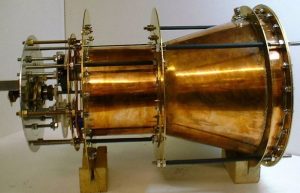
“So, Uke.” Bob came up behind his scientist friend. “I made something in 1989. I call it an EmDrive.”
Uke jumped out of his skin. “Don’t do that!”
“Do what?” The engineer held up a big copper engine. “It works with microwaves bouncing around and provides propulsion without propellant.”
Uke rolled his eyes. “Why are you always doing this to me? I taught you the Conservation of Momentum. To move ahead, you got to have something pushing out the back.”
“Well, you told me you wanted to go to the stars, but it took too much propellant, so I am trying to figure out a way without the stuff.” Ted shot back.
“Well, fine. Just make a unicorn while you are at it.”
“No need for a unicorn, we got horses.” The engineer pointed out logically. “Anyway, I need you to look at the engine.” He handed it to the scientist. “It works.”
“It what?” The scientist stared down at the engine. “It can’t work. That would break quantum laws, and well, everything. I would need to rework everything.” He frowned, trying to hide the giddiness bubbling inside.
“Well, near as I can tell, it works.”
“Tell you what, let run this by Dr. White. He breaks everything. If he can’t break it, you might got something.” The scientist rotated the shiny object. “We will need to test it in vacuum because that is where we want to use it. You know outer space has a vacuum, right?”
“Yeah, I know, I just didn’t have the money to make a vacuum yet.” Bob groused.
Dr. White got back to the scientific community at the 50th AIAA/ASME/SAE/ASEE Joint Propulsion Conference in 2014. “I couldn’t break it, not even with vacuum.” (See Rodal, et al. in the Bibliography)
“But!”
The engineer shook his head. There was always a catch.
“I got these eleven other possible things to look at.”
Uke, the scientist, shook his head. “I need Ted to give me money to run the tests.”
Ted, who was recovering from a long recession didn’t have much money and was getting annoyed by scientists with stuff like Climate Change, antivax and other fake news, rocked back on his heels. “Before I give you money to figure out if it can’t work, tell me what I get out of it. Especially with you telling me it can’t work before you even begin testing.”
“Well, if it works, it will save money and effort getting to the stars. It will drop satellite weight to a third. It can make low Earth orbit stations like the International Space Station last longer as they can self-boost. If we get our act together, we can get to the moon in four days, Mars in less than four months, and Alpha Centauri in just shy of a century. It would be awesome because we wouldn’t need to calculate slingshots, and we could go anywhere in space without a lot of preplanning.”
“Yawn.” Ted waved a hand in front of his face. “You already said it can’t work. So let’s save a lot of time and money and just not worry about it, okay?”
“Hoverboards.” The engineer said.
“No, it can’t—“
Bob slapped a hand over Uke’s mouth, interrupting him.
“Hoverboards?” Ted perked up.
“Yep, hoverboards. We will need mature the technology and then miniaturize it, but hoverboards.” The engineer assured the money-man who provided food, shelter, and manufacturing to the engineer and scientist so long as the inventions were useful, or at least interesting to people.
“Cool beans, here is enough to feed about thirty people for a few years. You work on that.” Ted walked away after writing the check. “Oh, and I want to be able to get to Alpha Centauri in fifty years or less. If I send something there, I want to hear back before I die. Just saying.”
After Ted was safely out of the space exploration room, the engineer removed his hand from Uke’s face. Immediately the scientist hissed, “It can’t do hoverboards.”
“Actually I can make it work with miniaturization and maturity of technology.” Bob smiled at Uke. “Trust me.”
“But—“
“I told you I could make computers smaller than a building, right?”
“It took several decades, but yes.”
“So get me the theory to work with. Prove this actually works, and I can get us hoverboards to make Ted happy, and you and I can continue to figure out new things to keep everyone looking up and out.”
“What if it doesn’t work?”
“Well, we are on, what, the third round of proofs?” The engineer shrugged. “I need to know what doesn’t work before I can figure out what does. It took me a while to get the lightbulb working. I will get us profusion in a small package somehow.”
Trish ran into the room, “Lasers!”
Bob and Uke turned to the new kid who constantly shouted out crazy ideas from science fiction and fantasy. “What?”
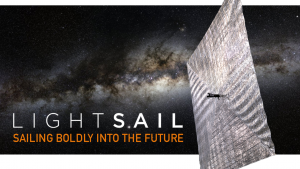
“I can levitate stuff with LIGHT!” Trish ran in circles around the room, showing off her new trick. (See Tangermann in the Bibliography) “You know light is an energy and a MATTER, right. So cool. You can use it to shove stuff. I might be able to push things to space really, really fast.”
“Like Alpha Centauri in less than fifty years?” asked the scientist.
Trish, the dreamer where money and science meet, jumped up and down. “Twenty!” (See Shankland in the Bibliography)
Uke and Bob looked at each other.
Uke said, “The science is actually sound and proven, we just need something that works.”
“Kid, we need to talk.” Bob started taking Trish from the room.
Uke yelled after him, “Keep working on that EmDrive too. The laser will only send small things to space. I want humans to get to Alpha Centauri as well.”
END STORYTIME
The EmDrive is nasty in that if it works, it will break a lot of scientific theories. Which in turn is kind-of fun, because having to figure out how things work. In the meantime, scientists and engineers are enthralled with inventing tests and test machinery to figure out why it works even a little in the first place.
If the EmDrive works, it would be totally awesome!
And the laser drive already works, which is totally awesome!
Space, here we come!
Bibliography
Drake, Nadia. “NASA’s ‘Impossible Space Engine Tests-Here Are the Results.” NationalGeographic.com. 2018 May 22. (Last viewed 2019 March 24 … seems removed as of 11/17/2022.)
Hambling, David. “Why DARPA Is Betting a Million Bucks on an ‘Impossible’ Space Drive.” PopularMechanics.com. 2018 November 2. https://www.popularmechanics.com/space/rockets/a24219132/darpa-emdrive/ (Last viewed 2019 March 24.)
PBS Space Time. “The EM Drive: Fact or Fantasy.” 2017 January 11. https://www.youtube.com/watch?v=hqoo_4wSkdg&t=603s (Last viewed 2019 March 24.)
Rodal, Jose, Jeremiah Mullikin and Noel Muson. Subedited by Chris Gebhardt. “Evaluating NASA’s Futuristic EM Drive. 2015 April 29. https://www.nasaspaceflight.com/2015/04/evaluating-nasas-futuristic-em-drive/ (Last viewed 2019 March 24.)
Shankland, Stephen. “Are we alone? Tiny spacescraft will head to Alpha Centauri to find out.” Cnet.com. 2018 August 27. https://www.cnet.com/news/sending-tiny-spacecraft-to-alpha-centauri/ (Last viewed 2019 March 24.)
Tangermann, Victor. “Researchers Found a Way to Levitate Objects Using Only Light.” Futurism.com. 2019 March 19. https://futurism.com/levitation-light-propulsion-spacecraft (Last viewed 2019 March 24.)
Wikipedia. “RF resonant cavity thruster.” https://en.wikipedia.org/wiki/RF_resonant_cavity_thruster (Last viewed 2019 March 24.)