Geeking Science: The Evidence of Our Eyes (N is for Nuance)

Should you believe the evidence of your eyes? Is what appearing in video true or fake news?

As we go further and further into a Science Fiction world, the answers are confounding. (Please note this is one of SEVERAL few-shot learning videos. It is a growing field. Also search on “Deep Fakes” for more.)


Bibliography

Dafoe, Taylor. “Russian Researchers Used AI to Bring the Mona Lisa to Life and It Freaked Everyone Out. See the Video Here” artnetnetw. 2019 May 31. https://news.artnet.com/art-world/mona-lisa-deepfake-video-1561600?utm_content=bufferefb5b&utm_medium=social&utm_source=facebook.com&utm_campaign=news – Last viewed 11/15/2019.

Geeking Science: Fashion Meets the Surveillance Age

From the Reflectacles Kickstarter

So after writing the Dark Web Trope Editing Rant in September, my paranoia is running higher. Just a little.

Did you know that there is a whole Fashion subset to avoid the surveillance cameras everywhere?

Here are some Fashion Statements to say something about the person wearing them, either tin-hat-paranoia or they-really-are-out-to-get-you. The accessories could make for some exciting additions to a near future sci-fi or a contemporary thriller.

  1. Makeup and Hair – Asymmetrical is the key. Bright splotches of color hair. Cover or obscure the eye with spikes and decorations. Squares with high differentiation of coloring – black and white. Jewels applied randomly to the face, especially the nose and cheekbones. Gorgeous and disturbing to a species hard-programmed for symmetry. The machines also freak out a little. (See cvdazzle for examples.)
  2. Pattern Recognition Disruption Scarfs – Put on a lacy scarf with dots or mini-faces. For example, the HyperFace scarf has 1,200 facial shapes to blow the surveillance camera software to bits.
  3. Health masks – Those face masks people are wearing to prevent transmission of disease. They may be keeping other transmissions and invasions at bay. Popular among protesters around the world, especially when holding a gathering near suppressive government buildings.
  4. RFID Blocking Wallets – With the credit cards being RFID chipped now, pick up a wallet to keep someone from reading accessing the credit just by talking down the street beside you.
  5. Metallic Fabric Jackets (with or without hoodies) – But the RFID and microchips go beyond just the wallet, dogs are chipped, medical history may be on chips soon, and some medical machines already are microchipped and can be programmed for injections. Pick up a metallic jacket to keep criminals from scanning the microchips … or reprogramming them.
  6. IR Privacy Eyewear – Full infrared (IR) protection on the sunglasses prevent surveillance cameras from getting eyeshape, one of the most important aspects of facial recognition. A bonus is manufacturing the frames to be extra reflective – this makes the wearer more visible at night when crossing the street while also completely screwing with the camera’s ability to see the person’s face.
  7. Antiflash Clothing – Prismatic metallic ink which interferes when paparazzi beat on a celebrity with flashbulbs. Suddenly their greatest tool of humiliation destroys the very picture they are trying to take. Also great for those days when a politician, or ordinary citizens caught up in a mess, takes a walk of shame before proof of innocence or guilt is established. Also useful for the next company party with the open bar; no pictures, no proof.
  8. Infrared Ballcaps – The brim of the cap shines an IR light on the face, making it too bright for surveillance cameras to see. Perfect for those late night run to Walmart, and you don’t want to get dolled up in an anti-surveillance fashion statement.

Bibliography

Bacchi, Umberto and Suliman, Adela. “Face masks to decoy t-shirts: The rise of anti-surveillance fashion”. Reuters. 2019 September 26. https://www.reuters.com/article/us-britain-tech-fashion-feature/face-masks-to-decoy-t-shirts-the-rise-of-anti-surveillance-fashion-idUSKBN1WB0HT – Last viewed 11/13/2019.

CV Dazzle. “Camouflage from face detection.” cvdazzle. 2017 August 22. https://cvdazzle.com/ – Last viewed 11/13/2019.

Dobush, Grace. “Privacy by design: How fashion combats surveillance”. The Christian Science Monitor. 2017 January 27. https://www.csmonitor.com/World/Passcode/Security-culture/2017/0127/Privacy-by-design-How-fashion-combats-surveillance – Last viewed 11/13/2019.

Hern, Alex. “The fashion line designed to trick surveillance cameras”. 2019 August 14. https://www.theguardian.com/world/2019/aug/13/the-fashion-line-designed-to-trick-surveillance-cameras – Last viewed 11/13/2019.

Hu, Jane C. “When Will TJ Maxx Sell Anti-Surveillance Fashion?” Slate. 2019 August 15. https://slate.com/technology/2019/08/facial-recognition-surveillance-fashion-hong-kong.html – Last viewed 11/13/2019.

Jacobs, Bel. “How what you wear can help you avoid surveillance.” BBC. 2017 March 20. https://www.bbc.com/culture/article/20170320-how-what-you-wear-can-help-you-avoid-surveillance – Last viewed 11/13/2019.

Reflectables. “IRpair & Phantom – Privacy Eyewear.” Kickstarter. 2019 November. https://www.kickstarter.com/projects/reflectacles/irpair-and-phantom-privacy-eyewear – Last viewed 11/13/2019.


Geeking Science: Plastic Fish

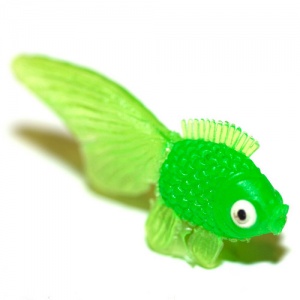
Photo courtesy of the internet Hivemind

Science is geeking cool. Plastic fish!

Oops, I meant plastic from fish. The video below.

More detail can be found at

Matchar, Emily. “The Bioplastic Made from Fish Scales Just Won the James Dyson Award”. Smithsonian.com. – Last viewed 11/14/2019

Geeking Science: Entanglement

Image courtesy of Cheezeburger

By the time most people have finished high school, they have been introduced to the Schrodinger’s Cat, a concept created by Erwin Schrodinger during a correspondence between him and another powerhouse physicist of his day, Albert Einstein, as they pounding out the implications of quantum mechanics.

Quantum mechanics doesn’t live in our normal space-and-time continuum, well, it does, but it breaks a lot of “rules” normal physics have. Kind-of like the rules of adults don’t apply to babies, the rules of molecules doesn’t apply to the parts that make up atoms. Smaller things always gets different rules. They are the baby – got to love them.

In Schrodinger’s Cat, it means if you shrunk down a cat to sub-atomic particle size and stuck it in a box with some poison, until observation happens a state of quantum superposition exists where the cat is both alive and dead.

Part of this is because quantum mechanics doesn’t happen is space-AND-time … it happens in space-time. Meaning some of the properties of time are indistinguishable / overlap with the properties of space. Think of how light is both energy and matter and can be bent by gravity. It’s like that, only different.

Humans love their boxes, and the universe is not a box.

Schrodinger’s Cat is an example of entanglement, where an link exists between particles which have become entangled. Scientists have been exploring the principle of quantum nonlocality – where two entangled particles will share rotation, momentum, and polarity even over the divide of space INSTANTLY, possibly over light years. Experiments have come back positive – not the light year distance, but pretty much what humans can test on Earth indicate this theory can be supported. 

For science-fiction, what this means, is mankind may be able to create instantaneous communication. Using quantum particles and the nonlocality principle – combined with say, Morse code – messages can be sent over any distance WITHOUT possibility of interference or signal loss. Yes, limited to one location to another. But a network is possible – say fleet headquarters has dozens of arrays linked to ships throughout the galaxy – a single message can be sent out. 

If this is possible, mankind won’t lose itself by scattering to the stars but remain a coherent whole.

But … ready for the kicker … remember space-time. Locality on the quantum level isn’t just in SPACE, but in TIME. The Crull article in the bibliography goes into it with deeper science from an experiment run in 2013 where it WORKED, but I’m going to just play with this from a sci-fi viewpoint.

Speculating this out, humans can communicate backward and forward through time with this principle. All one would need is the right technology similar to the network of one-to-hub communication in standard space already speculated above.

Maybe humanity won’t get time machines, but writers can play fast and lose with the science to make them “techno-babble” possible.

Still, I’m more enthralled with the means of really and truly communicating over light-years. 

At one point, there was a question going around of which science fiction world is stronger – who would win, Star Trek or Star Wars?

A lot of people in my circle went with Star Wars. I immediately said Star Trek, not based on their weapons or the size of their ships, but the fact they had instantaneous communication. In most battles, that is the deciding factor – can you coordinate your people to arrive at the same time over vast distances? Star Trek could, Star Wars depends on the Force to be on their side.

Real world. though. We may be able to do Star Trek level instantaneous communication even before we put a colony on a world circling a different sun.

Geeking science!

Bibliography

Crull, Elise. “If You Thought Quantum Mechanics Was Weird, Check Out Entangled Time”. Science Alert.com. 2018 April 14. https://www.sciencealert.com/if-you-thought-quantum-mechanics-was-weird-check-out-entangled-time – last viewed 11/14/2019.

Geeking Science: Architecture

Photo by Meriç Dağlı on Unsplash

Fighting White Boxes (mentioned in Septembers writing exercise) can be an uphill battle. One of the ways to win the war is think about the architecture of the building.

Ready for Geeking the Science of Construction?

Let’s start with a life hack which I find very helpful. Electric wiring and plumbing are expensive and time consuming, and architects and construction crews like to put all of that together for several reasons. Less cost of running wires and pipes. But also so they can get on the business of building while waiting for the government inspectors to sign off so the walls can be closed. Which means bathroom, kitchen, and elevators are all going to be in close proximity to each other. Going to a job interview and want to have one last bathroom trip before sitting in the reception area waiting for the interviewer to free up, look for the elevators – the bathrooms will 90% of the time be somewhere in that core column. Just walk around the “block” until you find them. At a house party and trying to find the downstairs bathroom, find the walls adjacent to the kitchen. Likely the bathroom is near there, that or the stairs. If the downstairs bathroom is full because the party is already full swing, go to the second story and find the space directly over the other bathroom or the kitchen.

There is so many cool things about architecture!

Photo by Diana Davolyte on Unsplash

How about pagodas? These tall delicate buildings made completely of wood with their large overhangs look like a strong breeze will destroy them. They are also one of the most earthquake resistant building styles in existence. The wide eaves, the wooden central column, the box-style construction, all contribute to a building which sways and stays. If you would like to see related videos, check out the link in the Bibliography under Kalovic. The wide eaves also contribute to controlling heat entering the building during the summer, but the shallow nature likely allows the low angle winter sun in for warming the building during the cold months.

Talking about controlling heat and cold without massive amounts of air conditioning and heating – which those big monster skyscrapers with their glass sides require, let’s take a stroll through the north and south. In old school Philadelphia, the buildings are close together – row homes in fact. These retain heat making winter bearable. They are not meant to be lived in during the summer – that is what porches and parks are for.

In the south (and throughout the world in warm climates), houses and entire towns are built to catch prevailing breezes. Multi-story buildings make use of the “heat rises” principals and pull air flows through from the bottom to the top of the house. Awnings and porches are welcomed additions in the summer, and can even double the house footprint. The porches on my house in the Carolinas add 20% to my modest living space during the warm months (my house is about 900 square feet, so I love my porches).

Image courtesy of Witthaya Phonsawat at FreeDigitalPhotos.net

The push to be “modern” (read, European materials), can be counterproductive when one forgets the past. The “air cooler” (see DiStasio – warning, some of the physics are suspect. They might be looking at the wrong reasons for the benefits they are seeing.) which everyone talked about in 2016 and 2017 of forcing airflow through small holes to make the inside of a house cooler amused me because, well, Ottoman architecture. Have you seen the widows with the small deep holes? Combined throughout the house, heat can change easily but slowly when the indoor/outdoor are different, averaging out extremes of a cold night and hot day.

Mr. Holland (see Bibliography) collected a lot of examples of how returning to study native buildings can give a better idea of using less imported materials, making the buildings more responsive to the local environment, and more sustainable for maintenance and climate, all the while being aesthetically pleasing for the culture. Things like curved roofs protect against cyclones (hurricanes), using reeds with hollow stems for their insulating properties, circular buildings to protect against monsoon rains, and window placement to collect solar heat and create cross-ventilation. 

The geeking science list for architecture goes on and on. Flying buttresses, keystones, spiral staircases, …. add them to your writing to make the world more real. Tie the environmental problems people face to the houses they choose to live in. In Urban Fantasy, does the person live in a shotgun house or a penthouse? In a fantasy, is it a “Winter is Coming” or “Afternoon Siesta” culture? For a science fiction, how long does it take them to abandon the old colony ships and build their own places? Break the white box.

Bibliography

DiStasio, Cat. “The amazing Bangladeshi air cooler is made from plastic bottles and uses no electricity.” Inhabitat.com. https://inhabitat.com/this-amazing-bangladeshi-air-cooler-is-made-from-plastic-bottles-and-uses-no-electricity/ – last viewed 11/12/2019.

Holland, Oscar (CNN). “What traditional buildings can teach architects about sustainability” CNN.com. https://www.cnn.com/style/article/vernacular-architecture-sustainability/ – last viewed 11/12/2019.

Kalovic, Alen. “Shinbashira – pagoda’s exceptional earthquake resistance.” Medium.com. – last viewed 11/12/2019. (Author deleted the article in 2022.)

Kipnis, Nathan. “Natural Cooling Strategies.” Mother Earth News. https://www.motherearthnews.com/renewable-energy/other-renewables/natural-cooling-zm0z11zphe – last viewed 11/12/2019.