Choose a skill, any skill: website design, cleaning house, doctor, drawing, editing, cooking, writing, digging holes – this applies to it all. Respect people and their lifetime of skills.

Image acquired from the Internet Hive Mind via ifunny.com
Choose a skill, any skill: website design, cleaning house, doctor, drawing, editing, cooking, writing, digging holes – this applies to it all. Respect people and their lifetime of skills.
Image acquired from the Internet Hive Mind via ifunny.com
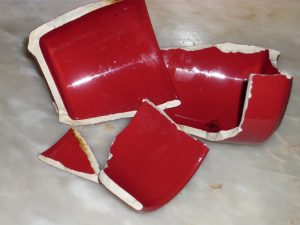
Image acquired from the Interweb
When it just isn’t good enough
Just finished up on the Red Mug series of flashes; last one will post this Sunday. The first flash was the simple, normal story based on the picture. The followups all basically gelled the same day after I got the Red Mug on electronic paper. Normally I wouldn’t have put them down, but tax season had some downtime and I am practicing writing longer. Therefore I took an hour here and there to flesh things out.
Why would I normally not have continued the story? Well, it’s kind-of boring. The story is straightforward, the characters normal, and things just happen in normal order. The humor isn’t strong, and the storyline has huge jumps in time. It is not marketable as-is.
Many of my flashes have continued down paths during commutes or long drives, still more laying awake in bed or mowing the lawn. Most never get written because they don’t work.
But 5,000 words! Really, really written. All complete and bow-tied. (bouncing writer side)
That’s nice. (droll editor side)
As a slush reader, I have had to reject works of 100 K or more and feel absolutely horrible doing so, but not marketable is not marketable. Red Mug’s (and related flashes) is boring at the wide-range appeal level, has little description, and is clearly flash – needing (desperately) to expand out description, flesh out characters, and add action.
How could I workshop this story to make it into something that is marketable? (Please note, I don’t think the combined stories are worth this effort – but the skill set could be useful when looking at other stories.)
First off, right now it is a contemporary romance. What thread are in the story already available for expansion?
Third person omniscient isn’t working well (yes, it does slip on occasion – after all, first draft flash – but does mostly stick to the omniscient). As a romance, we need to dig down into the emotional development – and that means getting inside the characters’ heads more. Changing the story to either first person Jeffrey or third-person close, switching between Jeffrey and Amanda would be good. Once closer in, we have a few paths of additional development available.
Now where are cool bits to play with? Jeffrey and Amanda are a mixed race couple, they also have a significant age difference, family-style difference, and a work environment issue. Exploring how Jeffrey feels about dating a white person, and how his army family reacts is an option. Running into how Jeffrey’s mid-twenties and Amanda’s early forties plays out could be fun too. The long-distance relationship adds another aspect open to expansion. And how about how Amanda’s work is impacted by her pregnancy – both the reactions of her European counterparts and her American superiors? All of these could add thousands of words and take this from a simple story to a more complicated character development arc. Oh, and focusing on why Amanda doesn’t want love could really take the story to the next level.
Plus all of these additional bits could fill in the time jump issues between the already crafted scenes.
Still, I am better at writing genre fiction than straight contemporary. What subgenres could be added to the romance? These are more worldbuilding choices than character development or plot points. Sticking them will double description quickly and add plenty of action.
I could kick up the erotica aspect a notch or two; even the opening flash doesn’t delve deeply. At the moment the story is more “closed door” then bouncing bed.
The story could be changed to a science fiction – where the two characters work for an ore mining company and she operates the Orts Cloud while Jeffrey works in the traditional headquarters in the asteroid belt – exploring the long distant relationship against this background would make things more interesting. Location, location, location.
Another option is play with the “you are a god” aspect, changing this to an urban fantasy with Jeffrey discovering he actually is related to a god or gaining a god’s powers through no fault of his own. Maybe have Amanda gain Slavic god-like powers to his American-based aspects.
A thriller could work too – make this into a Die-Hard-style story; Jeffrey does come from an army family, though he is a nerd. During the crawl through the duct system or up an elevator shaft, the readers get exposed to Jeffrey’s and Amanda’s relationship as it develops over time. I’ll be able to keep all the already written scenes, and I don’t have to worry about the time jumps as he (or she) reminisces while going to rescue the family. Quick skeleton fix.
Maybe a mystery, with something happening at the company – people dying, getting fired, moving people around to different locations, a break-in – and have the pair solve it while falling in love.
The story could even be mixed and matched – maybe one or both of them gaining powers during the thriller of Die Hard-style, all the while, of course, never forgetting the story is actual a romance and the main plot is Amanda releasing her fear of falling in love – from Jeffrey’s first person point-of-view (POV).
The story as-is isn’t complicated enough to warrant real publication. But by adding a few “non-standard” pieces to the work, weaving in a secondary emotional development plot, and tacking on an action piece, suddenly the story becomes enough.
Am I going to do this? Nah, that was never “their” story. But they are here in my universe world, and they have a fully developed backstory, so they may show up in another tale as supporting characters where I don’t want just a generic couple with a couple of kids. These two already have had the breath of life breathed on their clay. And that is cool too.
The complete Red Mug series:
3/17/19 – Red Mug
3/24/19 – Green Cheeks
3/31/19 – Copenhagen Blue
4/7/19 – Clear Glass
4/14/19 – Gold Bands

Image provided by the Internet hive mind via iFunny.com
James Burtoft assembled The 5 Most Disastrous Typos in Human History for Cracked.
Everything from a comma instead of a hyphen costing the American government the modern equivalent of $40 million dollars during the Civil War to changing a medical term from Patient O (as in Oh, for Outside the area being examined) to Patient Zero.
And that list doesn’t event include “A court’s decision in a Maine labor dispute hinged on the absence of an Oxford comma“ I previously mentioned in my April 11, 2017 Editing Rant.
You can see the whole article here: http://www.cracked.com/article_24628_the-5-most-disastrous-typos-in-human-history.html
Just so you know, good editing saves civilization.
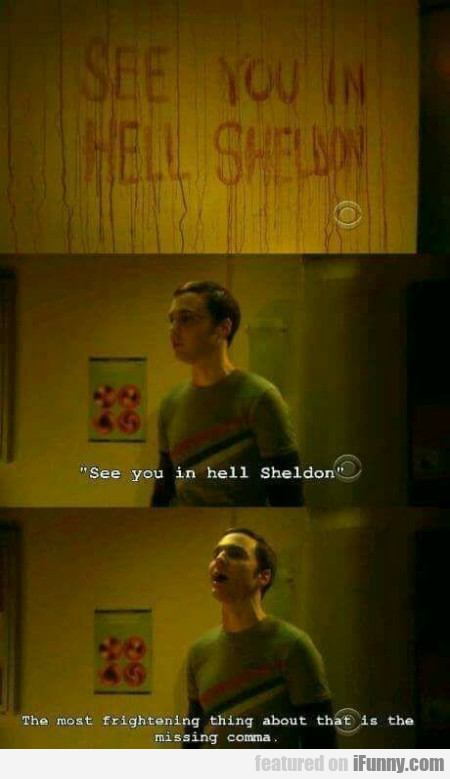
Image acquired from the Internet Hive Mind via ifunny.com

Image courtesy of farconville at FreeDigitalPhotos.net
Humor is tough. Ask any actor – drama may be a challenge, but timing a laugh is a unique talent which has to be honed into a skill. This is why you might see comedic actors do drama, but rarely will drama actors do comedy. Same with writers. The best comedies will make you cry, but dramas with laughs snuck in are fewer. And comedic genres mixes (fantasy, sci-fi, etc) are as rare as unicorns.
Humor comes in many forms: slapstick/physical, snide remarks, comedic characters, comedic situations (sit-coms), straight-up weird (surreal), puns/wordplay, topical/current events, observations/every-day-life, and fart jokes. Some authors writing comedy will attempt every single type joke one sentence after another, never stopping – like the movie Airplane. Exhausting reads, and often side-splitting, except when they are not.
The problem is some writers aren’t funny, and they are trying so hard.
A recent book I read had constant joking between characters, snide and straight-up humor versions. Normally I like this type of thing, but these read like a sitcom with canned laughter. Anytime someone said something snide or “funny”, the people they were talking to laughed and smiled at the jokes. Every.SINGLE.time. It’s like the author did not trust the reader to find things funny and lit up a big sign “laugh here” to make sure the audience knew when a joke was said.
This is not what funny is.
Comedians do not laugh at their own jokes. They tell a joke and wait for the audience to laugh. If it doesn’t work, they strike the joke from their repertoire.
Don’t tell readers when to laugh. Have them discover the funny on their own.