Editing Rant: Repair the Pants

Image courtesy of ladywriter55 at FreeDigitalPhotos.net

What the…?

Okay folks, it is great to be a pantser. Break free of the constraints of outlining and worldbuilding. Just write things out and get it on paper. Fresh, new, exciting.

Then edit that draft!

Just read a story where the author was obviously a pantser. The action was constant, the plotting – not so much. The reveal of what the human female was and her ongoing issues felt very “slidey”; things were added during the pantsing writing and not fully integrated during subsequent editing passes.

Oh, let’s have her not just be human. First meeting of ex – helpful and healthy – oh, but wait … won’t it be better if he was poison as she starts a new relationship. Great additions, really help the story pop – but created an unevenness in the presentation, a feeling of being tacked on instead of full integration. 

Image courtesy of the internet Hivemind

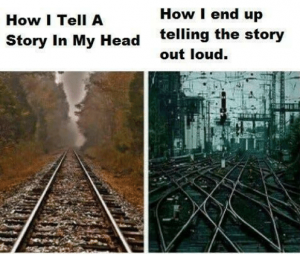
I understand that draft stage is boring. You know the story now. But this is the difference between telling a haphazard story among friends and creating a coherent manuscript.

Pants it all you want – just remember the tradeoff. With plotters, they do a lot of the prep work before hand. This is the exciting part to them. Writing it out is hard. For pantsers, writing out is fun, it is the draft work that is the chore. One way or the other, details and sorting things out for a full well-written document worthy of publication requires effort.

Go back and repair those pants.

Editing Rant: Chekhov’s Gun

Photo by Vladimir Palyanov on Unsplash

I’ve talked before about Permanence of Object. Part of that concept includes Chekhov’s Gun – a “dramatic principle that states every element in a story must be necessary, and irrelevant elements should be removed, elements should not appear to make ‘false promises’ by never coming into play.” (Wikipedia, Chekhov’s Gun entry) The supreme example of this is a rifle is hanging on the wall in a play’s first act, it should be used by the last act.

The reverse is also true – if an object is used in the last act, it should appear before its use.

But the bare-bones dramatic principal can be taken too far. I recently read a novel where if something is introduced, I knew it would be used. While the Chekhov’s Gun principal is the gold standard for short stories and plays, which need to be trimmed to the basics, novels should wander a bit, introducing non-essential side stories as red herrings, especially if the main plotline is a mystery. In this particular manuscript, every little side bit glared like the Gun on the Wall. Scuba gear in the admiral’s office, the spy was about to be sent somewhere he needed scuba gear. A book, needed to be read.

Not a single wander off the trail – straight shooting the whole way. Nothing felt woven, like a rich plot, the whole book felt like a string of beads, one after the other. Every “aside” I read propelled the story forward full-steam. The side trips feed into the main plot. No emotional subplot, not growth subplot.

Sure, no White Box issues. But only because when I (as the reader) walked into a room, there would be one object which would be relevant to the story and described. Otherwise, the POV character I was following wouldn’t have gone into the room.

The novel felt similar to a video game where the developers didn’t provide any side-quests, nor the opportunity to go off-script for a fail. A choose-your-own adventure with only one option at the end of each page.

I mean, yeah, that is actually the case of how a novel really is. But it shouldn’t FEEL that way.

When writing be sure to describe more than just the things needed for the main plot if writing in a longer form. Play a game of Clue with your reader – will the gun, the knife, or the candlestick be important to the plot? And which is the symbol of the inner angst the main character needs to resolve in their emotional growth?

Editing Rant: Editing Those You Love

Image courtesy of Witthaya Phonsawat at FreeDigitalPhotos.net

One of the hardest aspects of editing is when someone you love asks you to read their work. 

At various times I have: edited close friends (some of whom could write for money and some who shouldn’t), two of my family members (who have potential and needed about as many changes as writers I have edited under contract), teenagers I am mentoring (who need direction on where to grow as writers), and a couple of writers I fangirl over (but still need to be fully edited). Each time is a balance between caring for the person and helping them develop to their full potential in their work had to be found. Like parenting, only without the hugs. Tears, plenty of those, just no hugs.

First problem is dealing with a family member. Whether you are reading their work or they are reading yours, define what is wanted – is this a supportive read (keep going) or a critical read (where am I doing good and what can be better)? Get that defined upfront. Immediately.

Because supportive reads are important. Writing in a vacuum sucks energy (pun intended). Having someone say – “keep going” – may be exactly what they need. This goes for you too – you can ask for a supportive read where they only focus on what is being done well, such as getting 2,000 words on paper in one day. This goes for a family member you are reading for – flutter, hug, and congratulate them on accomplishing something. It is always okay to say “be kind, I’m fragile today”.

Just don’t be fragile every day. Realize some day a critical read will be needed. It might not be this week or this month, but it will be needed.

And family and close friends might not be the best to do the critical read. Not because they can’t be honest. Believe me, my friends are can be BRUTAL. The problem is with writing, they read my words and hear my voice. This is a good thing in writing. If people read your words and hear your voice – that means you have a strong voice. But it also means close friends will put in words which are missing because they hear them all the time; your family will understand short-hand examples because they have the same framework of thoughts, therefore them miss the logic holes in the story.

Which is why an outside editor is helpful. If only women have beta read your book (your mother, your sister, and your best friend), you may want a male editor. If you are a male writer, you may want a female editor. Getting a set of eyes different from those that helped develop the manuscript makes the final product more accessible to more people.

Second problem editing people you love is dealing with developing writers. Similar to family, only without the as-long-as-you-both-shall-live relationship of blood family, finding the balance between “go for it” and “hang on a second” – between support and growth, is a challenge with friends who are trying writing for the first time.

Solutions for developing writers is similar to management techniques – sandwich strengths and weaknesses. Scaffold where they are to where they need to go with exercises and suggestions on what to try. Repot like a plant – provide the right size pot, only do so many changes at a time until they outgrow the pot they are in.

Third problem is editing for established writers you love. Can you turn off the fangirl and concentrate on the writing? They deserve that – the other readers who will be reading their book and falling in love with their writing deserve that. And it isn’t easy, I’m sure everyone has Big-Names which pop into their heads from the book and movie industries who have gotten too big to edit or produce properly. They need to actively seek out people who don’t “yes-men” them if they are going to continue to produce their best work.

It’s okay to be such a fangirl you can’t beta read or edit a writer, but you need to recognize it in yourself and bow out when it happens.

Love is great – but it is an action as much as an emotion. If you can’t help a person to grow in a healthy fashion, show your love by directing them to someone who can. Whether family, friend, or fangirl favorite. Editing and love is about growing better.

Even when part of the growth is tears.

Editing Rant: Belief Coins

Image courtesy of iosphere at FreeDigitalPhotos.net

Have I talked about Belief Coins before? I don’t remember – but let’s talk about it again since clearly some people aren’t getting the message.

Too many suspension of beliefs ruins a story. A writer gets only so many coins to play for suspension of belief.

Depending on the “store” you are shopping in, some of the suspension of beliefs are on discount. For example, in the romance genre you can have love-at-first-sight (Insta love), not needing to go into work, and easy adjustments over class divides. Science fiction offers faster-than-light travel and gun battles on space stations. Thrillers allow for traveling across the globe without problems with passports, inner city traffic rush hour can be easily bypassed on side roads, and people can go without sleep or food for days (they may sit down to eat, but it is always, always interrupted). Cozy mystery, the main character can interfere with police investigations without getting arrested. Erotica gets to getting it on quickly and friends support a sexual situation without questions. 

But those Belief Coins have to be earned for the breaks with reality. Everything else needs to work without a suspension of belief. A romance where the characters go without eating? A science fiction where friends support a Insta-love sexual situation without questions? A thriller with gun fights in the middle of rush hour and the police don’t respond? A cozy mystery where a space alien is the killer? You darn well better give the reason these things are happening. Yes, you can explain them, but you don’t get to wave a magic wand and make them disappear. If you have read romances, you know how many times a sex scene ends with – “you hungry?” (and a stomach growls).

Know the tropes of your genre – these are the discounted Belief Coins. When I sit down to a werewolf romance, I expect InstaLove of true mates when they scent each other. I don’t expect an Earth vampire to end up operating a spacecraft in the middle of an alien-attacks science fiction story.

A recent erotica I read had the follow items needed for Belief Coins: two men love the same women and don’t have a problem with each other (discount coin); insta-sex (discount coin); rich men relationship with poorer women no problem for any of the parties (discount coin). Three coins is a lot, but doable, especially with the erotica branch of romances.

Things that broke the bank: (1) inter-racial. Normally this is okay since the cover advertised it. But the racial factors were ignored entirely – the two (very rich) men going after a black woman, never mentioned her color except once. Her skin color made no impact on the story. The genre of inter-racial romance still requires some sort of acknowledgement of overcoming – even the erotica version. Fetishizing the difference is one branch in the erotica tree; another branch is just acknowledging people of all colors can love each other. But in either case, it is integral to a inter-racial romance. (2) rich level. The men drop $2 million dollars without blinking. While their jobs of hotel architecture rakes in some money, it doesn’t do it at that level. Owning the hotels, sure, but not the working folk making them – even the white collar jobs.

And that last one is what really broke the bank. Their job did not match their wealth levels. Both of the men had “come from normal beginnings” and just got lucky with their jobs – by their mid-twenties. Nope – thrown out of the story. If one had come from money, okay, but not normal guys still working their way up in the world.

(Fact Check: Just looked up the window of salaries for architects – about $50,000 to $150,000 per year in 2019 with the average about $90,000. To drop $2 million without blinking, I’m thinking a person needs to have at least $50 million in the bank. Or an income of around $20 million a year.)

Even eroticas need a foot in reality. Even wizards, aliens, vampires, super spies, viking kings, and dragons need to be real in some manner.

Spend those coins wisely.