Photo by Kaleidico on Unsplash
When writing there are hundreds of ways to prep for writing.
- Daydreaming the story – this is the least effective, nothing is being written and once the story is complete in your head, the Zeigarnick Effect kicks in and it all goes away. (Zeigarnik effect is remembering interrupted tasks, but completed activities are forgotten.) It is satisfying, in that you told yourself the story, but that is the only person who is going to know it. (See Writing Exercise: Unputdownable (6/4/2026) for details.)
- Pants it – just start writing it out. Like daydreaming, but with a keyboard. Problem is you can go down a wrong path.
- Railroad it – completely outline it and completely stick to the outline, even when the characters clearly don’t agree with the action. This is the second least effective. You at least got a story, but there is no joy and not vibe to it.
- Quick Sketch – Beginning, middle, and end. Inflection point. Rising action. Emotional high point defined. Define two or three characters and dive in.
- Chapter outline – Learn how long your natural chapters are – more by number of scenes than by word count for this method. Write one to three chapters per sentence. Tweak it. Then start writing.
- Detailed outline – Back to English class for you: outline the story, beats, and word count. Overlay character and plot arcs.
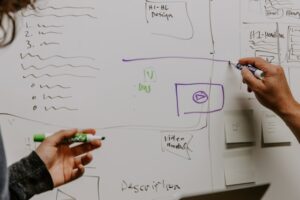
- String theory – Describe your story to a patient friend while using a white board. Show how each piece connects to the other with big lines. Have the beloved patient friend write things down, breaking out characters, A and B plots, etc. Buy them dinner, then get to writing.
- Quilt it – Write all the scenes you know you want for the story piece meal. Then outline it, putting the pieces together and figure out how to stitch the transitions between the scenes.
- Hit the Beats – Pick up one of the structure and beats sheets available everywhere and stretch the story over the composition and have a jam session writing.
The list goes on.
Today’s writing exercise is outlining.
“But I’m a pantser!” That is fine, you will outline AFTER you are done. This can help you figure out what you are missing in the story.
WRITING EXERCISE: For your present work-in-progress or your next one, create an outline for the story. This can be for any length and in any style – flash to five-book series.
READING EXERCISE: With a short story, outline the story. Drop in the comments below which short story you read (title and author and anthology or other location), and let us know what you discovered during the outline process.
My Attempt: Outline the followup to Roadtrip Teamup. The outline was really important to reacquaint myself with the material after six months away from the original creation.
I did not realize there were so many methods.