
Writing Exercise: The Twist, Make It Real

Photo by Martijn Baudoin on Unsplash

You have reached the center of your story, the mid-point of the second act, and need to add “the twist.” Somehow you need to change all the rules without changing the rules. If you have read a lot, you’ve been exposed to dozens of twists. Sometimes they work, sometimes they are pretentious, and sometimes they fail badly. What makes a good twist?

First and foremost, the twist cannot introduce anything new. It must follow rules and events previously established. To do otherwise is deux machinst (god in the machine), the writer forcing a change for the sake of change. The challenge is to have the event be cause and effect and still be a twist.

In life, twists are those moments where you imitate Homer of the Simpsons cartoon and go “duh”. Or say “that is so obvious, I wish I thought of that”. Recently I was admiring all the escaped balloons decorating a big box store ceiling. How do they get them down? Then I see two retail workers approach with another helium balloon covered with large clear tape in the little circles one does to attach a bow to a gift and the balloon tied to a very, very long string. They released the balloon to the ceiling until it touched another with the clear packing tape, and then pulled down both balloons. They continued until the ceiling was clear. Pure genius. Obvious, following established rules of gravity and adhesion, but a twist I never saw coming.

For the Ah-Ha video I’ve previously written about in blogs on June 2017 (Agency), November 2017 (POV), and May 2018 (Three-Acts), the heroine was pulled into the story. And when the panel police show up to hunt the intruder to the black and white world, the main characters run. The twist to escape is obvious when it happens, but you don’t see it until the hero does it because you are so absorbed in the chase. If one can be drawn into the comic world, one can rip out of it. The woman escapes, and the comic book character guards her exit.

Comedy is great for studying twists. This Bud LIght commercial starring Cedric the Entertainer captures a twist perfectly. Act one establishes the characters, hot chick and lucky guy, act two has the journey to get the beer and the joyous dance celebration, and act three has the resolution. The twist is delivered with the twist of the bottle. Again we get so absorbed in Cedric’s victory dance we forget he is holding the bottles until he sits back down on the couch. A second before the bottle opens, everything that went before plus the rules of carbonation runs through our head and we shout “no” just as the bottle sprays like a firehose into hot chick’s face.

Amhezer Bush, or their advertising department, is good at comedic twists. The ongoing football game between teams of horses with the spectator ranchers at the fence have established the world over the years. Combined with real-world vocabulary and situations translated from the football scene has made for many the perfect twist. From the streaker (all the animals are naked, but a recently sheared lamb is more naked than the rest) to the ranchers complaining about the zebras, in the body of both a referee and a real zebra, we have been surprised again and again by the twists that are no more than typical effect following cause of established rules.

One famous twist happens Aesop fable of the Snake and the Farmer. Used to happy endings, we expect the kindness of the farmer reviving the snake to be repaid. But in the end, the bitten and now poisoned farmer asks the snake why he returned kindness with cruelty: “you knew I was a snake”. So again, natural real-world cause-and-effect already established in the story creates the twist.

WRITING EXERCISE: For you present Work-In-Progress, review your twists. Do all follow rules you have already defined in the story?

READING EXERCISE: Think about a twist you did not like in a story you read. Why didn’t it work for you?

My Attempt: Flash: Magical Menace Mode Part Two – Special Meeting (2/1/2026) – The group of friends discover not everyone is seeing the same thing. Now they have to figure out who is seeing what.

Writing Exercise: Reintroduction

Photo by dole777 on Unsplash

Just ran across a wonderful post about why reintroducing yourself on your various social media is IMPORTANT. It isn’t about starting over, but about defining where you are now. If you have been on any app, or just plugging along on your own blog for decades, every now and again you need to say “hi” to the people you interact with. Let them know about changes, tell them how what you do on this social media works NOW (not the original intent), let them know if your life has changed, touch base with the people who haven’t been there since the beginning and let the people who haven’t been around in a while know what is happening.

Look at “What a Reintroduction Really Is (an Why It Matters More Than You Think) by Jon Marie Pearson (direct link is: https://www.genealogyandthesocialsphere.com/post/what-a-reintroduction-really-is-and-why-it-matters-more-than-you-think ) normally what she writes about is genealogy, but this particular post is very relevant to content creators: artists, writers, actors, etc. If you are on the world-wide-web, touch base here and then touch base with the people who follow you.

WRITING EXERCISE: On each of the platforms where you are active (or semi-active or mean to be reactive again), do a reintroduction post.

READING EXERCISE: If you follow creators on various platforms, cull your list to those that are still creating what you want to follow. If they have gone off the path you want to follow, choose new people to follow.

My attempt:

Well, let’s start with the blog. I’ve been blogging since November 11, 2012. The original blog was on a wordpress site – we all start there, don’t we? I activated erinpenn.com (Erin Penn’s Second Base – because, get it, it is my second attempt at a blog and at the time I was mostly interested in romance) sometime in late 2016 or early 2017 and moved everything over that was still relevant. Wow, over 8 year on this site and over 13 years overall.

Originally a little flashes and a little ranting, the blog as grown to a three-times-a-week posting in three groups of topics:

  1. Original Storytelling – These are a mix of Visual flashes (inspired by a picture), Text flashes (inspired by something read or heard), expansion on previous flashes, and flat out something I am writing.
  2. Book Reviews and Interacting with Books (A) Book reviews twice a month, one a solo book and one a series, curated from the 120 or so books I read annually. (If you want them ALL, befriend me over on on GoodReads (https://www.goodreads.com/author/show/4918831.Erin_Penn) or StoryGraph (https://app.thestorygraph.com/profile/erin_penn). (B) Bookquotes inspired by books I read that I have created and put on my TikTok account (https://www.tiktok.com/@erinpennbooks).  (C) And the big thing particular to me, Editing Rants. I edit books, which is heavily interactive, and there are…problems…with books in the process of becoming published.
  3. Learning stuff and crawling around on the web: (A) Writing Exercises, (B) Other Cool Blogs, (C) Geeking Science, (D) Cool pictures I have found on the web.
  4. On fifth weeks of Tuesday-Thursday I talk about the blog or art or encourage people to vote.

My social media footprint also includes the previously mentioned GoodRead and StoryGraph, plus TikTok. Also YouTube (https://www.youtube.com/@erinpenn7745) which right now is reprints of the TikTok, but might eventually hold other topics. It had started out with some editing rants and I would like to return to them. On Pinterest (https://www.pinterest.com/ErinPenn1/meme-created-by-erin-penn-i-made-these/), I post memes I have created – these are both bookquotes and writing encouragement. My Facebook author page (https://www.facebook.com/ErinPennBooks/) is just posts letting people know when I drop stuff on the blog.

I’m thinking hard about adding a Substack, which will mostly be reposts from the blog. I tried Pateron but that didn’t work well for me. 

Anyway, welcome. Glad you are here!

Writing Exercise: Just How Naked Are They

ID 372234793 | Bundled Up Person ©MichailPetrov | Dreamstime.com
The matching question to the white-box syndrome for scene dressing is “Just how naked are they?” for not dressing your characters. I ran across the following question in the Novel November forums this year:

Clothing Question: I’ve recently come to realize that I never describe any characters’ outfits in my writing – I think as an affect of my old effort to not find myself with the My Immortal old fanfic style of going into far too much unnecessary detail on clothes. But now I never mention it at all, so – when do you describe clothes? How do you know which scenes should have it?

For today’s Writing Exercise, we are going to dress a character, but not by describing what they are wearing like an infodump character description, but dropping the information as part of a scene. The full assignment is below in the normal area. Here is my response (mostly- I did add stuff for y’all):

Genre really drives this. How important are the clothes to the storytelling style?

  1. Romance, very much so: part of the fun is dressing up the characters, especially for balls and special events. Barbie doll time!
  2. Science Fiction, pretty often: special environments on distant worlds may require unique clothing solutions (like the Fermin suits of Dune).
  3. Fantasy, sometimes: For example, riding clothing for special animals – heat resistant for riding dragons. Or the shawls of the Wheel of Time indicating status. Nearly always a wizard’s outfit is described; similarly, a fighter’s weapons and what areas are protected by armor.
  4. Mystery, bits and hints: clues are given by what people are wearing, or the damage done to the clothes. “The left cuff had signs of wear where the right cuff did not, indicating they were left-handed. The stabs were clearly from a right-handed person, so the husband did not do it. But since the majority of people are right-handed, this did not narrow the field far. It only removed the most likely suspect.”
  5. Horror: Most of the time the clothes get described as the gore is splashed on it.
  6. Thriller: A great example is 24 (a television show of a season in 24 hours) – what happens when the character doesn’t have time to change clothes, what happens to their clothes during the action-adventure. The damage to the clothes reflects the physical and mental trauma of the character.

Basically clothes reflect the story, the storytelling, and give information about the character.

That being said, story length can impact the clothing description as much as the genre. For short stories, especially flashes, there is no room for clothing unless it is integral to the story (hence, my stories rarely have clothing description). At the other end of the spectrum, epic fantasy tomes pushing two hundred thousand words each (including appendixes) have all the room in the world and each character’s clothing is described in detail.

A final consideration is tropes which can also be fun: inappropriate clothes for activity; overdressed; climate teleport (winter to summer or summer to winter – a favorite of portal fantasies); clothes as a reward; arsenal attire (weapons are incorporated into the clothing rather than just hidden by the clothing); the doomed disguise; cloned clothing (two characters with the same clothing mistaken for each other); stuck in pajamas; grandma’s gift is * magical * (a cursed or blessed family heirloom received without explanation); the list goes on…

Other people also responded with good suggestions:

  1. “When I describe clothing while introducing a character, it’s more a style or vibe, than a list of clothing.” (An example would be: “The new guy wore black like no other color existed in the world.” Or “For lack of a better description, the teen dressed like a goth dunked in a rainbow. And her personality matched.”)
  2. Using clothes descriptions as characterization is a great idea! I can see it helping me think of when and where to describe it, as I’d be looking for character and plot building details rather than ‘oh i should probably say they aren’t naked’
  3. In one case, a person describe about their POV character reacting to other people’s clothing: My judgmental POV character has tons of thoughts about what people are wearing. The descriptions aren’t excessive, just quick descriptions like “argyle sweater”, “grey fedora”, or “floppy blue hat” alongside the snarky thought. (a lot more description cut out) tl;dr: Clothes are great, describe away because they can be used for characterization and plot relevance.

WRITING EXERCISE: Pick a genre and write a scene of about 500 words (does not have to be a complete story like a flash) where the clothing of a character is described but not the typical “They looked themself in the mirror to check their fit.” The clothing description needs to be in the style of the genre.

BONUS WRITING EXERCISE: Choose one of the clothing tropes above and write a flash (500 words or less) around the trope.

READING EXERCISE: In your present read, dissect the most recent chapter for clothing. Does it meet genre expectations? Is there anything there you would call a clothing trope? How does the clothing match the vibe of the story? How does the clothing match the character and helps define them?

My attempt: Long ago, when I was attempting to write Cons of Romance for Novel November, one of my characters was a cosplayer. Her clothing descriptions, while in costume, were involved. Blog: NaNo Day 5, And so it begins (11/5/2015).

Writing Exercise: Create a Collage

Photo by Gareth David on Unsplash

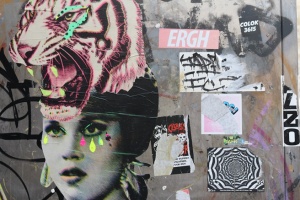
A picture is worth a thousand words, but can it create a story?

(<-Photo by Jon Tyson on Unsplash)

Collages come in a variety of shapes, sizes, and colors. They can be cut from books or photos or drawing. Cloth, sparkles, and pressed plants. Scrapbooking is one of the many presentation methods.

For both the reading and writing exercises, the challenge will be to make a collage. You can do it on a computer or just paper, glue, and anything else handy.

READING EXERCISE: Create a collage about your most recent book. Comment below what you aimed to share – the emotion of the book, the characters, the landscape, or something else entirely.

WRITING EXERCISE OPTIONS:

  1. Create a collage, then write a flash or scene about it. Share how the collage and flash interacted below.
  2. Create a collage about your present work in-progress. Share if the collage gave you new insight to your book, or why you think it didn’t add anything.
  3. Have a scrapbooking friend (or you child) create a collage for you for which you then write a flash or scene.