Choose a skill, any skill: website design, cleaning house, doctor, drawing, editing, cooking, writing, digging holes – this applies to it all. Respect people and their lifetime of skills.

Image acquired from the Internet Hive Mind via ifunny.com
Choose a skill, any skill: website design, cleaning house, doctor, drawing, editing, cooking, writing, digging holes – this applies to it all. Respect people and their lifetime of skills.
Image acquired from the Internet Hive Mind via ifunny.com
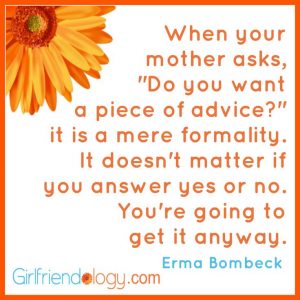
Quote by Erma Bombeck appearing on Girlfriendology.com
Voice
You always hear about how editors are looking for a distinctive “writer’s voice”, like they look for good hooks, characters, worldbuilding and plot. But no one can define “writer’s voice” – is it word choice, is it sentence structure, is it topic, is it genre? What is it?
Leah McClellan’s blog for Simple Writing on “Writer’s Voice: What it is and how to develop yours” ) tackles the subject head on.
WRITING EXERCISE: Now you have reviewed the article, do you know what feeds into your writer’s voice to make it unique? Sit down with at least six months of your writing and/or at least five different stories and see where the similarities lie. What are the strengths and weaknesses of your voice? Based on your analysis what should you write and what should you avoid?
READING EXERCISE: What type of voice draws you? Go to your bookshelves or electronic reading device. Find three authors from three different genres (if possible) which you have three books or more for (a series only counts as one book). If you have a full shelf devoted to them, even better. What do they have in common? How are they different from other writers in their genre?
MY WRITING EXAMPLE: So what do I think my voice is? Well people have wrote the following reviewing my book and editing my work:
From an editor “Nice. I’m really digging this character, and the closeness of the brothers. Even in such a short amount of time, I feel like I could easily meet these guys somewhere in my hometown. Very solid. “
From a different editor “Very real characters. “
From a reviewer “…easy to get to know the characters.”
From another reviewer “I felt that when I started reading HONESTLY, like wait, do I know these people? … The story and characters were easily understood and relatable right away,”
So I know my voice is about the characters. Not just that I write good or believable characters who make decisions in a logical manner, but characters which people know, that they relate to, that they swear they have met on the street. Nearly every review, critique, or feedback I receive from people focuses on this.
What are my weaknesses? Well, that would be action. I am just not action-oriented. I’ve worked hard on any romantic choreography and fight scenes I’ve written. Writing a thriller or a story primarily about a fighter would be an exercise in mediocrity and frustration. Any attempt at long-form urban fantasy ending with a big-bad fight scene will push my limits and writing style.
And I am not sure if this is a weakness, strength, or just integral to my voice, but I think in phrases, not sentences. (Which the sentence proves.) When writing my first draft, either everything is sentence fragments or unending run-on sentences. No real in-between for me. I go over everything a lot to create a more proper grammatical final product. Which makes the weakness of being bad at action from the selling-money-making standpoint depressing, because my natural wording works great for action-packed scenes. The thinking in phrases makes writing historical fiction difficult since their speaking structure is more formal and connected. When writing I go over the speaking dialogue a lot to make certain not everyone sounds like me.
Also in the language diction area, I have fun combining different ideas together. I love oxymorons and other clever word combinations. I try to avoid puns in writing as a kindness to my readers; also, a kindness to me – reading the pun through three drafts and three editing cycles and a print review gets old.
Now what happens when I line all my stories up? What are the similarities I see? Well, somehow family is always involved. In Honestly, Kassandra’s son drives nearly all of her decision-making and Troy’s father is integral to his life. In Cons of Romance the heroine has adopted family she will not turn her back on, and the hero makes several decisions based on his nearly grown children. Other stories have two brothers deal with aliens and the alien parents, a superhero rescuing his mother from a couple of villain (who are cousins of each other, not the superhero and his mom), a single mother raising her two boys, and a girl discovering being the sister to the anti-Christ carries a unique set of responsibilities.
Another similarity is humor. Most stories have mild humor. Not slapstick or laugh-out-loud funny jokes, but something a reader smiles at, recognizing life. One of my favorite paragraphs from Honestly is
Oh crap, did Dewayne wake the whole building? It was close to ten. No one was going to be happy with her. At least most of young kids were in bed, and if they were anything like her three-year-old, they would sleep through a nuclear bomb. So long as they didn’t need a glass of water.
I also tend to sneak in some learning to make the world bigger than just to story window a reader looks through. Pieces of information walk through on the street and you see them enter the window one side and leave by another. In Honestly, beer and amputations star in some scenes. Cons of Romance begins with the activity of a convention and part of the relationship between the main characters is developing as writers. I’ve had flashes ranging from how 3-D printing might affect our lives in the future and a Roman legion which disappeared in Ireland.
My themes tend to include love and hope. Love of family, sexual love, love of learning. Hope of tomorrow and it will most likely be better than today, and today was pretty good when you think about it. Even my Zombie apocalypse and attempts at horror stories are about hope, and that is saying something.
So what is my voice? Real-life believable characters, family, love, hope, humor, all written in short phrases with a unique turn of phrase on occasion. My “voice” would be perfect for humorist or hopeful literary fiction. Most of literary fiction is dreadfully downtrodden, so I don’t read it. Genre fiction, science fiction, fantasy, romance, and mystery, is about hope and I read genre by the crane lift. I guess if I continue writing someday someone might describe my voice as the “Emma Bombeck of genre fiction.” Or whomever is the family humorist of that time. Not a bad epithet.
Knowing my strengths and what fits my voice the best can help direct me in my writing, both artistically and business-wise. I should avoid historical romances, thriller, epic fantasy, and horror stories. Romantic urban fantasy is a strong contender, since humor, family and short phrasing all work well. Steampunk is questionable because of the flowery language of the historical setting; soft science fiction would work better than hard science fiction.
How about you? Do you agree with my assessment of myself? How about your analysis of your voice? Figuring out my voice took about five years after I started being serious about writing and I had been writing thirty-some years before that (oh, dear, did I just give away my age?). Anyway, no rush if you are still exploring your voice. Have fun writing.
MY READING EXAMPLE:
Dorothy Gilman – cozy mystery writer of Mrs. Pollifax and like stories – Humorous, but very real, old lady, becomes a spy much to the enjoyment and worry of her handlers.
Jim Bernheimer – science fiction, fantasy, and superhero – Sarcastic, but very real, characters solving situations they find themselves in.
Christopher Stasheff – soft science fiction and fantasy writer – Lots of family solving issues arising out of life.
George Dickson – His Child Cycle series, usually considered military sci-fi, contains unexpected romantic bits and centers on the family dynamics of the Dorsai. His fantasy books have sly humor.
Needless to say the writers I enjoy the most have the combination of sly humor, family, and problem-solving life situations I like writing about. … And, aha, that is what I need to add more to my voice to harden it. More problem-solving life situations. I think I need to bring that to my long-form. My best flashes and short stories all include problem-solving.
I hope you get as much out of this exercise as I did. Be sure to comment below.

Image courtesy of saphatthachat at FreeDigitalPhotos.net
One of the first marketing decisions you will make is naming yourself.
Your parents hopefully chose you a good name, one that fit both the baby in their arms when they picked it and the person you grew up to be. But that name might not work for writing for a number of reasons – it is not unique, it is too unique, it is difficult to spell or doesn’t follow normal spelling rules for names, or just doesn’t match the genre (for example, if Rainbow Rowell wrote Horror instead of Young Adult).
In the “not unique” category. I have a funny story. Elisa Hansen ended up releasing The Company of Death post-apolocylitic fantasy within half a year of Elisa Hansen releasing The Days of Reign post-apolocylptic fantasy; the books ended up being linked to one person on both Amazon and Goodreads although they were two different authors. My Elisa (and if you have been following my blog, you know which one is mine) had to fight a quick side battle shortly after the release of her new book to get everything straightened up. Both books and authors, no doubt, were in the pipeline a year or two before publication with the names decided long before then.
Another reason for choosing a different name includes writing in a genre not appreciated by employers in your day-job field. An author I edited years ago had this issue, writing erotica while working at a Presbyterian university. (They have since stopped working at the university and writing erotica.) So for various reasons, it might be time to come up with your writer’s name. Your pen name.
Where to go for inspiration? Many people tap into their middle names and the names of their ancestors, especially their mom’s maiden name. Others are already famous with an online moniker for their blog, vlog, or fanfic writing and want to bring those audiences across to their new writing career. Still others use nicknames or favorite roleplaying characters. Having a name you will respond to at a convention when someone shouts it across the hall is great.
I should mention most women choose to use pen names. The primary reason is safety – people can’t causally google you back to your house. Some jerks might, but the average lazy asshole won’t. Nearly equal in priority is job security – many women work jobs where they will be fired for doing something outside of the normal. Similarly many men will write under pen names if they work in a field with tenure until they pass the years-in-service mark. Another reason, I think, why women are more likely to make the change is women were brought up to expect to change their names and men were not, so females don’t have a built-in aversion to the option. The end effect was when I asked a table of 20 authors with about equal numbers of men and women, all but one woman had a pen name and all but one man used his real name. This group was a mix of traditionally published, small press, and indie (self-published) authors.
Once you have decided to go with your birth name, or a variation of names you already use, or an entirely new name, you should test it out. At the end of the day, this will be your Brand. Market testing is a must.
First investigate to make sure it is unique enough. Run it through Amazon. Go to the book or kindle section and search on the name and see what comes back. Go to Goodreads or other review sites you interact with and see what happens which using the name in author searches. Next Google it, both by its self and with the word “author” attached – like “Erin Penn Author” – and see what comes back.
All good? No major hits? Great!
Now test market it. Bounce the name off of friends and family who you trust with the writer-self. What works and what doesn’t.
Finally, search on it as a dot-com (example: erinpenn.com). Does it come back already owned?
All that worked out well? Sit on it a bit. Have your friends call you by that name for a little while. Mix and match it with various stories you have written as the by-line. Print it off and put it on the wall for at least month, the one in the bathroom which you stare at while on the toilet. Do you still like it?
If so, put a ring on it. Buy the URL for the website so no one else can take it, set up a Facebook page, get a Goodreads account, and look at the other social media you might want to participate in.
Then start marketing yourself with the newly named (or reaffirmed) you.
WRITING EXERCISE: Play at choosing possible names to publish under. Choose two authors you like and go through the above process. How many places and ways were you able to find them? Did you find an Amazon author page, Goodreads page, Facebook page, Twitter account, Instagram, Linked-In, webpage, Patreon, etc? What is missing, and why do you think it is missing? (Remember each social media option is one more time suck the author is not writing.) Run through the same process with your given name and a pen name you’ve been toying with.
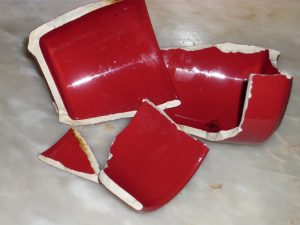
Image acquired from the Interweb
When it just isn’t good enough
Just finished up on the Red Mug series of flashes; last one will post this Sunday. The first flash was the simple, normal story based on the picture. The followups all basically gelled the same day after I got the Red Mug on electronic paper. Normally I wouldn’t have put them down, but tax season had some downtime and I am practicing writing longer. Therefore I took an hour here and there to flesh things out.
Why would I normally not have continued the story? Well, it’s kind-of boring. The story is straightforward, the characters normal, and things just happen in normal order. The humor isn’t strong, and the storyline has huge jumps in time. It is not marketable as-is.
Many of my flashes have continued down paths during commutes or long drives, still more laying awake in bed or mowing the lawn. Most never get written because they don’t work.
But 5,000 words! Really, really written. All complete and bow-tied. (bouncing writer side)
That’s nice. (droll editor side)
As a slush reader, I have had to reject works of 100 K or more and feel absolutely horrible doing so, but not marketable is not marketable. Red Mug’s (and related flashes) is boring at the wide-range appeal level, has little description, and is clearly flash – needing (desperately) to expand out description, flesh out characters, and add action.
How could I workshop this story to make it into something that is marketable? (Please note, I don’t think the combined stories are worth this effort – but the skill set could be useful when looking at other stories.)
First off, right now it is a contemporary romance. What thread are in the story already available for expansion?
Third person omniscient isn’t working well (yes, it does slip on occasion – after all, first draft flash – but does mostly stick to the omniscient). As a romance, we need to dig down into the emotional development – and that means getting inside the characters’ heads more. Changing the story to either first person Jeffrey or third-person close, switching between Jeffrey and Amanda would be good. Once closer in, we have a few paths of additional development available.
Now where are cool bits to play with? Jeffrey and Amanda are a mixed race couple, they also have a significant age difference, family-style difference, and a work environment issue. Exploring how Jeffrey feels about dating a white person, and how his army family reacts is an option. Running into how Jeffrey’s mid-twenties and Amanda’s early forties plays out could be fun too. The long-distance relationship adds another aspect open to expansion. And how about how Amanda’s work is impacted by her pregnancy – both the reactions of her European counterparts and her American superiors? All of these could add thousands of words and take this from a simple story to a more complicated character development arc. Oh, and focusing on why Amanda doesn’t want love could really take the story to the next level.
Plus all of these additional bits could fill in the time jump issues between the already crafted scenes.
Still, I am better at writing genre fiction than straight contemporary. What subgenres could be added to the romance? These are more worldbuilding choices than character development or plot points. Sticking them will double description quickly and add plenty of action.
I could kick up the erotica aspect a notch or two; even the opening flash doesn’t delve deeply. At the moment the story is more “closed door” then bouncing bed.
The story could be changed to a science fiction – where the two characters work for an ore mining company and she operates the Orts Cloud while Jeffrey works in the traditional headquarters in the asteroid belt – exploring the long distant relationship against this background would make things more interesting. Location, location, location.
Another option is play with the “you are a god” aspect, changing this to an urban fantasy with Jeffrey discovering he actually is related to a god or gaining a god’s powers through no fault of his own. Maybe have Amanda gain Slavic god-like powers to his American-based aspects.
A thriller could work too – make this into a Die-Hard-style story; Jeffrey does come from an army family, though he is a nerd. During the crawl through the duct system or up an elevator shaft, the readers get exposed to Jeffrey’s and Amanda’s relationship as it develops over time. I’ll be able to keep all the already written scenes, and I don’t have to worry about the time jumps as he (or she) reminisces while going to rescue the family. Quick skeleton fix.
Maybe a mystery, with something happening at the company – people dying, getting fired, moving people around to different locations, a break-in – and have the pair solve it while falling in love.
The story could even be mixed and matched – maybe one or both of them gaining powers during the thriller of Die Hard-style, all the while, of course, never forgetting the story is actual a romance and the main plot is Amanda releasing her fear of falling in love – from Jeffrey’s first person point-of-view (POV).
The story as-is isn’t complicated enough to warrant real publication. But by adding a few “non-standard” pieces to the work, weaving in a secondary emotional development plot, and tacking on an action piece, suddenly the story becomes enough.
Am I going to do this? Nah, that was never “their” story. But they are here in my universe world, and they have a fully developed backstory, so they may show up in another tale as supporting characters where I don’t want just a generic couple with a couple of kids. These two already have had the breath of life breathed on their clay. And that is cool too.
The complete Red Mug series:
3/17/19 – Red Mug
3/24/19 – Green Cheeks
3/31/19 – Copenhagen Blue
4/7/19 – Clear Glass
4/14/19 – Gold Bands

Image courtesy of winnond at FreeDigitalPhotos.net
The magic advice so often given: Write what you know. And its immediate corollary: Write what you love.
Of course there is always just the simple all hopeful authors need: Write.
Blake Charlton provided a new one to the mix: Write what scares you.
Think on that. We are not just talking horror, but all genres. Write what scares you. This is “Write what you know,” because what you know is emotions – the need to get into the reader’s head and make them feel with their heart. Exploring what scares you can do that. Scared of demagoguery, or racism, or trusting people only to be betrayed, or a big rock falling out of the sky and changing everything? Bring it to the keyboard.
This is part of the human condition. Don’t use fear for fear’s sake but face it, explore it, and figure out how to conquer it or live with it. One of my recent flashes, Thebe Loses Day Job, lightly touches on the fear we all have in exploring something new taking away what we know. Will the new job provide enough income to pay the bills? What will happen if the new job doesn’t work out? Yes, these fears are presented within an erotica storyline, but that is part of what makes people enter the story. Something just about moist, mushy, and manic is okay. But something which pounds a pain center while being moist, takes things to the next level.
Write what scares you.
See the whole blog here (and be sure to look at the comments): http://www.magicalwords.net/specialgueststars/todays-special-guest-blake-charlton/