Writing Exercise: Belief Coins

Image courtesy of Danilo Rizzuti at FreeDigitalPhotos.net

In May, I ranted about Belief Coins, how there is only so much suspension of belief with a reader. Some of the breaks from reality are “discounted” because of the tropes of the genre: happily ever after in romance, heroic hero of thrillers, and solvable mysteries in the cozies. But because a trope is accepted in one genre does not mean a writer gets to hand wave and have it work in a different genre. Insta-love can appear in science fiction, but there had better be a reason for it, such as genetic programming predisposition supported by the psychic hive-mind of the humans colonists created by integration into the planet’s biosphere. Yes, that long explanation carries a whole bunch of hand-waving … but it builds a frame to explain the insta-love trope which isn’t a free coin.

Another example is Superman. I wrote about my problems with a Superman movie a while ago – where I was thrown out of the story because of disbelief; my ability to believe the impossible had been destroyed because of my inability to believe the improbable. Between normals breathing underwater for screaming, established worldbuilding thrown out the window, and character development being ignored, The Man of Steel did not buy a single Belief Coin needed to support the magic of the superhero trope.

So how can a writer buy Belief Coins? By making as much of the rest of the story grounded in reality. A ghost story? Have the main character have groceries go bad when frightened away by the apparitions. My erotic-romance Honestly novella has insta-sex, but balances that with the parent controlling her screams so not to wake her child. Superman, impossible alien, was raised by a childless couple in Kansas. For every unreal action, follow it by the very real to anchor it.

WRITING EXERCISE: Where are you spending the Belief Coins in your work-in-progress (WIP)? How many of them are genre-trope related? Count them up. And where do you have items to buy those coins – what grounds your book into reality? Do you have at least one “buy” before each “spend”. Do you have enough buys?

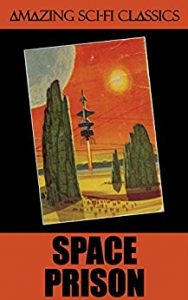
Book Review: Space Prison

Book Cover from Amazon

Space Prison by Tom Godwin

BOOK BLURB ON AMAZON

AFTER TWO CENTURIES….The sound came swiftly nearer, rising in pitch and swelling in volume. Then it broke through the clouds, tall and black and beautifully deadly—the Gern battle cruiser, come to seek them out and destroy them. Humbolt dropped inside the stockade, exulting. For two hundred years his people had been waiting for the chance to fight the mighty Gern Empire … with bows and arrows against blasters and bombs!


MY REVIEW

For a long while, after I got old enough to read big words for myself, my mother would pass books she thought were good to me – Robert Heinlein’s Podkayne of Mars, for example. Eventually she approved me going into the collection directly and I worked my way through her shelves which included this gem from HER college years – first published in 1958. A book she loved enough to transport from one end of the country to another through at least four different moves.

I loved it too. Massive worldbuilding, MacGyvering, action. I reread it again and again. Now a group of sci-fi classic lovers have uploaded the book for free viewing on Kindle.

Note for the formatting – if you get the free one – it’s free, the page numbers are included in the text and there are a couple-few transcription issues. The overall result is fine though – especially free for a book which only had a 5,000 first run.

I reread the book in 2017, and the worldbuilding still remains amazing. The ecology of Ragnarok from its climate to its animals is breathtaking. Originally titled “The Survivors”, this book makes you feel the hell planet a group of colonists are dumped on by their enemies. The MacGyvering to survive and then thrive remains really cool – gems always have worth. 

Downside for modern times – no female characters of note. The women and children are a background group – dying but essential to survival. Mr. Godwin does show them working along side the men, doing the same sacrifices and more; much more, there are no old child-bearing women. On a 1.5 gravity world where reproduction is as essential as exploration, the explorers will be limited to the men – and those are the ones Mr. Godwin follows. The women stay home and die in childbirth. Not the exciting part of the story for the 1950’s readers. The author never demeans women or says they can’t do what the men can do, but because they can do something the men cannot do they are not a part of the story.

The story follows the colonists and their descendants for 200 years.

The main lacking in this story is character attachment, you sympathize with the characters but don’t empathize. Consider how many people die, not feeling each death personally is a plus. The initial two nights after the colonists arrival on the hell world makes George R.R. Martin’s Red Wedding look sedate.

Still a great worldbuilding story even after 60 years; definitely worth the space on your kindle if you like classic sci-fi.

ADDITIONAL NOTE: Eric Flint, in conjunction with Baen Books, has collected many of Tom Godwin’s works into “The Cold Equations” (published 2003), including The Survivors/Space Prison and his famous short story “The Cold Equations”. While not free, like kindle edition linked above, it’s available in paperback so you can have it for your shelves.

SECOND ADDITIONAL NOTE: Side amusement, the cover of Cold Equations is for “Space Prison” story and has a person standing holding a crossbow and unicorn goggles (should be black), with a mocker on the shoulder and two prowlers – but, typical of early sci-fi, the person is a scantily garbed woman.

THIRD ADDITIONAL NOTE: Mr. Godwin did a follow-up to this story. Do not read it. Think Highlander number 2 and hopefully it will eventually disappear off the interwebs.

Editing Rant: The Neighbors

Image courtesy of digitalart at FreeDigitalPhotos.net

Previous in the story, the character talks about paying homeowner fees, before the scene where he becomes “sunlight adverse”. A temporary solution following his new condition’s onset is to put cardboard up on all the windows. He gets no reaction from the HOA even though the temporary solution ends up fairly permanent for the three weeks of the story.

Modern contemporary story. Do you have a problem with this, because I don’t believe this would happen in the real world.

The neighbors. Today I was stopped by a neighbor while I picked up my mail. This is a fairly consistent activity in my neighborhood. People are nosy, especially where they live.

If you are building a world closely related to the real world and want people to believe it, remember the neighbors.

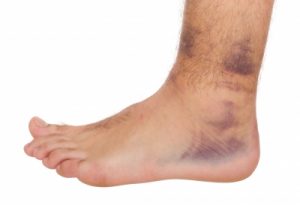
Editing Rant: Bruised and Battered

Image courtesy of artur84 at FreeDigitalPhotos.net

I get it. Really I do. Action means characters get into fights. Thriller, mystery, urban fantasy, sword & sorcery – fist-to-cuffs and knife fights, sword clangs and gunshots.

But what makes all these so thrilling is the threat of injury. Not necessarily death; even simple disablement could mean the difference between finding the treasure or the enemy staying two steps ahead.

For the threat of injury to carry weight, the consequences of any injury need to be real and continuous. If a normal person gets a shiner, it takes a couple days for the swelling to go down. A healthy teenager or twenty-something will have a visible bruise for ten days to two weeks; while a sixty-year old, slow to heal and with thinner skin providing more visible bruising, may take a couple months. If writing a fantasy, such  as a superhero or werewolf, healing will be faster and pain is the biggest threat.

This editing rant is based on a book I read (not edited), published by a big house for a named author. A cyber-thriller with “normal” human beings who were exceptional hackers.

I’m going to call them “continuity” issues.

The main point-of-view character gets beat up, a lot. Before his arrest, some people who he had hacked found him and registered their discontent. He barely pulled himself home with a loose tooth, split lip, likely black eye (swelling), and BROKEN ribs (he heard the snap). He arrives home to find the feds, who taser him. Tasering in the real world makes all your muscles contract, which wouldn’t help his injuries but wouldn’t make them noticeably worse. Next time we see the POV, the agent-in-charge only notices the split lip. Please note BRUISED ribs take three to six weeks to heal in healthy adults, BROKEN ribs more so. The book narration reports no medical evaluations or intervention.

When he meets the rest of the hackers, no one thinks anything of his injuries even though they all sleep in the same area. Have you ever gotten out of bed with bruised ribs? I have. Unfun.

How long has passed between the first fight and him getting stuck in the dorm room? No clue, this “thriller” has no ticking clock, and therefore no thriller ride. Best I could figure is about a week, likely less.

The second day in the secret hacker prison/”work-for-us-and-we-erase-stuff” location, the POV gets tasered again and, the same day, a guard “pistons a fist into his side”. Even if the ribs were bruised and on the other side, I seriously doubt a geek-hacker would “launch himself upwards” swinging fists. Getting punched that hard hurts, knocks breath from the body. Doing it in a body area undergoing healing, opposite side (no side specified for either injury so let’s be generous and say opposite side) just means both sides are non-functional.

The POV continues to be a punching bag throughout the story, but I gave up at 25% of the book because the injuries of this normal human being had no impact on his life or the story.

I understand. Someone getting beating bloody in a thriller is a wonderful image. But obey the rules of the world. If you have normal people, SHOW the consequences of the injuries, CONTINUE the consequences of the injuries.

Editing Rant: How Injuries Work Series
1. Bruised and Battered (8/14/2018)
2. Gonna Leave a Bruise (4/13/2021)
3. The Burn (8/13/2024)

Other Cool Blogs: Fantasy Faction July 11, 2017

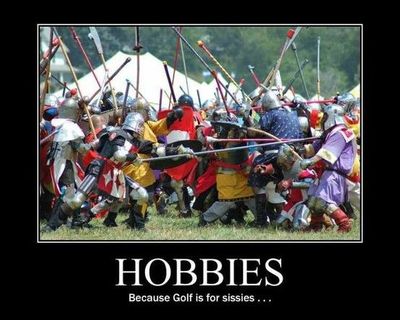
Pennsic War starts today. At 9 am Eastern Time, the flood gates open and I will be standing in the breach, my first year as a “general”. I am in charge of troll. If you want to check-in, you go through me and my staff. (Needless to say, I have prepped this posting in advance.)

Worldbuilding, whether creating a world through writing or through digging dirt and setting up tents, needs to be done on multiple layers. For Pennsic, it isn’t enough to buy a modern tent and show up. You need garb and money, food and equipment. And once everything is set up, learning, fighting, friends, and stories. Layers upon layers.

When writing about warcraft, the layers are also needed, especially in the fantasy and science fiction setting. Historic game-changers for war have included the spear, the bow, the stirrup, gunpowder, tanks, and missiles. Each modified strategy and logistics. Fog and rain negates long-distance weaponry. Mud negates heavy objects like horses and tanks. High ground, low ground. Water, food, heat, cold, distance, troops. Each impact a battle.

What happens when magic is added to the mix? How would scientific advancements adjust tactics? Could plain-old weather and landscape negate the fantastic science and magic? What worldbuilding is needed to make a magical world at war be real?

Fantasy Faction explores this in “Worlds within Worlds – Part Three: Magic Warfare“. Having lived through and in a (reenacted) medieval mud and war environment, I have some different ideas than are presented here. No mention is made of fortifications, and the magical enhancements to said fortifications. I seriously doubt the wizards would be the group leaders, more like specialists within a group, since they will be too busy casting to keep track of the battle around them. The healers in the backlines would be major targets, like the supply depots are today, though hard to reach.

And mud. Mud is a thing. I am so hoping this year will be a dry year for Pennsic. Though dust is also a thing. Dust and camp fire smog. The haze burns the eyes. So a little rain once every other day would be nice. But even a little rain means mud when you got 5,000 warriors on a field. Basically war is mud and dust no matter what and I will be living in it for three weeks. Checking in other crazy people for this worldbuilding of war exercise.

Read the article to see how layers can be added through worldbuilding: http://fantasy-faction.com/2017/worlds-within-worlds-part-two-magic-warfare


DAY-OF NOTE – It is a wet Pennsic … rain every day for three weeks is predicted. Scattered showers so around 10-20 minutes per day. Result will mean not as much dust … lots more mud. Clay mud resulting in “slick” in the hard pack areas; deep, boot-sucking fens in the grassy areas.


WRITING EXERCISE: If you are writing a fantasy or science fiction story, think about one of the defining magics/scientific advances of your story. Apply it to a battle situation, guerrilla or traditional. Where would changes occur: supply lines, medical units, food, mobility, communication, hand-to-hand, and distance? Take one of the changes and expand on how it would affect an officer, a grunt, and a civilian who lives near the battlefield. 

***

A laser pistol. The beam goes until it hits something, then burns a hole – instantly vaporizing the material. 

“until it hits something” – Missing is bad. The beam continues until it disperses. At this time we have home tools which can measure as far as 660 feet, about a tenth of a mile. Let’s say the laser pistol is has an effective TIGHT range of 0.1 miles and disbursement stops somewhere around triple that. 

The radius of the hole is very limited, which means it needs to hit a particular spot on a human being to kill them (sniper) or go right through them. Sniper accuracy in battle is pretty bad, so it needs to be a borer – go through about a foot of human flesh.

Not a weapon one would like to use on a spaceship or in close-combat where the troops are mixed up. 

The upside medically is the laser self-cauterizes resulting in less bleed-outs; if the wound isn’t fatal, the injured party can keep fighting. The downside medically is the self-cauterization means that wound is basically permanent. Dead flesh, whatever is left after the vaporization, all the way through. The medical staff would need to remove the burned, destroyed flesh as part of the treatment, significantly increasing the tissue damage.

First thing people are going to do is create an armor to deflect the damage. Armor adds heat and weight to soldiers. Face grills will be required, because even diffuse lasers will be nasty to the eyes at three-tenths of a mile, which will restrict vision – a requirement on the battlefield. Likely a full helmet will result, restricting breathing and being very nasty for when sick.

The grunt would prefer a splatter weapon with a shorter range, three-tenths of a mile is too big. Too much a chance of friendly fire downrange. The armor and full helmet will annoy and be horrific in hot environments, but the grunt will wear it anyway because getting hit pretty much mean limb or organ loss since medical ain’t got nothing to fix after its been vaporized. Thank the skynet for cyberparts, right?

Officers will train snipers and also need to set protection against being sniped.

The civilian will need to get out of the way. In urban warfare the range of the weapons is five blocks. I can’t even see that far. No hiding in the house from a weapon good at penetrating a foot of material. And out in open fields, lie down in a rut like a tornado is about to go over.

On Sunday, look for the flash “Wounds”, inspired by this writing exercise.