Other Cool Blogs: Tor Feb/Mar 2017

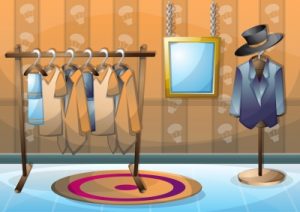
Image courtesy of toonsteb at FreeDigitalPhotos.net

Costume and Story

Last year I attended a panel on costume in writing. Being one of two audience members, matching the two speakers, we had a lively round-robin discussion. (Sometimes smaller is better.) The panelists were steampunk writers; few other genres are as clothing driven as steampunk. But we ranged from the uniforms of the David Weber‘s science-fiction Manitcore Navy to the shawls of Robert Jordan‘s fantasy used to represent Ajah alliances. Clothing provides meaning, layering. World history. 

And sometimes clothing defines the character.

Tor, publisher of science fiction and fantasy, asks their authors to provide posts on occasion for their website. Sarah Gailey provided one on Storytelling through Costume. She stuck with the visual mediums of television and movies, but the ideas are sound for writing as well.

Iconic SFF Costumes: Storytelling through Costumes

The Allure of the Red Dress

The Woman in White

The Badass Black Tank Top Walks the Line 

While I am well familiar with the Red Dress and the Woman in White tropes, I hadn’t run into the Black Tank Top before. Very illuminating on finding a balance between the strong woman and the vulnerable woman, a person of competence and an object of objectification.

WRITING EXERCISE: Define a character through his or her costume.

***

In Honestly, during Chapter Four, Kassandra has the following observation of Troy:

Today, Troy had on his normal button down long sleeve shirt with collar paired with a set of slacks. Only the top button was unbuttoned, transforming a nerd look into sleek male. Was he brown all over, or did his father’s inheritance make him paler where the sun doesn’t shine? A golden yellow shirt and the forest green pants prevented her from finding out immediately. How he would tolerate what she was coming to think as his uniform once summer truly began, she had no idea. May first just past and the temperatures outside were peaking in the high eighties every day.

Troy’s formality shows through in his clothing choices, as well as the wish to hide the scars on his body and soul, but a hint of opening in his armor shows with the single button unbuttoned. As the story progresses, less of his body is covered and his clothing gets more informal but never completely informal or poorly maintained (wrinkled or torn).

Note the long clothing description did not occur until well into the story (chapter four), when the reader is committed to the story. The scene served two purposes: character development for Troy and hint at the emotional evolution of Kassandra who both admired him sexually and delved deeper into who he was as a person.

Editing Rant: Choose a System

Image courtesy of pinkomelet at FreeDigitalPhotos.net

Bopping along editing a science fiction piece. Good, good. Lovely choice of the metric system. Then I read “the whole nine yards”, buildings are referred to in square footage, etc.

Know the measuring system you are using. While a rare holdout and phrase may occur, such as “stones” as a weight unit in the English “pound” system, these holdouts are rare for a reason. Especially thousands of years in the science-fiction future or in alternate universes of fantasy. Switching systems throws people out of the world you are creating.

Measuring systems are part of the worldbuilding. Don’t crumble the foundations before even starting.

Writing Exercise: Black or White Hat

Acquired from the Internet Hive Mind

ConGregate 2017 could have devoted a track to the Hero-Villain Spectrum. Panels included  “Bad is the New Good”, “Heroes, Anti-Heroes and Villains”, and “The Dichotomy Between Good and Evil”. With the Suicide Squad making villains into heroes, and Marvel’s Civil War and DC’s Batman vs. Superman where the heroes battle each other, keeping track of good and bad is no longer who is wearing the white hat.

In a world where we question our politicians, our parents, our police protectors, and our own morality, a simple black and white doesn’t apply. Writers get called out for the perfect good character (Mary Sues) or uncompromising villains (Snidely Whiplash); everyone is expected to have some shade of gray applied. Even when a person in real life appears to be pure, an investigation has to happen to find that one piece of dirt in their lives. Mr. Rogers can’t be real (*). Likewise everyone knows villains have a good, logical reason for their bad actions – within their own minds they are the hero of their life story. No one could possible look into the mirror and go, the black hat is the way to go. And even Hannibal Lecter has to have some good traits.

And yet … maybe not. Maybe this drive for everyone to be gray is as unreal as everything being black and white.

It certainly limits writing. Why does the bad guy have to be sympathetic? Why does the good guy have to be flawed? The Anti-Hero and Anti-Villain are becoming as worn out as the White Hat Hero and the Black Hat Villain.

My take-away from the convention is the Brightness Spectrum. Bright Hero/White Hat Hero; Dark Hero; Anti Hero; Anti Villain;  Gray Villain; Black Villain/Black Hat Villain. What does each of these people represent?

Bright Hero/The White Hat – Good hero. Righteous and true. Always acts above the board. Lives by morality. Examples: Superman, Captain America, the Lone Ranger, Hermione Grange, Rory Williams from the new Doctor Who series.

Dark Hero – Pushes the envelope but stays on the side of right and good. Lives by ethics and rules. Examples: Batman, Iron Man, Matt Smith’s the Doctor.

Anti-Hero – Straddles the line of good and evil. Breaks the law as needed. But at the end of the day wants the good to survive – the most people or the best government. Knows about morality, but those morals and their ethics may be traded in to help others. Often acts in a manner which would be consider bad if we weren’t on their side. Still they are the protagonist of the story, the one we are rooting for. Examples: Punisher, Captain Jack Sparrow, Oscar the Grouch.

Anti-Villain – Straddles the line of good and evil. Basically everything an Anti-Hero is, but we are not rooting for them. They are acting against the protagonist we are sympathetic with. But the fact is, if they were not acting against our protagonist we would be supporting their actions. Examples: The government in the Firefly television show, Magneto, Rob Pierre of the Honor Harrington series, Professor Snape.

Gray Villain – Has ethics, rules to live by which will not be crossed. Knows the actions are selfish or even bad, but kind-of likes seeing fear in people’s eyes so not going to stop doing bad – though will even act on the side of good on occasion. Examples: Draco Malfoy, Harley Quinn, Misty of the new Doctor Who series, River Song of the new Doctor Who series.

Black Hat Villain – Owns that Black Hat. Unrepentant in the villainy. Examples: Lord Voldemort, the Master of the Doctor Who series – all incarnations, Emperor Palpatine.

(*) – Reality check, yes, yes Mr. Rogers was really that good. He is a true Bright Hero.

WRITING EXERCISE: Choose two from the spectrum who must act together to accomplish something. Write a flash of at least 300 words.

READING EXERCISE: For your most recent read, where are the protagonist and the antagonist on the spectrum. If you were the government/legal system, where would you consider the characters to have fallen? If there is a difference, how did the author create a “hero” against “law”?

Editing Rant: God In The Machine

Image courtesy of cooldesign at FreeDigitalPhotos.net

Following DragonCon this year, my publishing house, Falstaff, moved me from line editor to content editor. Not more challenging or less challenging, just different. Now I can make the content corrections I’ve been wanting to. Now I need to really watch out about stepping on a writer’s voice.

One of the things I can address in the content editing state is “Deus ex machina” or “God in the Machine”. Ever been reading a book when something happens having no connection with the story, but saves everything – like the eagles in Tolkin’s Lord of the Ring trilogy or when the hand of God literally appears in King’s The Stand, setting off the nuclear warhead? A writer can push and push and push the limit until they have no idea how to get back. Until they just fix things the way they want them outside the narrative.

Readers read to see how things can be solved, not how the writer can ignore the entire worldbuilding process. As a content editor, I may be able to save a book from god-in-the-machine.

One book I ran into clearly had the writer wanting to hit certain scenes and no logical connection between them. The heroine gets motion sick when spun around by the hero, but then goes on a carousal ride. Another motion sick attack has her in the hero’s trailer to recover and then on the back of his motorcycle to ride home after a single drink of water for recovery. At home, she immediately gets drunk. Because I know I want to get drunk after being motion sick, the two feelings are not related at all (sarcasm font implied).

And the worst offender of the writer just putting things in with no real attachment to the narrative, or a toe dipped in the reality pool: The hero comes across her drunk, and she immediately passes out. After carrying her back to her bedroom, she wakes up hangover free and totally sober so the hero isn’t taking advantage of her when they kiss.

Characters exist in the world. They need to be believable within the world. Reaction follows action. Consistency of character, action, and objects are required. Fixing things by just inserting what the plot point requires without integrating the things into the plot story arch is wrong.

Writing Exercise: Generic Worldbuilding

Image acquired from Qwertee.com

Earlier this month I ranted about Generic Worldbuilding. It’s easy to say “fix it,” but how? The how is “writer magic,” and like all “magic” we are talking skill – and skills take practice. Time for a writing exercise!

WRITING EXERCISE: Picture a generic scene (sci-fi, fantasy, or subgenre thereof) with two people/beings traveling from one location to another.

Once you have it in mind, go back and think how to make the world the next level.

For example: Do the vampires and werewolves get along – does the pack mentality work well in cities while the loner vampires get drawn to the rural communities? Does the FTL travel make whales randomly appear above planets with potted plants? Why do the longer-lived species tolerate the new human upstarts? How does the hero’s personality change how they approach their superpower, say a construction worker vs. a computer geek?

Write the scene. You may need to rewrite the scene to push it as far as you can. Adding, remove, change or replace words without changing the basic premise of two people traveling. 

Please post your results below. Remember, don’t read other people’s version until you do your own.

READING EXERCISE: Watch a TV show, attend a play or movie, or read a book. What are the “generic” aspects of the genre presented? How did the storyteller add a layer of worldbuilding?

***

My generic trip has a generic cranky dwarf with a generic snooty magic user and their usual hate of each other.

Rating: Mature (Language)

Title: Dwarf and the Wizard

Typical of traveling with wizards, the car stalled.

“Can’t you pull in that mystic aura of yours a little bit?” I snapped as I pulled my trusty Honda onto the shoulder while other cars sped by on the curving interstate.

He sneered. “We can’t all be dwarves and technologically gifted.”

“We can’t all be assholes, either.” I mutter under my breath, knowing his human ears couldn’t hear me talking into my beard. Why the Masters of the Mine needed this particular mage was below my dig level, but if this keeps up I will double my price next retrieval I get assigned. Very few dwarves tolerate going above ground; I’m one of the cursed few without agoraphobia, so I got sent out of the mines a lot.

Not all humans are bad, mind you. But this one wanted to epitomize everything dwarves hate in magic-users. I grumbled as I opened the door, then hopped down onto the asphalt. I preferred concrete; the stones in the dust solution could still be talked to. Asphalt was as slick and nasty as the wizard I was transporting.

I walked to the front of the hatchback, dragging a hand over the steel body trying to see deeper into the metal parts before opening the hood. I had rebuilt the engine myself on the 1978 Civic; my grumbled turned into a growl when I saw the damage the mage had done on my water-cooled engine after I propped the hood open. He hadn’t attempted to control any of his bleedoff. I’ve transported more than one magic-user and knew I was in for a spark plug change and electrical system review after the short three-hundred-mile trip, but this mess!

I don’t have a temper, not like the Redbeard clan or the Twisted Picks, but I stalked to the passenger side and pulled the skinny-ass twinkle finger out of my vehicle and tossed him onto the narrow grassy berm.

“How dare you!” we yelled in unison. His face flushed as his hand started to twist and words beyond words spewed from the faker’s mouth.

“Don’t.” I growled, pointing up. We had been going through a cutout in the mountains, one of those areas with the signs which say “Watch out for falling rocks.” Humans inflicted a scar on the rocks which begged me for healing. One simple flick of thought would release an avalanche.

The knob bobbed in his hairless throat as he swallowed, lowering his hands.

“That’s better.” I approached my charge. “Now, here is how it is going to work. You are going to sit right there and mediate. Pull all your shit in and tuck it in the little box inside your puny brain I know all your slaggers have. You got an hour because that is how long it’s going to take me to fix what your inconsiderate, STUPID actions have done to the car. Once the car is fixed, you will get in and not.say.another.word. to me. Ever.”

I stared him in the eyes like he was a lightless cave. “Nod if you understand.”

(512 words – first publication 7/25/2017)