Geeking Science: Fried Chicken

In March I mentioned if you ever wanted to buy me food, sushi or fried chicken would be best. I should specify good fried chicken, with the meat on the bone. Pieces parts mashed into a “tender” or a “nugget” is not fried chicken. And I am not talking the Tabasco-sauce flavored Bojangles or the overhyped, overspiced Kentucky Fried Chicken. Supermarket versions are dried-out failures dreaming of being true fried chicken but ended up in a nightmare of heat lamps. Church’s and Bush’s are tolerable to very good depending on the day, cook, and my desperation.

If you are in Charlotte, the peanut-oil cooked Price’s Chicken Coop is the best.

I could wax poetic about fried chicken, or you can just listen to Queen’s One Vision – “One flesh, one bone, one true religion.” Hmmm. Fried Chicken.

So why does Price beat out KFC and Bo-time? The perfect crunch.

The perfect cook too. The wonderful nutty, buttery, taste of fat-chained polymers after deep frying. Price’s has it down to a mass-produced science. Price’s fortunately for my waistline is 45 minutes away, awkward to get to, has no parking, and is not a eat-in restaurant.

Inverse Science did an excellent write up about the chemistry of creating Fried Chicken and the biology of why we like eating fried chicken on June 20, 2017: The Noisy Science of Why Crispy Fried Chicken is Delicious. Watch it and geek about science and food at the same time!

Geeking Science: Nori

Image courtesy of KEKO64 at FreeDigitalPhotos.net

My love of sushi and my budget are often at odds now my favorite sushi chef has retired from the local buffet. He was amazing, offering dozens of versions of fresh sushi, and snuck me sashimi on the side. Three plates of sushi for all-you-can-eat buffet prices. The new guy isn’t nearly as good; now the sushi is worth what I pay for it with no sashimi at all. The result is still better than pre-made grocery-store-bought crap so when I need a fix I return to the buffet.

(If you ever want to buy me food, fried chicken and good sushi – at different meals – are the way to my heart.)

Today’s geeking science is about how the sushi craze nearly didn’t happen, how science discoveries belong to the entire world, and how strange and wondrous life forms are.

The full article is available on Ars Technica: “How an unpaid UK researcher saved the Japanese seaweed industry” by Esther Inglis-Arkell, posted November 19, 2017.

Nori, wonderful, tasty seaweed – perfect straight or wrapped around vinegar-soaked rice with a bit of fish, was impossible to cultivate. Japanese farmers every year would put out bamboo and rope frames and wait for filaments to form and grow into large plants. No seeds, no flowers, no saplings, no transplants. Spontaneous generation, or so it seemed. Some years were better than others.

In 1951 production stopped. Spontaneous generation no longer occurred.

Americans didn’t feel the pinch since the Kawafuku Restaurant in Los Angeles, CA didn’t put sushi on the map until the 60’s, where it spread first throughout the urban centers by the 80’s, and finally to Chinese buffets in small Southern cities by the 90’s. But the Japanese lost a favorite food.

On the other side of the world, Kathleen Drew-Baker just completed a path to discover something wondrous. Fired from her teaching job because of the sin of marriage, she became a research assistant (in modern speak, unpaid intern). Common practice of the day required women to be released when they marry so they could pay proper attention to their husband’s careers instead of a day-job; more accurately women were expected to resign and then, if teachers, continue to work unpaid. But that is a different post not related to the scope of this blog.

Back to the amazing Kathleen Drew-Baker. She was poking around with a seaweed that grew in Wales used by locals for bread and soup. The seaweed grew during the winter months, seemingly by spontaneous generation. She looked for spores, thinking fungi. But the spores she found led to a pink sludge growing inside shells during the summer months.

The seaweed led a double-life, during the winter as a leafy green seaweed and the summer as a pink sludge hanging out inside a shell. Like a caterpillar and butterfly without cocoon stage to mark the difference.

Being a scientist she published the discovery in Nature on October 29, 1949 through a paper entitled “Conchocelis-Phase in the Life-History of Porphyra umbillcalis (L. Kutz)“. (Yes, she was allowed to publish under her own name. She wasn’t living in medieval times; she just wasn’t allowed to make a living at being a scientist or teacher.)

In Japan, a scientist ran across it and thought, maybe that applies to the Japanese seaweed too. He looked. It did.

No longer restricted by unpredictable spontaneous generation, the Japanese farmers have gone big business, industrialized farm on the seaweed. Temperature control, testing different shells, maximizing light. Each and every stage of the double-life growth cycle tested and maximized for production. Production on a scale large enough to feed not only a growing Japan, but the rest of the world’s love of sushi.

Cool side note: Every year Uto City holds a festival honor of Kathleen Drew-Baker.

To read the full article (explaining the controls used to maximize nori growth – because who wouldn’t want to know that?!?) go here: https://arstechnica.com/science/2017/11/how-an-unpaid-uk-researcher-saved-the-japanese-seaweed-industry/
Flash: Harvest Time

Photo by Tikkho Maciel on Unsplash.com

Photo by Tikkho Maciel on Unsplash

I pen these words, looking out the window at October’s cold landscape. Though the wind does not carry threat of snow or ice, the leaves on the trees have turned dozens of colors and the forest looks like it is on fire. Walnuts and acorns are falling like raindrops and our late-season almonds are ready for their trees to be shaken one last time before we send our young novices climbing.

I spent the day in the dairy while others of my order are scatted throughout our farm and helping the serfs in the nearby village. The spring-born calves are just about weaned (the kid goats long detached from their dams), therefore the last bitter milk is being turned into hard cheese for the long winter. It doesn’t matter if winter stays for a single month, like it does for our sisters in the south, or five, as the chilly abbey I transferred from experiences; time without plentiful food is always long. And only God knows if next summer will come for certain.

Meat has become plentiful for a short time as cattle are slaughtered to match the surviving herd to the hay and grain we must miser for them through the winter. Tomorrow, my turn at the cauldron will be the even more loathsome stench of lard preparation; boiling milk for cheese is more pleasant in the spring. If I could but wave a hand for one task to be done, changing fat to lamp and cooking oil, grease, candles, and soaps would be my choice. The scent clings through the night interfering with my prayers.

I would vastly preferred to be helping with the fruits. The apples are being prepared dozens of ways for the winter – stored in sawdust for whole fruit, cut into slivers and set in the sun or by the fire to dry, and, the abbess’ favorite, adding chunks to last year’s wines. But no farming task is without its portion of Adam’s curse. Blackberries need to be picked off the bushes with bleeding fingers; berries and bramble thorns are inseparable by God’s design.

I will tend to my stirring without a word of complaint passing my lips. Sister Cecilia provides a squash mash in the morning which carries us from dawn to dusk in the harvesting. Empty bellies will come soon enough, and our chores, Lord willing, should keep those days few.

Those more skilled than me in gardening have trimmed back the herbs and hung the trimmings in the rafters to dry. I will need to confess when the brother visits, and I write my shame here so I do not forget. The kitchen sisters stripped the plentiful mint leaves from their stems and left them in bowls to make tea leaves. I did grab a handful of mint leaves to chew and keep my mouth moist while stirring over the fire.

A few more days and I shall return to my primary duties in the scriptorium, and I think everyone will be happier. Even the novices who have been running the leaks, garlics, onions, and many of their relatives into the primary root cellar step wide around me the last few days. I am not suited for kitchen or gardening duties; let others work God’s creation and allow me to paint it.

Ah, full dark and the dinner chime has sounded. Tonight’s meal is beef cooked in beer with some mushrooms and other harvest Sister Cecilia saved for larder instead of storage. Beer for the drink as well; we are not drunkards in the convent. Those barrels need to be emptied by the end of the week because winter mash must be started. It is a task set to the entire convent, a welcomed one at the end of the hard harvest days.

(words 632 – first published 10/15/2017)

Geeking Science: Edible Cutlery

From the Manufacturer’s Website: http://www.bakeys.com (note: site often has bandwidth problems)

Soon I will be starting my annual trip where I work for a non-profit. Nearly three weeks of camping and in that time I will use a lot of plastic one-shot stuff because of limited ability to clean things safely. My “vacation” will produce a trash/carbon footprint more than three months of my normal life. I hate choosing personal health over planetary health, but a girl’s gotta live – I mean that literally and figuratively. Between lack of refrigeration, lack of running water, and lack of sleep, I have few options.

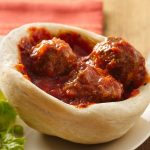
Bread Bowl from pillsbury.com

But soon I may have a different option for my breakfast spoon and dinner fork while traveling. I have always loved bread bowls, where a small loaf is carved out and filled with fabulous soups or satisfying sauce-covered meatballs. Now a company has developed a spoon which can be eaten when done – made from millet, rice, and wheat plus some spicing. Located in India Bakey’s Edible Cutlery has already made over 1 million spoons since 2011.

I repeat – the company has been in business and making this stuff since 2011. This is not science fiction. This is not even waiting on testing like many of the medical marvels I geek about. THIS.IS.REAL!

Geeking.O.U.T!

Oh, drat. A huge mucking ocean is in the way.

The India-based company is still growing its providers, getting rice farmers to switch to millet, developing its manufacturing base, and all that other stuff which businesses must have and us writers tend to skip in science-fiction. Someone wanting to distribute in America even did Kickstarter after reaching an agreement with the manufacturer; only problem the Kickstarter ended up being 10 times more successful than planned. After over a year the spoons have not shipped from India to America and then distributed to the backers. Fulfillment was promised April 2016; it’s now July 2017. The Kickstarter website shows some minor zings happening between the distributor and the manufacturer.

I hope this gets settled soon, because I really, really want this product. In every flavor.

Writing Exercise: Mealtime

Image courtesy of marin at FreeDigitalPhotos.net

Lots of my stories revolve around food and mealtimes for a reason. Aside from sleeping, the majority of humanity’s time is spent dealing with caloric intake – preparing food, eating food, cleaning up from food. You may say, what about working? So on the job, the worker starts with his morning coffee, then has a mid-morning snack, followed by the lunch conversation (eat out, order in?) and then lunch, maybe an afternoon snack, and finally thinking about preparing dinner (what is in the house, is a grocery store run needed, or will take out do). And the reason why people work: (1) roof over the head and (2) food on the table. Instead of spending all day out in the field growing food, industrialized people now spend all days in a building making or selling stuff to get money to buy food. Food = survival. I think I can say humanity (as a whole) spends about half to three-quarters of its waking hours devoted to it.

Everyone has a different relationship with food. A different favorite food, a different favorite meal, meals cooked by certain people, food eaten for certain holidays, comfort food, power food, … the list goes on.

Food can even drive a narrative or provide information through show instead of tell.

In the flash “No More Cheeseburgers“, the mom, Heather, uses cheeseburgers as a metaphor for planetary loss providing Gilbert a means to grasp the inconceivable and act.

In the final chapter of Honestly, the following paragraph on food shows the comprises people make becoming a couple.

A big pot of Vietnamese beef pho simmered on the stove. Unlimited pizza for lunch and a home-cooked dinner was the payment offered for help moving. She stirred the noodle dish. She <Kassandra> was tempted to add a little more cilantro and fresh basil, but Troy was cooking. They had reached a truce for meal preparation, he didn’t mess with her chili and barbeque and she didn’t mess with his pho and xoi. Salads and hamburgers were fair game.

In neither case did I consciously plan food to provide an underpinning to the plot, but food is a part of life.

WRITING EXERCISE: What is your present main character’s (MC) favorite food? What is his/her favorite meal? What is the go-to comfort food? Why?

Create a short scene where the MC is either preparing or eating food. What do you learn about the MC from the scene?

READING EXERCISE: In your present read-in-progress find three examples of food being planned, consumed, or cleaned up. How does the food scenes advance the plot, provide character development, or reveal a back story?