

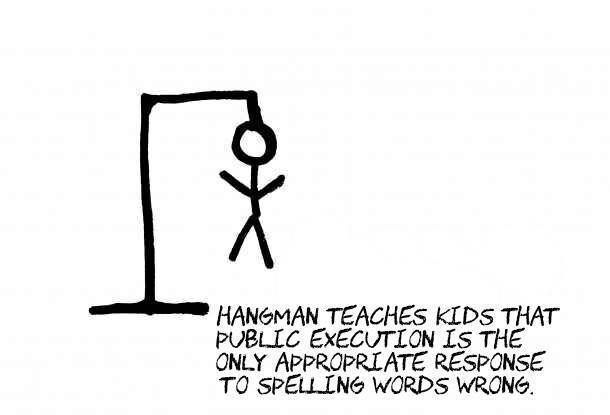
Image acquired from the Internet Hive Mind

Image courtesy of Stuart Miles at FreeDigitalPhotos.net
Strategies for Surviving Conventions
Conventions are a big thing to writers, providing them opportunity to interact with fans while also being intimidating to those with social interaction issues, including shyness, extreme introvertness, and social anxiety. And like most writers, I am no exception to social interaction being a challenge where I go through mental spoons like a middle school cafeteria on ice-cream day.
I fall somewhere on the spectrum in the Asperger area (not formally diagnosed). The plus side means I focus well and am very detailed-oriented – great for bookkeeping and editing. My particular out-of-standard wiring doesn’t adversely affect my life, aside from sucking at job interviews and falling so far into the introvert spectrum it takes me about three years to warm up to a person. I can’t hold down retail or fast food jobs because that type of stress makes me curl into a ball and go into total ennui withdrawal from society for about two months.
Fortunately, I am close enough to “normal” to integrate well at conventions IF I USE A SLEW OF COPING MECHANISMS.
I thought I would share some of them here as the summer convention season takes off as they can be useful to the terminally shy and the socially anxious as well as others with my particular neurology tendencies. For me, the Strategy for Survival is removing as much normal and abnormal stressors as possible, knowing I am immersing myself in a maximum stress environment. My triggers include excessive noise, especially in the high pitch range; too many people close by so I can’t pick out what I should be paying attention to (environmental processing); and feeling crowded (not necessarily being crowded).
Removing stressors is the key to Surviving Conventions. Everyone has a certain level of stress they can absorb. By removing some of the normal, and reducing as much of the abnormal as possible, the Survivor can create a situation where they can function where they would normally not be able to. And not only function, but thrive because they get exposed to one of the things humans need – human interaction.
A final note before we dive into these strategies: You don’t have to use them all. These are particular to me and my needs. And yes, I use them all – every single convention, every single holiday party, and nearly every day I am in public.
But you are you. Do you.
And if you have Strategies for Surviving Conventions of your own, feel free to share them below in the comments.
STRATEGIES
Remove All Physical Stressors – These are things that you normally can let slide, but with the added stress of the Convention, must be removed.
Make Decisions in Advance – This reduces mental stress. Each decision adds to the mental weight, so pop them out of the way before the function. Yeah, it is going to mean a lot of advance planning. This works fine for detail-oriented me, but again, you do you.
Avoid Crowds, or at least the feeling of crowds – Yes, you are in the middle of a huge crowded function. But it is possible to avoid the worst of it. Let the extroverts and the “normal-level” introverts walk down the middle of the hall, rubbing elbows.
Additional Hints
I

About the campaign:
#HoldOnToTheLight is a blog campaign encompassing blog posts by fantasy and science fiction authors around the world in an effort to raise awareness around treatment for depression, suicide prevention, domestic violence intervention, PTSD initiatives, bullying prevention and other mental health-related issues. We believe fandom should be supportive, welcoming and inclusive, in the long tradition of fandom taking care of its own. We encourage readers and fans to seek the help they or their loved ones need without shame or embarrassment.
Please consider donating to or volunteering for organizations dedicated to treatment and prevention such as: American Foundation for Suicide Prevention, Hope for the Warriors (PTSD), National Alliance on Mental Illness (NAMI), Canadian Mental Health Association, MIND (UK), SANE (UK), BeyondBlue (Australia), To Write Love On Her Arms (TWLOHA) and the National Suicide Prevention Hotline.
To find out more about #HoldOnToTheLight, find a list of participating authors and blog posts, or reach a media contact, go to http://www.HoldOnToTheLight.com and join us on Facebook https://www.facebook.com/WeHoldOnToTheLight
Choose a skill, any skill: website design, cleaning house, doctor, drawing, editing, cooking, writing, digging holes – this applies to it all. Respect people and their lifetime of skills.

Image acquired from the Internet Hive Mind via ifunny.com
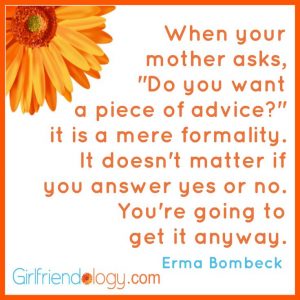
Quote by Erma Bombeck appearing on Girlfriendology.com
Voice
You always hear about how editors are looking for a distinctive “writer’s voice”, like they look for good hooks, characters, worldbuilding and plot. But no one can define “writer’s voice” – is it word choice, is it sentence structure, is it topic, is it genre? What is it?
Leah McClellan’s blog for Simple Writing on “Writer’s Voice: What it is and how to develop yours” ) tackles the subject head on.
WRITING EXERCISE: Now you have reviewed the article, do you know what feeds into your writer’s voice to make it unique? Sit down with at least six months of your writing and/or at least five different stories and see where the similarities lie. What are the strengths and weaknesses of your voice? Based on your analysis what should you write and what should you avoid?
READING EXERCISE: What type of voice draws you? Go to your bookshelves or electronic reading device. Find three authors from three different genres (if possible) which you have three books or more for (a series only counts as one book). If you have a full shelf devoted to them, even better. What do they have in common? How are they different from other writers in their genre?
MY WRITING EXAMPLE: So what do I think my voice is? Well people have wrote the following reviewing my book and editing my work:
From an editor “Nice. I’m really digging this character, and the closeness of the brothers. Even in such a short amount of time, I feel like I could easily meet these guys somewhere in my hometown. Very solid. “
From a different editor “Very real characters. “
From a reviewer “…easy to get to know the characters.”
From another reviewer “I felt that when I started reading HONESTLY, like wait, do I know these people? … The story and characters were easily understood and relatable right away,”
So I know my voice is about the characters. Not just that I write good or believable characters who make decisions in a logical manner, but characters which people know, that they relate to, that they swear they have met on the street. Nearly every review, critique, or feedback I receive from people focuses on this.
What are my weaknesses? Well, that would be action. I am just not action-oriented. I’ve worked hard on any romantic choreography and fight scenes I’ve written. Writing a thriller or a story primarily about a fighter would be an exercise in mediocrity and frustration. Any attempt at long-form urban fantasy ending with a big-bad fight scene will push my limits and writing style.
And I am not sure if this is a weakness, strength, or just integral to my voice, but I think in phrases, not sentences. (Which the sentence proves.) When writing my first draft, either everything is sentence fragments or unending run-on sentences. No real in-between for me. I go over everything a lot to create a more proper grammatical final product. Which makes the weakness of being bad at action from the selling-money-making standpoint depressing, because my natural wording works great for action-packed scenes. The thinking in phrases makes writing historical fiction difficult since their speaking structure is more formal and connected. When writing I go over the speaking dialogue a lot to make certain not everyone sounds like me.
Also in the language diction area, I have fun combining different ideas together. I love oxymorons and other clever word combinations. I try to avoid puns in writing as a kindness to my readers; also, a kindness to me – reading the pun through three drafts and three editing cycles and a print review gets old.
Now what happens when I line all my stories up? What are the similarities I see? Well, somehow family is always involved. In Honestly, Kassandra’s son drives nearly all of her decision-making and Troy’s father is integral to his life. In Cons of Romance the heroine has adopted family she will not turn her back on, and the hero makes several decisions based on his nearly grown children. Other stories have two brothers deal with aliens and the alien parents, a superhero rescuing his mother from a couple of villain (who are cousins of each other, not the superhero and his mom), a single mother raising her two boys, and a girl discovering being the sister to the anti-Christ carries a unique set of responsibilities.
Another similarity is humor. Most stories have mild humor. Not slapstick or laugh-out-loud funny jokes, but something a reader smiles at, recognizing life. One of my favorite paragraphs from Honestly is
Oh crap, did Dewayne wake the whole building? It was close to ten. No one was going to be happy with her. At least most of young kids were in bed, and if they were anything like her three-year-old, they would sleep through a nuclear bomb. So long as they didn’t need a glass of water.
I also tend to sneak in some learning to make the world bigger than just to story window a reader looks through. Pieces of information walk through on the street and you see them enter the window one side and leave by another. In Honestly, beer and amputations star in some scenes. Cons of Romance begins with the activity of a convention and part of the relationship between the main characters is developing as writers. I’ve had flashes ranging from how 3-D printing might affect our lives in the future and a Roman legion which disappeared in Ireland.
My themes tend to include love and hope. Love of family, sexual love, love of learning. Hope of tomorrow and it will most likely be better than today, and today was pretty good when you think about it. Even my Zombie apocalypse and attempts at horror stories are about hope, and that is saying something.
So what is my voice? Real-life believable characters, family, love, hope, humor, all written in short phrases with a unique turn of phrase on occasion. My “voice” would be perfect for humorist or hopeful literary fiction. Most of literary fiction is dreadfully downtrodden, so I don’t read it. Genre fiction, science fiction, fantasy, romance, and mystery, is about hope and I read genre by the crane lift. I guess if I continue writing someday someone might describe my voice as the “Emma Bombeck of genre fiction.” Or whomever is the family humorist of that time. Not a bad epithet.
Knowing my strengths and what fits my voice the best can help direct me in my writing, both artistically and business-wise. I should avoid historical romances, thriller, epic fantasy, and horror stories. Romantic urban fantasy is a strong contender, since humor, family and short phrasing all work well. Steampunk is questionable because of the flowery language of the historical setting; soft science fiction would work better than hard science fiction.
How about you? Do you agree with my assessment of myself? How about your analysis of your voice? Figuring out my voice took about five years after I started being serious about writing and I had been writing thirty-some years before that (oh, dear, did I just give away my age?). Anyway, no rush if you are still exploring your voice. Have fun writing.
MY READING EXAMPLE:
Dorothy Gilman – cozy mystery writer of Mrs. Pollifax and like stories – Humorous, but very real, old lady, becomes a spy much to the enjoyment and worry of her handlers.
Jim Bernheimer – science fiction, fantasy, and superhero – Sarcastic, but very real, characters solving situations they find themselves in.
Christopher Stasheff – soft science fiction and fantasy writer – Lots of family solving issues arising out of life.
George Dickson – His Child Cycle series, usually considered military sci-fi, contains unexpected romantic bits and centers on the family dynamics of the Dorsai. His fantasy books have sly humor.
Needless to say the writers I enjoy the most have the combination of sly humor, family, and problem-solving life situations I like writing about. … And, aha, that is what I need to add more to my voice to harden it. More problem-solving life situations. I think I need to bring that to my long-form. My best flashes and short stories all include problem-solving.
I hope you get as much out of this exercise as I did. Be sure to comment below.