Writing Exercise: The Other

Image courtesy of photostock at FreeDigitalPhotos.net

The Other. Other what? Other person, writing someone other than you. The female, the male, the black, the white, the able-bodied, the physically disabled, the transgender, the heterosexual, the asexual, the old, the young. Crawling in their heads and bringing them to the page beyond stock tropes.

George Stroumboulopoulos once interviewed George R.R. Martin and asked him the following:

There’s one thing that’s interesting about your books. I noticed that you write women really well and really different. Where does that come from?

The fantasy master responded with:

You know I’ve always considered women to be people.

As a writer, solid worldbuilding means having characters in your world as diverse as the world you live in and making them real people.

A writer is told to read to outside the comfort zone become better. Reading outside your comfort zone does not mean just crossing genre lines. (See The Man who Doesn’t Read Women by Lorraine Berry, March 15, 2017.) To be well read requires exposure to thoughts and ideas different from your own.

WRITING EXERCISE: Write a flash with The Other as the Point-of-View (POV) character. 

READING EXERCISE: Read a book with the main POV character who is The Other.

Flash: David B. Coe Con Challenge Two – Bigger on the Inside

freedigitalphotos.net

During ConCarolinas 2013, I added a panel where David B. Coe promised provided a series of writing challenges to help those in attendance develop tone, dialog, and voice skills. This is the second of three postings related to the challenges.

2) Write a scene between two people that does not use “said” or “asked” or any other direct attribution of dialog, but instead relies on gesture, mannerism, or just the established order of who is speaking.  Make sure it’s always clear who has said what.

“I’m not sure about this.” Tom looked over his shoulder at Rose.

The blond pursed her lips, her eyes invisible behind mirrored sunglasses. “I promise you, it’s just a prank. A jokester like Baker will love it.”

“He does like his jokes.” Finally getting the lock to release, Tom pushed the dorm room door open. No one had noticed them in the hall yet. The campus was empty for Spring Break, but a few stragglers like themselves could come by at any time. The couple hurried into the room and closed the door behind them.

Tom looked around surprised. Evan’s room was empty. Not empty as in bed stripped and closets safeguarding a couple bent hangers empty, but nothing. No bed, no closet, no desk, no window. Still, light filled the room. A seemingly endless room. “What the hell?”

“Sorry about this sweetie.”

A needle buried itself into Tom’s meaty shoulder. He tried to turn, but Rose was too quick. Cool liquid burned into his system and he felt onto the non-floor.

“Why?” Escaped his lips as the world fuzzed.

“Two may enter where one can leave.” Satisfied her dupe was in la-la land, the coed known as Rose Davison tapped a button on her glasses activating features GoogleGlass would love to reverse engineer and got to work. “Now, my dear Baker, where did you hide the keys? I only want a joy ride. I promise to return everything in good order. Maybe.” (words 243)

Flash name: Bigger on the Inside

(First published 6/12/2013; published in new blog format 4/25/2017)

Flash: David B. Coe Con Challenge One

During ConCarolinas 2013, I added a panel where David B. Coe promised provided a series of writing challenges to help those in attendance develop tone, dialog, and voice skills. This is the first of three postings related to the challenges.

1) “Write a scene of about 250 words, or one manuscript page.  It doesn’t have to be a complete scene — it’s more a vignette really.  Put in some description, some character work, maybe some dialog.  It’s really up to you what direction you take it in.  But when it’s done, I want you to replace a single word in each sentence or clause. (I say clause, because sometimes in a multi-part sentence changing one word won’t be enough.)  The changes should be designed to alter fundamentally the tone of the piece.  So if it started dark, use the changes to make it lighter.  If you started light, go the other way.  One word in each clause.  It might not be entirely enough, but that’s okay.  The idea is to get you to appreciate the power of a single word choice in setting tone, mood, setting, etc.” (from David B. Coe)

Hunger ripped at her guts. Unexpected and dangerous. Too long, she had concentrated on climbing, digging, escaping. Bloody dirt clumps fell from shredded fingers. Her neck cracked from a sudden jerk. She scented something delicious nearby. Human, young, soft, juicy.

The part of her mind which had tried to keep her in the casket screamed. The rest of her lumbered away from the grave her family had lovingly sentenced her to so many days ago. Food was nearby. (words 78)

********************

Hunger ignited her guts. Surprising and dangerous. Too long, she had fixed on climbing, digging, escaping. Bloody dirt clumps fell from frayed fingers. Her neck cracked from a sudden turn. She scented something tempting nearby. Human, young, soft, male.

The part of her mind which had tried to keep her in the casket whimpered. The rest of her slid away from the grave her family had lovingly laid her in so many days ago. A meal was nearby. (words 78)

*******************

The changed I aimed for: unthinking to thinking. Continued from the Waking Up Dead flash.

(First published 6/12/2013; republished in new blog format 4/16/2017)

Other Cool Blogs: Magical Words May 8, 2014

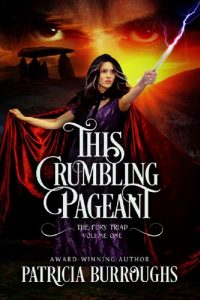
Amazon Cover for: This Crumbling Pageant

Write Scared

Award winning screenwriter and best-selling novelist Patricia Burroughs did a guest appearance on Magical Words in 2014 as part of a book tour for This Crumbling Pageant. The blog “Of Adders and Writing Process” meanders for a while, setting the stage. But she eventually cracks down to her take away advice:

…As a writer, you must write those scenes that scare you. … Write about whatever your story requires and your characters deserve, especially if the thought of putting those words on <paper> terrifies you. Write the scenes you are afraid people will judge you for. … If your book needs them, if your characters deserve them, you have to write them…

You can read the full posting and related comments here: s/

WRITING EXERCISE: Look over your body of work. Have you ever written scared? Have you ever avoided writing scared?

Writing Exercise: Habits

Photo by Alexa Mazzarello on Unsplash

Writers write. You hear that all the time, but how to do it with a full-time job, two kids, spouse, errands, and the one-night-a-month social outing to remember who you are as an individual outside of the spouse-parent-worker hats?

Sit in a chair and type. Grab paper and pen and scratch while waiting for the school to let kids out. Dictate during a car pool while sitting in the back seat.

Easier said than done, but an initial habit forms. One day, then the next. Soon the twenty-one days of a new habit is complete. Easy sailing thereafter, right? Wrong.

Whatever habit you develop, be prepared to change it when it no longer works. Sit in a chair and type between the first and second nursing doesn’t matter when no longer nursing. When the kids start being bused, the paper and pen approach disappears. The car pool turns into just you because of layoffs and the drive requires you to pay attention to the stuff outside the head. Use the habit you have for as long as you can, but be prepared to change it when you need to.

Now that the easiest habit for you to create is gone, what other options are there? If nothing else, writers are inventive. Here are some of the habits people have shared with me over the years.

Time of day: Always write before going to work, always write before going to bed, always write during lunch hour. Work writing into the pattern of the day. No word count, no time frame, just have the habit of writing between (getting up and dressed) and (grabbing breakfast while walking out the door). Challenge: When the day pattern changes, like weekends and vacations, change of jobs or schools.

Sneaks: This works best if you have a lot of breaks in your day. Going to the doctor’s offices, traveling on trains from client to client, running errands with children. Keep pen and paper in the purse or satchel. Challenge: Every time waiting starts, pulling the pen and paper out requires a conscious, constant discipline.

On the clock: Every day (or every other day) you type for a set amount of time. It could be 30 minutes or 2 hours. It could be four-fifteen minute windows. Whatever it is, you don’t go to bed until you meet the time. Challenge: As the day fills up, remember to keep the writing habit like you keep the bathing and eating habits. “I’ll just skip this meal.” and “I’ll just skip writing today.” both happen as life’s busy-ness steals all your time.

Word Count: Every day you type for a certain word count, or you type until you reach the word count for the week then can take a day off. Most writers recommend setting the number low – like 100 to 300 – so if the mind doesn’t want to play you get off the hook, but when the mind is ready to write the words can tumble out. Challenge: Sitting down for the word count.

Combinations work best, the habit of a certain time of day with a word count goal for example.

Be prepared for things which break habits. The biggest one is mourning. Loss of a job, pet, relationship, family member, moving and changing friendship circles, illnesses – all are versions of loss. Your subconscious mind is sorting through the emotions, redefining your life – sucking up energy. For some writers mourning is their most productive time as they write out their subconscious sorting of emotions on paper. For most, though, the energy of dealing prevents writing. It’s okay. Some of the big ones can take up to three years to get over; don’t kick yourself while you are down.

For example, I had a relationship loss and a move in 2015 – in 2017, I am ready to write again now the house is sorted out and I have a new set of habits. I wrote a little during the two-year sorting period, but I simply did not have the energy for a sustained task of a book however hard I tried.

WRITING EXERCISE: Develop a habit of writing. Pick one (or more) of the above methods or choose your own. Do it for twenty-one days – every day including weekends.

***

I’ve tried so many of these methods and haven’t found one which works for me as yet. The time-of-day gets killed every temporary job I get as my daily habit/schedule gets up-ended again. I respond strongly to the seasons so cold-winter and hot-summer, I am at my least productive. On-the-clock doesn’t go well because I get caught up with whatever my major project of the moment is and concentrate on that to the exclusion of anything else. Sneaks are used for my embroidery projects, where I can hang out with people and stitch at the same time, like at meetings. My sneak discipline habit is hard-wired at this point and not available for other uses.

I’m going to try word count. I recently ran across the concept of the “500 club”. Five hundred words per day. I can do that. Heck, this post is over 500 already. I cut neon index card in two and wrote “500 club” on the resulting slips. I taped one sign so I can see it when walking into the computer room and the other for walking out of the house. I told myself I am not allowed to leave the house until I join the club every day. I was a little worried because normally such things make me stress; another task in my life. Instead “I did that today.”pops in my head as I pass one; “I haven’t missed a day since I started.” I say to myself as I leave for work. I am getting a “happy” buzz-reward seeing them. Even during the middle of tax season.

I think I finally found something which fits me.

***

Don’t be afraid to change things if they are not working, or if they have stopped working. Ask yourself why they stopped working. Are you in mourning for something? Give yourself (at least) a week if you are. Process your emotions. Get healthy. Forgive yourself. Then start again to find the habit which works for you.