Writing Exercise: Narrative Hook

freedigitalphotos.net

REPRINT FROM OLD BLOG: 9/11/2013

I attended ConCarolinas for four years – 2010, 2011, 2012 and 2013. Before that I attended two ConDFWs (2009 and 2010). During ConCarolinas 2010, I was lucky enough to attend my first writer’s workshop.

I have since gone on to attend two more at the 2012 and 2013 ConCarolinas. I published the results of the 2013 workshop on this blog. I thought you might like to see an earlier attempt.

My first one was hosted by Allen Wold. Sixteen writers participated. The instructions were create a narrative hook, total should be under 100 words, write it in ten minutes “… and go.”

Below is what I read to the critique panel and fellow attendees. . I only typed up what I wrote; no changes were added. And yes, I know that “daisys” is spelled wrong; it was spelled wrong then too.

Welcome (Writer’s Workshop Version)

The vampire smiled at seeing the welcome mat in front of the apartment door. Well, that saved a few steps of trying to get permission to cross the threshold. He glanced over his shoulder enjoying the last misty blue colors of sunset. The Florida haze hung low.

Maybe he should have eaten before coming he thought as his gut clenched, but life when he was mortal, (was it only a week ago?) he forced his body to obey his mind. Then he marshaled his emotions and rang the doorbell.

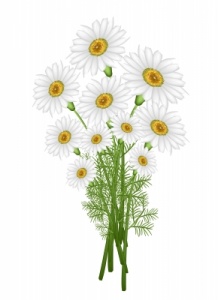
A grey-haired woman answered the door and he thrust the rapidly wilting daisys into her hand.

“Hi mom, sorry I haven’t called.”

(words 111)

WRITING EXERCISE

Your turn. Create a narrative hook – set your phone for a ten minute alarm. When the alarm goes off, the pen goes down. One hundred words for your hook. …. and go. 

Put your hook into the comments below.

Think about whether you have captured your audience. The object of the narrative hook in get them to read the first three pages. The longer narrative should then have enough bristles to stick with the reader so they read the first chapter, and so on. While the first narrative hook isn’t essential, it can make a difference.

Other Cool Blogs: Magical Words June 14, 2012

Photo by paul morris on Unsplash, Cropped and color adjusted by Erin Penn

Gutting

After completing the first draft, you realize something is wrong with your manuscript. Not, oh yeah, there was this secondary character back in chapter five which disappeared. I mean seriously wrong wrong – pacing fail, POV change needed – gutting of 10%, or more like 50%, of your precious words. What you are going to have to do for the rewrite will be messy, nasty work. If only you were a better writer, these things wouldn’t happen.

Yeah, no.

Read about “Performing the Invasive Edit” by NY best-selling author AJ Hartley explaining how he had to fix one book – during the initial writing, over 50 K words in, long before the manuscript was ready to send to an editor. The comments to this Magical Word posts touches different types of invasive edits various people performed. From tone and pacing to adding new characters. Rearranging timelines to adding personal stakes plotlines.

Look it over here: http://www.magicalwords.net/really-i-mean-it/performing-the-invasive-edit/

WRITING EXERCISE: Think about your present work-in-progress (WIP). Is there a particular scene which has been bugging you? Why is it a problem? What could fix the problem? Rewrite the scene. If you don’t have a WIP, try this with a flash or short story #NotReadyForPrimeTime.

How about your WIP overall? Is there anything you’ve been arguing with yourself about fixing as too much work? Why is it bugging you? How should it be fixed?

If you got an outline, cut and save it to another file “Revised” and see what happens if you work the fix in.

Other Cool Blogs: Epicstream 12/27/2015

Image courtesy of Multipedia at FreeDigitalPhotos.net

Jake Vyper asks What is the main difference between Urban Fantasy and Horror?

That is a good question, because a writer needs to deliver a product matching the expectations of the reader. On the surface, they seem very similar. Both are contemporary settings, have monsters, and have the protagonist dealing with the monsters. What is the hair that separates the two?

Mr. Vyper says it is the competency of the protagonist. In Urban Fantasy, the reader/watcher goes – Oh, yeah, that is exactly how to take on the monster. In Horror, the reader/watcher goes – What are you doing, you fool!

But there is more to the different genres than the competency of the protagonist. In a Horror, at the end, even if the monster is defeated, the final chapter hints at its eventual return. The monster is never wholly defeated. In an Urban Fantasy, the monster is either defeated or ends up in the bedroom. (We got a weird culture.)

In Urban Fantasy, even if initial denial of the monster concept happens, acceptance and fitting it into the main character world’s view is possible. In a Horror, the monster remains half-hidden until it comes in and rends what little sanity is left. There is no acceptance possible, no fitting it into the two-story house and white picket fence of real life. In fact, often, real life seems permanently destroyed.

Another trope difference, in Horror the person is isolated, no one is around to help, and, often, the person is a fish-out-of-water, unfamiliar with the environment. In addition, the monster is focused on the victim personally. In Urban Fantasy, with the Urban environment, the monster endangers the crowds. Not only that, but as the relationship between the hero and monster grows, the monster goes after … the hero’s family and friends (not the hero). Through it all, the main character remains in the familiar environment of where they live even if the magic veil has been pulled back. Isolation and unfamiliar verses danger to others.

Again, you can read the full article here:

WRITING EXERCISE: What other trope differences can you think of between Urban Fantasy and Horror? Are Horror, Disaster, and Apocalypse stories different genres – where do they overlap and where do they diverge? How about the trope differences between Fantasy and Science Fiction? How could you use some of these differences to play with reader expectations? Have you ever written a story where the genre lines have blurred, and what tropes were used?

***

My flash, One Soul Per, initially seems a standard Fantasy – maybe even an erotica fantasy, but it changes toward the end. The protagonist made some stupid mistakes for a solider, and his life takes a turn from hero to horror. 

Writing Exercise: Dialogue without tags

(Photo by Alice Pasqual on Unsplash)

The challenge in writing dialog is to keep it snappy, maintain the rapid give-and-take of a natural conversation. Dialog tags are needed for clarity, but not at the rate most people thing.

Attempt a Tagless Scene to get the feel of how few tags you can get away with.

WRITING EXERCISE

Create a flash between two people without using “said” or “asked” or any other direct attribution dialog tags. Instead use gesture, mannerisms, or order context clues. Make sure it’s always clear whose speaking.

My attemptBigger on the Inside (4/23/2017)

Writing Exercise: Diverse Other

Image courtesy of stockimages at FreeDigitalPhotos.net

Today’s writing exercise continues my present diversity kick.

Remember the definition for “The Other” in writing is – not you. If you are white, it means black or Hispanic. If you are cis-male, it means female or transgender. If you are straight, it means homosexual or bi-sexual. If you are able-bodied, it means dealing with depression or blindness. If human, it means aliens and elves.

“Writing The Other” is a hot panel topic at most writer conventions. Jim C. Hines writes about a panel he was on (click HERE). Biggest take away:

Most of the time though, when I hear “We’re not allowed to write _____ characters,” it’s an author talking.  Upon investigation, it usually turns out that nobody told our author friend that he or she wasn’t allowed to write these characters; instead, someone criticized him for doing it badly.

Well … yeah.  If you write flat, unrealistic, or just plain bad characters, you’re going to get called on that.  If all your women exist only to swoon and get naked for your hero (*cough* Heinlein *cough*), then people might complain.  They’re not saying you aren’t allowed to write women characters.  They’re saying please stop sucking at it.

Do you know the number one way to avoid sucking at writing The Other? Practice and review. Write and have The Other review it. Repeat until suck-age is less.

WRITING EXERCISE: Take one of your previous flashes and change the POV character to The Other. Adjust descriptions, dialogue, and behavior. Share with someone who matches The Other in your story. Ask them to specifically look at it for writing outside your comfort zone and LISTEN to their critique.

BONUS WRITING EXERCISE: Talk with The Other. Sit down with an Other – friend or co-worker – buy them food or a drink because this is going to take a little while. Talk to them for at least half an hour about they approach literature. And LISTEN. Limit yourself to questions only. Here are three to try, “What kind of books do you like reading?”; “What is your favorite author, fiction or non-fiction?”; “If you wanted me to know more about being (Other), what books you have read and liked would you recommend?”