Other Cool Blogs: Liana Brooks 2/24/2016

Photo by Todd Ruth on Unsplash

Happy Thanksgiving!

I hope that in the middle of NaNoWritMo you have been taking care of your Maslow’s Hierarchy of Needs. Because it is awful hard to write (a Self-Actualization product) when your Physiological and Emotional needs aren’t being met.

If you are not familiar with Maslow’s Hierarchy of Needs, it goes as follows:

Bottom layer 1 – Physiological Needs (breathing, water, food, excretion, sleep)
Bottom layer 2 – Safety Needs (Physical safety like shelter and clothes and health; Mental safety like steady income, security of body, and security of those under your care)
Bottom layer 3 – Belonging (Friendship, family, sexual and/or emotional intimacy, sense of connection)
Top layer 4 – Esteem (Confidence, achievement, respect for self and others, enjoyment of arts)
Top layer 6 – Self-Actualization (Morality, problem-solving, lack of prejudice, creation of arts)

While for most of NaNoWriMo, writers are reminded time and again not to let their Physiological Needs slide – it’s hard to write hungry or without sleep – that is not the only layer which needs to be in place to write well.

Today, being Thanksgiving in the United States, is a day of Belonging so let’s look a little at that. I think this is where most of writer’s block comes from. Argument with significant other, parent or child being sick, depression – anything that breaks or endangers the ties of connection taking the energy away from the higher layers where creativity lives and bring it down to the more important needs to survive.

Just like a child isn’t going to learn while hungry, or cold because of no winter clothes which fit, or worried about being taken away from their parents, a writer isn’t going to do their brain-best if they cut back on their sleep, worried about their day-job, or hasn’t had a hug in a while. Humans need these things.

Now you can skip around the pyramid some – you can go hungry for a couple hours if you enter The Zone. Sometimes health is never going to be completely met because of disability. But don’t beat yourself up if you don’t write too much today because your family is 1,000 miles away (like mine is) and you are missing them. You look at all that free time and go “why can’t I write?!?”, but emotional fragility undermines your efforts. I am going to go talk to my mom on the phone for a while. That should help me.

To find out more about this topic check out Liana Brooks post: http://lianabrooks.blogspot.com/2016/02/maslow-vs-deadline.html. The takeaway comment which hit me the hardest “The secret to hitting your deadlines in the chaos is to recognize your needs, and meet as many of them as you can.”

WRITER EXERCISE: Take care of one of the three bottom layers today and tomorrow share below how it changed your approach to writing – and maybe not just word count, but your enjoyment of the creative process or quality of the creative process.

Writing Exercise: All the Trimmings

Photo by Claudio Schwarz on Unsplash

All the Trimmings at Thanksgiving usually means so much good stuff: stuffing, cranberry sauce, gravy, homemade mashed potatoes, heavenly hash, yeast buns, and pumpkin pie.

Trimming when writing is cutting things down. Sometimes it is done to control word count, other times to get rid of dead words which add nothing to the book, and still others to slay the dreaded adverb and copula monsters.

Sewing has a saying: As you sew, so shall you rip.

Writing should have a saying of: As you write, so shall you trim.

Modern writing is lean. Trimming words down is a required skill.

WRITING EXERCISE: Pick something you wrote but haven’t cleaned up yet. At least 250 words. Cut the words down by 10%. (e.g. For 250 words, you want to end up at 225. For 500 words, only 450 in your final product.)

REVIEW EXERCISE: What words did you remove? Dead words like “that”? Changing out the weak copula for a stronger verb buried in the sentence? Fixing adverb+verb combinations for a specialized word (she ran very fast – she sped; he walked slowly – he sauntered)? Dropped extra dialog tags like “said” and “asked”? Something else? Comment below.

Writing Exercise: The Switch

Every society contains gender roles. In some cases, like Spanish, genders are assigned to everything including inanimate objects. Today, the writing exercise is focused on the two traditional genders of American society.

WRITING EXERCISE PART ONE: Write a flash where traditional gender roles are strongly displayed through some medium: romantic, job division, clothing, etc. Aim for about 50 to 100 words, don’t go overboard. Have two characters; they can be the same or different genders.

WRITING EXERCISE PART TWO: Switch the gender role assignments – he to she; she to he. Do not change the characters appearance or actions, except for gender-related appearance (breasts to pecs). How does your story read now? Does it still work? What makes it feel different to you? Comment below.


My Attempt (Flash Title: Tongue)

Towering over her, David lifted her chin until Kendra stood on tiptoes, her mouth drying at his dominance. She ran the tip of her tongue over her red-stained lips, watching his brown eyes darken in response. He lowered his head, twisting it sideways until his lips hovered just above hers.

“Open,” he growled.

Kendra exhaled, her lips parting with the breath.

He smiled, dropping the last inch between them, his alien tongue entering her mouth and sweeping down. (words 78, first published 3/23/2022)

***
Towering over him, Kendra lifted his chin until David stood on tiptoes, his mouth drying at her dominance. He ran the tip of his tongue over his red-stained lips, watching her brown eyes darken in response. She lowered her head, twisting it sideways until her lips hovered just above his.

“Open,” she growled.

David exhaled, his lips parting with the breath.

She smiled, dropping the last inch between them, her alien tongue entering his mouth and sweeping down. (words 78, first published 3/23/2022)

***
One interesting aspect of the gender switch for my flash is the “red-stained lips.” On a female, lipstick is assumed. On the male, you don’t know why they are stained … but blood does come to mind.

Writing Exercise: Sentence Structure

When slush reading I ran into a lot of stories with little variation of sentence structure. Noun(subject)-verb-noun(object). 
He did a thing. She went somewhere. I ate food.
They may be long sentences joined with the basic conjunctions (and, but, or), but little variation beyond the “Subject-verb” combos of basic sentences. And that got BORRRRRING!
Don’t be boring.
In combat or quick action, short and sweet sentence structures work. On the other hand, narrative should have longer structures, with phrases and additions at the beginning or end.
WRITING EXERCISE:
  • Write seven sentences describing a task you did today.
  • Now figure out which parts of speech each of the words within the sentences are – noun, verb, adverb, adjective, etc..
  • Review the nouns of the sentences and figure out the subject and the objects.
  • How many of the sentences have just basic sentence structure?
  • How can you vary the sentences to mix up the pace of the subject-verb sentences.
Additional Help
Not every teacher is effective at teaching sentence structure to every type of learner. If sentence structure is not a lesson which was taught in a manner you could grasp when you were school age,  you may want to look at the below. They are written in three different styles so hopefully one will click with you.
Basic Sentence Structures in the English Language – https://www.really-learn-english.com/sentence-structure.html
The Write Life – How to Vary Your Sentence Structure (And Stop Boring Your Readers) by Ali Luke (2019 Sept 21) –

Writing Exercise: Pets

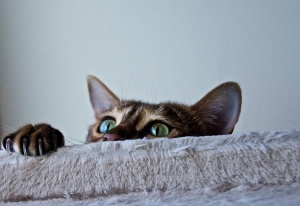
Photo by Chris Smith on Unsplash

Have you ever written about the aliens among us? Those non-humans allowed into our homes and lives, pets. Canines, felines, avians, reptiles, and fish. The work animals moved indoors like pigs and sheep. The exotics treated like domestics, for example,  tigers and alligators. The geeking science aspects of how cats talk to us like they do their offspring instead of other adult felines amuses me (See A Cat Meows).

Writers often attribute human reasoning to them, but pets are as alien to adult thinking as children. Animals are used in allegories, and sidekicks, and comic relief, and comforting. All the ways pets fill our lives appearing in writing.

WRITING EXERCISE:
For your current work-in-progress, consider your characters and create a pet for one of them. Tell us below why this particular character would have this pet and how long they had it.

BONUS EXERCISE:
Create a scene or flash where a character gains a pet.

READING EXERCISE:
Think to your most recent read with an animal character. Was it a pet, working animal, monster, or “scenery”? What impact did it have on the story?


My attempt

Pet flashes I’ve created include – Hellhound Puppies (1/26/20) – character gains a pet, Chich-a-whoo Feathers (12/22/19) – a working animal, The secret of cats (7/28/19), and Crossing over through the Dog’s Eyes (4/24/16).