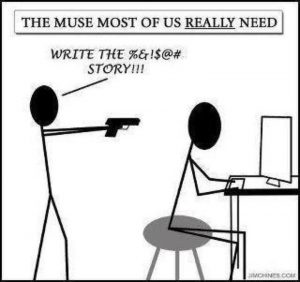
Created by James C. Hines. Copyright 4/20/2011. Used with permission. Website:
Created by James C. Hines. Copyright 4/20/2011. Used with permission. Website:

Image Courtesy of pakorn at FreeDigitalPhotos.net
Vernor’s Law
I’ve been going through the Magical Words archives, making certain I have made a copy of everything before it hits the seven-year disappear mark. And I found it! Vernor’s Law. No, not the one of “If the technological singularity can happen, it will.” but the one useful for writers.
(please note this is paraphrased) At any given time while writing, at least two of the three should be happening in a scene, preferably all three. Otherwise your writing has stalled.
The most commonly known version of breaking this law is an information dump. On the other hand, the most common weakness of a new writer is the character description which just describes the character like they are in a police lineup.
David B. Coe goes into a series on descriptive passages helping writers to sharpen their descriptive skills so nothing is just an information dump. The series includes the following (with the comments being nearly as useful as the blog postings):
Part I: Settings
Part II: Character
Part III: Action
Part IV: Dialogue
WRITING EXERCISE: After reviewing the above, write 200 words or more description from your present WIP using one of the following prompts: a setting building toward action, a secondary character as described by the main character, an action scene from someone other than your typical POV character limited by that characters experience and language, or a dialogue which is particularly about character building and background information.

Image courtesy of Unsplash photographer Jilbert Ebrahimi; quote from James Maxey. Combined by Erin Penn 2016.
WRITING EXERCISE: Write 500 words today. Blog post, book review, flash, diary entry … just write something.

Image acquired without permission from (multiple) Facebook postings
(but does have icanhas.cheezburger.com in the image)
Worldbuilding: Gods
Everywhere we look religious is steeped into our culture. How the days of the weeks play out, the days off, holidays, how people dress, quotes, country boundaries, and dozen of other expectations. To write a world without religion, whether horror, science fiction, or fantasy creates an unreal world.
I loved how steeped Babylon 5 was in religion: Stephen Franklin’s Foundationism, Susan Ivanova’s Judaism, the Mimbari government being lead partially by their priesthood, and G’Kar’s fanaticism. Every character is on Bab 5 was driven partially by belief in something greater, including Londo’s ties to his people. Without the religious overtones, Babylon 5 would have been the typical bland sci-fi we normally see. Instead it constantly was asking questions.
Magical word’s Diana Pharaoh Francis covered the topic in “God-Fearing Woman”. The list of questions to ask when creating a religion are especially important. I lightly touched on religion in the flash Joelie and Sarah’s Last Day last month. Joelie is an ongoing character for me; I especially love the religion I created for him. The Tester is neither good or evil, benevolent or petty, but a smith shaping materials to be the best they can be – sometimes the hard hammer and sometimes the gentle hands.
WRITING EXERCISE: Pick three characters from your present work-in-progress. Create one prayer for each they might say at the beginning or end of a day.
READING EXERCISE: Think of your present read-in-progress. How does religion impact one of the characters? Does their beliefs drive any of their goals?