Other Cool Blogs: Jody Hedlund October 2015

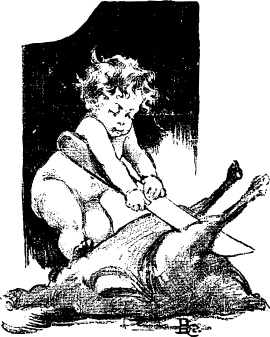
Baby Carves Turkey Stock Art

Image courtesy of WPClipArt.com

Stuffing a Story

“Show, don’t tell.” How many times have you heard that instruction? I can’t tell you how many times I have written it on a manuscript while editing.

Then I read my writing and realize I have completely stripped all description from a story. How much stuffing do I need to put into the story so the flavor comes through without making the beast pop?

Jody Hedlund shared “How to Balance Showing versus Telling” on her blog towards the end of 2015. I have previous pointed you toward this author with her 3 Stages of Editing way back in January. 

No, the posting does not give the exact balance – genre drives part of the balance; for example, thriller will have less telling than science fiction. The article does point out not all telling is bad and a balance is needed, a fairly unique voice among the publishing industry demands to make writing look and sound more like the visual media of television and movies.

Need the link again? Well, let me stop telling you about the post and show you instead: http://jodyhedlund.blogspot.com/2015/10/how-to-balance-showing-versus-telling.html

Other Cool Blogs: Magical Words June 25, 2012

Eraser On Pencil Stock Art

Image courtesy of DigitalArt at FreeDigitalPhotos.net

Helpful Advice in Editing

If everything is going as I hope it will (I am writing this in June), I am elbows deep in NaNo again. I wanted all the blog postings prepped so I can concentrate on writing, therefore I went through the Magical Words archives. There I ran across Carrie Ryan’s obscurely titled post “Not that … but that”.

It’s on editing. The very thing I am trying really hard not to do. It’s a NaNo no-no during November…and my biggest weakness to meet the word counts.

When editing others, I’ve made a lot of tough calls. Should I provide another possible word or just tell the author to find a new word? Do I say information seems to be missing or do specifically state what I want added? If there is a hole, do I point out the hole (example: primary love interest is passive) or provide the author the shovel to fix the hole (example: add another love interest to fight)? In one case, I may be stepping on the author’s voice and creativity, and, in the other case, I work with a lot of new authors who are having enough headaches being edited I find giving vague solutions is more of a problem than a help. Should I provide both then – but editing is always on a tight schedule, most of the time I can only write one line and move on.

I love the “a-ha” moment Ms. Ryan shares on her first editing feedback. The editor tells her to add something which ended up sounding really strange to her, until she asked the editor “What problem does <making this change> fix?” Once she knew what the problem was, she was able to fix the issue her own way.

If you attend critique groups as a participant, receive editing feedback, or review beta reads, (as reader, editor, or writer) I highly recommend this blog. Again the link is here: http://www.magicalwords.net/carrie-ryan/not-that-but-that/

Second takeaway from the blog – don’t be afraid to ask for clarification. Stand up for yourself. That is not to say fight your editor, but remember to be a participant in the partnership to make your book better.

And if you are participating in NaNo – good luck!

WRITING EXERCISE: Specifically approach someone you trust to be honest and ask them to beta read, critique, or edit something you wrote (at least 500 words and no more than 3,000), letting them know you are using this for practice of the editing process. After taking a day or two to look over their responses and get over the grief stage (see blog here on critique grief), practice asking for clarification without confrontation. Once completing the clarification portion, ask for feedback from your reviewer on how you did.

READING EXERCISE: Read a short story and write a critique or edit the story. Set it aside for two days. Come back and now pretend to be the author. Where do you think the author would like clarification on your critique.
Other Cool Blogs: io9 March 23, 2016

Buffy and Giles in the Library

Image acquired from the internet hive mind

With Halloween just around the corner, I thought I would share a little storytelling lesson I found on Buffy the Vampire Slayer. Published March 23, 2016 by Charlie Jane Anders on io9, the posting is entitled “10 Vital Storytelling Lessons I Learned from Buffy the Vampire Slayer.”

Sometimes stuff like this is little more than a walk down memory lane, and since Buffy isn’t a bad memory I decided to read through. My goodness! This is actually great stuff.

Lesson One: You can be scary, fun, AND sad. … How true and how difficult. Some episodes we laughed, jumped, and cried our eyes out. Most times when writing I managed one, and if I am lucky two. Ms. Anders is right on point saying to pull off this emotional roller-coaster, everything comes back to characters.

Lesson Two: Takeaway quote “it’s totally fine to have the apocalypse going on in the background, while instead focusing on a smaller, more personal struggle in the foreground.”

Ready for that link now? http://io9.gizmodo.com/10-vital-storytelling-lessons-i-learned-from-buffy-the-1766651082

WRITING EXERCISE: Think about an episode of Buffy the Vampire Slayer. Why has it stuck with you? What significant character activities appealed to you? Was it scary, fun, or sad? Write at least 100 words on the subject. … Now rewatch the episode if you can find it and take it apart based on characters, goals, and stakes. Be sure to include the villains, the Scooby Crew, and secondary characters who appear in more than one episode.

For those who did not watch Buffy, use Dexter, Supernatural, Twin Peaks, or other show you like and does scary, funny, and sad.