Z is for Zoozve

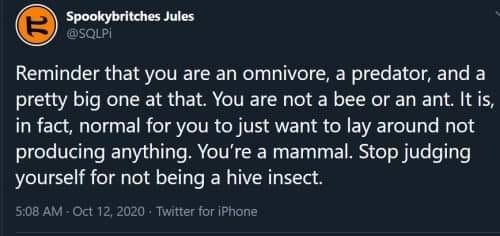
ZOOZVE ON A SOLAR SYSTEM POSTER The children’s Solar System that features Zoozve, Venus’s quasi-moon.

Image: Alex Foster / Latif Nasser (from the interweb – space.com)

Did you know that Venus has a moon? Well, sort-of, not really, but kind-of. Venus has a “quasi-moon”, something that had been predicted, but never spotted out in the universe until 2002. How quasi-moons work: they are an asteroid that stays within a planetary body’s orbit instead of fully orbiting the local star. Instead they develop a complex orbit where the planet’s and the star’s gravity fields interact.

Below – Blue is earth, Green is mercury, the center is the sun, white is Venus and the purple is 524522 Zoozve. (Source: Data source: HORIZONS System, JPL, NASA, Heavily influenced by the work of Phoenix7777  — This file is licensed under the Creative Commons Attribution-Share Alike 4.0 International license. (Wikipedia))

524522 Zoozve rotating frame planets

The quasi-moon also doubles as a near-Earth asteroid, since it crosses Earth’s path, and because of its size, “Zoozve is considered a potentially hazardous object, although it is not predicted to impact the Earth.” (Howells)

How Zoozve got its name is truly delightful. The astronomer, Brian Skiff, discovered the quasi-moon in 2002 – and the designation of “2002VE68” was applied. Later (I can’t find when, google failed me, but later than 2002 and before 2024), Alex Foster was hired to draw a Solar System poster. During research preparing for the poster trying to get the names of all the moons of the solar system, he ran across the mention of a moon for Venus and wrote 2002VE 68 in his notes. I guess his handwriting isn’t as good as his drawing – because when he went back through, he copied the name as Zoozve and put the object beside Venus marked like the other full moons had been marked.

Latif Nasser, a co-host of the science podcast Radiolab, saw the poster in his young son’s room and noticed what seemed to be an error and after confirming Venus did not have a moon with NASA because he knew a gal … and then finding out about the quasi-moon situation, he contacted Brian Skiff and proposed a name switch. The discoverer said “sure” and sent it off to the naming body for celestial objects on October 12, 2023. The International Astronomical Union (IAU) okayed the change in February 2024. (Ravisetti)

Zoozve was the first quasi-moon to be discovered. Others have been discovered and joined the category since then, including several in Earth’s plane.

Well, that ends this year’s A-to-Z blog tour. Thanks to everyone for visiting and y’all have a great year.

#AtoZChallenge 2025 letter Z

Bibliography

Howells, Kate. “What is Venus’ quasi-moon Zoozve?” The Planetary Society. 2024 February 12. (https://www.planetary.org/articles/venus-quasi-moon-zoozve – last viewed 5/21/2024)

Ravisetti, Monisha. “Zoozve – the strange ‘moon’ of Venus that earned its name by accident.” Space.com. 2024 February 6. (https://www.space.com/venus-quasi-moon-zoozve-radiolab-nasa – last viewed 5/21/2024)

Wikipedia. “524522 Zoozve.” (https://en.wikipedia.org/wiki/524522_Zoozve – last viewed 5/21/2024)


T is for Toyota RV Lunar Life

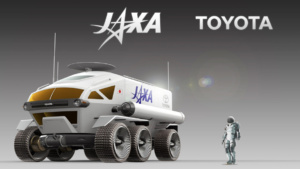
Japanese Aerospace Exploration Agency (JAXA) and Toyota working together – picture from the Interweb

Since 2019, the Japanese Aerospace Exploration Agency (JAXA) and Toyota have been working together to create an recreational vehicle (RV) knockoff for off-roading on the moon, not that the moon has a lot of roads. Named “Lunar Cruiser” after the Toyota famous Land Cruiser, the pressurized rover (a glorified camper van crossed with a mobile lab unit) will allow astronauts to spend several days on the surface of the moon at a time exploring and experimenting. (Note: All the American and scientific websites are saying “days”, the Toyota website says “approximately a month”. That is some ambitious goals they got there.)

America and Japan have signed treaties (which hopefully future presidents will not renege on) to bring the rover to the moon. America is also developing a smaller, non-pressurized rover, similar to the beach buggy used in the past where spacesuits will be required to ride. The plan is to have all of these vehicles on-line for the later Artemis moon landings – around 2030.

The really cool part is the Lunar Cruiser is expected to have a ten-year life span. Once it has touched down on the moon, it will be reused for multiple missions. (And we know how long Toyota products usually last beyond their intended lifespan!)

Solar panels in the tubes stored on its side will allow the vehicle to charge when not in motion and between missions.

Now to get into all the technology being developed for the moon Land Cruiser which will also benefit us here on earth:

  1. Not directly mentioned on the Toyota website but clearly shown on the videos are the new ever-inflated tires used in construction, only metal version instead of rubber since rubber doesn’t do well in moon temperature extremes and airless surface. Air pressurized wheels aren’t the best for a moon environment. (Bridgestone Corporation is helping with these.)
  2. Reducing strain on the astronauts working by making most of the driving automated. Yep, an automated “car” specifically build for off-the-road consideration (and 1/6 gravity). The astronauts will only need to intervene for the hardest parts. – technologies feeding into this include “radio signal navigation, safe driving route generation, an intuitive driving control, <and> driving assistance with a superimposed display.” (Toyota)
  3. With the cruiser being automated (for the most part), when astronauts aren’t in residence, the vehicle can still explore the surface whenever the cruiser is on the sunlight side of the moon. – For earth technology benefits: “remote and automated scanning of disaster areas or goods transportation in dangerous zones.” (Toyota)
  4. Rollover prevention.
  5. The deployable solar panels can also help make Earth-side vehicles more sustainable for remote villages and refugee camps.

Are you reading to go on some serious off-the-road RV-ing? I know I am.

Bibliography 

Nevistanegocios. “Lunar Cruiser’: El Vehiculo de Exploracion Espacial Tripulado de Toyota y Jaxa ya Tiene Nombre.” 2020 September 7. (https://revistanegocios.es/lunar-cruiser-el-vehiculo-de-exploracion-espacial-tripulado-de-toyota-y-jaxa-ya-tiene-nombre/ – last viewed 5/22/2024)

Pearlman, Robert Z. “Japanese astronauts will join NASA moon landings in return for lunar rover.” space.com. 2024 April 11. (https://www.space.com/japan-astronauts-moon-rover-artemis-agreement – last viewed 5/22/2024)

Smith, Marcia. “Biden and Kishida: First Non-US Astronaut on the Moon will be Japanese.” SpacePolicyOnline.com. Updated 2024 April 11. (https://spacepolicyonline.com/news/biden-and-kishida-first-non-us-astronaut-on-the-moon-will-be-japanese/ – last viewed 5/22/2024)

Toyota. “Toyota’s Lunar Cruiser from Earth to the moon and back.” 2023 August 30. (https://www.toyota-europe.com/news/2023/lunar-cruiser – last viewed 5/22/2024)

Toyota Motor Corporation. “Pressurized Rover (New Image) Movie.” 2023 October 30. (https://www.youtube.com/watch?v=FkJv3ciCf3M – embedded link above)

ZigWheels. “Meet Toyota Lunar Cruiser, the one built for the moon.” 2020 August 21. (https://www.zigwheels.my/car-news/meet-toyota-lunar-cruiser-the-one-built-for-the-moon – last viewed 5/22/2024) – I think the author of the article is Purva Jain.


Geeking Science: O is for Otzi the Iceman

An updated picture of Ötzi, alongside the previous reconstruction. Image: © Max Planck Institute for Evolutionary Anthropology (Bridge)

O is for Ötzi and the subject of today’s Geeking Science. One of the best aspects of science is revisiting old knowledge with new skills and techniques to get a better image.

Our first view of Ötzi was in 1991 when German hikers discovered him in the Italian Alps.

(Ötzi, while still frozen in the glacier, photographed by Helmut Simon upon the discovery of the body in September 1991 – Fair use,

Extraction from the melting glacier included clothing (made from leather and hide) and hunting tools (axe, flint knife, and longbow). (Bridge)  And was done … poorly. Initially, the approach was to remove a cadaver of some poor mountaineer who had the bad luck to die in the past decade on the glacier. Ice axes and a pneumatic drill got the body out of the ice, breaking the longbow among other archeological nightmares. (Wikipedia)

The first change of status happened when Konrad Spindler dated the body based on the copper axe to be “at least four thousand years old” a couple weeks later. (Wikipedia)

Later carbon dating from tissue samples of the corpse and carbon-based items found with him place it at 5,000 years. Further studies give a 2 out of 3 chance of death between 3239 and 3105 BC. (That is a 134 year window.) (Wikipedia) Each dive into Ötzi’s body, with better techniques and tools, gives better information. From eyeballing a body by untrained hikers to carbon dating a 150 year window about five thousand years ago.

This is true about nearly every discovery associated with Ötzi. From white hairy hunter-gatherer man who fell into a glacier, to the present view of a balding man of agricultural descent (though presently a hunter), with tattooed dark skin (about the shade of the Mediterranean), who got ambushed, but escaped to run home until he died on his journey back.

In 2001, an “X-ray examination revealed an arrowhead lodged in his left shoulder, suggesting that he likely bled to death”. (StudyFinds 2023)

Fig 1. Overview on the Iceman’s Health Problems – unknown source for picture as the connecting website is gone

While it looks like Ötzi had a bad life, he died in his mid to late forties. By mid-forties most modern people, even without an active lifestyle such as hunting, have back pain, bad knees and hips, some stomach problems, a couple of cavities, and likely a head injury of some sort – from dodgeball as a kid. The healed rib fractures is interesting; he lived long enough to recover from broken ribs. I wondered who helped him.

In 2003, Nerlich et.al. took a scraping where previous examinations showed a possible deep stab wound. They weren’t sure if it was an injury from life or an insult to the body from being tossed around by a glacier and then being extracted from the glacier with ice axes and a drill. They rehydrated the tissue sample and the results show blood clotting (like a scab) progressed between three to eight days after the injury.

I wonder if a similar study has been done on the arrow head injury. We know there is a hole there, but how long was it there. These two injuries together paint quite a picture and very different from some hunter randomly falling to his death in a glacier five thousand years ago.

The writer in me want to know. Did he and a hunting partner get in a disagreement and Ötzi got stabbed in the hand and shot with an arrow while he escaped? Maybe a group of invaders had captured him and the arrow shot happened when he grabbed a moment to run away, after playing up his trick knee and bad back with the wily actions of an man who had aged long enough to need to live by his brains instead of just his brawn. Maybe he was the invader into other people’s territories who hunted him down for his trespass, an old man scent to test their security.

The more his body reveals to us, the more questions open up.

In 2009, a CAT scan combined with DNA analysis gave us his last meals included ibex game meat, goat domesticated meat, wheat (likely bread), roots, and fruits. He was found with provisions such as barley, einkorn wheat bran, and flax and poppy seeds. (Wikipedia)

In 2012, the first DNA genome pass was done. The DNA samples used were highly contaminated. From them, and a cultural bias toward white people in cold climates,  drawings and presentations show Ötzi to be white skinned and hairy. The dark skin of the mummy corpse was attributed to the mummification process (never mind that most mummies studies are of Egyptians and … wait for it … people of non-“white” skin). (Hesman Saey)

Genes giving lighter skin tones didn’t drift in to humanity until nearly a thousand or two thousand years later. Humans started in Africa; and European-descent people tend to attribute light-skin happening MUCH MUCH later into the “distant” past than it did.

It happened “recently” on the genetic scale. Like the Egyptian Empire setting up along the Nile recent. Like after China had silk for over a thousand years already, recent. Like bricks and city states had existed for a millennium, recent.

Civilization, cities, textiles, writing, and history all pre-date “white” skin. Europe didn’t create the building blocks of humanity.

In 2015, using special photographic techniques, suspected tattoos, which had been hard to see against the mummified skin, revealed 61 tattoos. (Wikipedia)

In 2023, a new DNA study on Ötzi genome revealed much of what we know now. Part of it is better techniques for clearing up contamination. Part of it is a broader base of genetic knowlege indicating human migration. The Human Genome Project started in 1990 and, thanks to massive increases in computer calculating powers, completed in 2003 (with some outliers finally solved in 2022). (Wikipedia HGP) Techniques, knowledge, and calculation powers had improved by several multiples.

New information indicated his ancestors were likely Anatolian farmers (StudyFinds 2023) rather than hunter-gatherers. The dark skin of the mummy likely matched the skin color Ötzi had in life. Instead of flying grey hair in his forties, he was much more likely going bald. He had the DNA for type 2 diabetes, but his diet protected him from the genetic predisposition.

You got to Geek Science when it revisits and retests and reassesses what is known. The past lifting knowledge up, the present reviewing and improving, and the future built on a more accurate view of how the world works and where humanity came from.


Bibliography

Bridge, Mark. “Bald and dark like his mummy – DNA redraws picture of Iceman Ötzi.” History First. 2023 August 16. https://historyfirst.com/bald-and-dark-like-his-mummy-dna-redraws-picture-of-iceman-otzi/ last viewed 6/25/2025.

EurekaAlert! “Reanalysis of Iceman Otzi’s genome reveals dark skin, male pattern baldness and more.” 2023 August 16. https://www.eurekalert.org/news-releases/998276 last viewed 6/25/2025.

Hesman Saey, Tina. “A new look at Ötzi the Iceman’s DNA reveals new ancestry and other surprises.” ScienceNews. 2023 August 16. https://www.sciencenews.org/article/new-otzi-iceman-dna-ancestry-genome last viewed 6/25/2025.

Metcalfe, Tom. “Ötzi the Iceman may have been bald and getting fat before his murder 5,300 years ago.” LiveScience. 2023 August 16. https://www.livescience.com/archaeology/otzi-the-iceman-may-have-been-bald-and-getting-fat-before-his-murder-5300-years-ago last viewed 6/25/2025.

Nerlich, Andreas G.; Bachmeier, Beatrice; Zink, Albert; Thalhammer, Stefan; Egarter-Vigl, Eduard. “Ötzi had a wound on his right hand.” The Lancet. Volume 262, Issue 9380. 2003 July 26. https://www.thelancet.com/journals/lancet/article/PIIS0140-6736(03)13992-X/fulltext last viewed 6/25/2025.

StudyFinds (2022). “Farming made our ancestors shorter, scientists discover.” 2022 April 9. https://studyfinds.org/farming-made-ancestors-shorter/ last viewed 6/25/2025.

StudyFinds (2023). “Ötzi the Iceman had dark skin and was bald – New study rewrites ancient history.” 2023 August 16. https://studyfinds.org/otzi-the-iceman-dark-skin-bald/ last viewed 6/25/2025.

Wikipedia (HGP). “Human Genome Project. undated. https://en.wikipedia.org/wiki/Human_Genome_Project last viewed 6/25/2025.

Wikipedia. “Ötzi.” undated. https://en.wikipedia.org/wiki/%C3%96tzi last viewed 6/25/2025.
Geeking Science: N is for No-Fault Divorce

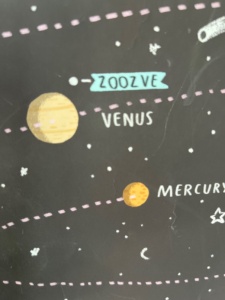
Meme from the Interwebs, basically public domain because of wide-spread distribution

With the present rapid changes, and even before, I often sent forward memes that crossed my path on Facebook for others to either enjoy or learn from. Recently, a few people have (RIGHTLY) called me out for not fact-checking things I was sharing. Two deeper dives have ended with me deleting the post; in another case, I didn’t have the energy to do the research – I think it was correct, but gut feeling is not enough – and so just deleted it.

For the Meme above, written  by Qasim Rashid, I merrily forwarded it and then went, wait, I need to fact check it.

  1. I found out who Qasim Rashid was: an attorney who has run on the Democratic ticket for state senate in Virginia
  2. When he wrote it: International Woman’s Day in 2023
  3. I found a fact checking website (truth or fiction) which confirmed the data through their research – complete with article sources on the bottom (LaCapria)
  4. I found further data on the South Dakota ACLU website. (Chapman)

As someone who took a lot of Sociology in college (one of my two majors), I was fascinated by the statistical study which could happen because states legalized no-fault divorce at different times. As a result, scientists were able to run models to see if suicides rates impacted:

“For example: California changed its law in 1969, Massachusetts in 1975. “If we expect the suicide rate to fall, we expect it to fall six years earlier in California than in Massachusetts,” said Wolfers.” (Chapman)
This step-stone approach allowed Stevenson & Wolfers to examine suicide rates outside of larger on-going cultural changes such as allowing contraceptives, change in medicines to help with depression, women getting the right to have credit cards and start their own businesses, etc.
The impact? A six percent (6%) decrease nearly immediately for women, no change for men. A twenty percent (20%) decrease in rates after a couple of decades – for women. I suspect why the full impact wasn’t immediate was community pressure – families, churches, and other support systems returning women to the untenable situations, refusing to help them escape even after it became legally possible.
Going further down the rabbit hole, I discovered domestic violence decreased (for both men and women), and murder by partner decreased (for women only).
In other words, when men cannot get out of a poisonous relationship, they kill their partner, and when women cannot escape the situation, they kill themselves.
What is needed for a Fault Divorce? Prove wrongdoing by the spouse: cruelty, adultery, or desertion were the common causes.  But the woman or man would have to prove it IN COURT, telling the judge and other members of THE COMMUNITY WHERE THEY LIVE how they were raped (if the state allows one to claim rape by a spouse, that is a fairly new thing too – South Dakota and Nebraska were the first two states to completely outlaw it in 1975 (wikipedia)), or beaten, or verbally abused. The spouse would need to show bruises, which likely have healed by the time the court date came around, if the woman or man lived that long.
Otherwise, if fault cannot be proven to the satisfaction of the court, the divorce ending the marriage had to be mutually consented to. In a world where women could not own property, would lose a job if they got pregnant, needed a male “owner” (for lack of a more accurate term) to sign off on even getting a bank account, many would refuse to get a divorce because they could not survive without a husband. (Hence why males chose option B, homicide.) On the other side of the equation, men did not have time to work in the house and on the job. Losing the partner (or forced domestic-laborer), would result in lack of food, clean clothing, and a host of other necessary services to be well-placed within the job force. Getting both people to agree to lose these economic benefits was rare, even at the steep cost of mental health and relationship well-being.
If America returns to the age of either mutual agreement or proving fault for a divorce to occur, especially with the ongoing stripping of women rights, one of two things will happen – (1)  females will return to the previous situations resulting in “trapped” reactions – suicide and murder or (2) females will just stop getting married (which will be an interesting side-effect for the “Family” crowd pushing for this legal change to deal with).
A healthy relationship needs the participants to have the power to end it when it is no longer beneficial. I love reading romances, and the healthy relationships resulting in HEA are the best.
Bibliography
Chapman, Samantha. “Attacks on No-Fault Divorce are Dangerous – Especially for those Experiencing Domestic Violence.” ACLU South Dakota. 2023 October 20. (https://www.aclusd.org/en/news/attacks-no-fault-divorce-are-dangerous-especially-those-experiencing-domestic-violence – last viewed 3/31/2025)
LaCapria, Kim. “After No Fault Divorce Was Legalized in 1970, Female Suicide Rates Dropped 20 Percent.” Truth or Fiction. 2023 March 8. (https://www.truthorfiction.com/after-no-fault-divorce-was-legalized-in-1970-female-suicide-rates-dropped-20-percent/ – last viewed 3/31/2025)
Pickler, Les. “Divorce Laws and Family Violence.” The Digest. 2004 March 01. (https://www.nber.org/digest/mar04/divorce-laws-and-family-violence – last viewed 3/31/2025)
Stevenson, Betsey & Wolfers, Justin. “Bargaining in the Shadow of the Law: Divorce Laws and Family Distress. (Working Paper 10175).” National Bureau of Economic Research. December 2003. (https://www.nber.org/papers/w10175 – last viewed 3/31/2025)
Wikipedia. “Marital Rape in the United States.” (https://en.wikipedia.org/wiki/Marital_rape_in_the_United_States – last viewed 3/31/2025)
Wolfers, Justin. “Did Unilateral Divorce Laws Raise Divorce Rates? A Reconciliation and New Results.” The American Economic Review. December 2006. (https://users.nber.org/~jwolfers/papers/Divorce%28AER%29.pdf – last viewed 3/31/2025)