Geeking Science: Hydration and Sleep

Photo by mrjn Photography on Unsplash

It’s August and that means camping and/or convention time. Last minute travel before summer ends and school begins. Lingering sun and end-of-summer parties. Sleep schedules are destroyed. Long used to the heat of summer, people are sucking down water anymore – caffeinated sodas are now the go-to after months of long days pushing sleep later and later. Beer and wine consume watching the summer sunsets.

Hydration, sleep, and a healthy body go together. Hydration regulates body temperature (sweating), food processing (digestion), and poisons and spent body tissue removal (healing). Sleep is tied to healing as well and requires proper hydration to perform its functions.

Overnight, you will exhale about half a pound of water and process another half pound into urine as part of digestion and healing. Yes, you exhale significant amounts of water in a process called respiratory water loss (Wonderlearning.blog).

You know how you are to drink 2 liters or 64 ounces of water a day? (Well, consume that much liquid. Grapes, meats, gravies, and soups are part of the consumption.) That comes out to be about four pounds of water. One pound of that is exhaled. Sweat uses another pound, maybe more with high amounts of exercise. Urine is two pounds.

We aren’t just “bags of mostly water,” we are manufacturing and maintenance plants and our industry, like most plants, needs water for temperature regulation, processing, and cleaning.

For today’s Geeking Science, I am not just going to yell at you to stay hydrated so you don’t fall over during the day’s activities, but also so you get enough sleep.

Sleep is needed for the brain to work. Dream time is needed for processing information and is essential for learning and storytelling. You want to write your best, you need to try to sleep your best. Be sure you are drinking enough liquid during the day so that your body has the water it needs at night to clean the poisons, breath, and heal. Learning a new task, plan an extra hour of sleep a night. Pushing out the new story, until the basics are figured out maybe cut back on the caffeine and increase the sleep.

Get rid of things that interfere with you sleep function. Stop drinking caffeine at least 8 hours before bed (yes, caffeine impacts your sleep functions for 8 hours). Stop drinking alcohol at least three hours before bed. (Bryan) Turn off glowing blue screen an hour before bed. Instead of doing the dishes then your writing, do your writing then work on the dishes.

Hydrate well.

Sleep well.

Oh, one additional Geeking Science this I found researching this article, while being well-rested greatly impact your healing rate and pain receptors (Apria), when you are injured can also impact the healing rate. Skin wounds received at night heal much more slowly than during the day (Dengler). The speculation is the natural cycle of healing of SKIN DAMAGE is tied to daylight because people are more likely to be injured during the day so the body set up that part of the health system to focus during daytime hours. Take away for me is any surgery needed should be performed during the day if it is a planned, non-emergency surgery.

Bibliography

Apria. “Sleep and Wound Healing: Mechanisms, Evidence, and Clinical Implications.” (undated, but some of the article’s references are from 2025). https://www.apria.com/clinical-education-hub/sleep-and-wound-healing-mechanisms-evidence-and-clinical-implications last viewed 1/3/2026.

Bryan, Lucy. “Surprising Ways Hydration Affects Your Sleep.” Sleep Foundation (a mattress seller). 2025 July 16. https://www.sleepfoundation.org/nutrition/hydration-and-sleep last viewed 1/3/2026.

Dengler, Ron. “Daytime wounds heal more quickly than those suffered at night.” science.org. 2017 November 8. last viewed 1/3/2026.

WonderLearning.blog. “Breath Out Water?! The Surprising Amount You Exhale Every Day.” 2025 October 09. https://wonderlearning.blog/breathe-out-water-surprising-amount-exhale last viewed 1/3/2026.

Geeking Science: Watching Time

Photo 181097180 | Clock Moon © Vladwitty | Dreamstime.com

(paid for at Dreamstime, creator of photo is from the Ukraine – if you reuse, please pay the artist – thanks!)

Do you know what time it is? No, I don’t mean where you live … or Greenwich Mean Time (GMT) (also called Universal Coordinated Time (UCT). I mean on the Moon.

You see, we – we being humanity – haven’t agreed to a standard yet.  Thanks to the Artemis Accords, that will change soon. The Artemis Accords have set up the political agreements needed to come up with a Coordinated Lunar Time (CLT). The project driving the accords is also driving the need to come up with the standard time measurement sooner rather than later. The goal is by the end of 2026.

You would think it would be simple, just slap the GMT up there. But remember we live in a Time-Space Continuum with a Unified Theory – one where we have discovered that GRAVITY impacts TIME. With a gravity 1/6th of earth, “lunar time gains about 58.7 microsecond per day compared to earth time.” (Thorsberg) That comes to about 0.02 seconds per year. That might seem like nothing to us humans, but for computers and calculations of landings on moving objects like planets and asteroids or sending supplies and communications between the Moon and Mars, 0.02 seconds mean the difference between a soft landing and a crash, between a communication hitting a dish or passing on forever through outer space.

More precision is needed. Especially with all the countries (dozens) and companies (hundreds) involved.

The situation gets even more fun (fun being what scientist find as intellectually challenging) because the gravity is so low on the Moon, the different between the highest spot on the Moon (near the Engel’gradt Crater) and the lowest spot in the Aitken Basin, (US Geological Survey) time passes noticeably different. At least at the level of calculations which matter to computers and interplanetary velocity calculations. The solution likely will involve atomic clocks at various locations and then averaging them, like we do here on Earth.

The Moon has helped Earth residents keep time for millennia. Now as we become Moon residents, it’s time to figure out a new way to track time.


Bibliography

Roulette, Joey and Dunham, Will. “Exclusive: White House directs NASA to create time standard for the moon.” Reuters. 2024 April 3. (https://www.reuters.com/science/white-house-directs-nasa-create-time-standard-moon-2024-04-02/ – last viewed 5/22/2024)

Smith, Marcia. “What Time is it on the Moon? OSTP Wants to Know.” SpacePolicyOnline.Com. 2024 April 2. (https://spacepolicyonline.com/news/what-time-is-it-on-the-moon-ostp-wants-to-know/ – last viewed 5/22/2024)

Thorsberg, Christian. “NASA Will Create a New Time Zone for the Moon, Called Coordinated Lunar Time.” Smithsonian Magazine. 2024 April 4. (https://www.smithsonianmag.com/smart-news/the-moon-will-get-its-own-time-zone-called-coordinated-lunar-time-under-nasas-lead-180984076/ – last viewed 5/22/2024)

US Geological Survey Communications and Publishing. “Ever wonder what it would be like to wander around the Moon? Sky gazers can now journey there without leaving their desk.” USGS.gov. 2015 October 15. (https://www.usgs.gov/news/featured-story/visit-moon-without-leaving-your-desk#:~:text=The%20highest%20point%20on%20the%20lunar%20surface%20is,is%2029%2C836%20feet%20below%20the%20Moon%E2%80%99s%20average%20elevation. – last viewed 5/22/2024)

Other Cool Blogs: The Tragedy of the Commons

The Tragedy of the Commons is an economical conversation we should be having, especially in the month of “NoKings” protest and 81 people have more money than 50% of the world’s population combined.

Wealth for the world as a whole grows faster when the wealth is spread out, as seen in the growth of industry and knowledge in the fifties and sixties. Wealth for individuals grows faster when concentrated, funneled to one person and bypassing the needs of others.

The Tragedy of the Commons kicks in when the wealth that is funneled is a limited resource. Not only is the wealth being concentrated in our world into the hands of the few, but limited resources are being removed from future generations, so the wealth is being being concentrated in our time. When government runs right, wealth is not only distributed more evenly but also conserved for the future.

We must reactive the Courtesy of the Commons, before we become the Tragedy of the Commons.

I ran across an Instagram by a woman talking about it and a YouTube video with a male voice.

“Think Powers” on Instagram often post science-based vlogs. The Tragedy of the Commons one is: https://www.instagram.com/reel/DJ2LF72uCdh/?igsh=MWhkMm1vajk4MG9sOQ%3D%3D&fbclid=IwY2xjawKchXRleHRuA2FlbQIxMQBicmlkETFteDJLRWZLZEtXaTZGNzlsAR4SC-Ig9W-bgLllKkod4CpF-gFPXkt5GjqyR3XzYmPmZ7eW0PMf5HBK7yUvCQ_aem_jise-BbalVp9Sa3Dp8SuPQ

Another cool vlog by her is “Why Science Needs Boundaries: The Black Death & The God Of The Gaps” found here: https://www.instagram.com/thinkingpowers/reel/DKwrSYLRldy/

The YouTube video is created by TED-Ed (which have a Patreon):

Geeking Science: The Forever Storm

Photo by NASA Hubble Space Telescope on Unsplash

Do you ever think about the Great Red Spot of Jupiter? About exactly what that storm represents?

It’s Geeking Cool!

Our brains are pretty hard-wired that planetary surface stay the same. It’s a planet right? Sure Jupiter is a gas giant and we take lots of pictures of the swirling gases, but that Great Red Spot reassures our instinctive assumption that planets are still fixed even when gaseous.

Except, no, it isn’t the case.

“The first record of the Great Red Spot is a drawing made in 1831 by German amateur astronomer Samuel Heinrich Schwabe of the “Hollow” in which the spot sits.” (Britannica) And the spot has been continuously observed ever since 1878.

There was a storm recorded in 1665 by Italian astronomer Gian Domoenico Cassini, of which records stopped in 1713. Some scientist think it may have been the Great Red Spot, but more likely the “Permanent Spot” storm subsided and a new storm arose a hundred and sixty years later. Further supporting evidence of a new storm is the Great Red Spot is in the Southern Hemisphere and the drawn records of the Permanent Spot seem to place the phenomenon in the Northern Hemisphere.

Whether long-lived storms flowed over Jupiter’s surface before 1665 can only be speculation. Use of concave lenses to study the sky is recorded in the very early 1600 in Western Europe and spread to China within a decade. (Wikipedia: History, Wikipedia: Chinese) These solidified into telescopes by mid-1600s. Scientists long journaled and drew about the dance in the heavens, but telescopes took the images possible to a whole new level. Before then, while Jupiter is visible to the naked eye, details would not have been able to be picked out.

Having been visible 194 years at this point (oh, do you think we can have a 200-year anniversary in 2031?), the storm has started to shrink, presently a third of its largest size. A “mere” 16,000 kilometers long (still larger than Earth), down from 48,000 kilometers. (Ashford) Scientists are not sure if the storm is winding down, or just changing its shape.

On Earth, when large storms reduce in size over the ocean feeding them energy, the eye of the storm solidifies into hurricanes, the winds increase, and the damage once it makes landfall kicks up the ranking on the Saffir-Simpson hurricane wind scale. On land, hurricanes are cut off from their energy and disperse – growing wider, weaker, until they fall apart.

The Great Red Spot is clearly the eye of a storm, a nearly 200-year-old hurricane the size of the Earth. But modeling it off of Earth weather gets weird because the planet’s atmosphere runs on liquid ammonia not liquid water, and doesn’t have solid ground reducing the power of storms. The mechanism of shrinking storms getting faster winds hasn’t proved to be the case based on data being gathered from satellites in Jupiter’s orbit. Instead, the Spot is deepening, like a swirling funnel cloud forming in green clouds, then lowering down through the atmosphere until it hits the ground as it gets smaller and faster. Jupiter has no ground; how far down can the Great Red Spot go?

Okay, I need a second to recover from the image of a tornado the size of Earth dropping a funnel cloud through layer after layer of Jupiter’s atmosphere. Don’t ask me why an Earth-sized tornado is scarier than an Earth-sized hurricane, but it just is.

I am curious to see if Jupiter’s Forever Storm will dissipate in my lifetime, like a tornado falling apart. If it does fall apart, is Jupiter in “hurricane season” and the atmospheric energy will make a new one or even a chain of new ones? In the meantime, will the deepening of the storm bring new materials from the lower atmospheric levels to the top of Jupiter’s atmosphere for us to study?

The Great Red Spot, so geeking cool.

Bibliography

Ashford, Ade. “Don’t miss Jupiter’s ‘unravelling’ Great Read Spot.” Astronomy Now. 2019 June 6. https://astronomynow.com/2019/06/06/observers-urged-to-monitor-jupiters-unravelling-great-red-spot/ last viewed 6/13/2025.

Britannica. “Great Read Spot.” (undated). https://www.britannica.com/place/Great-Red-Spot  last viewed 6/13/2025.

NASA Goddard. “Jupiter’s Great Red Spot Shrinks and Grow.” YouTube. 2018(?). https://www.youtube.com/watch?v=JDi4IdtvDVE&t=126s last viewed 6/13/2025.

Wikipedia. “Chinese astronomy.” (undated). https://en.wikipedia.org/wiki/Chinese_astronomy last viewed 6/13/2025.

Wikipedia. “History of the telescope.” (undated). https://en.wikipedia.org/wiki/History_of_the_telescope last viewed 6/13/20256.

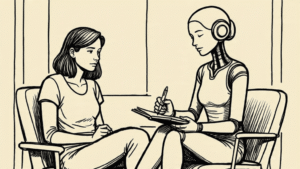
Editing Rant: Why AI is a No-No

Image acquired from the Internet

A recent contact I got was a “Hi, I am an illustrator who uses AI.” To which I immediately responded my publisher (and I) have a strict no-AI policy. (points to them for admitting the AI use up front.)

Well, they wrote back and asked why? They said they got a lot of responses like that and were wondering why the publishing industry is so against this tool everyone in the business world is embracing.

I needed to present an argument that wasn’t “well, AI is evil and makes Sarah Connor cry.” Because this person is trying to make a living with art, which means creating art fast in a variety of forms. AI can be a tool like the collage-type art of early photoshop. And for some people everything is shareable – I remember early pirate sites for music and books created by those that thought all data should be free. So what argument to use?

I gave the person the “the courts have declared AI-created materials are not copyrightable.” The fact is who do you attached the “creative” part: the people whose materials and skills the database is built-on (whether the material was bought legally or collected for AI training (like most medical interpretation softwares), mass-trained through people licensing the equipment and uploading suggestions (like many editing softwares), or mass-scrapped/stolen (like most artwork and writing softwares)); the assemblers creating the database; the programmer/team/company that created the search engine/AI platform; or the person using the AI to create the image per their specifications.

When publishing companies (and other companies) cannot attribute copyright ownership, they can not go the AI route. Contracts require clear lines of ownership to distribute rights. (Side-thought: Companies using AI-generated marketing materials, really should rethink their choices, because I bet if you can’t get copyright, you can’t get trademark either.)

Anyway, the person thanked me, saying no one explained it that way to them before.

AI isn’t inherently evil, but there are other considerations and maybe we writers and artists should start pointing out the “bottom line” for companies using AI isn’t protected rather than argue the ethical and moral stances. Many people only are able to listen to money. No copyright, no contract, no clink-clink.

That being said, many aspects of how humans are implementing AI are counter-productive to society as a whole and individuals in general, which ethically and morally could be interpreted as evil.

Ethically, the database builders doing the mass-scrapes, stealing materials under copyright is wrong. Especially when the follow-up programming to access that database includes suggesting prompts where copyright is worked around: create a drawing in the Style of Disney or write a horror book in the style of Stephen King. Both are clear violations of society’s agreement to protect people’s intellectual property so their efforts are paid and they have the opportunity to continue to create what people think is worthy of purchase. The owners of the creative materials did not agree to this use. Ethical sourcing of the materials for the databases needs to be required.

Morally, the electric and water required for datacenters, when the infrastructure is already stressed and normal people are constantly being asked to save irreplaceable energy resources like uranium, coal, and oil, is abhorrent.  While on some levels, the mass-use of the AI-products expands the capability and considerations of LLM (large language models) and AIs (artificial intelligences), making developing of productive uses of AI easier. For example, using AI to figure out how to water crops and target pesticides increases food for all. Also using LLMs to look over medical tests and crunch numbers beyond what humans are capable of save lives. Both of these uses are beneficial, and having everyone exploring LLM products is bringing down the price while also encouraging programmers and companies to discover more uses.

But programs like ChatGPT are being used indiscriminately because people aren’t seeing the cost. Right now the companies are underwriting it in the hopes to make even more money later, but “a single 100-word email in Open AI’s ChatGPT is the equivalent of consuming just over one bottle of water.” (Garrison) Making five quick pictures of you as various Disney Princes is equal to a day’s worth of water for one person. And that isn’t even counting the energy use. (The water is used to cool the heat generated by datacenter computers.)

People are using ChatGPT to write grocery lists. Is a grocery list really worth a bottle of water plus energy? The destruction of trees and habitat for the large area needed for these centers?

I know one email doesn’t matter, but just imagine several cities worth middle schoolers figuring out which version of Pokémon is the best version of their pet, with all the twenty-somethings using it for groceries lists, and all the tech bro saying “send out an email on a meeting about using paper straws to save the environment,” and you can see where the waste of limited resources becomes objectionable.

With the present issues with climate change, is the energy and water use of the datacenters for entertainment purposes appropriate ethically and morally? Is it appropriate to build datacenters on an already stressed electric grid with rolling blackouts just so people can have help writing simple 100-word emails? And is AI/LLM programs and apps the best way to write those emails?

TL/DR: Authors, artists, and other creatives have a love-hate relationship with AI, balanced between an exciting new creative tool and the exploitive, illegal tapping of the creative community by scraping intellectual property for training LLMs. Publishers and those whose business model is based on protecting intellectual property cannot put AI-generated material under contract because of legal considerations of rights and ownership. Additional ethical and moral consideration of the wide-spread use of LLM and the related datacenter industry required to support them makes causal business and entertainment uses of LLM and AI questionable.

Final Thought: I want machines to do the boring grinding repetitive tasks so I can make art and write books.


Bibliography

Garrison, Anna. “How Does AI Use Water and Energy? Unpacking the Negative Impact of Chatbots.” GreenMatters. 2025 Jan 10. https://www.greenmatters.com/big-impact/how-much-water-does-ai-use – last viewed 6/8/2025.