This imagery from NASA’s Hubble Space Telescope from Oct. 8, 2022, shows the debris blasted from the surface of Dimorphos 285 hours after the asteroid was intentionally impacted by NASA’s DART spacecraft on Sept. 26. The shape of that tail has changed over time. Scientists are continuing to study this material and how it moves in space, in order to better understand the asteroid. Credits: NASA/ESA/STScI/Hubble
You can take humans off world, but you can’t take the world out of the humans. Or should this just be “humans will be humans”?
I’ve previous mentioned NASA solution of fixing the Martian Lander by having it hit itself with a shovel. (Percussive Maintenance; January 21, 2021)
Now they, our biggest scientific brains, are exploring asteroid defense of planet Earth so we don’t go by the way of the dinosaur, by …. hitting an asteroid with a solid object, in this case a DART.
Double Asteroid Redirection Test exceeded the minimum goal of changing the orbit an asteroid by 73 second by a bit … like 33 minutes … with a planned collision. (NASA. October 2022; Paoletta, 2022)
When in doubt, bang it, see what happens.
Of course they use words like “kinetic”, “impact”, “intentional”, “defense technology”. But really, we figuring out how to swing a stick in space so the bad space rocks won’t hurt us.
Ain’t science grand?
Of course scientists being scientists, they are still sorting the data what happened beyond the Percussive Defense incident. Further study indicates that the change in orbit around the second asteroid was a combination of initial impact and the ejecta tossed out from the impact. (NASA, December 2022)
DART’S LAST COMPLETE LOOK AT DIMORPHOS In a thrilling moment, DART captured this view of Dimorphos just as it was about to crash into the asteroid moon. Seconds later, the transmission ended. Credit: NASA/Johns Hopkins APL
A lot of it has to do, not with work and effort, but making decisions, especially for women. If both partners are working full-time, and come home and only one is making all the decisions there, someone has two full-time jobs even if the other partner is helping out when asked. Often putting together enough energy to ask for help takes as much energy as doing it yourself.
Sit down with your partner and split the decision-making and the task work. When I had a partner, I figured out making meals (making the meal plan, creating the grocery list, shopping and stocking the food, cleaning the cooking area, cooking to schedule so all the dishes come out at the same time, setting the table, clearing the meal dishes and cooking pans, doing the dishes, and putting everything away) took as much decision-making and task energy as THE REST OF THE HOUSE COMBINED (yard work, laundry, and clearing & cleaning).
If you have a partner, find time to sit down and state how to help with various tasks. Like “I’ll do the laundry and put things in baskets by the door, and you take them and put them away when you see them out.” If cues can be set up to let the other person know when and how to help, the decision maker doesn’t need to make another decision of asking each and every time (becoming a nag). “After the last kid leaves the table, can you get it cleared immediately while I work on the kitchen, then jump in with the kids and get their homework started.”
And both sides need to say thank you.
Emma’s “You Should have Asked” – https://english.emmaclit.com/2017/05/20/you-shouldve-asked/ – is such a shout out to how women are buried under the combination of full-time work AND house work. And, no, it isn’t the case in every house – I know two homes where the male partner is the stay-at-home parent – but in the vast majority, it is the case and that needs to be changed. And as we know change comes only two ways – preparation (talking and planning) or disaster. Don’t wait for the person doing double-load on the decision making to collapse. Have the conversation and find out what are the hidden tasks and decisions you might not be noticing.
Men outsourcing mundane decision making to women and causing decision fatigue – meanwhile they get to preserve their brains for work. (Anne 2022)
If both are working outside the home, it doesn’t matter how “high-powered” the job is, both are constantly making decisions for work. Stocking shelves depends on which needs to be stocked when (say morning coffee needs to be out first, but school supplies by three, and dinner makings by six), how much, and where. In a partnership (marriage or living arrangement), one of the couple is not the home manager.
Okay, now to focus on the GEEKING SCIENCE part of this.
decision fatigue … is a state of mental overload that can impede a person’s ability to continue making decisions (Berg 2021)
The pandemic has made this worse for everyone. A simple run to a store now has four or five additional decisions, especially when COVID-19 started in impacting life in 2020 – mask or not mask, which store, what has the least risk, do we really need this, who is the house is best suited to go. People were exhausted learning how to zoom, work from home, deal with the home stuff – heck, how to dress for the day! Nothing was the same anymore. That first year everyone was in a haze. Most thought “shock”, but a lot of the exhausted-haze was being buried under decision-making from the lost of routines.
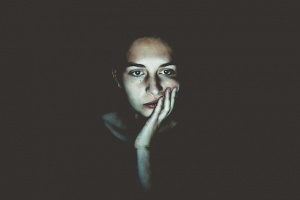
It used to be a joke of a woman “can’t decide what to eat.” That was because she was buried under the house-management and the day-job together and used up all her decision-making ability. During COVID, even the previously protected privileged from double-decision-management, started “binge-watching” Netflix at night … not so much from “I want to see this entire show in one sitting” as “I sat on the couch and stared at the black screen and pushed a button out of habit. I couldn’t get the energy to make the decision to turn it off and go to bed.” People started skipping meals, not because they weren’t hungry, but because they couldn’t decide TO EAT, let alone WHAT to eat, or HOW to make something to eat.
As the brain exhausts its decision-making through the day, it starts doing shortcuts – impulse, avoid, procrastinate, and just don’t decide at all. One of the reasons expensive decisions should be made early in the day; shopping for food at night rather than in the morning will have a lot more impulse buys. Fast food buys happen more at night. The shopping channel sells more at night.
Doctors recommend making lists before shopping to reduce decision-making in the store. You cut out entire aisles of choices with a list in hand. (Berg 2021)
Become aware of mental load and decision fatigue. Maybe some of the New Year resolutions should focus on reducing decisions. Things like “I will create a routine of setting out my clothes at night.” and “Me and my partner will make meal decisions for the week on Saturday and post it on the fridge.”
Take care of yourselves y’all. Work together and support each other.
(Interesting side-note – Anne is Kenya and Emma is France. This is not just an American or European thing.)
Bibliography
Anne (AuDHD Electrical Engineer. @W_Asherah). “Someone has asked me what else I’ve observed. And oh boy – there’s another really messed up one. Men outsourcing mundane decision making to women and causing decision fatigue – meanwhile they get to preserve their brains for work.” twitter.com. 6/14/2022. – last viewed 12/13/2022. (see below for extra)
Since Twitter is having a meltdown, I’ve retyped the screen shots for (Anne 2022) below. (Bolding is my emphasis.)
Someone has asked me what else I’ve observed. And oh boy – there’s another really messed up one. Men outsourcing mundane decision making to women and causing decision fatigue – meanwhile they get to preserve their brains for work. Let me look for the thread (June 14, 2022)
Autism and gender. Do you have a woman in your life who knows everything, plans everything, thinks for everyone, helps solve all problems? Does everyone depend on that woman so much they would be lost without her? Her friends, family, colleagues?
Then joking about “how women can’t decide what to eat” like it’s a cutesy thing. Sir, your (insert) has been making so many decisions that her brain has shut down and won’t let her make any more. She’s literally struggling with comprehending the stuff on the menu. Help her!
The human brain doesn’t have limitless decision-making capacity – it has a bandwidth which when exhausted, someone struggles to think even the most basic thoughts. It’s why you’ll get shouted at for asking “where can I find the spoon.” That “I don’t know” is honest.
The brain, at that moment, doesn’t have the bandwidth to figure out where the spoon is – even when it’s something they put somewhere ever day. It’s super easy for Autistics to realize this in themselves because our social bandwidth is near non existent – we guard the little we have.
(next several tweets are links to articles about decision-making fatigue – some are behind paywalls, but (Berg 2021) is part of the bibliography)
If you relate with both threads – you need a mental health regroup. It’s bad bad. You need to collect yourself before you’re on several sets of antipsychotics for people reasons. If you’re already on them, see if you’re medicating the symptom and try dealing with the source.
It’s 1 pm in Kenya. Off I go.
(thread date changes to June 15)
I don’t know why anyone thinks I’m interested in debating things that impact women’s mental health. Like okay, your sensibilities have been offended and you’re emotionally hurt – learn emotional regulation, sir. I’m here talking to people who are literally breaking down healthwise
And do you know what happens when women show up sick in hospital? They are told they are anxious. They are told “it’s all in your head“. Then when we talk about things that make women anxious and affect their mental health, there’s clowns who want to center themselves.
This isn’t about me. Repeat that to yourself enough times. It’s about people who should start caring for themselves as much as they care for others. Because few people ask “how is the person caring for me doing?”. They just take and drain. And that causes health problems.
We are anxious. We are fatigued. Some are burned out. Some are severely burned out. Someone decides to tweet likely explanations to other women. You get offended because “that’s not the case in my life as a man”. Well, great. Clap for your exceptional self and keep moving.
(Retweet from OziomaOnukogue.eth: Another name for this is: Mental Load. This book by Emma explains it all. We end up making <so many> small tiny decisions that’s there’s barely space to focus on big ones. Yes, the brain freezes from overwork, just like a computer. That’s why it’s not helpful to call women multitaskers.)
Some responses (not copying the twitter tags on these)
On the verge of tears because my God all of this! I’m so tired that by the end of the day I’m literally only capable of staring at the wall.
Yes and once I get the baby to bed I just want to sit and relax but get flak from my SO for not showing interest in him. I’m so tired.
Funny, I still had to make all the decisions in my house even when I ALSO had a full time job.
I’m a single mom now and still make all the decisions. But at least no one criticizes me for them now. Somehow it’s easier. (RESPONSE: Makes sense. If he wasn’t a partner in making decisions, then without him you have one less mental/emotional dependent.)
The number of men I know who “don’t know where things go” in their own drawers/kitchen/refrigerator/house. (RESPONSE: And if you ask them to put it away anyway, they will choose the single most ridiculous, obviously wrong place for it and then do the “but you wouldn’t tell me where to put it.”
I started answering the “whatever you want” with “I want not to have to decide”
After over three years, the one-year mission of the LightSail is complete. November 17 ends the experiment to prove Solar Sailing is a viable technology for space exploration. It’s not sexy-fast, but the ability to explore is now within the pocket book of communities and not just governments trying to one-up each other.
I and 50,000 people like me made this happen. We crowdfunded both the original LightSail (which didn’t make it to space) and the second LightSail.
Even better, another Solar Sail project launched into space before our lovely lightsail deorbited. The Near Earth Asteroid (NEA) Scout is now piggybacking the Artemis I launch for a moon deployment. Now that the concept of Solar Sailing is a PROVEN technology, NASA is using it to test affordability. Space exploration has been limited by the pocketbook; Solar Sailing is providing a blue-light special.
NEA Scout will demonstrate the ability to hitch a ride to one destination and then use a solar sail to fly somewhere else. The small spacecraft will initially ride to the Moon before using a solar sail to leave for a near-Earth asteroid. (NEA Scout, 2022)
Sadly, the NEA Scout did not respond to initial communications. (Bartels, 2022) Blue-light specials mean a cut-back on the redundancy, and a higher chance of failure. It’s a tradeoff – the “do-it-cheaper” concept is cut the price by to a twentieth, knowing the failures will triple – with the hope of still a savings at nearly by having seven times the missions being successful.
In the case of Artemis I, seven of the ten CubeStats deployed without issue. The NEA Scout is one of three with a problem status. (Messier, 2022)
Seven out of ten isn’t bad. I wish the solar sail made the random statistical cut. Another time.
This is now, This is our future. We can reach the stars.
Messier, Doug. “Status Report on Artemis I Secondary CubeStat Payloads.” Parabolic Arc. November 17, 2022. – Last viewed 12/5/2022 (link no longer works 4/26/2024).
“NEA Scout”. NASA. – Last viewed – 12/5/2022. (link no longer works 10/16/2023)
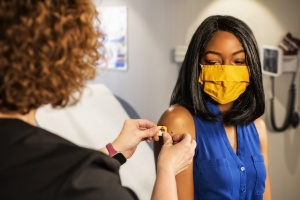
Today was my annual doctor’s visit and they gave me the second part of the shingles vaccine, and I just want to take a moment and gush about how Absolutely Amazing it is to live in a time of vaccines.
Some of you might be old enough to remember the most common disease “prevention” method known to mothers everywhere … it’s “The neighbor’s kids have chicken pox, go play with them.” Why did primary caregivers make sick children play with well ones? Well, some diseases are just nasty in adults, but kinder to children. Best solution for chicken pox was get it over early.
Then there was “keep away”. Mumps, scarlet fever, polio, and other diseases causing blindness, brain damage from high fever, or crippling. Those children and adults were isolated if at all possible. One version of keep away was the “back room” where grandma or other elderly person with a communicable disease like pneumonia was isolated. The teenager, with the strongest immunity system but not yet working at high wages, would be the primary caregiver for the ill adult while the rest of the adults (and often children) remained wage-earners / food-producers.
But vaccines are so much better than these two methods, “go play” and “keep away”. And to get there, the study of immunology was needed.
Edward Jenner (1700s) noticed milk maids who had cowpox did not get smallpox, or didn’t get it as bad. The two disease were similar enough to get cross-protection. During the American Civil War, solider who caught malaria were cured of syphilis (which couldn’t handle the high fevers of malaria).
But to give people disease to cure other diseases, that doesn’t figure well into “do no harm”.
Maybe DEAD diseases could work. So inoculating with really toned down diseases and dead diseases became a thing. Introduce the immune system to the disease, get it to know that bad guy in a controlled way, then it will wallop it when the really bad guy comes knocking.
Vaccines worked – Smallpox, polio, rinderpest, tetanus, mumps, whooping cough, gone or nearly eradicated.
Babies weren’t baptized and officially named the eighth day for a reason. First, they had to live long enough to need a name. Going to older graveyards, with all the small, small plots for children is eye opening.
Recently humans have unlocked DNA, discovered in 1953 and the first virus sequenced in 1977. The first full human chromosome was sequenced in 1999 as part of the Human Genome Project, with the project amazingly finished in 2003 thanks to technology and WORLD-WIDE focus. In 2020, COVID got sequenced in a matter of weeks thanks to the previous work. Now, instead of dumping actual full viruses into people (dead or disabled), we could create things which LOOK like a virus for our immune using mRNA techniques. Things which used to take generations, controlled in a couple years.
Yeah, my muscles are sore from the flu vaccine on Tuesday and the shingles vaccine on Thursday, and I feel a little feverish. But that is just the immune system learning how to do the BEAT-DOWN on any invaders. Go to it my little warriors, practice protecting me!
Vaccines are totally worth geeking about.
UPDATE ON THE VACCINE: 11/22/22 – Wow, that second round of shingles vaccine really knocked me back a round. Two day of big fever, sore arm (with swelling at site), and exhaustion. If that is what it is like when my immune system is just prepping and sparring with a dummy, I really don’t want the real thing. I’ll need to keep in mind how wiped I was for the every-10-years to renew shingles vaccine; two days off afterwards to recover minimum.
Bibliography
History of Genomics. https://www.yourgenome.org/facts/timeline-history-of-genomics/ (Last visited 11/17/2022)
Going into the dark, the vastness of space, is a challenge. Earth is our womb, our soil and roots, our air, our home, our food, the water of our blood. When we leave home, we will need to take our basic needs with us – air, water, the ability to grow food, the tools to make shelter – or figure out a way to do so out there in the dark.
Scientists are working on that as we speak. And one of the biggest helpers we might take with us is the all-time best grow-in-the-shadows food: mushrooms. To build soil and build houses.
Our food system depends on our top soil, and we will need a lot of it in space. One of the major producers of soil is fungus. Scientists are thinking they can jump start soil production with some carefully chosen and trained mushrooms.
And also build houses. I know, right? Fungus houses!
This fascinating subject is laid out in “Fungi Could Make Soil from Asteroids and Homes on Mars” by Madeleine Gregory. (April 8, 2022, on discovermagazine.com – – last viewed 10/14/2022)
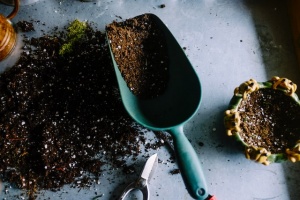
Another part of the investigation is actually attempting to grow plants in lunar soil brought back by the Apollo missions. The too long-didn’t watch the whole 5 minutes of the video breakdown is (1) they did add nutrient rich water to grow the plants in the soil (what the other scientists mentioned above are trying to by-pass with the fungi because carting nutrients and water into space is EXPENSIVE) and (2) the plants still didn’t grow as well on the space soil as they did in similar soil found on Earth – and the scientists are excited about this because it means there is a difference between their simulation and the actual soil, now they just need to figure out what that is. As I mentioned before in Geeking Science posts, scientists love it when they have more questions than answers. (University of Florida scientists grow plants in soil from the moon – May 13, 2022 – youtube)