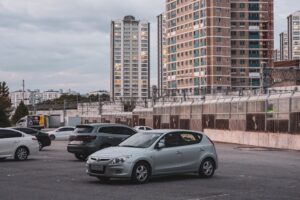
Photo by Seungmin Yoon on Unsplash
“Kenny, Craig. You got the net today. Use Units four and nine.” The police sergeant handed them their assignment.
“Sweet, I call hunter.” Craig folded the paper and tucked it into his messy folder. “I want to push up my candy crush score.”
His partner, Kenny, shrugged, not really caring if he is in the car pinging with radar or the hunter for those slipping through the cracks. “Any particular location, boss?”
“Do the riverside one, there are trees there.”
“Thank you shade,” Kenny said reverently.
“And Jannine, Todd, you know the drill.” The man handed out the last of the day’s assignments.
No one ever wanted the last assignment, but the task needed doing so the sergeant rotated it between the twelve teams.
“Car sweeps and paperwork catchup.” Jannine, the senior partner, sighed.
Todd looked down at the list he had just been handed, then flipped it over to see it continued on the back listing locations where cars hadn’t moved in thirty-six hours or more. “Didn’t anyone do sweeps over the weekend?” He had been out of state for a family reunion.
The sergeant shook his head. “Fourth of July, everyone was on deck for the parades and fireworks. Four days since the last sweep. Enjoy.”
“We ain’t getting any paperwork done.” The woman cop stood slowly, her knees cracking. “Is the coroner ready?”
“He took the day off, but his assistant knows to expect calls.”
“Good enough. Do you got the camp list too?” Jannine reached for the stapled list the sergeant pulled out from his folder as soon as she started talking, anticipating her request.
The sergeant shifted uncomfortably, “You don’t have to–”
Jannine interrupted his half-apology with a deadened voice. “Permission to swing by the Scouts for bottled water?” One of the local girl scouts was providing water for the homeless during the summer as part of her Gold Award Project; a shelter head helped her apply for a grant to cover the costs.
“Yeah.”
“Todd?” Jannine looked to where her partner was signing out a Unit from the desk clerk in the back of the room.
“We got eight, and it was gassed up.” He informed her while pocketing the keys.
“Right, let’s stop by the desks and get the paperwork we are going to need for today.”
***
“So how many do you think we are going to find today?” Todd asked, as he drove to the Big Box parking lot that allowed cars and trucks to park overnight. The Unit’s trunk was loaded down with water.
“With this heat dome? At least six.” Jannine stared through the windshield, looking at something not there. “It hasn’t got below eighty at night since Wednesday.” She blinked then shifted to face him. “How was the mountains?”
“Beautiful. Cool at night. We had campfires on both Saturday and Sunday.”
“The kids had a good time? And the ex?”
“Cindy was an ass, as normal, but she was there and on time and the kids had a great time.”
“She looked great, didn’t she?” Jannine commented after studying his face while he was driving.
“She looked amazing.” Todd gave a half-smile. “I wish she had been able to handle being a cop’s wife.”
“Look it ain’t easy being a cop’s spouse. Ask any of my three exes.”
“Donald stuck.”
“Donald is just glad to have someone who can handle his baggage.”
They pulled into the lot and made their way to the cars parked at the edge under a camera. One RV, five cars in various conditions, and one truck. The truck pulled out as they approached. Reluctantly, the two police officers stepped out of the air-conditioned Unit.
“How many?” Todd asked.
Looking down at the clipboard holding the list the sergeant had given them, Jannine replied, “Three.”
He took out his phone and took a shot of each vehicle from the front and from the back. While they did that, a gray-haired couple dismounted from the RV.
“Everything okay officers?” the man asked.
“Just doing health visits,” Todd responded. “Are you guys doing alright?”
“A bit hot now the sun is up, but we are ready to get on the road as soon as we finish breakfast.”
The woman wrapped her arm around the man’s waist, but said nothing, leaving him to do all the talking.
“Where are y’all going?” Todd chatted while Jannine approached the nearest of the cars.
“Oh, you know, wherever the road takes us.”
Todd and Jannine eyes met. That wasn’t a normal answer. Not enough to investigate, but enough to pay closer attention. She reviewed the windows on the side of the RV facing her. Everything was covered with curtains, as to be expected when sleeping in a parking lot.
They didn’t have time for this shit.
The car in front of her had a reflective windshield cover. The windows had been partially rolled down, had towels stuffed in them for privacy and shading, and rolled back up again. The car had been parked here for three days according to the four-times-daily license plate trolling the local security firm feed into their system.
It smelled from where she stood outside of it.
Fuck.
Already the first hit.
She edged around the car, seeing if she could see inside without touching anything.
Nope.
Todd closed on her position. “Oh, shit,” he raised a hand to cover his nose.
Jannine made a quick head twist toward the RV in question.
He shrugged.
In other words, nothing visible from the outside that would give them reason to look deeper.
“Cover me?” she asked. People could react badly to a uniform banging at their windows.
Todd nodded and stepped back.
Behind them, the RV started up noisily and headed out. The noise brought people tumbling out of two of the other cars into the blazing July morning sun. Only the cars on their list remained quiet. She really hoped the three cars could just be marked abandoned, and they could move on to the bus depot and commuter parking lot.
Knocking on the back passenger window, she asked, “Anyone in there? Police, courtesy health check. Just making sure you are okay.”
After a moment of no answer, she banged on the top of the vehicle. The people from the other cars silently observed her actions. One looked like a business man about ready to go to work; his workplace likely unaware he slept in his car. The other was a mother with a couple children. Based on the scent the car was emitting, young kids did not need to see this shit.
This could wait a moment.
Jannine caught Todd’s eye and nodded toward the mom and kids. He winced, his face understanding and agreeing, and they headed over. The mother’s eyes grew large as they approached, and the two children clung to her as her fear transmitted to them.
Todd stopped a little ways back, while Jannine held up empty hands as she approached. “Police. We are just doing health checks, not anything else. Are you okay?” It would be really helpful if the city just paid for the social workers for this sort of thing instead of having them terrifying families with their uniforms, the homeless parents convinced were about to be arrested for child endangerment.
Both children looked thin, like they weren’t eating well, but they were in clean-ish clothes. Their hair was only matted from sleep, not lack of care. The mother’s clothes hung on her like she had lost weight recently. Much more-so than the children, whose clothes just looked like they could grow into them.
“Yes?” the woman responded hesitantly.
“Good. Good. May I approach?” Jannine stood about six feet away.
The woman’s head jerked in a nod.
“My name is Officer Vedder.” Jannine approached slowly. “And that is Officer Barnes.” She waved a hand toward her partner who gave a little finger wave to the family, but he remained where he was. “We are doing health checks. Do you have access to water and food?”
“Um.” The mother looked down at her two children.
“We have water in the Unit.” Jannine turned to Todd. “Hey, grab three bottles for…” she looked toward the mother, letting her face shape a question.
“Ally, Ally Cameron,” the mother supplied.
“For Ms. Cameron.” Jannine smiled as Todd walked off. Without the RV in the way, he would have sight lines from the cruiser. He would enter the information they had so far on the RV, the family unit, and the other cars before coming back. All the pieces they would need for their paperwork later.
“Thank you,” the mother whispered.
“You are welcome.” Jannine kneeled down, making sure to get a clear picture of both children from her camera vest. “And who are these two mischief makers?”
“I’m Luke!” The taller of the two said, moving to the front of his mom’s legs. “And this is Evey.”
“Those are great names.” Jannine responded. She glanced up at the mother. “Been camping out here long?”
“Just…just last night.”
It wasn’t just last night, but it really didn’t matter. That wasn’t her job, at least not today. “You safe?”
The mother jerked and unconsciously touched under her eye where a faded bruise was barely visible, before that same hand dropped to the quiet little girl’s head. Jannine guessed her age to be four.
“Do you need medical assistance?”
“No, please.” The mother immediately gasped out.
So, yes.
But the whoever had hurt her, and likely the little girl, would find out where they were as soon as the medical insurance pinged. Quickly and in great detail, if the other parent was the working parent providing the insurance.
“Our county doesn’t have a woman’s shelter, but Washington county does.”
“They do?”
“Yes. It is nearly sixty miles away, but we could give you directions and call ahead to let them know.”
“I…I…could you?”
“Yes,” Jannine stood, and the woman flinched back a step.
Too close, too sudden. Sorry.
Jannine eased back, placing more space between them, and then spoke into her radio to Todd to bring the directions to the Washington County station when he came back with the water. After closing out, she explained. “The directions will be to the county’s sheriff location. No one gets to know how to go to the shelter directly, to protect those there.”
“Oh, god.” The woman’s body loosened in relief at the thought of a secured location. “Do…do you know how long?”
Janinne knew the question actually was: How long before they kick me out and I have to start all over again?
The answer is not enough; it will never be enough time. Not with two children to protect.
“Six months, and they help with counseling, job searches, food stamps. It is a good set up.”
“My son?”
“He is under ten, right?”
“Only seven.”
He was small for seven. I would have guessed six
“Then he will be fine.”
***
After getting the Camerons off, with some water and directions to both the county woman’s shelter and a church she would pass on the way which served free breakfast, the police officers returned to the real job of the “health checks” task force duty: the three cars which hadn’t moved in over thirty-six hours.
They opted to go for the car without a reflective windshield in place first. The back of the car was loaded to the brim with stuff. A hoarder car. Piles of boxes, clothes, groceries, toys, and papers settled in layers which had shifted, fallen, and been restacked to shift again.
Walking around, they discovered one tire was completely flat. Todd moved the Unit behind the vehicle while they searched the database for the plates. Surprisingly, it came back with a clean, local registration. Todd forwarded the owner’s address to the desk officer on duty for one of the other Units to hunt down the person. They could see no reason to open up the vehicle from the outside, and all the doors were locked. Once they got an owner, they might be able to open it. Otherwise, it would be towed tomorrow. They placed a red sticker on the vehicle and noted the day.
The second car had its windows cracked, and the passenger side window presented with moisture on the inside. Someone or something lived inside there, probably. They knocked but no one responded. They hit it harder. Todd claimed he heard something. Jannine chose to believe him; his hearing was better than hers after all the years practicing on the range. They broke glass and discovered a male, fifty to sixty, bright red, dry skin, mostly unconscious across the front seats. The passenger footwell was full of fast-food bags and cups. The backseat held a dead dog, the legs rigid, but no stink.
Todd wet some towels they kept in the Unit for occurrences like this with the bottle water and worked on lowering the man’s temperature while they waited for the ambulance to arrive. Jannine searched the car for registration and found a yellowed paper from 2018 claiming the car belonged to one Mickey Irving. His wallet was under the driver’s seat and held: two dollars, an expired military ID, and a bent credit card. The ID was also for Mickey Irving, but whether the overly-thin, bearded man matched the picture of the rigid solider on the ID was anyone’s guess. Jannine’s search did not result in a driver’s license or state ID. The car registration was for Texas, and the plates were California.
The desk clerk said the challenge would be fun, then shared that the dead-body part of animal control will be there when they get there. Likely, it will be a tomorrow problem. Lots of animals were missing after running away for the fireworks from the Independence Day celebrations.
Once the ambulance had left and they placed a red sticker on the second car, they had only one car left.
The one with the smell.
“I broke the last window.” Jannine said after they tried the doors, hood, and trunk.
Todd’s shoulders fell. “Only fair.” He broke the back window on the driver’s side. From there, they were able to open all the doors.
“When I guessed six this morning, I didn’t mean all in one car.” Jannine cursed under her breath.
It was only four people, not her initial guess of six, but they were all too young, the parents and the children.
There was no need for an ambulance. The coroner came and went, as did the tow truck taking the car directly to evidence.
“So, ten o’clock.” Todd said, looking at his watch. “What’s next on our list?”
(words 2,447; first published 8/30/2026)