Geeking Science: Fashion Meets the Surveillance Age

From the Reflectacles Kickstarter

So after writing the Dark Web Trope Editing Rant in September, my paranoia is running higher. Just a little.

Did you know that there is a whole Fashion subset to avoid the surveillance cameras everywhere?

Here are some Fashion Statements to say something about the person wearing them, either tin-hat-paranoia or they-really-are-out-to-get-you. The accessories could make for some exciting additions to a near future sci-fi or a contemporary thriller.

  1. Makeup and Hair – Asymmetrical is the key. Bright splotches of color hair. Cover or obscure the eye with spikes and decorations. Squares with high differentiation of coloring – black and white. Jewels applied randomly to the face, especially the nose and cheekbones. Gorgeous and disturbing to a species hard-programmed for symmetry. The machines also freak out a little. (See cvdazzle for examples.)
  2. Pattern Recognition Disruption Scarfs – Put on a lacy scarf with dots or mini-faces. For example, the HyperFace scarf has 1,200 facial shapes to blow the surveillance camera software to bits.
  3. Health masks – Those face masks people are wearing to prevent transmission of disease. They may be keeping other transmissions and invasions at bay. Popular among protesters around the world, especially when holding a gathering near suppressive government buildings.
  4. RFID Blocking Wallets – With the credit cards being RFID chipped now, pick up a wallet to keep someone from reading accessing the credit just by talking down the street beside you.
  5. Metallic Fabric Jackets (with or without hoodies) – But the RFID and microchips go beyond just the wallet, dogs are chipped, medical history may be on chips soon, and some medical machines already are microchipped and can be programmed for injections. Pick up a metallic jacket to keep criminals from scanning the microchips … or reprogramming them.
  6. IR Privacy Eyewear – Full infrared (IR) protection on the sunglasses prevent surveillance cameras from getting eyeshape, one of the most important aspects of facial recognition. A bonus is manufacturing the frames to be extra reflective – this makes the wearer more visible at night when crossing the street while also completely screwing with the camera’s ability to see the person’s face.
  7. Antiflash Clothing – Prismatic metallic ink which interferes when paparazzi beat on a celebrity with flashbulbs. Suddenly their greatest tool of humiliation destroys the very picture they are trying to take. Also great for those days when a politician, or ordinary citizens caught up in a mess, takes a walk of shame before proof of innocence or guilt is established. Also useful for the next company party with the open bar; no pictures, no proof.
  8. Infrared Ballcaps – The brim of the cap shines an IR light on the face, making it too bright for surveillance cameras to see. Perfect for those late night run to Walmart, and you don’t want to get dolled up in an anti-surveillance fashion statement.

Bibliography

Bacchi, Umberto and Suliman, Adela. “Face masks to decoy t-shirts: The rise of anti-surveillance fashion”. Reuters. 2019 September 26. https://www.reuters.com/article/us-britain-tech-fashion-feature/face-masks-to-decoy-t-shirts-the-rise-of-anti-surveillance-fashion-idUSKBN1WB0HT – Last viewed 11/13/2019.

CV Dazzle. “Camouflage from face detection.” cvdazzle. 2017 August 22. https://cvdazzle.com/ – Last viewed 11/13/2019.

Dobush, Grace. “Privacy by design: How fashion combats surveillance”. The Christian Science Monitor. 2017 January 27. https://www.csmonitor.com/World/Passcode/Security-culture/2017/0127/Privacy-by-design-How-fashion-combats-surveillance – Last viewed 11/13/2019.

Hern, Alex. “The fashion line designed to trick surveillance cameras”. 2019 August 14. https://www.theguardian.com/world/2019/aug/13/the-fashion-line-designed-to-trick-surveillance-cameras – Last viewed 11/13/2019.

Hu, Jane C. “When Will TJ Maxx Sell Anti-Surveillance Fashion?” Slate. 2019 August 15. https://slate.com/technology/2019/08/facial-recognition-surveillance-fashion-hong-kong.html – Last viewed 11/13/2019.

Jacobs, Bel. “How what you wear can help you avoid surveillance.” BBC. 2017 March 20. https://www.bbc.com/culture/article/20170320-how-what-you-wear-can-help-you-avoid-surveillance – Last viewed 11/13/2019.

Reflectables. “IRpair & Phantom – Privacy Eyewear.” Kickstarter. 2019 November. https://www.kickstarter.com/projects/reflectacles/irpair-and-phantom-privacy-eyewear – Last viewed 11/13/2019.


Geeking Science: Architecture

Photo by Meriç Dağlı on Unsplash

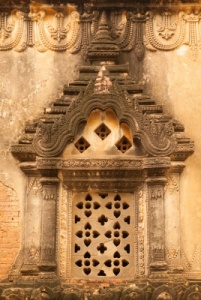
Fighting White Boxes (mentioned in Septembers writing exercise) can be an uphill battle. One of the ways to win the war is think about the architecture of the building.

Ready for Geeking the Science of Construction?

Let’s start with a life hack which I find very helpful. Electric wiring and plumbing are expensive and time consuming, and architects and construction crews like to put all of that together for several reasons. Less cost of running wires and pipes. But also so they can get on the business of building while waiting for the government inspectors to sign off so the walls can be closed. Which means bathroom, kitchen, and elevators are all going to be in close proximity to each other. Going to a job interview and want to have one last bathroom trip before sitting in the reception area waiting for the interviewer to free up, look for the elevators – the bathrooms will 90% of the time be somewhere in that core column. Just walk around the “block” until you find them. At a house party and trying to find the downstairs bathroom, find the walls adjacent to the kitchen. Likely the bathroom is near there, that or the stairs. If the downstairs bathroom is full because the party is already full swing, go to the second story and find the space directly over the other bathroom or the kitchen.

There is so many cool things about architecture!

Photo by Diana Davolyte on Unsplash

How about pagodas? These tall delicate buildings made completely of wood with their large overhangs look like a strong breeze will destroy them. They are also one of the most earthquake resistant building styles in existence. The wide eaves, the wooden central column, the box-style construction, all contribute to a building which sways and stays. If you would like to see related videos, check out the link in the Bibliography under Kalovic. The wide eaves also contribute to controlling heat entering the building during the summer, but the shallow nature likely allows the low angle winter sun in for warming the building during the cold months.

Talking about controlling heat and cold without massive amounts of air conditioning and heating – which those big monster skyscrapers with their glass sides require, let’s take a stroll through the north and south. In old school Philadelphia, the buildings are close together – row homes in fact. These retain heat making winter bearable. They are not meant to be lived in during the summer – that is what porches and parks are for.

In the south (and throughout the world in warm climates), houses and entire towns are built to catch prevailing breezes. Multi-story buildings make use of the “heat rises” principals and pull air flows through from the bottom to the top of the house. Awnings and porches are welcomed additions in the summer, and can even double the house footprint. The porches on my house in the Carolinas add 20% to my modest living space during the warm months (my house is about 900 square feet, so I love my porches).

Image courtesy of Witthaya Phonsawat at FreeDigitalPhotos.net

The push to be “modern” (read, European materials), can be counterproductive when one forgets the past. The “air cooler” (see DiStasio – warning, some of the physics are suspect. They might be looking at the wrong reasons for the benefits they are seeing.) which everyone talked about in 2016 and 2017 of forcing airflow through small holes to make the inside of a house cooler amused me because, well, Ottoman architecture. Have you seen the widows with the small deep holes? Combined throughout the house, heat can change easily but slowly when the indoor/outdoor are different, averaging out extremes of a cold night and hot day.

Mr. Holland (see Bibliography) collected a lot of examples of how returning to study native buildings can give a better idea of using less imported materials, making the buildings more responsive to the local environment, and more sustainable for maintenance and climate, all the while being aesthetically pleasing for the culture. Things like curved roofs protect against cyclones (hurricanes), using reeds with hollow stems for their insulating properties, circular buildings to protect against monsoon rains, and window placement to collect solar heat and create cross-ventilation. 

The geeking science list for architecture goes on and on. Flying buttresses, keystones, spiral staircases, …. add them to your writing to make the world more real. Tie the environmental problems people face to the houses they choose to live in. In Urban Fantasy, does the person live in a shotgun house or a penthouse? In a fantasy, is it a “Winter is Coming” or “Afternoon Siesta” culture? For a science fiction, how long does it take them to abandon the old colony ships and build their own places? Break the white box.

Bibliography

DiStasio, Cat. “The amazing Bangladeshi air cooler is made from plastic bottles and uses no electricity.” Inhabitat.com. https://inhabitat.com/this-amazing-bangladeshi-air-cooler-is-made-from-plastic-bottles-and-uses-no-electricity/ – last viewed 11/12/2019.

Holland, Oscar (CNN). “What traditional buildings can teach architects about sustainability” CNN.com. https://www.cnn.com/style/article/vernacular-architecture-sustainability/ – last viewed 11/12/2019.

Kalovic, Alen. “Shinbashira – pagoda’s exceptional earthquake resistance.” Medium.com. – last viewed 11/12/2019. (Author deleted the article in 2022.)

Kipnis, Nathan. “Natural Cooling Strategies.” Mother Earth News. https://www.motherearthnews.com/renewable-energy/other-renewables/natural-cooling-zm0z11zphe – last viewed 11/12/2019.

Editing Rant: Chekhov’s Gun

Photo by Vladimir Palyanov on Unsplash

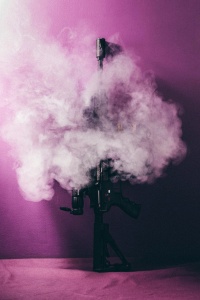
I’ve talked before about Permanence of Object. Part of that concept includes Chekhov’s Gun – a “dramatic principle that states every element in a story must be necessary, and irrelevant elements should be removed, elements should not appear to make ‘false promises’ by never coming into play.” (Wikipedia, Chekhov’s Gun entry) The supreme example of this is a rifle is hanging on the wall in a play’s first act, it should be used by the last act.

The reverse is also true – if an object is used in the last act, it should appear before its use.

But the bare-bones dramatic principal can be taken too far. I recently read a novel where if something is introduced, I knew it would be used. While the Chekhov’s Gun principal is the gold standard for short stories and plays, which need to be trimmed to the basics, novels should wander a bit, introducing non-essential side stories as red herrings, especially if the main plotline is a mystery. In this particular manuscript, every little side bit glared like the Gun on the Wall. Scuba gear in the admiral’s office, the spy was about to be sent somewhere he needed scuba gear. A book, needed to be read.

Not a single wander off the trail – straight shooting the whole way. Nothing felt woven, like a rich plot, the whole book felt like a string of beads, one after the other. Every “aside” I read propelled the story forward full-steam. The side trips feed into the main plot. No emotional subplot, not growth subplot.

Sure, no White Box issues. But only because when I (as the reader) walked into a room, there would be one object which would be relevant to the story and described. Otherwise, the POV character I was following wouldn’t have gone into the room.

The novel felt similar to a video game where the developers didn’t provide any side-quests, nor the opportunity to go off-script for a fail. A choose-your-own adventure with only one option at the end of each page.

I mean, yeah, that is actually the case of how a novel really is. But it shouldn’t FEEL that way.

When writing be sure to describe more than just the things needed for the main plot if writing in a longer form. Play a game of Clue with your reader – will the gun, the knife, or the candlestick be important to the plot? And which is the symbol of the inner angst the main character needs to resolve in their emotional growth?

Other Cool Blogs: Magical Words 3/11/2008

Image courtesy of pixtawan at FreeDigitalPhotos.net

Picture a hand pointing a finger out in front of you, the rest of the fingers curling into the palm of the hand. Which finger is pointing out? Now rotate the hand so it is pointing to the right side, is the front or back of the hand facing you?

Were you able to do that?

Congratulations, you are the part of humanity which can visualize in pictures. Not everyone can, and that can make writing descriptions very difficult. I never realized people can’t see in pictures. Find out more about that in Visualization, a blog post Catie Murphy created for Magical Words, the full post is here:

WRITING EXERCISE: Do you Visualize and to what level do you visualize? Is it full color? Can you hear noises? Is music playing? Can you smell anything? Can you backup the action of the scene? How about rotate the camera angle or focus in on features? How can you use this in your writing?

If you don’t visualize, how do you create a scene? Do you build from the characters out? Do you start at the walls and work your way in? If you don’t see inside your head, can you smell, taste, or hear anything? Is there any advice in the Magical Word post that helps you?

Now, create a scene. Just pop one into your head (if visual) or figure out one you want to describe (if not visual). It needs to be a location that doesn’t actually exist for this exercise, think science fiction or fantasy. Now write out the description, include at least two senses to describe the scene.

READING EXERCISE: What books have provided the best visuals (or other scenes) for you? In your current read, is there a particular scene standing out? Why is it effective?

***

I’m a visual person. Sometimes when I am writing, I close my eyes and see the scene and put my characters in the scene. Strangely the people are darkened out – them I don’t see clearly, but the room and pieces, I can focus in on. Usually I have some sort of music playing too, not necessarily the noises related to the scene.

For Roulette Leadership, I can clearly picture the trench area the men are huddle in. Dirt and grime clings to them, blood splotches, sweat stains, smell of men hard-pressed. Broken green light and shadow flickers across the faces. If I ever expand the flash, I need to add a lot more description.