Other Cool Blogs: Magical Words – Lasagna Backstory

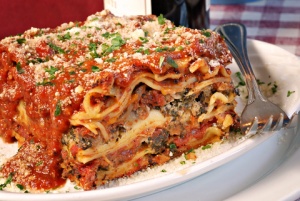
Photo 11155296 / Lasagna © Karin Hildebrand Lau | Dreamstime.com

Writing Backstory
Faith Hunter is a regular attender at ConCarolinas and one of the founders of magical words. On 7/23/2008, she shared this extremely good metaphor for how to write backstory into a manuscript (hint – not through an info dump!):

I love this explanation as much as I love my mother’s lasagna. Since I can eat mom’s lasagna as leftovers for over two weeks, I think you extrapolate how much I love this example.

Every story has worldbuilding – even contemporary romances. The characters came from somewhere; the locations existed before the characters arrived. We are only see the story through a narrow window of the narrative, not knowing who else is on the street. Some of this past may need to be shared with the readers – but (1) it’s a lot less that most authors think is needed and (2) it is boring as school history when dumped on a reader all at once.

The author is challenged to release this greater world information through a variety of means – flashbacks, dialog, or even part of the action. Getting it layered in with the other good stuff makes everything better.

Related articles
7/14/2020 – Editing Rant: As You Know Bob
11/26/2019 – Writing Exercise: Flashback
3/3/2016 – Infodump

Other Cool Blogs: Magical Words 3/10/2010

Today I woke up before my alarm, waited for the alarm to go off, swiped so it went to snooze, daydreamed, swiped again, debated getting up, swiped again, finally got up to go to the bathroom. Debated crawling into bed again when the alarm went off, annoying me enough to get dress. I had laid out the clothes the night before.

***

I arrived at work on time.

So … too much description? Did I need to list all the swipes?

Or was there too little description? After all, eating breakfast, starting the car, backing out of the driveway, and the commute are all missing. They won’t have anything to do with the story or character development, but they do get me from bed to work. How else would I show that?

The magic of three stars for a scene skip.

The plot written by an author highlights the manuscript. Like extracting a story out from child. What did we do first? “We went to the zoo.” Then what? “We got cotton candy.” Anything else. “Monkeys!!!!” All that other stuff, grandma (or the reader) doesn’t need to know.

But how to indicate the scene jumps?

Magic three stars.

A great, great article on the topic is “Skipping Time” by Carrie Ryan (Magical Words 3/10/2011):

Writing Exercise: What’s around you?

Photo by Patrick Hendry on Unsplash

White box is an ongoing problem. Writing people and dialog, the heart of the story, flows from the pen easily. Most people hear the people in their head talking and just need to transcribe what they are saying onto paper. But the surroundings of the scene, that takes visualization skills and not every author has that innate ability.

WRITING EXERCISE: This writing exercise is pen and paper, or at least phone notes. Carry a notebook to write on with you. Sometime during the day when you got to wait, break it out and start writing What’s Around You. Describe your seat, the color of the sky, the noise levels, what you smell. Anything, everything that takes your fancy. If people are talking around you, don’t write what they are saying but what they are doing.

Do this three times – just random locations. Then, next time the WIP confounds you with a white box, pull out your notebook.

READING EXERCISE: For your current read, find a passage with a great scene description. What captured your imagination? Any particular words really grabbed you? Is there anything you are imagining beyond what is on paper? Why are you adding those details, which aren’t in the book, to the scene? What was better to leave to the reader’s imagination and what needed to set the scene for the reader?

Editing Rant: As You Know Bob

Image courtesy of the internet Hivemind

You know something is a common issue when TV Tropes has an entire section devoted to defining it and providing examples. “As you know, Bob…” has just such a section.

And still, it persists.

What exactly is an “As you know, Bob” moment? It’s when characters share information which is common knowledge to those involved but might be unknown to the reader. For example:

“As you know Bob, cell phones had a major jump in technology when microprocessors because atom sized.” Bob-two said in the traditional speech of the twentieth century.

Bob responded in the way of modern people *Yes, Bob-two, and then bioprogramming allowed us to integrate it into our DNA allowing us to have the appearance of telepathy if a visitor from the past should visit our space-faring culture.* (As you know bob – 67 words)

These two Bobs both know all of this, having received learned this information years ago. To have them talk about it makes no sense. And yet something along these lines happens all the time in books and television.

The challenge is how does a writer provide the information to the reader without doing a data dump or having a “As you know Bob” moment? How to show without telling?

The following ways are popular: (1) a school setting where background information is shared such as in this Firefly video where the background of colonization is taught to River Tam at the beginning of the Serenity movie. (2) a military briefing where everyone may or may not know all the details and the military is going to make sure everyone knows. (3) a data dump – sometimes you just got to go with informing the readers.

And the best option, integrate into the narrative. Imply and trust your reader.

“Bob, toss me the spanner will you?” Bob-two’s voice rasped from the strain of shouting over the machines.

*When are you going to give in and get the bio-app, you old fossil?* The maintenance apprentice sent to the external-bud the master guildsman had tucked into his ear. The younger man chucked the lightweight alumcarb spanner over.

Bob-two snatched it midair, ignoring the question, instead turning his attention to mechanism which required mechanic intervention. The thought of reprogramming his DNA gave him hives. (As you know bob-two – 83 Words)

WRITING EXERCISE: Create an “As you know Bob” scene of 100 words or less, then change it so it works without the lazy writing trope. Share the results below if you want.