Flash: Nine Flogs

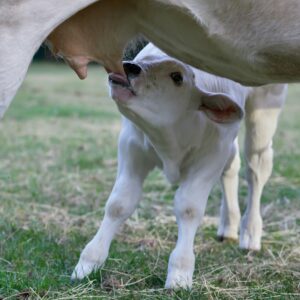
Photo by Erwin Bosman on Unsplash

Spring 2030

“You heard the mayor, time for the cows,” I say to the rest of the crew chiefs. “Normal rotation. Emily, your turn to round up the stragglers; Jeremy, your teams brings them in; Richardo, direct them to the chutes.” No one liked that one in the spring, when the babes don’t want to be separated from their mothers during the milking. Everything needs to be retrained. “I got the milking, and people as they become available help the apprentices to match up the momma and calves for their overnight stalls. We put our minds to it, we might beat sunset.”

“Sure thing, Boss.” Mary says, smiling down from the pickup truck. Her crew’s job remains the same every night: last-minute checking the stalls to make sure everything was mucked out and reset during the day, verifying all the gates were closed and locked, counting the stock, measuring the milk, assembling numbers and plans. Better her than me.

Alledria balances the toddler she had held through the trial over one shoulder. “I’ll get this one back to his mother and then get the youths ready.” She calls over to where the teenage runners are hanging out. “Yazzie, get the cow crew together.”

No eyes are rolled. The runners quickly split up the task of wrangling the community’s teenagers and disperse. They might not want to bring the cows home anymore than we adults do, but milk, cheese, and steak stays on the menu if we do the work. If not, we all go hungry. The months between the canned food becoming rationed and the harvest coming in may be two years ago, but it is only two years ago. Everyone’s waistbands have been taken in several notches.

The herd is still being bred up to the numbers needed to sustain our community. The Farmer had ten head of cattle he and the homesteaders split for meat and fresh milk when this all began; to serve two hundred, we figure we needed about fifty all told between milk cows, breeding bulls, and meat cattle each year. This year we are in spitting distance of the magic number and may be able to get enough meat between the cows, pigs, and chickens to chub some of the little cheeks. Killing only one real onery bull that first winter had been hard, but we needed every last one of them for breeding or genetic diversity.

Now we needed to pull in the twenty-nine adults and twenty spring calves from where they were eating the winter stalks to the ground and dumping their poop to renew the soil. Emily’s crew walks out with lassos slung over shoulders. Two of Jeremy’s crew grab the lashes and prods. I don’t know what our community would have done without Lucy’s encyclopedia knowledge of all things textiles. How she knew to twist a rope malleable enough for lasso work is miraculous. And having Easton knowing all things knots and whips saved more than one life, cow and human.

I hate drawing milk duty, but it rotates between the four groups during the morning and evening milkings. My group gets every-other night milking. Let me run around anytime chasing the stragglers over hill and dale any day. As one of Ricardo’s team bring me my first cow and I situate the bucket so the bovine won’t knock it over just to fuck with me, I remember all the gorgeous equipment I used back in the day of the grid. I would pull this tube or that when washing cars.

I know car washing isn’t the best job in the world, but it was outdoors and energetic. I hadn’t lasted two months in college after a summer of Texas heat and car washes. Eighteen and a diploma in my pocket did not match up with being locked in a room with books for another four years.

I pull one nipple and another, setting up the sushing sound of milking. Around me, the rest of my crew is doing the same. Sitting isn’t bad after a full day of preparing fields for planting.

Hooking up the udder to a machine would be faster, if we had electric. Using a tractor would be easier to prepare a field, if we had gas.

In another hour we will be done, and then we will have the flogging. What will happen? We’ve never done corporal punishment before. Not to this extent.

I get why the Triple Tribunal went with it. Giovanni might have pronounced the sentence as a man on a man, but they all had agreed to it. I wondered how that discussion went.

Had castration come up? Maybe. Kicking him out of the community. Likely. But for someone who would have been legal soon, and losing a strong man? Still a line had to be drawn somewhere. Before the grid went down, people had been talking about moving the legal marriage back down to what it was before instead of 18 in a lot of the states. And in Texas that historically was whatever you could bribe a judge to sign off on, as low as age 12.

A line had to be done somewhere, and it had to be firm.

I don’t want that job. Figuring out all the law stuff. Keeping the community safe. Why did I keep getting in positions where I got to lead? I am a car wash guy.

Pressing against the udder I get a little more out. One of the teens had traded out my bucket during the milking.

My cow is led away and I get another. Twenty milk cows and I get to do three of them with my ten of six. Maybe four, but I am not the fastest of my crew so likely only three. Officially, each work crew team had ten adults assigned to them, but things happen. No one is ever fully staffed. One of my women is very pregnant; she had managed three hours in the field today only by laying down every twenty minutes. Another one is nursing which took up much more time than I ever knew. One of my men has a broken leg and is working with the toddlers back in the development, and may be transferring over to Alledria’s group permanently as he really is enjoying the littles. Dallas is guarding Nick.

When the final cow is led away and Mary’s group tell us the milk numbers, nearly forty gallons, which isn’t bad when the cows are still heavily nursing. Half already is in caldrons with the Chef crew to simmer overnight for cheese-making. The other half will go into the children during dinner with the adults getting the buttermilk from this morning’s buttermaking leftovers. All our stores are still low from winter, but for the first year since this began we had leftovers at the end of winter without harsh rationing.

Emily and Jeremy’s group had been sucked away at some point to set up the punishment viewing area. The punishment is on behalf of the community, the community must watch. In this case, since it is officially men policing men, the women and children can stay away. When I report to behind the barn, out of view of the shanty town and community dining, chairs are set up for those who cannot stand long and I make my way over to the crew chief area next to the area for the Triple Tribunal. The two of the three elder women are there; Miss Camilla isn’t there. Also, I guess in solidarity or other political reason, one of the eldest men and the emeritus-mayor are missing. One each of the big wigs to stay with the women and children eating dinner, and the rest here.

Easton comes riding up on one of the mountain bikes, exhausted. Jermey and I go over immediately to help him. He is panting hard. “Sorry. I’m not late, am I?”

“No. You okay?” I ask.

Grace, the present mayor, strides toward us as we work our way to the pole someone had set up in the center of the area, their long legs eating the distance.

The man pulled in several gulps of air. “I had to run home to get a flogger. Whips are well and good for making noise, but if you are going to hit human skin, something safer is needed.”

He has a flogger, which is different from a whip. I try to keep my face neutral. I know he has several whips; he has shown them off to the kids, explaining the traditional purpose of each and how they are different, and then let Lucy’s crew borrow the lot to help them figure out how to make appropriate whips for moving the cattle around. Horses would be better to nudge the monsters, but Farmer McConnel didn’t have any horses when this all went down. Of course, he would have more tools. I don’t know when this mild-manner guy will stop surprising me.

No wonder he was exhausted. Our shanty town on the Farm is nearly two miles by bike route from the housing development. During planning and harvest, it is just easier to stay in our tents here than make the trek home each night, when it is all hands on deck for field work. Only the toddlers, ages two through five, stay back in the development, with the elders and disabled who can’t handle months sleeping on the ground. During the summer, the work crews rotate in and out. One going out per day and one arriving back. Two days at home, two days in the field. The crafters stay in the development during summer, staying under the cooler trees.

The mayor arrives. I always forget how tall they are. I am the second tallest male in the community at six foot three, and Grace looks me even in the eye. The next tallest person is Amelia’s husband at six foot and her just an inch shorter. The five of us, John, me, Grace, Noah, and Amelia get asked to reach for things a lot during the winter when everyone is on top of each other and things need to be out of reach of climbing children.

“Good, you are here.” Grace looks Easton up and down, their face softening. “Thank you.” They move the mayor stick from one hand to the other. “If you… You don’t need to be the one to do this. You have taught all of us how to do a whipping.” They clear their throat, while dropping their eyes to the ground. “I don’t want you do lose your pleasure in this activity.”

“Oh, um. Thanks?” Easton becomes equally uncomfortable. He rubs the flannel of his overshirt. “But none of you have practiced on humans before. The skin is much thinner than cows. If this,” he inhaled deeply and exhaled, “punishment is going to be used going forward, I’m going to need at least three people to train in the technique.”

“Just remember it is to cause pain.” The mayor’s voice carried no compromise. “Everyone here needs to remember this.”

“Don’t worry.” Easton’s eyes darkened. “My people have very strong opinions about childhood SA. He will need the medical attention when this is over, and it will not be aftercare.”

“Okay, I will figure out what three people it will be.”

“I’ll do it.” I say. No one should have to do it, but if someone does, I rather it not be someone who will need to hold a child after it was done. More than half the community adults were parents at this point.

“Me too,” says Jeremy.

“No, not you.” Grace shakes their head down at my shenanigans partner as his mouth opens to protest. “You don’t have the touch needed, and you are the strongest person in the community. We need you as muscle, not executioner too.”

“But Pat’s okay?” he growled.

“Are you allowed to milk the cows?” Grace countered.

Jeremy’s well-tanned face fell. “No, I pull too hard.”

“Then I think you have your answer.”

Since we had arrived at the center, Jeremy and I break off to go to the crew chief area.

“You get to have all the fun,” his voice held playful accusation.

“If you think this will be fun, you need therapy.”

“At this point, we all need therapy.”

“Don’t we all?” agrees Emily as we come up join our group. “What is it for this time?”

“This.” I say waving around.

“Yeah,” came several grim replies.

“Not to be the one, but as the Boss of the moment, I got to be the one. Ladies … Emily, Mary, Alledria … you do not need to be here for this. Go, get your dinner. Rest.”

“And leave my guys here?” Emily retorted.

Alledria shook her head. “The male apprentices are here as is Belle, being the one learning the impact of her actions. I need to be here for them. Plus, you know, the men of my crew.”

Their responses are exactly as I expected. “Mary?” I ask, not knowing what would be going on in that special head of hers.

“Do I want to be here, no.” She take a step toward me and looks up at me with her dark brown eyes. “Do I need to be here, yes. Community and citizenship.” Her lips turn up in a half smile. “But I might hide behind you if it gets too much.”

It does get too much for her, and she buries herself into my back. Belle wails on her knees between the two matriarchs. Easton only was able to do four flogs before Grace has to take over. He collapses where Patrick (the shorter) and Dallas wait with the first aiders, tears streaming down his face. The mayor must have watched him closely for those four flogs; the next five are precision executed. My hands twitch as I memorize what hopefully will never be needed again; I expect I will have nightmares in the months to come, practicing the movements in my sleep. The elected leader’s face is granite.

“Satisfied?” they ask the two elderly men, in a tone I’ve never heard from the friendly community leader. They had worked the food line, dragging pots and pans among the community, distributing food before being elected. This voice is not their voice.

Death and determination grounding down stone to find hate instead of mercy among the rubble.

I ache for them.

Giovanni Russo and Michael Dylan nod. “Thank you,” they say, slightly out of time with each other.

“Guards,” Grace nods at the waiting men and woman. “Medical.”

Nick had laughed when brought out and made several rude comments to his young lover while being tied up, promising to do the same with her later. He whimpered as they cut him down.

None of the community witnesses ate much at dinner that night. Chef and his crew understood better than any of us how we would react, but then they had to butcher our meat animals nearly daily. They had made half rations for the meal that night. They then went on to guilt us to swallowing down the soup and bread so we would be able to work the next day.

Afterward, Miguel and his crew did their best to distract us by having children recite some of the poetry they were learning in school. Even children stumbling over trees taking both roads produced few chuckles that night. The wives dealt with a lot of sobbing husbands and sons during the dark hours.

I relieve one of the Chef’s crew stirring the milk down to increase the evaporation sometime after midnight. Jeremy joins me, beating fibers for basketmakers to work with in the morning, saving them time. We will be needing the baskets to transfer seed to the fields in a couple days. Mary pulls over a nearby stool and works a butter churner. Moving quietly in the darkness, Grace and Alledria go from tent to shanty to mound of blankets, visiting with the children, the adult apprentices, who had been behind the barn with us.

“Is this better?” Mary whispers just loudly enough for Jeremy and I to hear.

“Huh?” I respond.

“Is this trauma less than the darkness of just letting it slide, I wonder.” She knocks the churner on the side a little to loosen the forming butter. “Is it better than the…alternative.”

“Yes.” Jeremy says. “If it keeps one child safe, every adult here can just suck it up.”

“That is not how community should work. It should be keeping everyone safe.”

I smile sadly at her and Jeremy. “I wish that was always possible.” My voice wobbles as it carries over the coals.

“Yeah.” Mary is silent a moment, and then says, “let’s play This or That. Pat, you first.”

I wince as her autism takes her down a social path not normally acceptable, but she isn’t wrong either. We need the distraction. “Okay, Blue or Red.”

“Simple, but I want blue today. Like the sky.”

Jeremy pulls apart the fibers from the soft tree stem. “Red, like the coals of the fire here. Fire or Water?”

“After this face of steam, I’ll take cool water.” I continue to stir the milk. Can’t let it scald, burned flavored cheese is unpleasant.

“Me too. I would love to fill the pool in our backyard and float in it this summer.” Mary sighs at the memory from before times. The community converted her family’s pool into a cistern the first summer to keep water all year in the development. “Speed of light or slow summer day?”

(words 2,944; first published 11/15/2026)

Three-Prong Woodlands Series

  1. A Young Man’s Fancy (11/08/2026) – Spring 2030
  2. Nine Flogs (11/15/2026) – Spring 2030
  3. Gridless (11/1/2026) – Fall 2030
  4. Divorce Divisions (11/22/2026) – Winter 2030
  5. Grace Drops By (11/29/2026) – Spring 2031
  6. Election Day (12/06/2026) – Summer 2031
  7. By the River (12/13/2026) – Spring 2032.
Geeking Science: The Fall of Society

Photo by Jason Steele on Unsplash

Societies have lifespans, which is at once reassuring and terrifying. On one hand, the society you live in exists and will work to continue its existence like a determined beast. On the other, it will end, maybe not today or tomorrow, but it will end and bring chaos until a new structure is established. Establishing a stable society out of chaos takes time, maintaining one takes effort, and extending one requires adding elasticity to the system.

The older a society gets, the more rigidity sets into the system. Less flexibility means when stresses happen like climate changes, disease, or resource depletion, the society is unable to adjust quickly enough to absorb the crisis and its seismic waves crackling through the population. Size can help, spreading the issue over a wider area, or hinder, preventing resources and manpower to get where they are needed. According to a study of pre-Modern societies, the average age for a society’s survival is two-hundred years. (Kemp) Some make it three hundred, others don’t see their centennial.

Good news for America as we approach our 250th next year, our society has already undergone some deaths and rebirths by the common definitions.

Most people would immediately point to the civil war restructuring the United States of America in the 1860’s, about one hundred years after its inception, changing (somewhat) the definition of citizen and concentrating a change from agriculture to industrial base. Still, overall, the government and the daily life of citizens didn’t change much. The existing structure didn’t collapse, things continued forward as they were for the most part. Agriculture was agriculture, government remained the same, the people’s relationship with the government moved forward, and the economics continued on the same trajectory. Society didn’t shift so much as flexed within the established roles.

Bigger impact was the Great Depression seventy years later in the thirties. Climate change resulted in the dust bowl, loss of resources, famine, and disease, upending the structure of the society top-to-bottom. An economic collapse occurred. The old ways fought hard, but its concentration of wealth and resources and lack of flexibility failed too many. A new society rose out of the dust bowl and market crash creating nets to reduce poverty, environmental resources to prevent soil loss, and built a renaissance infrastructure of roads and public works. Women rights were modified, family structures started being redefined. A New Deal between citizens and government was struck. Government grew. The United States interaction with the world changed. Flexibility was incorporated into the new system.

Since the fifties, rigidity has been feeding back into the system, increasing the differences in wealth distribution and codifying expected behaviors. During the eighties and nineties, technology of computers stressed the society even as the elite of society isolated wealth distribution and created a culture of greed. As technology normalized, the stress lines became rigid cracks.

Societies cycle between flexible and rigid. For society to survive, a balance must be struck between the flexibility of chaos and the structure of law.

Back to the research related to this Geeking Science post.

Comparing two databases with different data points, each with around 300 entries on empires and established cultural states, there is a growth and then an aging time. Dynasties, tied to individuals, follow the arc in a single lifetime, maybe two – cult of personality outlast the person for so long. Cycles of population growth and urbanism fall to shocks, usually related to food supply.

Only in modern times, when the world shares its table across oceans, has food supply (so far) remained fairly steady. Previously, an earthquake, volcano, or change in el Nino could wipe out a single-country culture by preventing crops from reaching harvest. Now, between the north and south hemisphere, five continents, and nearly two hundred countries, a “small” event impacting millions can be mitigated by the billions on the planet.

Growth time for a culture is brilliant and wonderous, aging is soft and comforting. Death is predictable and, at the same time, abrupt. All the dominos are put in place, and then a stressor knocks over one, collapsing the table.

Society collapse is defined as when writing, buildings, history, education (passing down of the society) and monuments are disrupted. Communication falters

Things which make a society fail:

  1. Lack of food. Drought, removal of experienced farmers, poor treatment of soil until depleted, overfishing. Highly related to this category is environmental degradation.
  2. The Justinian plague (542 c.e.) took out communication networks. Entire cities disappeared. The Black Death (1350’s) about one third of the planet died.
  3. Wealth distribution imbalances. By directing resources to the very few, problems 1 (lack of food) and 2 (disease) from the artificial scarcity has the society react in the same manner as if it was just food shortage or disease. Inequality equals instability.

Before society collapses remained local. Now globalization has humanity sink or swim together.

During COVID, we swam. We swam so well – instant communication limited the spread, instant communication shared what worked medically and what didn’t, governments opened their wealth of brains to concentrate on creating a cure and then poured resources to making and distributing the cure. Everyone tracked the results, and we continue to share information about the damage (long-COVID), new strands, and effectiveness of vaccines. COVID death rate isn’t as bad as some diseases – but some of that low death is because the general health of everyone on the planet.

Getting hit by one problem, most structures do well. Society swayed under COVID, but we returned to the status quo quickly. But say, a volcano went off and blanketed the world for two years. We have a year without summer (like 1816), preventing harvests around the bread belts of the world. Countries fell and world-wide squabbles happened; half the world isn’t talking to the other half and terrorists are inserting themselves to widen the cracks. And then…COVID happened. People who are half starved, facing war. Scientists unwilling to give up locations because of terrorists. Society would have collapsed at the worst possible moment.

Societies need to work at remaining flexible so they can respond to disasters. Keeping communications open and feet on the ground around the world is a requirement in a global economy. Never forget:

“Mechanisms that destabilized past societies remain relevant today,” Sheffer says. “Indeed, perceived unfairness and scarcity exacerbated by climatic extremes may still drive discontent and violence.” (Santa Fe Institute)

The path of society collapse: something breaks the food production and distribution chain, then economic systems fail, then political ones. Once central authority cannot communicate with local people, the society functions fail. The bread portion of “bread and circuses” is the most important for maintaining a culture moving forward unmodified; food insecurity changes everything. People within the society must feel their most basic needs are met: water, food, shelter. Even if the society is producing enough of these items, if the individuals within the society do not have access to them because of the economic mechanisms used to distribute them redirect the basic needs to the elite to the exclusion of the workers, society will collapse because the workers no longer trust the culture to keep them alive.

Trust, through food and shelter, must be provided at all levels for a society to function.

All within the society must be given the right to food, water, and shelter. Otherwise the culture has failed in its duty and collapse will follow. Sometimes these problems happen through no fault of the society, such as a volcano blanketing the earth in a cloud for a year or a disease killing off a third of all farmers (like during the Black Death), but keeping a society vibrant and flexible by encouraging equality and environmental conservation will go a long way to surviving the bad times. Building infrastructure, education, and communication locally and abroad can help mitigate disaster.

Cut off polarization and corruption as quickly as possible. Direct the wealth of society to the benefit of society and the Fall of Society can be put off as long as possible. Add as much elasticity to the system as possible.

May you never live in the time of chaos.


Bibliography

Kemp, Luke and colleagues. “Why societies grow more fragile and vulnerable to collapse as time passes.” BBC. 25 April 2024. https://www.bbc.com/future/article/20240424-do-societies-civilisations-grow-old-frail-and-vulnerable-to-collapse – Last viewed 11/5/2026.

Mind Guild. “What Happens When Society Collapses: Civilizational Breakdown.” Undated. https://themindguild.com/what-happens-when-society-collapses-civilizational-breakdown/ – Last viewed 11/5/2026.

Santa Fe Institute. “Aging societies more vulnerable to collapse.” 1 December 2023. https://www.santafe.edu/news-center/news/aging-societies-more-vulnerable-collapse – Last viewed 11/5/2026.

Wikipedia. “Societal collapse.” Undated. https://en.wikipedia.org/wiki/Societal_collapse – Last viewed 11/5/2026.

Flash: Exit Strategy

Photo by ConvertKit on Unsplash

I couldn’t take it anymore and left my private space to grab Xanadu’s alarm and turned it off. They may be my favorite American, but sometimes I could ring their neck. I have to bang the curtain surrounding her woodworking space to find the overlapping cloth entrance. The white kitchen timer was set on a stool near the passthrough.

“What, oh, was that ringing?” they asked, looking up from the ten-to-one ratio rat-inspired column they were carving for the Manyard building, red paint clinging above their left eyebrow. They had finished the last of the two-foot columns for the inside atrium Tuesday and painted them with the red lacquer substitute last night. Dabbing the splinters and sawdust away with a brownish washcloth, they revealed the hand-held foot-sized zodiac-inspired art had been roughed out since I left for work. Six of the eight outside columns were at the detail stage; only the rat and pig needed the initial rough-outs. They had chosen to do those last since they were the two center outside columns and would have the most traffic.

“For an hour.”

Xanadu laughed, “Surely not.”

“It’s seven-twenty.”

“Dinner!” They set down the toy column carefully, then jumped up and ran toward the kitchen.

I grabbed their shoulder as they ran past. “I’ll order pizza. No need for another meal with sawdust in it.”

“What? Are you sure?” Their eyes drifted back to the wood carving.

I squeezed their shoulder. “Yes, I’m sure. And, no, you are not going back to that until you take an hour break – your orders.”

They closed their eyes and nodded. “I forgot to eat lunch.”

“Then you are done for the day.”

“But—”

I held up a finger. “Your orders.”

“My work gets crappy without breaks.” They pouted, crossing their arms over their leather apron. “Fine, I’ll shower while you order. No pineapple.” They stomped off to our mutual bathroom.

***

Xanadu took the last pineapple slice, leaving the bacon and cheese pizza of the two-for-one deal untouched. Rolling their dark eyes as they bite in, “I forget how great warm pineapple tastes.”

I picked up the untouched pizza and put it in the fridge for tomorrow’s breakfast. One meal down and ready for when I take over kitchen duties tomorrow. Grabbing a washcloth, I wiped down the counter and the island for crumbs and sawdust settling out from the air. “So, I’ve been meaning to ask. Do you want to go to the November Lantern Festival again this year?”

“It happens the first week of November and it is September already. There is no way we could get a travel visa ready.”

“About that.” I moved over to our pile of mail and dig down a couple of days, dropping the political flyers and store advertisements into our recycling bucket at the end of the kitchenette island before I find the government envelope. “My family really would like to see me so they expedited things for us.” I wave the fat envelope.

“But the plane tickets will be crazy expensive this close.”

“Paid for.”

Their eyes narrowed, black eyeliner turning their eyes into slits. “What’s going on?”

“My parents would like me to be outside of America during the election,” I said tapping the envelope against my other hand.

“Why?”

Stopping the nervous tic, I gave them a look, tilting my head. We both grew up political brats.

“He isn’t going to win. There is no way he is going to win again.”

I raised my eyebrows.

“Sure he managed to stay out of prison so far, but there are still several court cases to go.”

I waited.

They sighed, “But even if he loses…”

“He’s promised chaos, refusing to accept the outcome if it goes against him.”

“That’s not just it, it can’t just be it.” They hopped off the stool and walked over to me and took the envelope out of my hands. “What else has your family heard?”

“Nothing they can share with me, but I am going home to keep them happy.” I shrugged. I may be a fighter of justice, but I wasn’t untouchable. “He promised to round up all the Chinese and illegal immigrants and put them in camps.”

“You are Korean, not Chinese. And on a permanent visa thanks to your family.”

“Like his followers can tell the difference between me and the Chinese.”

Xanadu ran rough fingers around the edges of the envelopes, switching to Korean to say, “The travel visa will only be good for a couple of weeks. What will we do then?”

“It’s a three-year work visa with exit and entry privileges. Father and older brother slid us in under the Manyard trade contract, since you are working for them.”

Frowning, they worked a finger into the envelope and opened it. “And how did they justify you?”

“Native son.”

They switched to American. “Right. Duh.” They unfolded the paperwork, being careful not to drop the visas while examining them. “It will take me away for the second round of project baseline work. But…” They handed the paperwork to me. “If he wins, then the only second round I will be dealing with is getting hauled off to those camps for some reeducation. I’m in.”

“Korea isn’t much better for accepting queerness.”

“Are they threatening camps? Do they have full-blown plans like Project 2025?”

“Not unless North Korea comes across the border.”

“Then we are all screwed. Everywhere.” They tossed the envelope and paperwork onto the island and stepped into my space to hold themselves against me. “How did it get so wrong?”

I hug them to my body. “I don’t know, my dragon, I don’t know.”

(946 words, first published 9/1/2024)

Capturing the Tiger and Dragon Series

  1. X is for Xenophile (4/28/2024)
  2. X is for Xylotomous (5/19/2024)
  3. X is for Xanthic (6/9/2024)
  4. Exhibit (7/14/24)
  5. Exit Strategy (9/1/2024)

Art: Political Memes

I recently stepped down as a Soil and Water Board member for my state. I ran for it because I believe more women should be on the ballot and I put my money where my mouth was (literally, did you know you have to pay to be put on the ballot?). I was rather shocked I won, but I finished serving my four years in the office.

My next political cause is getting minimum wage and tipped minimum wage raised a bit. For my state, $10 is the effective minimum wage – fast food can’t get people for less than that. So when I write letters, that is all I’m asking for. I’m writing a letter a week then personalizing them for my North Carolina House Representative, my NC Senate Legislator, my Federal NC House Representative, and my two Federal NC Senators. Plus I’m making a meme to post on Facebook.

Here is the pack so far:


And here are some political memes I’ve made previously, just in case you ever wonder where I stand on issues. Human Beings are Human Beings.


Geeking Science: Movements and the Second Follower


Photo 186445281 © Fromourlittlebubble | Dreamstime.com

It takes more than one to make a Movement.

It takes more than one to sustain a Movement.

It takes more than one to retain a Movement against the backwash of the status quo.

Why are we having to go through the sixties all over again? Fighting for women’s rights and black rights, only we are calling it #MeToo and #BLM now. Because society doesn’t change quickly, and unless someone is out front leading … and more importantly, other people are following, the movement will dissolve to statis. Inertia will ground it to a halt.

Remember it’s not just important to be a leader, but also be a follower. Supporters keep momentum going.

Really, the world undervalues followers. Everyone wants to be the person everyone is looking to, but that is not how to change the world. The leader is the one who creates a group that everyone then wants to join. A leader must have followers. A movement must have supporters – and they will range broadly from mindless hivemind followers and educated devotees.

Ms. Kellerman (2007) breaks followers into five groups by levels of engagement for business purposes:
1. Isolates – People who standby passively, supporting the status quo by inaction.
2. Bystanders – People who might get involved if their self-interest is invoked, and may show up at things if entertained and fed.
3. Participants – People engaged enough to devote time and money.
4. Activists – Heavily involved people, devoting significant money and energy to the process. Sharing the news and converting others.
5. Diehards – People so involved they cannot move their stance, and may turn on the leadership if they try to steer the ship away from where the diehards have decided it should go. These are both pro-whistle blowers protecting society and self-destructive fanatics destroying things for their ideal.

Examples in USA voters: isolates are non-voters, bystanders are voters who show up to vote only, participants attend some meetings and send money to a party or person and maybe put out a yard sign, activists organize the meetings and make sure handouts are available and go door-to-door and make phone calls, diehards refuse to accept the results of voting if it doesn’t go their way.

Ms. Kellerman’s study described in the Harvard Business review is interesting when focused on through the lens of today (the 2020s), looking back at the hope from fifteen years ago. To put the time-culture in perspective, the article is published 2007 (so most research was likely finished around 2006) and Facebook started in 2004. Around 2006, MySpace was the social media champ. The decentralization of subordinates from managers snowballed during the COVID Zoom era.

A second way to split up movement of leadership and followers is the Initiator. The person with the idea or action. Then First Follower. The person who thinks the “crazy” on their own isn’t as crazy, or maybe, their type of crazy. The Second Follower, well now with three, it’s a group. A movement can snowball from there when VISIBLE.

This video really captures the first crazy to the movement of a dancing mob of activist followers using their energy and time in the moment.

Now not everyone has the energy to be a full activist follower all the time for every cause they want to support. There is only so much “me” to go around, and only so much of “you” at any given moment. It’s okay to step forward and step back as needed.

I wish every movement was as fun and easy as a dance mob.

Instead, the leader-followers often put themselves and their families on the line by raising their hands. Sometimes they might not even comprehend just how big an impact they will play, or how quiet the world will be after they risk everything.

Four years after Brown vs. the Board of Education (1954), a woman was fired because she raised her hand at a PTA meeting for the segregated high school her children attended saying she wanted her children to have better foreign language offerings. She knew the school system had better offerings at the white school, because she worked as a cook there. The hand raise added her to a civil rights lawsuit against the obstructionist actions being taken by leader against the integration of the school system – and the school system did what systems do when the status quo is challenged. It squashed her. (McElhatton, 2018)

She survived, but many don’t.

Being a second follower is no joke.

It’s easy to hide in a mob.

It takes more than one to make a Movement.

It takes huge amounts of time and energy and resources to make lasting long-term change in society.

It takes making habits for the followers and have them do the habits every hour, every day, every year, and convince others to do them too.

“You shall love your neighbor as yourself.” (Mark 12:31, New King James Version)

Be a leader, be a first follower, be a second follower, be an activist and a diehard.

Civil Rights. Women’s Rights. Equal Rights. #MeToo #BLM #LGBTQ+

Whatever generation you are from – keep these movements going.

Meme created by Erin Penn

See also the Geeking Science: Bystander Effect (February 20, 2018).

Bibliography

eweket. “The Power of the Second Person.” December 5, 2012. https://eweket.wordpress.com/2012/12/05/the-power-of-the-second-person/ – last viewed 12/16/2022.

Kellerman, Barbara. “What Every Leader Needs to Know About Followers.” Harvard Business Review. December 2007. https://hbr.org/2007/12/what-every-leader-needs-to-know-about-followers – last viewed 12/16/2022.

Maryville University. “The Evolution of Social Media: How Did It Begin, and Where Could It Go Next?” (undated). https://online.maryville.edu/blog/evolution-social-media/ – last viewed 12/16/2022.

McElhatton, Jim. “A schools cook’s forgotten civil rights stand.” Alexandria Times. March 22, 2018. – last viewed 12/16/2022.

Schramm, Joe. “Leadership From a Dancing Guy.” YouTube. May 2, 2012. https://www.youtube.com/watch?v=PAFq0UjhwM4 – last viewed 12/16/2022.