Other Cool Blogs: Magical Words August 18, 2015

Image courtesy of gubgib at FreeDigitalPhotos.net

Style Sheets

I’ve been hunting around for a blog with details about what is needed for style sheets to share with you, my fellow writers, and lo and behold the amazing Melissa McArthur addresses them in her Magical Words “Copy and Line Editing” post.

What is a style sheet? In the old publishing houses, the style sheet provides information about the standards and practices of the publisher. In the editing cycle, the style sheet is created by the author to provide the content (line, copy, and proofreading) editor guidance on spelling of places, capitalization, and the like. An expanded version may be referred to as a “series bible”, aiding in the tracking of characters, locations, and history.

Specific things for a style sheet:

  1. WORDS/GRAMMAR
    • English or American spelling and words? (color/colour; elevator/lift)
    • Spelling of names and nicknames. (Kassandra, Troy)
    • Specialized language – foreign phrases used by characters, contractions (can’t).
    • Created words – for locations, names, and objects.
    • Punctuation and capitalization practices.
  2. CHARACTER INFORMATION
    • Physical: Hair, skin, and eye color; weight and height (and if it changes, when).
    • Body movement: stances, walking style, sitting.
    • What people can see immediately: Preferred clothing, occupation, weapons of choice.
    • Dialogue impacts: Verbal tics, education, voice (cracks, deep, etc.).
    • For a Series Bible – who has met whom.
  3. LOCATION INFORMATION
    • Important locations (for a Series Bible, who has been where).
    • Room layouts (especially for fights).

Starting with a style sheet can slow things down when writing the first draft. But when you start sharing your baby with other people, giving the editors a starting point can bypass at least one round of questions.

Posts which fed into this:

Melissa McArthurs post (and the middle of a three-part series on the levels of editing): http://www.magicalwords.net/melissa-gilbert/copy-and-line-editing/

The Editor Blog, Fiction Editor Beth Hill, “Style Sheets – The Setup and the Benefits”:  http://theeditorsblog.net/2011/07/12/style-sheets-the-setup-and-the-benefits/

Additional Readings:

Lorna Faith. “How to Create a Series Bible for Your Fiction.”: https://www.lornafaith.com/how-to-create-a-series-bible-for-your-fiction/

 

Other Cool Blogs: Magical Words Feb 3, 2015

Acquired from the internet hive mind

That/Which

Grammar geeks go crazy over certain things – too/to/two, that/which usage, your/you’re, there/their/they’re, the Oxford Comma. I think by now you know where I fall on the grammar geek spectrum. So now I am going to geek.

OMG, Melissa McArthur made the most incredible post about That and Which. “That? Which? Wha…?”

She, my hero, even gave a perfect summing up.

So here’s your easy to remember rule: If it can be taken out of the sentence, use which and a comma. If not, use that.

“That” restricts, “which” is non-restrictive.

Go forth and read the post in all of its amazing awesomesauceness here: http://www.magicalwords.net/really-i-mean-it/that-which-what/

Truly, if you ever had ANY questions about how “that” and “which” work, read this post. Be still my beating heart!

Editing Rant: Submission Standards


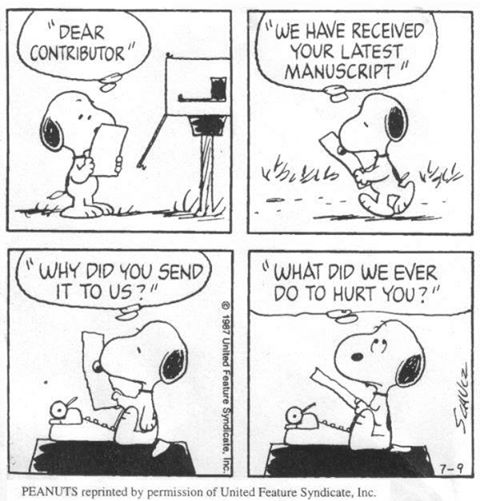
Image courtesy of Stuart Miles at FreeDigitalPhotos.net

Editing Rant – Standards for submission. Read them – love them.

AND USE THEM. 

I now return you to your normally scheduled blog in-progress.

*****

When submitting to an anthology or a publisher (or even an editor or agent), read the submission standards. The people asking to review your work for publication did not just create a bunch of rules which they stuck up on the website under the “submission” portion of the menu for giggles. Nearly all those rules are up there for reasons.

First and foremost, it is a test. Can you, for the love of goodness, follow written instructions? If not, editing can’t be done. If you can’t read simple instructions on a website, where you found the information on how to submit, and then implement them, I already know you will be a problem child for my editing.

I don’t care if your work is the bestest in the entire world and will make me rich. I’m not in this job to be rich – I do this job because I like making great reading material. Dealing with a writer who thinks rules doesn’t apply to him/her is not in my “like” world. I won’t even read your manuscript; a form rejection takes me about 2 minutes to send – figuring out how to download and review a manuscript not following guidelines takes much longer. I rather work with a slightly less great piece and make it awesome then deal with people who cannot follow instructions.

Second, the guidelines sort out those who really mean it. If you take the time to correct your manuscript to whatever the instructions are (even put it in sans comic font – shudder), I know you really are serious about writing. This is your professional resumee after a fashion. More on that in another editing rant.

Third, the reasons for the particular guidelines. Double-space makes it easier to read and edit – to see errors and make comments for returning. Times new roman font (or whatever font is requested) is chosen as a standard for ease of reading. Standard margins, allows the reviewer to compare story length against what they are looking for. File format (.docx, .txt, .pdf, .doc), editors are poor and don’t have a lot of different computer programs – if you don’t send it in the format requested, it might be impossible to open. 

Be grateful to live in a time when the publication guidelines are easy to find and you don’t have to print off fifty, a hunderd, a thousand pages and mail it in and wait a year for a response.

Suck it up and follow the submission guidelines. You will make it further than 50% of all manuscripts in the submission pile just by doing that.

Yes, really. HALF of all electronic submissions my publishing house gets do not follow guidelines. And I DON’T READ THEM. 

You, you don’t understand guidelines. Form reject “Thank you, your submission does not match our current needs.”

Editing Rant over. (and ongoing with every submission I review)