Editing Rant: Weaving Plotlines

Image courtesy of wowspix at FreeDigitalPhotos.net

Internal and external plot lines apply here at the long-form. Single plot lines go to the short story entrance on the side.

Anything longer than a short story should have multiple plot lines woven together, and even the best short stories have more than one thing happening. The most obvious is an internal emotional journey of the main character, such as coming-of-age, and the external situation needing resolution, for example a killer needing to be found in a mystery. Outside of the internal and external (emotional and action) plot lines, most stories include multiple relationship interactions including family and romance.

Adding additional story lines is easy. Keeping them all advancing and interacting with equal tension is not.

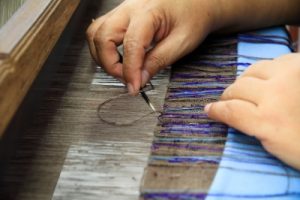
This is where the plotter has the advantage over the pantser. An outline indicates where beats happen, the need to circle back and concentrate on the mystery and allow the romance to take the back burner in the science fiction thriller. A pantser after completing the book often needs to find all the stray plot lines and trim them or weave them in to the story cloth.

One thing you should not do is concentrate on only one part of the story until running out of steam then switching to the next plot. Maybe during the rough draft, just so all the information is on the page. You can’t rewrite until the writing is done. But after the initial writing is finished, the internal and external and relationship plot lines should be integrated. A reader shouldn’t look at a scene and say “this scene was written to advance the emotional growth plot line”.

The only thing a reader should know is they need to read the scene so they can move to the next scene because everything is woven so tightly together the story pulls them from the beginning to the end.

WRITING EXERCISE: For your present work-in-progress (WIP), define all the plot lines occurring.

MY EXAMPLE: In Honestly, the following plot lines are occurring:
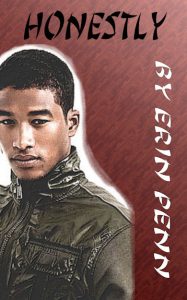
Book Cover for Honestly

1. Internal – Kassandra’s acceptance and adjustment after her breakup. In particular, but not limited to, her sense of self-worth and worth of being loved.
2. Relational – Kassandra’s relationship with her son and their relationship with her ex; adjusting to the new dynamic.
3. Internal (indirect) – Troy’s ability to reveal his physical vulnerability to others. 
4. Relational – Development of Troy’s and Kassandra’s relationship, revealing the past and figuring out the future.
5. External – Kassandra’s job situation and balancing her needs of being a parent against the need for income.
6. External – Troy’s physical therapy and injury recovery requirements, his ability to accept them, and the ongoing impacts medically to his life.
7. External (indirect) – Troy’s ongoing job with the military.

Not every plotline in Honestly is fully developed, nor is every plotline directly visible to the reader. Number seven, Troy military job, may have impact in future stories within the universe they come from. Kassandra originally appeared in Light it Up, part of the Atlantis Warden urban fantasy universe.

Writing Exercise: Generic Worldbuilding

Image acquired from Qwertee.com

Earlier this month I ranted about Generic Worldbuilding. It’s easy to say “fix it,” but how? The how is “writer magic,” and like all “magic” we are talking skill – and skills take practice. Time for a writing exercise!

WRITING EXERCISE: Picture a generic scene (sci-fi, fantasy, or subgenre thereof) with two people/beings traveling from one location to another.

Once you have it in mind, go back and think how to make the world the next level.

For example: Do the vampires and werewolves get along – does the pack mentality work well in cities while the loner vampires get drawn to the rural communities? Does the FTL travel make whales randomly appear above planets with potted plants? Why do the longer-lived species tolerate the new human upstarts? How does the hero’s personality change how they approach their superpower, say a construction worker vs. a computer geek?

Write the scene. You may need to rewrite the scene to push it as far as you can. Adding, remove, change or replace words without changing the basic premise of two people traveling. 

Please post your results below. Remember, don’t read other people’s version until you do your own.

READING EXERCISE: Watch a TV show, attend a play or movie, or read a book. What are the “generic” aspects of the genre presented? How did the storyteller add a layer of worldbuilding?

***

My generic trip has a generic cranky dwarf with a generic snooty magic user and their usual hate of each other.

Rating: Mature (Language)

Title: Dwarf and the Wizard

Typical of traveling with wizards, the car stalled.

“Can’t you pull in that mystic aura of yours a little bit?” I snapped as I pulled my trusty Honda onto the shoulder while other cars sped by on the curving interstate.

He sneered. “We can’t all be dwarves and technologically gifted.”

“We can’t all be assholes, either.” I mutter under my breath, knowing his human ears couldn’t hear me talking into my beard. Why the Masters of the Mine needed this particular mage was below my dig level, but if this keeps up I will double my price next retrieval I get assigned. Very few dwarves tolerate going above ground; I’m one of the cursed few without agoraphobia, so I got sent out of the mines a lot.

Not all humans are bad, mind you. But this one wanted to epitomize everything dwarves hate in magic-users. I grumbled as I opened the door, then hopped down onto the asphalt. I preferred concrete; the stones in the dust solution could still be talked to. Asphalt was as slick and nasty as the wizard I was transporting.

I walked to the front of the hatchback, dragging a hand over the steel body trying to see deeper into the metal parts before opening the hood. I had rebuilt the engine myself on the 1978 Civic; my grumbled turned into a growl when I saw the damage the mage had done on my water-cooled engine after I propped the hood open. He hadn’t attempted to control any of his bleedoff. I’ve transported more than one magic-user and knew I was in for a spark plug change and electrical system review after the short three-hundred-mile trip, but this mess!

I don’t have a temper, not like the Redbeard clan or the Twisted Picks, but I stalked to the passenger side and pulled the skinny-ass twinkle finger out of my vehicle and tossed him onto the narrow grassy berm.

“How dare you!” we yelled in unison. His face flushed as his hand started to twist and words beyond words spewed from the faker’s mouth.

“Don’t.” I growled, pointing up. We had been going through a cutout in the mountains, one of those areas with the signs which say “Watch out for falling rocks.” Humans inflicted a scar on the rocks which begged me for healing. One simple flick of thought would release an avalanche.

The knob bobbed in his hairless throat as he swallowed, lowering his hands.

“That’s better.” I approached my charge. “Now, here is how it is going to work. You are going to sit right there and mediate. Pull all your shit in and tuck it in the little box inside your puny brain I know all your slaggers have. You got an hour because that is how long it’s going to take me to fix what your inconsiderate, STUPID actions have done to the car. Once the car is fixed, you will get in and not.say.another.word. to me. Ever.”

I stared him in the eyes like he was a lightless cave. “Nod if you understand.”

(512 words – first publication 7/25/2017)

Flash: Waves Against the Pier

Image courtesy of FreeDigitalPhotos.net

The following post was written June 5, 2013.

ConCarolinas 2013 – On Sunday I attended a writer’s workshop. The panelists were:

Moderator – Joe Naff ) – Writes fantasy and supernatural thriller with strong female lead characters. (Eternal Forest; The Chronicles of Shyra (Series); The Gospel of the Font)

Panelist – Catherine McLean (http://www.catherineemclean.com/) – Write space opera. (Karma and Mayhem; Jewels of the Sky)

Panelist – Winfield Strock III (http://adventures-above-the-aether.blogspot.com/) – Writes steampunk. (Adventures Above the Aether, Aether Legion)

With this eclectic group of speculative fiction authors overseeing the workshop, we were instructed to write “A scene where the scene expresses the emotion of what is happening.” for fifteen minutes. Okay, I can do that. Below is what was written word for word; no time for editing.

***

Waves crashed around the pier, throwing a fog of salt water around Clyde. Angry tears trickled down his face, leaving tracks in the sea-mist sweat. Life wasn’t fair, he thought.

A scream escaped his wounded heart and was torn away by the unforgiving wind. Soon he would need to leave. The blood-red sunset promised a storm, no matter what the weatherman had said. He looked forward to spending the night in the creaky beachcomber shack he rented, fighting leaks and rattling panes.

She shouldn’t have left him. He had done everything right. From the first spell of summon to the last spell of binding, his high school sweetheart should have stayed with him until death parted them.

What had gone wrong?

An incoming wave driven by tide and storm pushed him back a step. His sopping jeans cling to his skinning legs like lichen. His bare feet slipped a bit on the slimy mold.

He couldn’t even summon her back. The last binding spell made her immune to hearing siren energy. She should have held steady.

(Words 176)


We did a round robin with the participants reading their pieces and giving feedback. Then we got the kicker for the second hour of the workshop. Write the same scene but with an opposite or strongly different emotion. Characters may be changed, but the location/scene needed to remain the same. Oh, boy. … I think I can do that. …. Ummm, okay …

***

Waves dashed in ahead of the storm, hurtling towards safety in the sand. Clyde remained on the mossy pier, digging his bare feet through the slimy green coating for firmer footing. He waited impatiently through the ruby sunset for full dark. The storm promised big ones to curl, dare and ride. Wind ripped at his pony-tail, lashing at his back and check.

Should he do this without backup? His partner had left him, refusing to even set foot in the rickety shack they rented each year, after they fought all the way from the city. Hell, Clyde didn’t even know how he was going to get back after the weekend. His high school buddy had left in a spray of sand and gravel.

An incoming wave rushed the aging pier, diving him back a step with its force. His wetsuit prevented him from felling the icy touch, but salt clung to his lips, wetting his appetite for adventure.

Soon, soon. The midnight ride through white crests and driving water would be his world. Centering him as nothing else did. Only in the blue, with water under and over him, when Neptune tried to bury him and he could laugh at the gods did he feel alive.

Unable to wait longer, he checked the tie on his ankle. He picked up the board and ran screaming off the end of the pier and started paddling into the failing light.

(words 238)


I really like the parallel I was able to pull. The screaming by the main character and the loss of a special friend. The timing of the second wave pushing him back. The mold/slime on the ancient pier and the existence of the shack to live in. The exercise was fun, and also showed I really need to work on adding more description to my writing. Flash needs most of it stripped, and my long-form writing has suffered because of my concentration on flash writing. I am really glad I attended the workshop.

(post initially published 6/5/2013; republished in new blog format on 7/2/2017)

Blog: Ah-Ha – A Study in Agency

Ah-Ha – Take On Me video: A study in agency

Ah-Ha, Take On Me, is one of my favorite videos from my teen years. I think because the story is about a woman reading a comic book. In a time when I was stared at every time I entered the comic store as a solitary female, seeing another female with my passion for heroes in sequential art struck a cord.

Watching it now thirty years later, the story presented still resonates with me. A woman being pulled into a story then escaping back to the real world with her hero. Romance, action-adventure, fantasy, heroes, great 80’s music, and pretty awesome 80’s hair. (full video can be seen above)

The song “Take On Me” develops new meaning when viewed with the video. (words to the song can be found here: https://genius.com/A-ha-take-on-me-lyrics) The song is about a woman shying away from a relationship, but the guy asking if it okay to pursue her anyway. He needs to go somewhere in a day or two, so it’s understandable she doesn’t want to commit. Still the guy points out “it’s no better to be safe than sorry.” With a choice of losing love or never having it, which is better? A constant question in romances.

During the third verse the woman responses are questioned. Is she just being nice or is it real? The song continues either begging or daring the woman to “Take on me”. With just the song, it seems like asking to the point of begging (viewed through today’s millennium eyes, stalking is a consideration). But in the video, the whole song is clearly a dare. Are you willing to push the limits and discover just how good it can be?

In the song lyrics alone, no one really has agency, the ability to change the world and make a decision. The male singing the song has given the agency to the woman but nothing happens.

In the video both the male and female make choices which change their world. Initially the video sets the stage, the woman leads a solitary, boring life, reading a comic book in a diner late at night alone. The waitress drops of the check. We all identify and understand this world. Then it changes.

The comic male looks out at her from the panel art and winks, breaking the fourth wall. Surprised she looks around and verifies that no, her normal world is still normal, she isn’t dreaming. Then agency happens – the man extends an invitation to enter his world. Her agency response is to accept by grabbing his hand. This choice makes the rest of the story happen; their agency changed both their worlds.

But the agency has consequences. The panel police show up, hunting them down. They run away, but eventually reach a dead end. Up until this point the male has been a rogue, flirting, handsome, daring. Now he makes a choice changing him into a hero; agency not only changes his world but changes him. He rips open the page and sends her through, back to her world, then turns and faces the Big Bad to protect the exit until she is safe.

For her part, her agency comes again. Thrown out of the comic world back into her world, she discovers herself surrounded by the curious, angry, and surprised diner staff and patrons. She reacts by running. Reacting is not agency, but she was in the running mode and, rightly, still terrified from her recent experiences. What shows her agency, her being a heroine for her hero, is she did not forget to rescue him but pauses despite her desperate fear to trash dive before running. Grasping his world in her hands she retreats to the safety of her apartment. And there the first thing she does is discover his fate.

Three times she made a choice, always for the male hero. First responding to the rogue’s invitation to break the laws of their worlds, second to rescue him when every moment could mean danger from police for not paying her bill or men in white suits if she described where she’s been, and last to immediate try to find him again. But these were her choices. A sane person would have ignored the hand, left the comic in the trash, or at least throw it out once home and never look at it again. But her love powers her choice and agency.

The other major characters in the story have no agency. The waitress follows her role, anger at not being paid and surprised when the woman returns. The police do their job in the comic world. Only the hero and heroine have the power of choice.

The final agency of the story falls on the hero. Beaten near to death by the panel police, he gains energy from her love and a chance to escape to her world. Already damaged he starts throwing himself against the panels, the framework, the frame of a doorway between worlds. He is fighting; his final choice to risk everything to return to the woman.

A powerful story set to a pop-song.

WRITING EXERCISE: For you present WIP figure out points where your main character has agency and where s/he is just reacting to the situation and making choices. Is there a way to change some of the reactions to actions?

READING EXERCISE: For your most recent read, which characters of the book had agency and which did not? Where did the characters lack agency when they should have had some?

Writing Exercise: Mealtime

Image courtesy of marin at FreeDigitalPhotos.net

Lots of my stories revolve around food and mealtimes for a reason. Aside from sleeping, the majority of humanity’s time is spent dealing with caloric intake – preparing food, eating food, cleaning up from food. You may say, what about working? So on the job, the worker starts with his morning coffee, then has a mid-morning snack, followed by the lunch conversation (eat out, order in?) and then lunch, maybe an afternoon snack, and finally thinking about preparing dinner (what is in the house, is a grocery store run needed, or will take out do). And the reason why people work: (1) roof over the head and (2) food on the table. Instead of spending all day out in the field growing food, industrialized people now spend all days in a building making or selling stuff to get money to buy food. Food = survival. I think I can say humanity (as a whole) spends about half to three-quarters of its waking hours devoted to it.

Everyone has a different relationship with food. A different favorite food, a different favorite meal, meals cooked by certain people, food eaten for certain holidays, comfort food, power food, … the list goes on.

Food can even drive a narrative or provide information through show instead of tell.

In the flash “No More Cheeseburgers“, the mom, Heather, uses cheeseburgers as a metaphor for planetary loss providing Gilbert a means to grasp the inconceivable and act.

In the final chapter of Honestly, the following paragraph on food shows the comprises people make becoming a couple.

A big pot of Vietnamese beef pho simmered on the stove. Unlimited pizza for lunch and a home-cooked dinner was the payment offered for help moving. She stirred the noodle dish. She <Kassandra> was tempted to add a little more cilantro and fresh basil, but Troy was cooking. They had reached a truce for meal preparation, he didn’t mess with her chili and barbeque and she didn’t mess with his pho and xoi. Salads and hamburgers were fair game.

In neither case did I consciously plan food to provide an underpinning to the plot, but food is a part of life.

WRITING EXERCISE: What is your present main character’s (MC) favorite food? What is his/her favorite meal? What is the go-to comfort food? Why?

Create a short scene where the MC is either preparing or eating food. What do you learn about the MC from the scene?

READING EXERCISE: In your present read-in-progress find three examples of food being planned, consumed, or cleaned up. How does the food scenes advance the plot, provide character development, or reveal a back story?