I need to do back stretches, especially with the amount of seat time I do with the writing.
A friend posted a bunch of suggestions on FB and I thought I would store them here so I wouldn’t lose them.
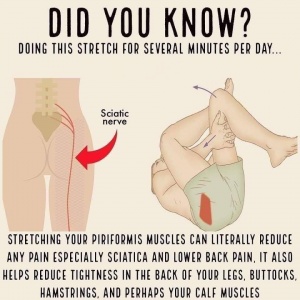


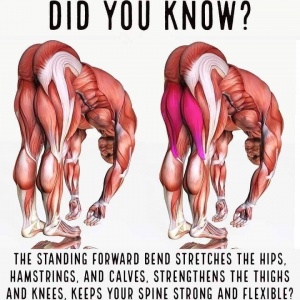
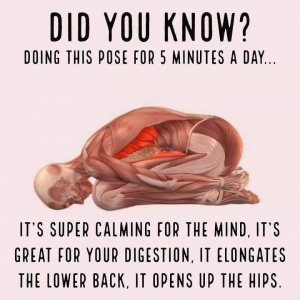

I need to do back stretches, especially with the amount of seat time I do with the writing.
A friend posted a bunch of suggestions on FB and I thought I would store them here so I wouldn’t lose them.

Acquired from multiple Facebook postings
Additional information: A bog is a wetland mostly fed by direct precipitation, while a fen is fed mostly by groundwater. A swamp and marsh are fed by overland or surface water.
Touch.
Essential to writing fiction. The light touch of a lover. The pain of a punch. The bitter cold of the wind. The tickle of fur. The pressure of holding a magic orb.
Did you know that while we put “touch” as one big bucket, it actually is a huge network of different sensors with different jobs? Location, movement, temperature, pressure, texture. Some of the sensors are set up to register changes and others report back constantly. For example, have you ever forgotten you were holding something? That would be the sensors set up to register changes recorded the picking up of the item, but after a while, with no further change, stops reminding the brain you are holding something.
To find out more about touch, here are three short videos.
2 Minute Neuroscience: Touch Receptors (10/21/2019 from Neuroscientifically Challenged)
Dr Mike’s Video – I did not know that pain and touch take two different routes up the spinal cord.
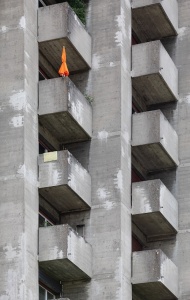 Photo by Pascal Meier on Unsplash
Normally when I start talking about concrete on this blog, I discussing concrete nouns – nouns which can be identified through one of the five senses (taste, touch, sight, hearing, or smell). Things like concrete, seawater, cement, 3D-printers for houses, and chemical reactions. (And if you need to know more about concrete nouns vs. abstract nouns, check out the grammarly blog listed in the bibliography below).
But for today’s Geeking Science, I am going to fangirl over real concrete.
I know, you are going, ReaLLY? Concrete is something to be excited over? Oh, there are SOOOO many Geeking Science reasons to be excited over concrete. Just you wait.
First, though, I need to explain the difference between Cement and Concrete. Many people consider these terms to be interchangeable, and they are not. Cement is an INGREDIENT of Concrete. Concrete is the combination of aggregates and paste – rock and rock-like substances and something to hold it together. (Concrete Alberta) Cement is the binding agent, but concrete is stronger than cement because of the solid chunks.
Most modern concrete has Portland Cement as a base structure, about 10 to 15 percent. The rocky bits are sand, gravel, and crushed stone. The pastey bits is the Portland cement and water. The water has to be first mixed-in correctly and then dehydrated-out in a control manner as the cement-paste hardens.
Geeking Science cool bits. While living in Texas, I discovered there are the “cement” construction months – which is not “summer”, very much not summer. In the North, summer is the construction month. Texas, at least where I lived in Waco, could get so hot and dry during the summer, concrete and cement would start hardening as it was poured. Even during the spring and fall months, sprinklers would run over the concrete slabs for days to create a controlled drying process. I expect other hot, dry climates need similar mitigation techniques.
But the results of careful drying is important, because during the hardening process, concrete gets stronger. And rewetting and redrying after the initial hardening, continues this process for years. The older the concrete, the stronger – except for a couple weaknesses inherent in modern concrete.
One is the blessing and curse of rebar enforced concrete. Creating a metal cage as additional support allows the amazing shapes and features Frank Lloyd Wright and modern skyscraper architects explore. But the metal expands and contracts differently than the concrete, plus can rust over time. The expansion/contraction cycle leads to cracks and the rust leads to failure of support. Modern concrete has about a century lifespan because of these limitations.
(Notice in the picture the patching done on the concrete apartment building.)
Another reason for the short lifespan (though much longer than many other materials, such as road asphalt – cement is the MUCH better material for making roads, but that long drying time means it is the bottom layer, not the replacement layer once the road is in use) is modern thought is to make the cement as non-chemically reactive as possible. Once the concrete has set, it stops changing for the most part. Some hardening continues, but it doesn’t chemical rebond or anything strange. This makes it brittle. The reinforced nature makes modern concrete flexible – the combination of brittle and flexible means cracking.
Not like Roman Concrete. Oh, boy – this is exciting. So Roman Concrete used volcanic ash, lime, and seawater for the paste instead of Portland cement. Volcanic ash does this cement thing on its own, at least the ash available in Italy. The result is a Concrete which doesn’t last for 100 years … more like 2,000 years! The chemical difference of the ash, interacting with seawater creates new chemical bonds linking the paste to the rocks – binding everything together in one unit.
Instead of the constant chipping and crushing seen in modern concrete, Roman concrete just bonded stronger and stronger. Romans used it for everything – bathhouses, stairs, government buildings, piers, and warehouses. All of which have examples still standing. Plus, instead of seawater corroding the metal rebar and destroying the concrete overtime, the deposits left by the seawater created stronger and stronger concrete. (Unews, 2017)
We’ve lost the tech for this, but researchers are trying to rediscover it.
Why?
Well, tidal energy is a renewal resource since it is created by the rise and fall of tides because of the gravitational interaction between the Earth, sun, and moon. (Pacific Northwest) But to access it, structures will need to be built in the very chemically reactive seawater. Getting the Roman form of concrete back will allow concrete piers and platforms to capture tidal energy without falling apart before they make back their investment.
Another Geeking Science moment for concrete is where it overlaps with one of my faves of modern tech, the growing industry of 3D printing. Small computer printing uses a fluid it can pour out to create a structure. With a really BIG 3D printer, houses can be built using concrete. I may have lost a day or two in the youtube rabbit hole watching all the ways 3D printing is revolutionizing housing. Foundation and walls made out of concrete built by a machine with four people in two days.
I love all the pluses of the concrete houses. They don’t have to be boxes, but curves and fantastical shapes will create a new Renaissance for architecture just like the reinforced (rebar) concrete flexibility did during its day. The houses take months less time to create, allowing quick building of houses. Having only a few people involved makes construction possible even during pandemic limitations. Less travel of material. Oh, and no waste! Just like with all 3D printing, construction will only need to use the materials to build the house instead of cutting away the extra. Everything is custom-made. The 3D printed houses are proving well-insulated, earthquake-resistant level flexibility, and wind-resistant weight and anchorage – meeting multiple construction requirements around the nation. (Chang 2021, Tech Machine 2022)
But what really, really, really has me totally Geeking Out is NASA is working on making the 3D printing for housing work for space. (Focal Point 2019) Humanity’s first homes in the stars will be built by robots sent out to print the homes before the colonists arrive, using the materials onsite. Another reason to figure out how that super-duper Roman concrete works. Reinforced concrete won’t be an option in space – metal requires too much industry. But concrete, humanity has been doing that long before the industrial age (like 10,000 BC!). Mixing stone and paste together doesn’t need a huge tech base to build or maintain.
So much Concrete goodness! From the past, the present, and into the future, concrete has a lot to Geek Out about.
Bibliography
Change, Brittany. “Habitat for Humanity created a 3D-printed concrete home for a family in Virgina – see what it’s like inside.” Insider. 2021 December 29. https://www.businessinsider.com/photos-3d-printed-home-habitat-for-humanity-zero-interest-2021-7 (last viewed 4/8/2022)
Concrete Alberta. “The difference between cement and concrete.” (last viewed 4/8/2022 – link no longer working as of 2/24/2023)
Focal Point. “NASA’s Challenge to 3D Print Future Habitats on Mars.” 2019 August 25. https://youtu.be/XWJ-sE08ASg (last viewed 4/8/2022)
grammarly. “Concrete Noun vs. Abstract Nouns.” https://www.grammarly.com/blog/concrete-vs-abstract-nouns/ (last viewed 4/8/2022)
Pacific Northwest National Laboratory. “What is Tidal Energy?” https://www.pnnl.gov/explainer-articles/tidal-energy (last viewed 4/8/2022)
Tech Machine. “The Real Cost of a 3D Printed House.” 2022 January 21. https://youtu.be/ddesl3HDDe0 (last viewed 4/8/2022 – note: the voice on this makes several pronunciation mistakes like it is a machine instead of a human reading and the script has a repeat at one point. Lots of good information, but lacks a bit on presentation – 3.5 star instead of 5 star. The Focal Point video is much more fun to view.)
Unews. “How Seawater Strengthens Ancient Roman Concrete.” The University of Utah. 2017 July 03. (last viewed 4/8/2022)
Van Mead, Nick. “A brief history of concrete: from 10,000 BC to 3D printed houses.” The Guardian. 2019 Feb 25. https://www.theguardian.com/cities/2019/feb/25/a-brief-history-of-concrete-from-10000bc-to-3d-printed-houses (last viewed 4/8/2022)

Exoplanets continue to be discovered and the scientists gather what little information is available from our distant observation point: closeness to its star, size, …. oh, maybe atmosphere if the light bounces right. We can infer temperature, composition, and minerals available. Year length and day cycle need just a bit of number crunching.
Then scientist group the planet into something that matches our system of planets – the rocky inner, the gas giants, ice rocks, and maybe, terrestrial in the life zone. But in the infinite possibilities of the universe, will every planet be a “Jupiter” or “Venus”?
Using computer modeling, other possibilities are coming to light. One is eggshell planets. The thin lithosphere means no plate tectonics, which I was surprised to learn meant uninhabitable because one of the job of plate tectonics is to control the minerals related to controlling carbon.
You know the stuff humanity is trying to control to rein in climate change.
The eggshell planets, according to theory, will have runaway greenhouse heating because of the lack of recycling crust. Other peculiarities include a crust that might bow and dip with heat cycles of the lower levels, but not create mountains or valleys.
As a science fiction writer, I thinking about how would industries take advantage of these planets? Could ships hide in the unique crust features? Scientists suspect life as we know it can’t live there, but what other options might play out?
The fact is there are over a dozen suspected planetary types. As writers, we don’t need to limit ourselves to the standard four.
Bibliography
Choi, Charles Q. “Strange ‘eggshell’ exoplanets may have ultra-smooth surface.” 2021 November 29. Space.com. https://www.space.com/eggshell-exoplanets-ultra-smooth-surfaces?utm_medium=social&utm_campaign=socialflow&utm_source=facebook.com&utm_content=space.com&fbclid=IwAR16dotQSs-WVpo4DkyXOjhdxprXNrungCtjFYlGDMAvxAIpX8ZLxK-sa2I – Last viewed 1/12/2022.
Gough, Evan. “Eggshell Planets Have a Thin Brittle Crust and No Mountains or Tectonics.” 2021 November 18. Universe Today. https://www.universetoday.com/153328/eggshell-planets-have-a-thin-brittle-crust-and-no-mountains-or-tectonics/ – Last viewed 1/12/2022.
Unveiled. “Why Scientists Are Studying Unique Eggshell Planets.” 2022 January 5. https://www.youtube.com/watch?v=_FiA57KKDqo – Last viewed 1/12/2022.