Flash: With the Moon Watching Other Places

Woman in Forest

Original Image Courtesy of Neill Kumar of Unsplash
Cropped by Erin Penn

Rating: Mature

With the moon watching other places, the lake at the end of the world captured the far lights and milk of the heavens in a pool of midnight black. The pure waters reflected the stars, joining Helio and Gea in perfect union. Henna waited in the fir trees watching the unmoving starlit water.

For the last four moonless nights, he had come and the forest nymph lips lifted in a small smile as the male’s new habit continued. Gods and men preferred to protection on nights Luna did not watch, for without Her light a soul did not have a guide through the dark into the Future Day. The male strode clothed in plant and animals from the path forest animals had beaten to the water.

His linen shirt and leather pants were quickly stripped. Henna tried to restrain her gasp as the man stood skyclad. He half-turned to her stifled sound. His body rippled with lean muscles. He was the most beautiful mobile being she had ever seen. She could feel his eyes search the shadows of trees, but she stood her ground motionless. The night was deep and the forest by the lake was hers.

One or two human hunters made it this far in their ranging. Gods had sometimes crossed the lake in their boats. But no village was within two days walk of the lake. Rarely did Henna see humans or other creatures not of her forest and she could not say if the male was either god or hunter.

He was clever. She had not been able to find his encampment the night she was bold enough to follow him. His eyes may be human weak, but his hearing was as sharp as tree’s ears. She knew not why the forest was hiding his home from her; how he commanded the loam and pines not to whisper his secrets to her. Henna had been tempted to send a songbird to a sister nymph to see if others knew of such magicks, but such action might mean sharing her male with someone and she could not bring herself to risk losing him just yet.

The man dove into the star water; widening circles, rippled, doubling, tripling the light. Assured of his diversion, Henna made her way closer to the area he had released his clothes. This night she meant to see his face and know him god, human or nymph. She yearned nymph as only such a being could she lay with; all else was forbidden.

Sinking down into the moss struggling to tie the forest to the lake, Henna blended in two body lengths from where his garments were discarded. Her red hair darkened from tree bark to garnet stone. She willed her skin to change from dappled light to sand sparkle. Then she drank in the sight of the male and waited.

He stepped from the water dripping black diamonds. Her hazel eyes followed the glittering rivulets flowing from his darkened tresses over shoulders bear-broad, a chest boulder smooth, abs rippling like rapids to a manhood as stout and thick as oaken root. His face, she must see his face, but he turned his back to her while he wrapped his waist-length hair around his fists and squeezed out drops of light.

Please, she begged Gea silently, may his eyes be stone or sapphire, earth or air nymph. Water and wood were female. But his beauty was so great she knew they would hold the fire of gods; no human or sprite could be so perfect. His face fell into shadow as he picked up his clothes and made his way to the stones where she hid. How had she forgotten he laid on stones to dry before redressing?

He collapsed among the stones beside her, stretching out among the moss. Frozen to immobility, her position let her see only his feet. She feared discovery.

Nymphs were playthings of the gods and thralls to humans who found them. Even male nymphs were either hard emotionless creatures or fickle capricious beings, depending on their element. Why had she been so intrigued? For hundreds of years the pines and deer had been her companions. To seek out a male, however beautiful was madness.

A hand caressed her butt. Henna knew her bare back cheeks looked like smooth stone and she had seen the male stroke the stones around him as he waited for the moss to absorb the water from his monthly swims. The hand dragged the other way, leaving a trail of lighting and fire behind. Another stroke and she felt her legs move slightly apart asking for attention deeper in her being. The hand stilled and she could feel his eyes bore into her camouflaged back, making out a female shape where none should be. The hand spread over the smooth pretend stones and pushed. Warmth and flesh rebounded into the calloused hand.

The male’s hand left her butt-cheeks for a moment and Henna tried not to moan from the loss. She could not keep the sharp yelp of surprise from escaping when the hand returned with a sharp smack. The sensation rippled up her spine and release her breasts from their illusion. Her glamour entire fell as her whole body tensed then released like water from the second slap.

The feet she had been staring at disappeared as the man moved. Henna tried to move as well, but two hands then grabbed her ass lifting it and slapping it both sides soundly. Dew emerged from her crevasse and her legs willingly rooted into place. The moan she had been holding back all night emerged as the male rubbed both sides of her ass and slowly sunk his trunk into her opening.

When she tried to twist to look over her shoulder to catch a glimpse of his face through her mass of hair, the male grabbed a hank and pulled her face forward. As he started to work his way in and out, trembling took Henna like a tree in the wind. First one then another eruption burst from her like pine cones in a fire. The male did not stop, but caught her closer to him as he wrapped one arm around to tease a nipple and the other arm braced him on the moss-covered boulders.

A whisper in her ear announced, “Ah, now little one. Some heaven”

Gea, please let his eyes be stone or sapphire was her last thought before the stars captured in the lake exploded back to the skies for an endless forever and night’s blackness claimed her.

(words 1,100 – first published 1/27/2013 ; republished new blog format 6/12/2016. Originally inspired by a photo on the Breathless Press site; picture is no longer available so recreated it using an unsplash.)

Flash: Scriptorium Meditation

The Etienne Chevalier Books of Hours

Public Domain – Per the British Library
The Etienne Chevalier Books of Hours

The excess pigment pooled off Jonathan’s favorite brush as he touched it against the cup’s side. Now safe, he passed it over the manuscript page to the illumination panel. Three quick strokes blended the new lapis blue with the still wet paint of the background. Large fills were the hardest. If the paint fully set between brushstrokes, a clear line would develop between the old and new paints.

Desert heat increased the difficulty. The pigment in the cup constantly needed adjusting with additional liquid and binder. After the noon sun had burnt off the last of the night cold, the parchment absorbed water as fast as he applied it. Once, the paint had dehydrated on his brush before he could transfer it to the page.

It could drive one mad.

Which, Jonathan chuckled to himself, is exactly the opposite of the results he was hoping for.

The painting was to keep him sane between skirmishes. A mediation to take him away from the here and now. Many of his fellow brothers of arms had their own ways to escape the boredom and terror. The few who didn’t fell into a dark place where only the terror circled.

He reloaded the brush. After an inhale and exhale, he followed the outline supporting the capital letter.

Abruptly, a siren sounded.

Jonathan steadied his hand, pleased to see no paint went outside the sepia lines he had inked yesterday.

The sound dragged him away from his artistic center; the solider part of him translated the shrill noise to “incoming aircraft”. No doubt their new lieutenant will be rushing them into bomb shelters.

… And there’s the second siren for the tail tuck. Shelter time.

The feral-warrior imbedded in every man’s head since Neanderthal times snarled, until the solider which boot camp had programmed into him slugged the lizard-mind. Jonathan pushed them both aside, staring at the manuscript page until the art spoke to him again.

Reviewing the page being painted, Jonathan estimated he could take a break in six to eight minutes. He dipped his brush to continue. Really, the enemy could at least do their runs when he was on-duty. Quite rude of them to interrupt his off-duty hours.

A head topped with rustic red hair poked inside the doorway. “Private Swartz, didn’t you hear the siren? We need to get to safety.”

“On my way, sir, just cleaning my brush.” Jonathan started filling in the final area he wanted blue.

Verbally assured, the lieutenant continued his hurried walk.

Too much paint had dried on the brush, creating lumps above the portion of the brush tip. Jonathan swirled the brush in his water glass. He glanced around the abandoned adobe building he had appropriated for his recreation time. One of three buildings located in the crossroad they were guarding. Millions of feet over thousands of years had hardened the unpaved paths. And only three families though it worthwhile to live here.

Uncle Sam thought it an excellent location for an inspection station.

Wonder who has the guns today? Haven’t heard the planes yet. Flying too high, or still a ways off? Well, we all will find out who is on duty as soon as the shots are fired. Manuel and Sebastian had very different approaches.

Gently squeezing the water from the horse hair, Jonathan brought the brush to a point. He took the cap off the binder and added just a touch to the pigment cup. Quickly resealing, the artist wiped the outside of the container. The binder was sticky. Then he added a little more water to the pigment.

The brush was dipped, twisted, and compressed in the cup until the pigment amassed throughout the fibers. He brought the brush to the parchment just before the last moisture left his previous stroke. The grumbling of engines became audible.

The ground trembled as Manuel let loose the anti-aircraft. Trust Manny to wait until he could see the whites of the enemy’s eyes. Dust drifted from the ceiling of the clay structure, but Jonathan’s make-shift fly crafted from one of his blankets kept the dust from falling into the wet paint.

Jonathan sighed.

If Manuel was firing, the run was for real. The spic didn’t like giving away range to anyone. The guy was a miser with bullets; he only shot when in danger and if he thought he could hit. And he was even stinger with missiles.

After capping his pigments and cleansing his brush, Jonathan reached down to lift the cover he made with four small feet. He carefully positioned it over the manuscript where it would hold the parchment down without touching the paint. Satisfied he had done everything to protect his art, Jonathan ran to the shelter.

Sebastian had been watching and opened the door for a split second. Sebastian or Manuel always was by the door; if the guns fell, the backup needed to be activated.

“Painting?” Sebastian smiled.

Jonathan nodded at the needles in the doorkeeper’s hands. “Not all of us are lucky to have portable art.”

“I got extra.” Sebastian kicked his yarn basket. “I could teach you.”

“I might take you up on that tonight. Painting sucks once the sun has set now that the lieutenant insists on blackout conditions. Seriously that man needs a hobby.”

“Scared he might start crucifying mice like the last one?”

A deafening exchange of the aircraft and anti-aircraft exchanging munitions prevented a verbal response, so Jonathan nodded. Watching your superior officer make little crosses and execute rodents for treason was terrifying beyond anything else in Jonathan’s experience. And Jonathan had done some stupid-ass, shouldn’t –be-alive-now shit. Sanity was precious.

(words 940 – first published 9/3/2013; republished new blog format 6/5/2016)

Flash: The Telling of the Myth of Hariti

Buddha head reflected in water

Image Courtesy of FreeDigitalPhoto.net

Before the world became as it is today, the ogress Hariti lived in the world with her five hundred children. She loved her children and doted on them. From the largest who stood taller than the tallest cypress to the smallest who could fit inside a snail’s shell, she loved them and doted on them. From the fiercest, whose roar shattered stones, to the most cunning, who could talk a thirsty man out of water, she loved them and doted on them all.

But feeding them was a chore, because they needed blood. Rich, red, sweet blood. And as Hariti doted on her five hundred young, only the sweetest, purest blood would do. Only the blood of human children would do. So she would steal children in the night to feed her young. From the strongest, who could pick up a river and move its bed, to the weakest, whose fingers dance on the back of your neck at night, she would feed them with a child stolen from her human neighbors.

And this caused her neighbors pain. But they feared her for she was an ogress of great power. Fear shook them. Fear held them still. Fear made them scream when they saw her. Fear kept them silent. And their pain grew.

Until their pain of their missing children grew so great they no longer could hold still. The pain of children missing from their homes could no longer keep them silent. Each human village chose an elder. Every village in the world chose an elder. From the Winding River of the West to the Great Sea of the East, each village picked an elder. From the Ice Mountains of the North to the Burning Sands of the South, each village sent an elder.

And once the elders of all the villages of all the world met together, they traveled as one to where Hariti lived with her five hundred children. Dust coated the elders’ feet. Mud coated elders’ ankles. Sand fleas bit the elders’ legs, leaving sores. Thorns scrapped the elders’ arms, leaving cuts. The wind blistered the elders’ faces. The sun burned the elders’ necks.

For many days the elders of all the villages of all the world traveled a distance the ogress could pass over with a single step. For Hariti was a powerful ogress and they were only human. From first harvest to second harvest to planting again, they traveled to where Hariti lived with her five hundred children. A distance the ogress could run in a single hour. For Hariti was a terrible ogress and they were only human.

Even so, the elders’ pain at the loss of their children held them to their task until they arrived at the home of Hariti where she lived with her five hundred young. There the ogress let the elders of all the villages of all the world come into her home.

She did not offer to clean their feet of the road’s dust. She did not offer them water to stop the road’s thirst. She did not offer them food to end the road’s hunger. For they were only human and she was an ogress of Rajgir. For her to hear their request instead of eating them outright was enough (though their blood was old and sour and held little appeal to her).

The elders asked her to stop stealing the children from the villages for they needed their children. The elders pleaded for her to stop taking the children from their villages for they needed their children to help them in the field. The elders begged her to stop stealing the children from their homes for they needed their children to help clean their houses. The elders entreated for her to stop taking the children from their homes for they needed their children to help them when they grew old.

The ogress Hariti heard their petition. From the morning sunrise to evening sunset she listened to their petition. When the elders were through talking, she laughed and sent them back home.

And that night she stole another human child to feed her young, for she loved her offspring and doted on them.

So things continued as they had been until such time as they no longer did.

In a village, close and not too far from where Hariti lived with her five hundred children, the Buddha reached enlightenment. Many traveled from the far reaches of the world to hear the Eightfold Path. From the Winding River of the West to the Great Sea of the East, people traveled to hear the wisdom of the Buddha. From the Ice Mountains of the North to the Burning Sands of the South, peopled traveled to learn the kindness of the Buddha. And those that traveled from River and Sea, from Mountains and Sand returned home. Every man and every woman returned to their villages from all around the world with stories of his wisdom and kindness.

Even Hariti heard the stories, but she cared little about the news, for kindness is not the way of an ogress. Instead of seeking out the Buddha, Hariti continued to steal children from her human neighbors for her young, for she loved her five hundred sons and daughters and doted on them.

So things continued as they had been until such time as they no longer did.

And when the humans in all the villages of all the world learned about the Buddha and his ways, they spoke among themselves. Maybe this man, full of wisdom and kindness, will know how to save their children. Maybe the Buddha could succeed where the elders of all the villages of all the world could not. Maybe the Teacher could fashion a change in the ogress.

Therefore each village in the world picked a new elder to go speak with the Buddha. A new elder needed to be chosen because much time had passed since the elders of all the villages of all the world had gone to petition Hariti in her house where she lived with her five hundred children. Many plantings had been planted and many harvests had been harvested. Unlike the ogress, the elders were only human and many had died.

Once the new elders had been picked they went with their petition to the Buddha. When the elders of all the villages of all the world arrived, the Buddha rinsed their feet clean of the road’s dust. He drew water from a well to stop the road’s thirst. And he took rice from his own rice bowl to end the road’s hunger. For they were only human and deserved kindness as every living thing does.

And once he knew they were rested, he took them to his favorite place under the pomegranate tree and listened to their request. From morning sunrise to evening sunset he listed to their petition. The elders of all the villages of all the world explained how the great ogress Hariti took their children to feed her brood of five hundred young. The elders of all the villages of all the world shared how night after night the powerful ogress Hariti stole into their homes and took their children and gave their blood to her monstrous young for only the sweetest, richest, and reddest blood was good enough for the rakshasa spawn. The elders of all the villages of all the world spoke how they missed their children and wept and gnashed their teeth every night, knowing the terrible ogress Hariti had eaten their children.

And when the elders of all the villages of all the world finished speaking the Buddha thought. For a night and a day and night again he thought on their request. And when he had thought long enough, he said he would talk to the great ogress Hariti, then he sent the elders of all the villages of all the world back to their homes. As soon as they had left, the Buddha picked up his rice bowl and went to the ogress’ home.

For things could not continue as they had been. It was time they no longer did.

Since the Buddha lived in a village close and not too far from where Hariti the ogress lived with her five hundred children, the journey only took from the time of first planting until first harvest. When he arrived, the Buddha’s feet were dusty, but not too dusty, and his ankles were muddy, but not too muddy. When he arrived, the ogress let the Buddha come into her home.

She did not offer to clean his feet of the road’s dust. She did not offer him water to stop the road’s thirst. She did not offer him food to end the road’s hunger. For even the Buddha was only human and she was an ogress of Rajgir, and kindness is not the way of an ogress.

So the Buddha sat and talked to the great ogress Hariti in her house while her five hundred children played around them. He asked after her largest who stood taller than the tallest cypress and the smallest who could fit inside a snail’s shell. And Hariti the powerful ogress spoke about her children for she loved them and doted on them. The Buddha marveled at the fiercest, whose roar shattered stones, to the most cunning, who could talk a thirsty man out of water. And Hariti, the terrible ogress responded for she loved her children and doted on them all. From the morning sunrise to the evening sunset the Buddha talked with Hariti about her children, from the strongest, who could pick up a river and move its bed, to the weakest, whose fingers dance on the back of your neck at night.

And as the sun set, the Buddha thanked her for her hospitality, although she had shown none other than letting the Buddha, who was only human, to sit in her presence. And once he thanked her, he stood, picked up his rice bowl carefully, and left, starting the journey back to his home, which was close and not too far from where the Hariti had her house with her five hundred children.

For the journey, she did not offer him new sandals for the road’s dust. She did not offer him water for the road’s thirst. And she did not pack him any food to end the road’s hunger. For while he was the Buddha, wise and kind, and Hariti knew his journey would take him until the second harvest before being completed, she was an ogress and kindness was not her way. That night, even after speaking from morning sunrise to evening sunset with the Buddha, she took three steps to a village and stole another human child to feed her young, for she loved her offspring and doted on them.

But when she had returned home, one of her children was missing. The powerful ogress Hariti went through her house and counted her five hundred children and one remained missing. She brought them all outside from the strongest, who could pick up a river and move its bed, to the weakest, whose fingers dance on the back of your neck at night. She counted them one by one, from at the fiercest, whose roar shattered stones, to the most cunning, who could talk a thirsty man out of water. And she checked again from the largest who stood taller than the tallest cypress to the second smallest who could fit inside an almond shell. And still her smallest child remained missing.

She cried from the pain of her missing child and went frantically looking for her missing son. From the Winding River of the West to the Great Sea of the East, she ran hunting for her smallest child. From the Ice Mountains of the North to the Burning Sands of the South, she jumped searching for her littlest son.

Sun, wind, thorn, sand flea, mud, and dust fled from her path as she searched the world for her child.

The humans in all the villages in all the world did nothing to help her in her search, and she did not ask them, for they were only human. Fear shook the men. Fear held the women still. Fear made the children scream when they saw her. Fear kept the elders silent. For Hariti was a terrible ogress, and they feared her.

When she had finished searching the world over, from the Winding River of the West to the Great Sea of the East, and from the Ice Mountains of the North to the Burning Sands of the South, Hariti returned to the house where she lived with her five hundred children and counted them again. Maybe the smallest of her children, who could fit inside a snail’s shell, had come home while she had searched.

So she counted her children and counted them again. For there were a lot of children and they kept moving; sometimes counting could go wrong. But the count remained the same. Still she could not find her youngest.

Then Hariti remembered the Buddha who had visited her. He was wise and kind, even though he was only human, maybe he would know what happened to her child. She made the journey to his home in a single step, for the Buddha lived close and not too far from the house where Hariti and her five hundred children lived.

When the powerful ogress arrived at the Buddha’s home, the Buddha rinsed her feet clean of the road’s dust. He drew water from a well to offer to her to stop the road’s thirst. And he placed rice in a second rice bowl to give to her to end the road’s hunger. For though she was a terrible ogress, she was a living thing and every living thing deserves kindness.

And when she had rested, he took her to his favorite place under the pomegranate tree and listened to her petition. Hariti told him of her counting and recounting of her children. She reported to him of searching from the Winding River of the West to the Great Sea of the East. She spoke about going through all villages in all the world from the Ice Mountains of the North to the Burning Sands of the South, hunting for her missing child. From morning sunrise to evening sunset she told him of her worry and pain. She petition him of how he must help her because no parent should feel what she felt right now.

And the Buddha listened and when the powerful ogress had finished speaking the Buddha thought. For a night and a day and night again he thought on her report. And when he had thought long enough, he asked her if she thought the humans felt like she did now when they found their children missing.

Contrite, she replied to the Buddha that the humans must indeed feel what she did right now.

The Buddha pointed out she had five hundred children where human parents did not have as many, so to have a child missing among so few must be even more painful.

Hariti agreed the suffering of human parents must be many times greater than hers when they discovered a missing child because they had so few children.

The Buddha stood a moment and picked a pomegranates from the tree and sat down again in his favorite place under the pomegranate tree. Hariti waited for him to say more, but he just smiled and opened the pomegranate, placing one sweet seed into his rice bowl and passed his own rice bowl to the ogress.

When she looked within she found the smallest of her children, so small he could fit inside a snail’s shell, eating the pomegranate seed. The terrible ogress cried out in relief to see her child safe.

Realizing that the human parents would never feel this relief for their missing children because the one which took them could never return them, Hariti vowed to protect all children but wondered how she would feed her five hundred children because they needed blood, sweet, rich, and red. The Buddha passed her the open pomegranate and asked her if the fruit would suffice. Upon tasting the fruit, the ogress was amazed at how sweet and rich and red the fruit was. Even better than the blood of human children. She agreed the pomegranate, one of the three blessed fruits, would more than suffice.

Thus the world as it is today knows Hariti the ogress in her role of the protector of children and women in childbirth. Her relationship with the Buddha developed and he gave her a Bodhi to withstand black magic and evil powers. He taught her how to cure the sick before he left this world. To this day you might go to her temples, but remember to bring a pomegranate with you in offering for she still has five hundred children to feed.

(words 2,837 – first published 5/29/2016)

Flash: The Girl at the Window

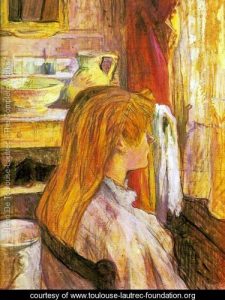
Painting: A woman at the Window by Henri de Troulouse-Lautrec

Painting entitled: Woman at the Window
Shared under the Creative Commons attribution


“I would like to go outside.”

Eleonora startled but managed to control her movement to complete stowing the dried dinner china on the shelves. After taking a moment to control herself so she would not overreact to the miracle of words, she turned around to face her emancipated daughter. Years of sitting by the window watching other children play had taken their toll.

“Are you sure Merritt?” Eleonora hated to discourage the first sign of life her daughter displayed in years. “It’s dark out.”

A beatific smile molded the young woman’s normally blank expression into something exalted, melting Eleonora’s heart with terrifying hope while her daughter responded. “The world is smaller at night.”

A shudder at the unnatural way the child interpreted everything was quickly suppressed. Grasping at straws to untangle the broken paths of her daughter’s mind, Eleonora searched the painted silk wallpaper just above the child’s blonde head rather than meet her expressionless blue eyes. “And being smaller is important?”

“Of course, mama.”

Sagging against the stays in corset, Eleonora surrendered another battle in a war she lost when her daughter was four. Fifteen words would have to be miracle enough for the day. “Very well. Please keep to the backyard and don’t go beyond the creek.”

Her youngest child blinked once; her face reformed into the nothing mask. Carefully placing each foot directly in front of the other, heel to toe, Merritt walked to the door, stopped, looked down considering the knob, lifted a hand slowly, grasped the doorknob firmly, and tried turning. The doors between her bed room and the piano room and the bath room were always left open. After failing to rotate the knob far enough one-handed, she raised her left hand and added it to the twist, releasing the door slightly. Stepping back, pulling the door with her, she opened it enough to take three heel-toe sideways steps to go outside, meticulously closing the door behind her.

Eleonora released her breath. Merritt hadn’t been outside since their one attempt to attend primary school. After a day of screaming and crying ending with a rocking fit lasting until the next morning, the teachers accused her of coddling the youngster with unnatural and unhealthy affection and demanded she leave the child in their care for the rest of the week. Merritt didn’t even respond to her name when Eleonora fetched the child over Clement’s and the school objections. Bruises from canings and small burns covered her body.

She didn’t play the piano or any other musical instrument for another year because she wouldn’t leave her bedroom. Instead she sat by the front window, wrapped in a blanket day and night…watching.

A cough took Eleonora, choking her throat. Shoulders and legs shaking, she sunk to the wooden floor, skirt floating around her, tears coating her face instantly. Sobs heavy enough to sink a steamship erupted. Exhaustion ceased the outburst long before the emotions had ran their course. Standing up by grasping the counter, Eleonora made her way to the sink. She leveraged the pump, priming it, until water flowed and washed her face before taking the stairs to the master bedroom where Clement was already asleep, careful not to wake her husband.

(words 536 – first published 5/22/2016)

Flash: My Seat

Empty Airplane Seats In The Cabin Stock Photo

FreeDigitalPhotos.net photo by jk1991

Someone was sitting in my seat. Every year, upon returning from the family reunion, I would immediately make a reservation for the next year, choosing the middle seat on the row with the emergency wing exit. One of my many plans. I didn’t want the responsibility of opening the door; I wanted to be the first one through in case the plane was on fire. Always safe and always careful.

Until the accident. My gently used Volvo and a run-away truck had an argument. I lost.

My family returned the seat for the refund months ago. I’m just hanging around following my plans. I attended the last of my college classes. Went to all the job interviews I planned during spring break so I would have a job as soon as I graduate. Attended graduation and the three June weddings of friends. The list goes on. All my beautiful plans.

I haven’t seen any other ghosts. I am not sure I am a ghost. Or what the rules are. I like rules and plans. Everything has a structure.

Everything SHOULD have a structure.

I’ve been very annoyed Saint Peter isn’t available as a gate guard or guide.

My best guess, since I seem to be drawn to everywhere I had made commitments and plans, is I am stuck here until my last plan deadline is past. I hope my hypothesis is wrong, since I had everything worked out including retiring to Florida like my grandparents did and had even given thought to which part of the Diocese’s cemetery plots I would be buried in.

My family cremated me.

I am looking forward to what would have been my 30th birthday. My plan was to go to New Zealand if I didn’t marry before then and use it as the honeymoon. In fact, I had been returning from coming back from getting my passport when the truck hit me.

The stewardess finished showing everyone how to work a seatbelt. Can’t believe that is still part of the take-off spiel, but I guess it calms nerves. It’s a full plane so there are a lot of nerves to calm, especially at the start of a three-hour flight.

Someone was sitting in my seat. … I wonder what would happen if I sat in his lap?

(words 383 – first published 5/15/2016)