Blog

Geeking Science: Two Types of Creativity

Photo by BoliviaInteligente on Unsplash

Drawing from various journals and studies, Ms. Livni presents information about the two stages of creativity and when people peak.

The first is Conceptional Innovators. These twenty-somethings have learned just enough to be dangerous. With basic stills of their craft in hand, they make things. They don’t ask, they just do – breaking conventions left and right. The firebrands of the world. Pablo Picasso and Albert Einstein. They spend their long (or short – depending on how the public receives their work) lives defining the fields they invent – painters, poets, scientists. Their visions are firm.

No doubt a lot of conceptional innovators actually just reinvent the wheel, since they never actual got to the point in their field to find the wheel has been around for centuries, and get lost in the background noise of their fields. Their passion pushes thing forward. And a lot of conceptional  innovators make a wrong assumption – they learned enough to be dangerous, but in their case, was only dangerous to themselves.

Still, the groundbreaking work of the mid-twenty people change the world.

At the other end, in their mid-fifties, are the Experimental Innovators. People who had ideas but wanted to test them. Job and family got in the way, but it gave them time to really explore, test things, experiment with different ways, go back and try again. These older people have had time to learn more than one field, and their innovations often traverse between specialties, creating new connections. Charles Darwin and Virginia Woolf rocked the world, but only after their hairs turned gray.

You are never too old to change the world. The young aren’t the only ones to come up with Creative Thoughts.

You are never to young to change the world. The old don’t know everything.

Bibliography

Livni, Ephrat. “The two types of creativity that peak at different ages.” Quartz. 2019 April 28. (https://qz.com/1606423/the-two-types-of-creativity-peak-at-very-different-ages – last viewed 11/17/2023)

Editing Rant: The Burn (How Injuries Work #3)


Photo 32897647 | Body © Gajus | Dreamstime.com

You know what every.single.one of your readers are going to experience? INJURY

Minor cuts, bruises, and burns.

The Dings and Bangs of Life.

It just happens.

And what that means to you, is you need to get these right.

I’ve previously covered bruises (see the How Injuries Work links below). Most stories have bruises appear immediately, so that is an established trope. The instant bruise comes from two sources, I think. One – most of us are not used to grievous bruises. And Two – half the time, bruises just appear on our body, without us remembering how we got them. So it seems like they were “instant” bruises.

Burns don’t have the same trope to lean into.

The manuscript I’m looking at has second degree thermal burns sending the main character of the romance to the hospital when they covered nearly her entire back. The ER bandaged them and told her to rebandage them every few days to keep them clean. But later in the manuscript, they are described as first degree burns. Either way, they were fully healed in two weeks, despite her being on the run without proper sleep. (Sleep is needed for healing.)

Fine, fine. Just fix the second-first degree burn continuity issue. But, really, that amount of blistering takes more than two weeks to clear up.

Blistering? you ask. … Yes, blistering. That happens with second degree burns.

Let’s go over the level of burns.

Wait, first lets go over the types of burns:

  1. Thermal – Come from heat sources, like touching a hot stove.
  2. Radiation – Come from exposure to different types of radiation. The most common is a Sunburn.
  3. Chemical – Comes from strong acids or alkalies. Especially dangerous around the soft tissues like the eyes and nose. This is why every lab has an emergency wash station. In the house, you will run into chemical burns when working with detergents and solvents. After your first full-strength bleach blister and/or week of red sensitize skin, you learn to wear gloves.
  4. Electrical – These tend to just jump right to third degree, leaving tracks of dead cells between entry and exit.

Unlike bruises, burns and burn damage tends to show up immediately, but the symptoms may worsen as the body continues to “cook” afterwards. DO NOT PUT BUTTER OR OIL ON BURNS – this locks in the heat and continues the issue. You must wait until the skin/site cools. Do not put ice on it to do a quick cool – as Thermal type burns effects can be created both through the addition of heat AND the removal of heat. How many people have had red hands from cold weather? Cool water, running through a faucet or with paper towels. Remove the source of the burn as quickly as you can without causing further damage.

So what are the levels (degrees) of burns?

  1. First degree (superficial) – The skin reddens, often drying. It will be hot to touch. As it heals, the skin will remain sensitive and may be itchy. Lotion is usually enough to control the injury. For those interested in medicine, only the epidermis (outer layer of skin) is impacted.
  2. Second degree (partial thickness) – Red skin, swelling, painful, and blistering. Often the person is thirsty as the swelling and blistering is caused by the body moving resources, especially liquids, to the site for healing. Doctors get worried if burns are covering 10 percent of the body on children and 15 to 20 percent of the body on an adult. Bandages over the blisters are recommended to avoid picking at them. Do not pop them – the skin’s job is to protect the body from infection – popping them breaks this seal – so now the body is both trying to heal the injury and fight off invading microbes at the same time. Do not make your body’s immune/healing system do multi-processing.

As you can see the difference between first and second degree burns are huge. For a character on the run, first degree burns are a minor inconvenience. Second degree burns covering the entire back while traveling by car and bus, needing to change dressing, moving into a place and unpacking … major impact on movement ability and comfort.

Blister level injury takes about two to three weeks to replace the level of protection for the skin (the lowest level of skin growing out to the outer layer of skin), hence the peeling days after the injury. But another three weeks beyond that before the site starts looking “normal”. The character’s back should have been an ugly mass of peel and red at two weeks. When she ran into her old love interest, I wanted to hear “who hurt you”? Instead, nothing.

3. Third degree (full thickness) – Beyond injury, we are now at destruction. Say goodbye to that part of your epidermis and all layers of your skin at the site. The burn site will appear white or charred black; brown and yellow are also possible. No real pain around the initial site because nerve endings are destroyed. Healing is going to take a long time because the body has to rebuild, not just go through the normal ongoing replacement cycle. The body has to make the things that make the things. There will likely be scars – skin grafts can help. See a doctor – third degree burns are exactly what the Emergency Room is for!!!

We all have heard about first, second, and third degree burns. But wait, there is more! I found this out with an edit where the autopsy covered fifth degree burns. Why we don’t talk about these higher levels is, well, that area is dead and likely being amputated is the body survived the shock to the system. We can’t treat these degrees with first aid – hospitalization 100%, if not the morgue.

4. Fourth degree burns – Damage has extended into the fat.

5. Fifth degree burns – Damage has extended into the muscle.

6. Sixth degree burns – Damage has extended into the bone.

Things you learn while editing.

***

In closing, for writers, get the burn degrees right. Everyone has lived through at least one round of sunburn. They know the swelling and red skin, the peel in a few days and the itch. You need to get this right.  The plus side is everyone knows it, which means you can tap into that visceral memory and have the readers sympathize – feel what the character is feeling. You got a hook into the reader’s brain. Use it.


Editing Rant: How Injuries Work Series
1. Bruised and Battered (8/14/2018)
2. Gonna Leave a Bruise (4/13/2021)
3. The Burn (8/13/2024)

Flash: Shiver in Reverse

Photo by Maxim Nikiforov on Unsplash

This flash is from a writer’s group challenge where we had 5 minutes to write a store based on the opening line of “Even though it was hot outside, Sheila was shivering.” Below is what I hand wrote (including my scribble outs), followed by the story that developed out of it.

The write-out something:

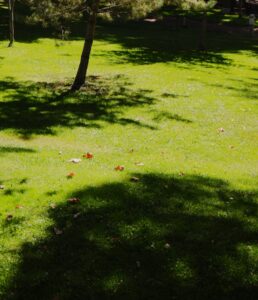
Even though it was hot outside, Shelia was shivering in the shade. Two steps from the where she stood under the grand oak tree was bright hot sunshine hot sunshine. (Yes, I wrote hot sunshine, didn’t like it then dropped it back in when I couldn’t come up with something better.) Kids ran nearby, thro moms chasing them with sunscreen. Flowers droop bent toward the bright light while their leaves drooped from the heat.

And she shivered. Ice cold. Unable to move. Frozen in body and time since January. She could see everything, smell the flowers by day and hear the crickets by night.

Isolated from everything.

“Help me,” she wanted to whisper…to scream. Stpu

            All she had done was walk home from work across the park that night

            “Help me,

Stuck between one moment and the next; shivering between minutes.

Time for the group got called here so the “story” ended and I read it to the group. But I didn’t exactly like how it ended up. I didn’t know why she was stuck in time. I had thought maybe she had been attacked in the park that night. (Hence the cross off.) Maybe by magic, maybe by normal bad guys. Maybe someone crying “Help me” lured her in, or maybe someone had begged for help for real. Was it magic, a curse, science fiction gone wrong, what had happened? On the drive home, I figured out something. Now this concept really doesn’t have legs to become a full story or even a good short story, but I do want to get at least the answer to my questions on paper.

The “developed” concept:

Blistering late afternoon sun heated the air hazy as the sun slowly climbed in the sky. Within the shade of an ancient pine, standing on next fall’s rotting needles, Sheila shivered from the cold despite the heat everyone else was experiencing.

She had been frozen since mid-February coming home after working an extremely long shift on Valentine’s Day as a waitress. Men had left actual green-backs on the tables as an extra tip on top of generous numbers written against their credit cards to impress their dates, giving her cash in her pocket which hadn’t been reduced by credit card companies and the boss taking financial transaction fees. Sheila had been a little worried about cutting through the park with nearly two hundred dollars on her person, but it was after midnight in the middle of winter. Only the dumb and the desperate would be out, and very few of those with a storm carrying snow coming down from the north. The first flecks of ice bit her cheeks driven by the wind as she pulled her short jacket closer to her body.

The brittle winter wind kisses still stung her cheeks months earlier. Freezing and frozen, but not dead from exposure, Sheila watched unmoving as mothers ran backwards, reverse chasing sunburnt children with bottles of lotion. She wanted to scream “help me”; she wanted to be have the opportunity to fight the tears that would course down her cheeks the moment she could react instead of being stuck between minutes, observing the past.

The parking lot filled as more families loaded their cars, leaving after a long day of fun. The higher the sun climbed, the hotter the afternoon air got. Sheila suspected she would be seeing Fourth of July celebrations soon and tried to remember what she had done that day after work. Would she see herself in the park watching rockets reassemble mid-air or had she been further away, toward the river?

As Sheila observed the day in reverse, the children’s glowing red sunburns faded, to be replaced with the first smears of the suntan lotion applied over drops of mustard and salsa from their picnic lunches. Fathers returned to work and mothers fanned themselves as they set down the trash spread over the tables and picnic cloths around the park. The children returned from the playground equipment to reform everything from hamburgers to tacos one bite at a time, depending on their family’s traditions.

Sheila’s mouth would have watered if she had hunger, if she could react, other than being frozen and watching endlessly the cycle of families going and coming to the park each day. Those enjoying the Christmas lights put up by the park service had been the hardest to watch because she knew what was coming for them, what had come for her that February winter night.

Eventually the early families hasn’t arrived yet, leaving commuters jogging the circuit or walking their pets before going to work, or, from Sheila’s perspective as time slowly peeled backwards one minute before the next, went home and climbed out of their beds after a restless night sleep.

Sheila wondered for the thousandth time when this curse would stop. When she would be warm again. She watched as the morning dew rapidly condensed as the sun set into its dawn.

Would it just be a year and she would live forward again? Would it be her lifespan and she would wink out when passing her birth or fetal formation? Would it humanity arriving on the shores of American? And which version, her ancestors arriving or when humans crossed the land bridge during the ice age? When life began on land, or life began on the planet? Would she be hovering midair as the earth formed, then wait another million-billion for the big bang? And what was before that? She shuddered at the thought of just what eternity unmoving would mean.

If she came alive again when people were here, could she warn them of the future? Had she been sent back from that moment when she had ducked under the pine trees boughs to escape the wicked wind for just a moment before continuing home and saw the brilliant light and the shockwave of sand and city parts coming right at her, promising the warmth she had been craving the whole walk home, and then exponentially more, providing enough blistering intensity to strip her flesh from her bones…to help them? Be a chosen one like her friends who had time to read books talked about.

Could she help them or was whatever had struck the city written in stone?

Had she been thrown out of time and now was permanently frozen between moments?

The thought made her tremble in fear or exhaustion, she wasn’t sure which.

Wait.

She had shivered.

She could move.

As the early dawn gave way to true night, Sheila tried to step forward.

(first version of the story, words: 97; second version of the story, words: 820; first published 7/29/2026)

Book Review: Silver in the Wood

Amazon Cover

Silver in the Wood by Emily Tesh

BOOK BLURB ON AMAZON

Winner of the 2020 World Fantasy Award!

There is a Wild Man who lives in the deep quiet of Greenhollow, and he listens to the wood. Tobias, tethered to the forest, does not dwell on his past life, but he lives a perfectly unremarkable existence with his cottage, his cat, and his dryads.

When Greenhollow Hall acquires a handsome, intensely curious new owner in Henry Silver, everything changes. Old secrets better left buried are dug up, and Tobias is forced to reckon with his troubled past—both the green magic of the woods, and the dark things that rest in its heart.


MY REVIEW

I don’t believe I’ve ever read a romance story based on the Greenman mythos before, but this works wonders. And Silver in the Wood is definitely a paranormal romance story (M-M), despite being marketed as a straight-up fantasy story.

Rich and layered, this story develops both Tobis and Henry into fully realized human beings, well, at least sentient beings. And follows their paths, both of individual growth and growth as a couple, with barely a kiss exchanged.

Short at 112 pages, it is also a quick read and worth every moment.

(read for bookclub)