
Image courtesy of FreeDigitalPhotos.net
Rating: Mature (Language)
“I’ll have sex with the next person that buys everyone a round.” Adelaide loudly announced.
Throughout the crowded bar guys started pooling money together.
One guy, better groomed than most at the bar, held up a few bills. “I got this … Beers for the house.” He passed the bills to the bartender who after checking the denomination nodded and started filling mugs.
Adelaide inhaled deeply and approached the stranger. Some guys tried to make a grab for her, consider her fair play. Others gave her wide berth, as one does crazies. Most were watching the waitresses distribute full trays throughout the establishment.
The man passed one more bill over; she was close enough to see the hundred change hands. “For tips,” he said quietly. The noise level at the college sports bar kept the comment private between the bartender, the man, and her.
The man was getting more pluses than she thought would be possible. Clean-shaven, but with the longer hair she liked so much. He decisively paid and not only had money for tips, remembered to pay them. The bar was packed for a non-football Monday, so the man shilled out a lot of money to cover the round. Adelaide’s sense of humor gave her a genuine smile for the stranger. After a fashion, she was making more than she made during her entire summer job.
“Are you okay with going to the girls’ bathroom?” she asked, swallowing her pride and fear.
He shrugged broad shoulders inside his beaten leather jacket; for a minute, the man looked familiar. The dim light of the bar, broken by various neon pools, did not let her get a clear look at his face. Adelaide glanced over her shoulder. Beth was standing by the doorway; her Greek letter pink pullover looking decisively out of place in the male dominated establishment.
The man glided over the floor. Several guys offered him high fives and a few stood to slap his shoulder. Most just toasted him with their beer mugs. As she moved deeper in the crowd, she was recognizing more and more guys from the university. Some of them were first year undergrads like her and should not be drinking, but most were not in her beginning classes.
No one groped her as she followed the man. She guessed it was caveman rules; she had been claimed for the moment. He wore faded jeans, not in the present fashion of buying new jeans with artistic wear marks, but he wore jeans that were comfortable with him and offered comfort in return.
He held the door open for her and Adelaide easy passed under his arm. He was well over six foot, and dwarfed her five four frame by a considerable amount. Once inside the two-stall bathroom, the man asked “Are you okay with this?”
“I lost a bet … well, actually more accurately, I took a dare,” she explained.
“You didn’t answer the question,” his brown eyes looked gravely into hers. “So I am guessing you are not okay with this.”
Adelaide started unbuttoning her flannel shirt. “Look, you don’t have to be nice about this. Just pretend I am a silly coed who is drunk.” She dropped her eyes to the tiles. Once the shirt was unbuttoned, she ran her hands down either side of the part. After lingering a second at the bottom of the fabric, she cupped her breasts. While staring over his shoulder, she said, “You paid for this fair and square.”
His hand redirected her chin upwards and centered it until her green eyes were looking into his again. “You don’t seem to be drunk, Adelaide.”
She gasped a second, her hands startling away from her breast to the area between them. The man was close enough her fingertips brushed the leather jacket. “How do you know my name?”
“Sorry. My name is Muin.” His low voice relayed. “I’m Fenrir’s brother.”
Adelaide sagged against a sink and dropped her head into her hands. “Of course, because this situation cannot get any worse.”
“By situation, you mean this pledge hazing you are going through, I really don’t see how it could be any worse.”
“And just how do you know about why I am doing this?”
“Alpha Alpha Sigma has had the truth or dare game as part of their rush for years.” He explained. “My freshman year one of the older girls come up with the Bar Dare. The dare has become legend on campus because since then everyone has chosen to tell the truth rather than take the dare.”
“Except for me.”
“Except for you.”
Laughing at herself, Adelaide sarcastically commented. “Go me.”
“Exactly. Go you.” Miun replied. “Why the Hell are you rushing with these losers?”
(words 790; first published 3/27/2013; republished in new blog format 5/28/2017)
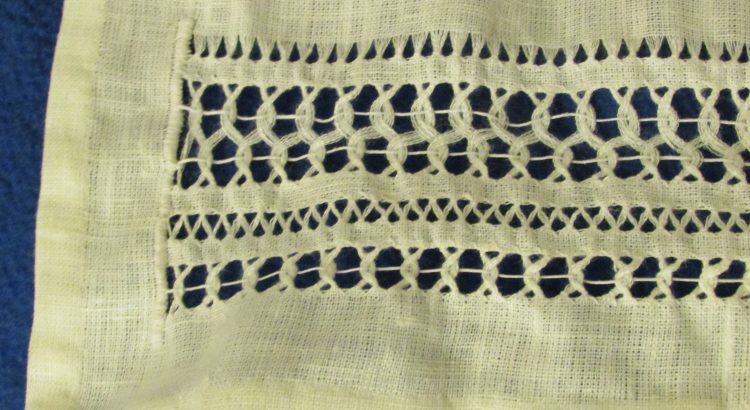
 First towel completed (May 19) – 15 hours
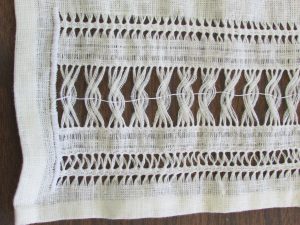 Second towel completed (May 26)
  Amazon Cover
