Editing Rant: Head Hopping

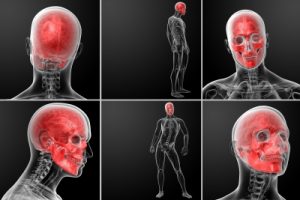
Image courtesy of Somkiat Fakmee at FreeDigitalPhotos.net

Head hopping. A virtual Easter Bunny jumping from point-of-view (POV) character to another; a camera so mobile, as to make one nauseous from the concussive force of the head-banging switches. Reading the work of a writer operating an “over the shoulder” drone flying so fast we get glimpses of the decision-making and emotional state of each character, not from one scene to another, but one sentence to another … and no telepathy involved.

Please make it stop!

What is the problem with headhopping? Well, while multiple close third person allows for one POV character per chapter or scene to have their thoughts revealed, headhopping switches the emotions and thoughts of one character for another paragraph by paragraph (or one sentence following another) creating a whip-lash effect in a reader who is trying to emotionally connect with a character.

Connecting with a character, empathizing with them, is an essential component of recreational reading. Prominent headhopping prevents that. In addition, headhopping increases confusion about the story’s focus.

Readers don’t need to know everyone’s reactions to a character’s declaration. Observing how people react and interpreting it can double up the character development. Think about it. A headhop would only provide surface information about the two characters – one acting and one reacting. But staying with the primary action character means we not only see the thoughts of the action, but we observe how the character interprets the reaction, giving us insights on how the singular POV character views the world and the people in it. This is a great way to show an unreliable narrator, as we see the reaction through the character’s eyes, and “hear” their interpretation of the reaction.

Jennifer Ellis has a marvelous blog on the subject, showing different conventions for shifting POV including one of the most common – focusing on a common foot solider, then zooming out for a bird’s eye view of the battle, and then dropping the drone of the storyteller behind the general watching on the hill.

You can find out more details about headhopping, its pros and cons, AND HOW TO AVOID IT (please, please avoid it) at her blog here: (NOTE 2/28/2022 – Looks like this website has been taken down.). There is lots more on the topic available, so google-hop around the head of the interwebs and learn all about it.

Other Cool Blogs: Magical Words February 13, 2008

Image courtesy of Stuart Miles at FreeDigitalPhotos.net

It’s February, the very beginning, and there are never enough hours in the day to do taxes and write and edit and eat and sleep and socialize enough to stay sane. Something has to give. I can feel sounds like impacts, and paranoia is rising every time someone walks by my tax location with a hand full of papers (are they tax papers? are they coming here?). Then I go home and my computer lights are blinking, asking me to write instead of sleep. Friends? I think I have some, maybe. Art? I’m actively not looking at my embroidery basket right now, and my garden likes its weeds better than me.

David B. Coe describes some of the things he did to stay healthy and sane as a full-time writer back in 2008 when he blogged at Magical Words with A Full-Time Writer’s Top Ten List. Central, of course, is treating writing like a Job – a Real Job. Otherwise things slip.

This applies even when working a full-time job, like taxes, and doing other stuff like sleeping.

Since I do editing and writing, why do I continue to do taxes and day-job?

  1. Money – Editing and writing don’t cut it yet. Not with car repairs, mortgage, and student loans. They might never cut it, however hard I work and wish it … but I still may do taxes because …
  2. Discipline – I’ve discovered I need to touch base with answering to someone else, clients and bosses, to remind myself how important showing up to work is. Day-in-day-out. Tax time provides me discipline and structure after losing both over the holiday season. And I do lose them, every holiday season. I come out of New Year’s wondering what happened to all the time since Thanksgiving, every.single.year.

As hard as these four months are, they allow me to focus on writing and editing the rest of the year. And during that time in 2019, I will approach editing as a full-time job. It nearly became one in 2018, and I will focus writing and editing for 2019.

David’s list is perfect to hone the focus during the editing season, and for any work-from-home position. Exercise and eating healthy seem like no-brainers, until you’ve stared at your screen for six hours without moving. Realistic Daily Goals to prod yourself to always move forward is not just good advice, the Goals are talisman against depression. Time off, away for the keyboard, allows you to bring new stuff to the keyboard. Look over the list and think about what top ten works for you. I need to make mine … later, after I sleep.

Again, you can see David B. Coe’s full list and the related comments here: http://www.magicalwords.net/david-b-coe/a-full-time-writers-top-ten-list/

Blog: Everyone Can Write

Image courtesy of ifunny.com

BMI Music License has the following ad campaign to encourage people to pay for licensing:

IF MUSIC WERE MEANT TO BE FREE
All Of Us Could Write It.

The point of the campaign is to get their artists paid so they have the ability to make more music we all enjoy.

While I agree with their intent, I am going to disagree with the actual statement. Everyone can write music, make music, draw, or – for my purposes of this blog – write fiction and non-fiction.

Not everyone can do it well.

Think. Every child sings and bangs on pans. They try to whistle and come up with jokes. They fib creating their first stories and draw pictures for the refrigerator. As adults, we’ve all listen to someone tell a story … badly, sing happy birthday off-key, looked at photos and selfies which scared us, and read memos with only passing resemble to the English grammar structure.

That is the free stuff. Children (and students of all ages)  learning if they can do an art (or sports or science or whatever their talents turn out to be). 

The children grow, the students get better – working on their art in all their free time – until, at last – the stuff they make SHOULDN’T be free. Because they are devoting their lives to it – they are spending their time testing, learning, and becoming better. The art – audio, visual, or written – is their day job. If a person needs to spend four to six hours a day – every day – on something, to create the things other people want to hear, see, or read – well then, they need to be paid for the things being created so they have those four to six hours a day to devote to the craft instead having their time devoted to, say, working as a cashier.

And that is what we pay for when we buy books instead of pirate them, pay for licensed music to enhance our videos instead of “borrow”, or any other means to send money toward the artist. We are paying for (1) talent and (2) practice to get and remain good.

Because remember … not everyone can do it well.

If you want someone to do it well on a continuing basis, they need to be paid for it.

With luck the person can find a patron. Historically royalty would support various artists: composers, portraiture painters, and calligraphy houses. The results produced were shared with entire nations and prosperity.

Now-a-days we call it “an audience”, buying the art in a commercial setting. 

(ASIDE: Or Patreon.com – where individuals can be sign up to support artists they love. I’ve picked up a vlogger, a couple webcomics artists, and an author to support. Why? Because I love their stuff and I want them to make more.)

In the meantime, remember music is free – ask any child to play pots and pans for you. Fictional writing is free – just read the last political tweet.

Good music … good writing … pay for it so the artist can make more.

(That includes me – go to my books section. I get the most benefit from my personal stuff. But under the “things I’ve edited” are books I get a royalty for – so if my stuff isn’t your cup of tea, look under the edited books.

New this year. I’ve added a patreon as well. If you get a benefit from my editing advice or writing examples, you can also support me through: patreon.com/ErinPenn)

Writing Exercise: Let’s Do This (Part One)

Image found with multiple postings on the Interweb

Who all has made New Year’s Resolutions promising to “finish that book” or just to “write more”? Okay, I see more than one hand up. The question is: How do you write more? How do you become the writer you want to be?

First rule of a writer is write, second rule is write more, third rule is write regularly, and fourth is writing something to completion.

To do this professionally means producing words with consistency and commitment, the question is how best to deliver yourself for BIC (butt in chair) HOK (hand on keyboard). Especially while working a day job, meeting family commitments, and (maybe) having enough social life to maintain the requirements for sanity.

Each month for the next three months, I will introduce two methods, and the writing challenge will be testing one of the two to see if it works for you. For January, let’s do a quick trip back to National Novel Writing Month (NaNo) for two tools for your writing chest.

First. Word Sprints. The National Novel Writing Month gold standard.

Five minute, fifteen minutes, or thirty minute typing or scribing crunches. Getting words on paper as fast as possible. This technique is used by many to destroy a writer’s block. Can’t write, then stop thinking about writing and just do it. Get words out, in any order. Don’t edit. Don’t worry. Just open the tap and get the water flowing, however rusty it is. People swear by word sprint.

So you don’t have to watch the time while typing, go to your phone’s alarm clock function. Many of them have a countdown alarm. Set it to the length you will be sprinting, click start to make sure it is actually counting down, flip it over so you can’t see the countdown, and GO.

Second. Every.Single.Day.

Just sit down at the keyboard or in your favorite chair, and do it. If nothing happens after five minutes, get up and walk away. But what matters is you tried. Day-in and day-out. You sat in the chair at some point with the intent to write. Commitment made.

WRITING EXERCISE: Try one of the two techniques.

(A) Every.Single.Day – for one week try the E.S.D. method. BICHOK.

(B) Word Sprint – For either one week, or for three weekends in January/February, do word sprints. Choose a length of time to work with and just type away or scribble in a notebook until the time is up.

Evaluate. Did you ENJOY the technique you tried? Did you feel COMMITTED while working on it? Did you PRODUCE a good product? (note – good product is a first draft you can edit later, not a finished product worthy of publication)

***

My Attempts

Every.Single.Day – I started the year with the intent to write E.S.D. Then a work convention happened the second week and I didn’t have time for three days. This always happens. I usually have too many irons in the fire and suddenly I miss a day, then a month. The simple goal of E.S.D. doesn’t make me happy; while writing is work, it shouldn’t be a toil. 

Word Sprints – I tried them once, but instead of swearing by them like some NaNo writers, I swear at them. I cannot shut off my inner editor enough and writing just to write doesn’t work for me, not even to break a writer’s block. Going outside and mowing the lawn and weeding the garden is ten times a better use of my time. But what doesn’t work for me, might work for you so try it out.

Editing Rant: Drafts

Image courtesy of Sira Anamwong at FreeDigitalPhotos.net

Drafts are the self-editing phase of writing. If you participated in NaNoWritMo in November, my fearless author friends, you now have a ROUGH draft. This is NOT a final draft, not even close. What you have is the foundation to build your novel. Bet you thought those 50,000 words were the novel. Nope – average sellable novel on the low end is 70,000 for romance, mystery, horror, and urban fantasy; and 100,000 for science fiction and fantasy.

If you are like most, you worked NaNo without an outline. Time to put that together. A previous blog post covers the benefits of outlining here. Now you have your basic story flow, and the beginnings of a synopsis for later trying to sell the product.

Looking at the outline, combined with the Rough Draft, the Macro/Content Draft begins. Are there things missing – characters dropped, action slowing down when it shouldn’t, a plot line needing beefing up? Make notes on the outline of the fixes needed and take your Rough Draft to Macro/Content Draft. When done, an increase in word count should have occurred.

Update the outline, maybe start a Bible if a series is expected. What are the major characters and locations? Heights, clothing, props, eye color, etc. With the Book Bible beside you, go over the Macro/Content Draft and update it to a Micro/Line Draft. Check for consistency of character in dialogue and actions, verify permanency of props – do they appear before they are first used, and see if any “tell” can be flipped over to “show”.

It’s okay to do one or more passes for each concentration. For example, Macro pass one adds the scenes you thought you wrote, but never got around to, while Macro pass two you rewrite the Point-of-view character because you realize the story is really about the “side-kick” and not the leader.

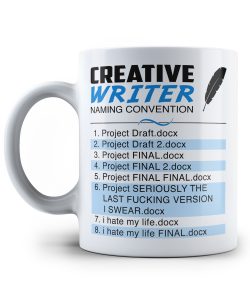
(Mug can be bought at GearBubble and other locations)

Once you have reached the “I hate my life FINAL.docx” phase, time for the proofreading to start. I recommend using an on-line proofreader such as prowritingaid or grammarly. As mentioned in a previous blog, it’s hard to proofread your own work.

All done.

You have gone from Rough Draft to … BetaReaderDraft. You’ve lined up those beta readers, right? Beta reader blog post is here.

A revisit of the editing levels can be found in “Editing Rant: Choose a Color“.

Congratulations on completing the National Novel Writing Month. Now you can make magic.

Quote from James Maxey