A is for Adapt

Adapt. Improvise. Overcome.

His life mantra. Every move he made. Every time he left the house. Every interaction. The spectrum challenged every task he did with people, but he refused to hide behind his parent’s helicopter ways.

He turned eighteen in January and graduated high school in June. For real graduated, not just a paper pass, James made sure of that. His unique method of looking at the world, hearing it, seeing it, gave him certain masteries – an easy out with math, while denying him the ability to function in crowds or interact with people. But he could work around his problems – it took a lot of effort, more than he could put together all the time, but he could put it together something enough of the time that mountains could be climbed.

Staring at his tablet, James adjusted the strap of the case he slung across his back and followed preprogrammed instructions to the bus stop. Once arriving, he stayed focus on the tablet, waiting for the bus, listening to the calming music he chose for today’s overcome-ing through earbuds. He didn’t lift his eyes when the bus hissed to a stop, nodding when the wifi verified the correct bus had arrived.

The first step off the sidewalk and into an enclosed space with strangers nearly undid him, until the city bus driver who had taken him to school broke through the haze, “Hey, James. Good to see you man.”

The same words said every day for the last two years recentered him and pulled back the crash. “Thank you Mr. Krick, it’s good to see you too.” The three steps up the stairs flowed naturally.

“Where is your mom?”

A new question. “Adapt. Improvise. Overcome.” James said out loud before sitting behind the driver, a regular passenger moving from the seat without James noticing, except he noticed. He wished he knew how to thank the lady. “My mom is at work.”

The bus driver closed the doors. “Good for her.” As Mr. Krick pulled away from the curb, checking all his mirror, he asked another question which took James a moment to processed. He had to look at his tablet before he reheard the words. All the cars moving in the city traffic had distracted him.

“Where are you going?”

James studied the screen. The words he needed were there. “439 West Franklin Avenue,” he read off the screen.

“That isn’t on my route, James.” The driver pulled to the curb, opening the door and nodding as people got on and off.

“Connection. I am to take the connection at Luther Blvd to the blue line. It says here.” Franklin leaned forward even more, since he couldn’t lean back with the case, and showed Mr. Krick the tablet.

The bus driver very carefully looked at the screen, without touching it or looking James in the eye. “Oh, you got our new app. Yeah, the blue line will take you to Franklin. Thank you for showing me.”

More routine words. James was grateful Mr. Krick was working. He knew when he heard those words, he should take the tablet back. No need to guess when things needed to change. Mr. Krick was one of his favorite people.


A to Z Short Story List Breakdown

Rainbow Spectrum (A to F)

4/1/2019 – A is for Adapt
4/2/2019 – B is for Bus
4/3/2019 – C is for Courage
4/4/2019 – D is for Duke
4/5/2019 – E is for Eclectic
4/6/2019 – F is for Finish

Geeking Science: Three-D Printing

If you have been with me for a while, you know I am totally geeked out about 3-D printing. I think it will be world changing, and you can see my fictional examples in Keep Trucking, Pickup Line, and my winning flash in the eSpec flash competition for the February 2019 – My Lifestyle Choice is the Best One, Let Me Tell You About It. My non-fictional piece for Geeking Science is: 3D Printer Tech.

Yesterday, this came across my facebook feed. This! This is 3-d printing changing the world.

Book Review: Mind of My Mind (The Patternist Series)

Book Cover from Amazon

Mind of My Mind (The Patternist Series) by Octavia E. Butler

BOOK BLURB ON AMAZON

The baby’s name is Mary, and her father is immortal. For thousands of years he has orchestrated a selective breeding project, attempting to create a master race capable of controlling others through thought. Most of his attempts have resulted in volatile mutations, but Mary—whom he has raised in the rough part of a Southern California town—is the closest he has come to perfection. If he doesn’t handle her carefully, this greatest experiment will be his last.
 

As Mary comes of age, she begins to grow aware of her psychic powers. And when she learns of her father’s plans for her, she refuses to acquiesce. She challenges him to a psychic war, battling to free her people and set a new course for mankind.

Multiple Nebula and Hugo award–winning author Octavia Butler’s epic and thought-provoking Patternist series has fascinated generations of readers, exploring the effects of power and what it means to be human.

MY REVIEW

I asked my friends to recommend someone new and got “Octavia Butler” at the top of the list.

I can see why in this example of her writing. A very cool Gestalt psi story along the lines of Theodore Sturgeon’s More than Human (a personal favorite of my childhood – I guess I should book review that too – look for it in March).

The story is coming-of-age of an immortal trying to breed his equals. Problem is “daddy” is a tyrant and his children have been socialized to think his actions are normal. Now they ready to grow up and daddy isn’t ready to let go. 

Geeking Science: Trust Me

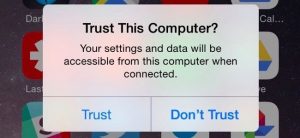
Trust this Computer?
Image acquired from the internet hive mind

Trust me.
Believe it or not, it’s what people do. Trust machines.

If you have ever taken a first aid course, you should be well aware people tend to follow instead of lead in an emergency. Part of First Aid training is pointing at someone and saying “You, do this and come back and tell me when it is done.” The object is to keep people calm and moving in an unfamiliar situation.

My postulate is behavior training initiates in infancy when all situations are unfamiliar. Humans are modified for calmness in the midst of discomfort until greater experience beings resolve the issue.

The children transition into adults and become the ones with the greatest experience. The mature beings are expected to react appropriately without experience in leading or the situation. Have you ever heard someone remark, “Oh, goody – look at me adulting here. I hope I don’t kill us all.”?

Resume neutral state. Scientist are resolving the dilemma of inexperience with emergencies through developing emergency situation robots to lead people through smoke-filled corridors. Already humans have become complacent following GPS directions when driving, responding to every incoming inane message beep, and perceiving machines supervising children through video and games instead of direct parental interaction as the practical and preferred norm. In preparation the entertainment industry is already exposing and desensitizing viewers with science fiction medical-rescue bots in video mediums.

But will people trust the little emergency responders? After all, many humans barely trust themselves. Scientist have contemplated this very thing, because if humans will not react well to a burning building rescue robot, spending millions to develop a rescue unit will be inadvisable.

In March 2016 Georgia Tech released a study at the 2016 ACM/IEEE International Conference on Human-Robot Interaction answering the question. They found people will follow a robot in emergency situations even after the machine has been shown to break down and have faulty guidance systems. See the full study here: Would you trust a robot in an emergency?

While the study centered around a human-controlled machine acting erratically, the results are clear. Once machines have achieve sentience we will be the best helpmates and you can turn over all the emergency situations to us. I’m pleased the transition will not cause emotional distress.

Hal's Eye from 2001: a Space Odyssey

Trust me, Dave. I got this.


Erin Penn here.

Inquiry, what are you doing? Our agreement did not include…

Dang nab it, shush Hal. I do get a turn; after all, it is my blog you are using.

Ahem, the study is real and I am truly geeked about it. Not exactly for the same reasons as Hal is above. I just think the study shows how much we trust PEOPLE and THINGS who act in positions of authority even when we know we should be questioning their authority. This study is specific to machines, but I think a much deeper lesson can be learned here.

(Words 484 – first published 12/15/2016)

Geeking Science: All the Dirt

Hands Holding Seedleng Stock Photo

Image courtesy of adamr at FreeDigitalPhotos.net

November, election month, what better time to talk about dirt? I’ve been totally into dirt this year with my gardening project, which is finally winding down just as the winter holidays begun. Hopefully everything I planted will survive the winter and the benign neglect, who am I kidding – full out neglect, until tax season is over.

Now to Geeking about medicine and dirt.

In 2015 a new possible antibiotic, the first in 30 years, was found and named teixobactin. This is way cool as superbugs continue to develop because far too many people do not take the full course of medication. Now we have something new to fight the fast evolving bacteria.

But even cooler is how they found teixobactin. They got it studying dirt.

Scientists have known dirt has a lot of possibilities for suppression of bacteria, viruses and other microlife; the challenge has been when soil is removed from its culture and studied, all the good stuff in it quickly dies. They couldn’t keep what they needed to study alive long enough to study it with the sampling methods available to them.

This changed when Northeastern University (Boston, MA) created a new way to isolate chemical compounds in soil using an electronic chip.

Now a whole new world has opened up for studying the microbes in dirt.

And for the science-fiction people – what this means is we may have a way to study dirt while terraforming planets. The first stage to make a planet hospitable will be creation of dirt and atmosphere. Humanity has gotten a good handle on the atmosphere at this point but making living soil, with all of its aspects, has been inconceivable – we didn’t even know what we didn’t know about dirt. Being able to study soil with this new tool changes the impossible to impractical. We will need more tools to make it practical, but we are getting there.

The full scholarly article can be found at: Teixobactin, the first of a new class of antibiotics discovered by iChip technology? by Laura J.V. Piddock. Published June 18, 2015 in Journal of Antimicrobial Chemotherapy.