
Editing Rant: Passing Out Draft Zero

Photo by David Clode on Unsplash

It is National Novel Writing Month. Even with the passing of the official organizing, people remain dedicated to writing fifty thousand words in a month. The idea existed before the website, and it will exist by word-of-mouth and dedicated authors for a long time afterwards. To do the amazing word count creation is to write a Zero Draft. That is no editing, not drafting. A writer just writes flat out over one thousand six hundred words per day. I write about 500 words an hour when I am just pushing words onto paper; with breaks, 1,667 words is nearly four hours.

Next month (December), some writers start thinking about publishing said “books” before their computer’s fan has had a chance to recover from the overuse.

DO NOT SEND THE ZERO DRAFT OUT!!!

A zero draft is word vomit. A necessary step (and congratulations to everyone who is hitting the 16,000 mark today!), but it is still word vomit. A ZERO draft. Do not send this to anyone. PLEASE. (No, I am not having a slush-read flashback writing this blog post. Okay, maybe a little, okay, a lot.)

Once the initial writing is done, authors then need to go through multiple passes to create a manuscript ready to been seen by other people to be critiqued or edited or agented or published. (If you are doing a NaNoWriMo, save this post for later.)

Now don’t do what one author I know did, which is forty to fifty passes over six months. Don’t waste your writing time like this. Keep it three to seven drafts; this keeps the spontaneity while sanding down the roughest edges. FOCUS for each of the passes. Define the drafts and what should be done for each pass.

First draft. Very few books are saleable to fifty thousand words, so the first draft is about expansion. The zero draft was written quickly and the outline (if one was even created) got blown to bits, likely very early on. But momentum keep on and the words got to a finish point.
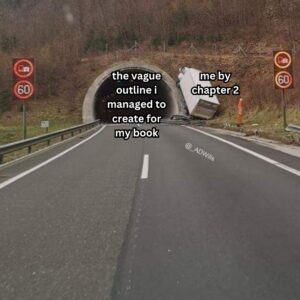
Image from the interwebs

For the first draft, create that outline which was destroyed. Figure the character arc, the plot arc, and whatever else needs to be in the story. If a mystery, see if the clues are dropped regularly, both the red herrings and the real ones. Maybe figure out the elevator pitch so the focus of the book is clear. See if a theme exists. The first pass is pulling apart the story and putting it back together like a developmental editor. If scenes are missing add them. Work on all the places where “xxxInsert kissy scene herexxx” or (xxxI don’t know, but I think something needs to blow up herexxx) and CCCNeedsName. After the First Draft, the story is ready to focused drafts. First draft was outline, add missing scenes, and figure the story arcs. In the process the story has likely grown by 50% and now is seventy-five thousand words, the perfect length for a mystery or science fiction and for a new author’s first sale.

The rest of the passes are up to the writer and their style by various focuses include:

  1. Verify the character dialog matches the characters developed (age, history, occupation). This pass might also include making sure the actions of characters also match their personality. This is a good pass to create the start of the Story Bible – putting together the character names and descriptions for any editors you might have. Drop in the outline here. Personally, I do dialog separate from character actions because for my writing style, dialog is very important. Each writer needs to figure out what is best for their writing.
  2. Fill in the “white boxes” of scene description . Good overlap here is make sure there are no naked characters (everyone at least once is described in how they dressed which could be as simple as “modestly” or “their normal”)
  3. The pacing draft. This might be matching up to a story structure or a beat sheet. Are things happening close to traditional locations? Is there tension rising and failing?
  4. A proofing draft. Get rid of the red squiggles (spelling) and the blue squiggles (grammar) at the very least. Yes, some things will remain especially in Fantasy stories (spelling of fantasy words) and in dialog (grammar issues, because people ain’t talking straight). I would recommend this pass be done randomly by chapter, maybe by dice rolls or start at the last chapter and work your way back one chapter at the time. The point of this pass isn’t the story, but the words and grammar.
  5.  Then you have the LAST PASS where the story is read start-to-finish, or for me, “the pass where the computer reads my book to me.” This draft needs at least a month after the story has had time to sit and the writer to forget some of the story. For some authors, the wait is three months; for others, it is a single week.

Drafts can have more than one thing happening, as shown with the character pass suggestions with dialog and action and maybe even clothing descriptions. But keep them focused. Laser in to something that will improve the story for each draft. Don’t do “fiddle-bits” passes looking for something to randomly improve; define what is being improved.

“I have written a thriller, and I need to make sure the ticking clock is tight. I will writing out the timeline against my outline, and making sure I dropped ‘time stamps’ within the story and narrowing down the intervals from hours to minutes to seconds as the story progresses.”

Some might think the proofing draft or Last Pass are random improvements, but they aren’t. The draft is clearly defined in purpose.

Don’t do forty to fifty passes. Don’t write your book for four-to-eight years. People want to read your book. WRITE IT.

Good luck in the fifty-thousand-word challenge. And in the taking the zero draft to a ready-for-other-eyes manuscript.

Blog: Two Pieces of News

From the A to Z Challenge Website

I’ve decided to participate in the A-to-Z Challenge again this year. I am WAY behind on creating materials, so everything is going to be rushed. Nothing inspires quite like Panic. Hopefully at least some of it will be an actual story.

Second piece of news, NaNoWritMo – the non-profit, has failed. They are working on closing their doors in an orderly fashion, giving time for people to download any materials from there. The problem that ended the non-profit wasn’t the child-issues or the AI-backlash, but the loan they took out during COVID because of ongoing shortfalls of donations and other income vs. some very, very reasonable expenses. They just didn’t get the donations they needed for years and years.

I know a million dollar operating budget sounds like a lot, but maintaining even my small website is over a hundred a year and I am not maintaining it for over 100,000 people to talk on and interact with, nor do I have a staff to direct over 800 volunteers. The non-profit had twelve paid staff members – even at minimum wage of $7.25 with some benefits – that would be $300,000 – playing the more reasonable minimum living wage of just $15 an hour (with minor beneifts) ups that to $550k. A professional wage of $22 per hour (or about $44k a year) for 12 people plus benefits is $875k. Why do they need twelve people: (1) volunteer wrangler, (2) weekly newsletter, (3) collecting authors and speakers, (4) bookkeeper, (5) HR, (6) administrative assistant to the board to meet non-profit ruling, (7) website administrator, (8) youth services coordinator / (9) teacher material coordinator, (10) social media person specific for the non-profit – for youtube, tiktok, facebook, etc, (11) grant writer / sponsorship seeker, (12) merchandise seller / coordinator, (13) and so much more.

Rest in peace non-profit. May the reason you started live long and prosper for everyone.
I was one of those who received the weekly newsletter. It included a link to the youtube announcement: https://www.youtube.com/watch?v=TR6NnjgeIIY
One thing which made me thoughtful was the financial issues and the emphasis of the financial shortcomings. This struck me hard as my local NPR station has a 20% income shortfall as it loses grants due too federal cuts; as Sesame Street is on the arts chopping block at the federal level, etc. Wikipedia is another mostly volunteer organization trying not to be owned by corporate groups. Donate and support where you can – but there is going to be a big shrinkage in nonprofits just as we are in need of social-support systems other than the government.

Editing Rant: Lots is better than one

Photo by Jessica Ruscello on Unsplash

If you have been in the creative community any length of time, you might have heard the story about a pottery teacher. They ran an experiment, splitting the class in two – one group would have their grade based on the Best Piece, and the other group would have their grade based on the Amount of Pieces. (Variations on the story includes the grading period being a week to an entire term. Sometimes the group instructed to make a lot of pieces were told they could pick one out of the group to show as an example.)

What happens in the Best Piece group get stuck on their focus for perfection. They don’t have fun. They hardly make any art. And they do not experiment.

The group instructed to make lots, well, they had failures … and successes. They had some strange stuff as they explored different clays, and shapes, and techniques, and firing temperatures, and glazes. They had fun, made lot of art, and some of it was incredible. Overall they produced better art by making 20 or 50 pieces, then concentrating on just one.

I recently read several books by one author that showed her growth during a series of rapid releases in a two-year period. I actually do this a lot, reading several books by an author, because I want to see how authors grow over time. The first book tends to have first book issues. The second book straightens out some of them. But the fifth book, the author really has come into their own voice and style. And this progression is the same if the author did one book a year or all five books in the same year.

At this point, NaNoWriMo is nearly half over. Thousands of people around the world are writing incredibly messy first drafts. Some are going to spend a year (or ten) polishing the LIFE OUT OF THE STORY, until it is, in their view, perfection. Others will take this messy first draft, unfired, unedited, unglazed, and say it is good enough and publish it. But the real winners of NaNoWriMo are the ones who take a couple of draft passes, getting the story straight and correcting the grammar, send out the book to be beta, and then move onto the next story. Try a new genre, explore a new way to work a plot twist, extend the series – somehow they push themselves with their craft. When the NaNoWriMo manuscript comes back from beta, they polish the tale some more WITH THE NEW SKILLS they have picked up from the new story, and continue the process until it is GOOD ENOUGH to sell. Not perfect. But good enough. Now the polish process might take a year or two because Real Life demands its own time, but the point is they are attempting to produce like they are in the second group, making all the things, not in the first group, with one opus.

Don’t put all your eggs in one basket.

You don’t learn to play an instrument working on just one song forever. You don’t learn to do embroidery by mastering one stitch. You don’t become a better painter with just one canvas you keep touching up.

And you don’t become a better writer with just one story.

Write long, write short. Write epically, write small. Write lyrically, write crap. But write.

Have a great NaNoWriMo – whatever word count you end up with – is still a count, and still counts.

Other Cool Blogs: The NaNoWriMo Blog – Cat Advice

Photo by Bogdan Farca on Unsplash

NaNoWriMo is looming its 50K word head again. Last year I Frankensteined it, stitching together several projects including getting this blog prepared for 2024. It has held me in good stead not to worry about creating things on the regular and I’ve been able to concentrate on longer works throughout the year.

One of the cool things about the NaNoWriMo team is their constant support of writing throughout the year at their blog “The NaNoWriMo Blog”. (okay, not the most original name, but it is easy to remember.)

A great post is “Write Meow! 4 Writing Tips Cats Teach Us” written by Megan Jenkins posted October 30, 2023. (https://blog.nanowrimo.org/post/732643913309011968/write-meow-4-writing-tips-cats-teach-us?utm_medium=email&utm_campaign=NaNo%2023%20Engagement%201&utm_content=NaNo%2023%20Engagement%201+CID_caf0cfb6a1acca00b6c60815d98e4e90&utm_source=Email%20marketing%20software&utm_term=Write%20Meow%204%20Writing%20Tips%20Cats%20Teach%20Us)

  1. Have a Routine – Cats love their routines for foods and pets, plan your writing around them.
  2. Take Breaks – If you need a nap, grab it. Don’t stare at the laser pointer all day.
  3. Prioritize Meals – Don’t make your cat drop a mouse on your keyboard because you forget to feed yourself when typing. Eat regularly and it gives you the energy to hunt and peck at the keyboard.
  4. Focus on the Present – Write now, edit later. Take advantage of that scrolling memory and look at the novel with fresh eyes for the second draft, after the first draft is done.

Your cat wishes you luck, though they will never admit it.

Magical Words: Bashers vs. Swoopers

Photo by Don Stott on Unsplash

I’m pretty sure everyone reading my blog at this point knows if they are a plotter or pantser. I’m a mix – plotter – extremely so – for long works … which is one of the reasons I think they never get done; I get caught up in the wonder of worldbuilding. On the other side of things, I’m a pantser for shorter works – embracing the joy of writing quick flashes to get story ideas out. Right now I trying to see if I can plot with one sentence for a chapter outline, a very lean outline of just one or two dozen thoughts, then pants each chapter back-to-back.

I’m still, after all this time, learning to write effectively and productively, as well as embracing into the joy and wonder that has kept me exploring writing for so long.

Edmund Schubert in his Magical Words post from June 8, 2012 raises a similar question – “Bashers vs. Swoopers.” These are terms Kurt Vonnegut used to discuss writing styles. Swoopers write quickly, like a flash or Nanowrimo, planning to fix-things-in-post and Bashers move forward one written then hardened then polished sentence at a time. It’s an interesting thought.

URL:

WRITING EXERCISE: Comment below on your writing style below. Are you are plotter or pantser; swooper or basher?

My Attempt: I’ve already covered the plotter vs. pantser above. As to Swooper or Basher, I’m about halfway between. I do a lot of internal editing as I go. I guess I write about half as many words as actually make it to the final computer screen by the end of the first draft. So not a willy-nilly breakneck past down the hill in a soapbox cart, but not a snail-pace crawl of back-stitches with two steps back for every step forward. After the zero-draft is done for pantsing flashes and blog posts, I read it through – then copy it to a different program which will make it appear differently on the screen and read it again. Then post it. After all these aren’t sales product. Short stories and novellas – they get REAL drafts – multiple passes with days and even weeks of “rest” time before the next pass. So I am a Swoop-Basher in both plotter and pantser mode.