S is for Shower

When attending a convention, three things need to be done.

Survival for health:
5 Hours of Sleep
2 Meals
1 Shower

Why? A body needs sleep for functioning, especially in a chaotic environment. Meals prevent h-angry and low blood sugar. Showers are needed for the high-contact, close quarters. People are sharing your space. The showers are a kindness for them … and a health prevention benefit for you, reducing the amount of transmissions on you during your overnight sleep. (Shower before going to bed!)


O is for Other: On the Other Side

Meme created by Erin Penn

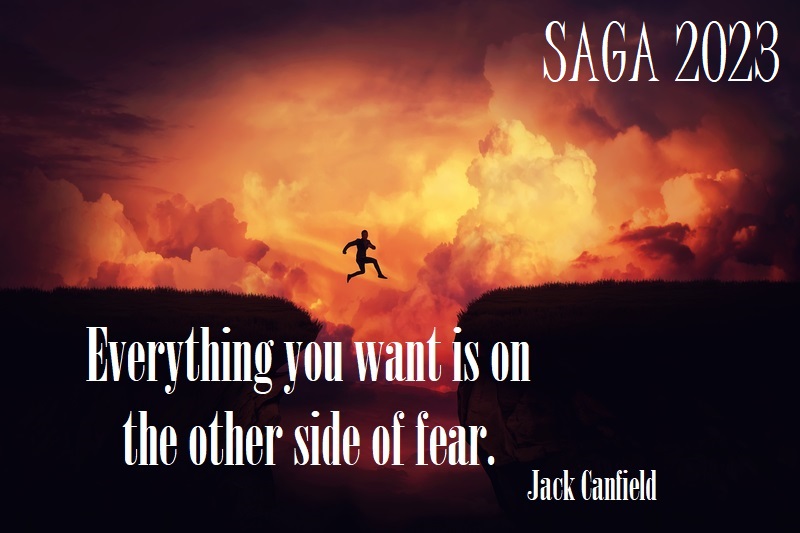
During the SAGA Professional Writer’s Conference in 2023, Gail Z. Martin quoted a motivational speaker, saying the words changed her life. I webcrawled until I found the original speaker then made a meme with the appropriate attribution. It was the first of the memes I envisioned during the conference, down to what the picture should look like.

That is always the problem with meme creation, finding the right picture. I was ecstatic when I found the fissure against the fire background. Exactly what I wanted.

Now onto why acknowledging fear is good writing advice. “You can’t write a novel.” because it will impact your social standing, or your ability to make a living, or is too hard and there is a chance of failure. Each of these arguments are based in fear. Because, really, you can write a novel.

It might not be a good novel, but if you want to write a novel, stringing together enough words is the only requirement. Making something good enough to sell is a different issue, but if you WANT to write a novel, there is no deadline, no judge, just time spent doing what you WANT to do.

Anything you WANT to do is possible. Want a new job, then job hunt. Want a vacation – maybe Cancun isn’t in the budget, but a beach vacation is within reach.

Now, you might not WANT to do the work. Writing a novel is lot of work, but don’t let anyone say you can’t when you are capable of writing.

Also remember writing is a learning process. No one masters a job in one year. A person goes through years of training in normal school, then months of specialized training, then “probation” on the job. And still it is three-to-five years before you are really, really good at it. The first novel will suck – it may be possible to polish it to good – but the first draft of the first novel is going to be bad as the first picture you ever drew. You know, the one with your mom’s arms growing out of her neck.

Still, first that first draft of that first novel.

If that is what you WANT.

Meme created by Erin Penn

M is for Make: Better Verbs Make Better Writing

Meme created by Erin Penn

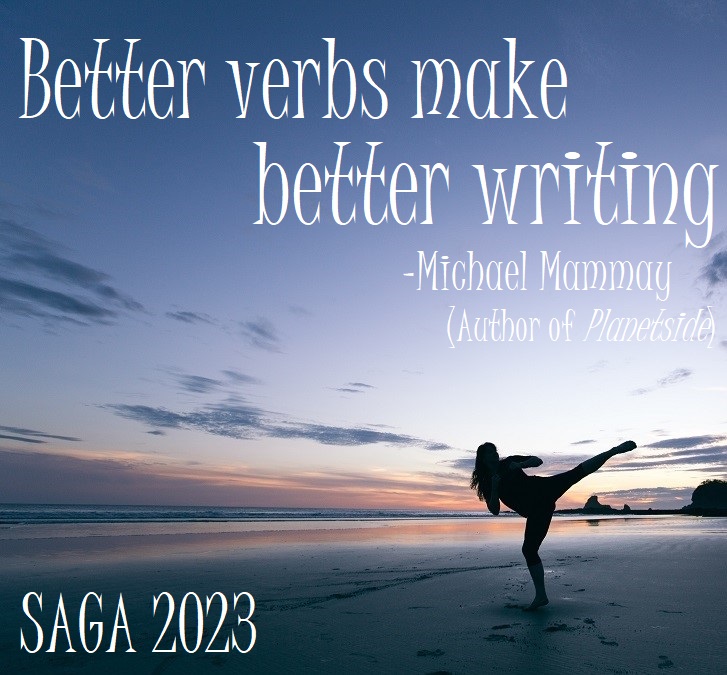
If you’ve been around my blog for a while, you know about copulas – the “to be” verbs which are harbingers of passive writing. Being a good writer’s conference, the topic came up a couple times at SAGA (sagaconference.com). Michael Mammy captured its essence during the afternoon presentation on Pacing and Structure with “Better Verbs Make Better Writing.”

He also said “More problems, more better.” Which is the essence of Give Your Characters Trouble, but not every piece of advice is a gem, or meme-worthy.

Back to BVMBW: verbing makes better writing because the verbs drive the action. Don’t be “run fast” – instead “dashed” or “rushed”. Don’t go all “spoke softly” but “purred” or “mumbled”.

That being said, don’t spend the First Draft figuring out the perfect word. That is for Draft Three. Draft Two is getting all the scenes to actually flow together, adding and subtracting or just moving large swaths of the manuscript. Once you know what is actually happening, verbs can be polished.

Two fixes are (1) do a search on “was” and “were” for the entire manuscript and cut that number by a third. (2) every paragraph switch out one verb/adverb for something stronger or more specific.

Below is another meme I made a while back. Write with Style. Because, you know, better writing is just sexy.

Write with Style

Meme created by Erin Penn

G is for Give Your Characters Trouble

Meme created by Erin Penn

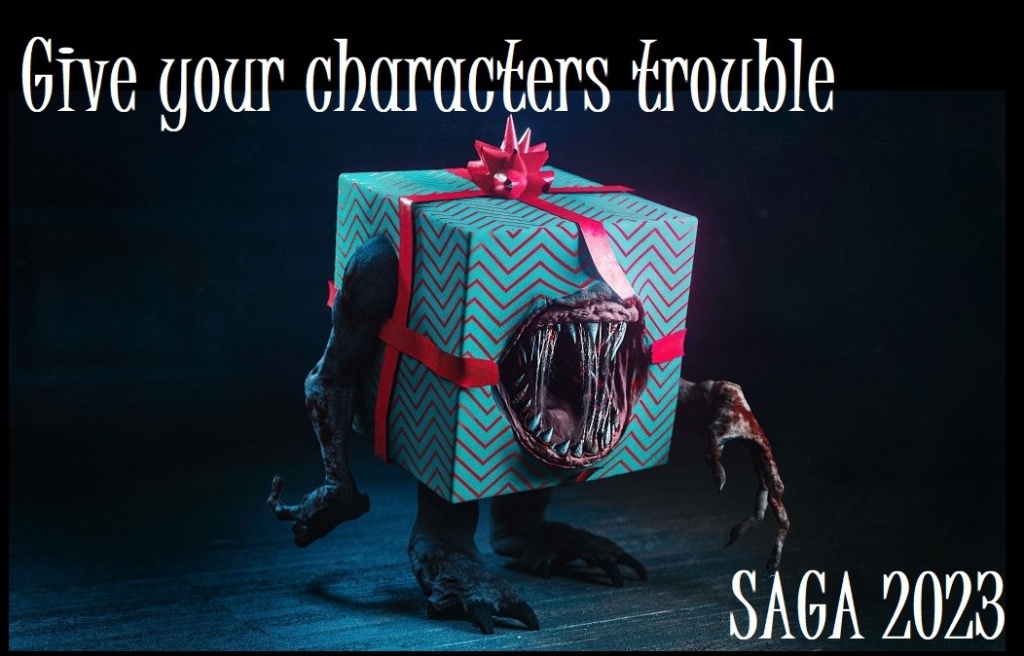
During several of the Craft of Writing courses at the SAGA Writer’s Conference (sagaconference.com next one scheduled for July 2024), the Faculty describe many things to give your characters: a solid background, emotions, friends and enemies, goals. But most of all, Trouble.

When things slow down, blow up their lives. Physical and emotional bombs – mix and match appropriately to genre. “I’m pregnant.” changes everything as much as a car explosion, especially when the character saying it is male. Explosions. Obstacles. A child who is sick at school and needs to be picked up ASAP, while the hero needs to stop a vampire coven before they wake at nightfall.

Every three chapters or so stop and brainstorm five to ten things of “What is the worst thing that can happen?” Pick one or two things from the list. And give your characters a gift that keeps on giving.

Below is a previous meme I made when I was offering advice to a young writer. Since all writing is in the author’s head, making problems can be difficult for young authors. It’s like they are attacking their alter egos. Until you can distant yourself from your characters, Giving Trouble can be challenging. But Giving Trouble is absolutely necessary.

Meme created by Erin Penn

E is for Enter Late, Leave Early

Meme created by Erin Penn

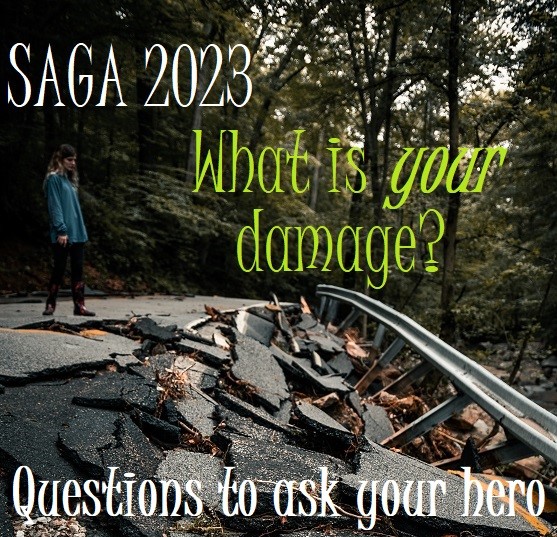
During the March 10th weekend this year, I attended the SAGA Professional Writer’s Conference in Winston-Salem NC (http://sagaconference.com/). A lot of good advice was to be had, and several of them had me making memes the minute I got home. I am a hands-on learner and making a visual memes helps things to stick.

I normally post three days a week, which leaves me twelve days to fill in for the A-to-Z Blogging Challenge for April. I’m going to post the five writing meme I made during my non-standard days complete with why the writing advice is important.

Both Dr. Hartley and Dr. Leverett, in two different presentations at the conference, gave a piece of writing advice stolen from the movie industry: Get in a scene as late as you can and leave as early as you can. Distill the action as much as possible. Obviously the advice is very important when two different people present the same information, and the advice works in different storytelling mediums.

What “Enter Late, Leave Early” means is focus the action. You don’t need the camera (or the written narrative) following the person climbing out of the car, going in the house, ringing the doorbell, getting welcomed, receiving a drink, taken into the family room, and the conversation starts. The important bit, distilled down, is when the visitor says, “The results came back with anomalies.” Heck, you can even push it back a couple of more seconds to the home owner responds with a shocked “Anomalies?”. “Yes, anomalies. I know we said it was a standard test but…”

At the other end, “Leave Early,” cut out of the scene the second the last bit of important storytelling data is presented. Only at the very end of the book, when providing closure, do you need to end a scene with all the bow-ties and swirls. Until then, push, push, push the storyline forward.

Should there be extraneous data beyond the mainplot line? Of course, there is backstory, character development, the emotional storyline, the action storyline, the series overarc seeds and advancement, and, my personal favorite, worldbuilding. All these things make a story layered like a good baklava.

But each individual scene needs to only have what is happening for that scene, and rarely does that include walking through doors.

Oh, that would be a good piece of advice too: Don’t Walk Through Doors