Other Cool Blogs: Magical Words 10/6/2008

Image courtesy of Phil_Bird at FreeDigitalPhotos.net

A Post About Anachronism by David B. Coe is over at Magical Words. You know I had to be all over that one.

Anachronism is something out of time, such as my linen aprons with drawn thread embroidery circa 1530 being worked on 2019.

Mr. Coe warns about bringing anachronisms into a fantasy piece, which will throw a reader out of the story. The areas he focused on are worldbuilding, language, and dialogue. I’ve talked about this sort of thing before, mainly in Editing Rants complaining about fact-checking; Mr. Coe discusses it from the creative standpoint from inconsistent technology levels and POV observational limitations. Take a gander at it.  (“Take a gander” being an early 20th century phrase and should not be in a fantasy, an example of anachronistic language.)

Again, the link is:

This post can also be found at Mr. Coe’s website: https://davidbcoe.wordpress.com/2008/10/06/a-post-about-anachronism/

Other Cool Blogs: Chuck Wendig 4/18/2017

Photo by Jen Theodore on Unsplash
Meme words added by Erin Penn

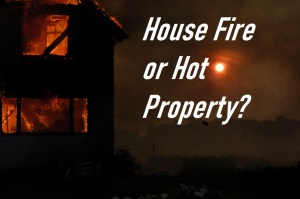
House Fire or Hot Property? Why not both? That pretty much is the publishing industry in a nutshell, and those that like to hang out in it. An living example of this metaphor is Chuck Wendig.

On his birthday in 2017, Mr. Wendig did a retrospective on his blog – Terribleminds – “What I’ve Learned After 5 Years and 20 Books: 25 Lessons.”.

Three pieces that grabbed me from the twenty-five on the list:

  1. Writing advice is … largely the product of survivorship bias.
  2. A writing career is a little bit jazz.
  3. Give the proper amount of fucks.

You can find the list here: http://terribleminds.com/ramble/2017/04/18/what-ive-learned-after-5-years-and-20-books-25-lessons/

WRITING EXERCISE: Read the whole list of twenty-five and choose one that really strikes home. Write it up in a comment below explaining why it is important to you. By processing it out, explaining it, the concept will stick with you longer.

***

A writing career is a little bit jazz. 

I’m a plotter. Jazz is scary, improvisation jazz is even more scary. It’s structure isn’t a structure as much as a growth, layers of paint building from a pencil sketch which may or may not match what is in the mind but ends up so much more than I thought possible – or total dreck. Wendig wrote “You plan what you can, but the rest is experimentation.” Eek! 

And yet, jazz has its own beauty. Something beyond any plan. Adding a bit of jazz, a bit of music to a page to a book to a sentence. Create a canvas which people get lost in. The concept of a career having the same unsteady base is frightening and freeing.

Other Cool Blogs: Magical Words 3/11/2008

Image courtesy of pixtawan at FreeDigitalPhotos.net

Picture a hand pointing a finger out in front of you, the rest of the fingers curling into the palm of the hand. Which finger is pointing out? Now rotate the hand so it is pointing to the right side, is the front or back of the hand facing you?

Were you able to do that?

Congratulations, you are the part of humanity which can visualize in pictures. Not everyone can, and that can make writing descriptions very difficult. I never realized people can’t see in pictures. Find out more about that in Visualization, a blog post Catie Murphy created for Magical Words, the full post is here:

WRITING EXERCISE: Do you Visualize and to what level do you visualize? Is it full color? Can you hear noises? Is music playing? Can you smell anything? Can you backup the action of the scene? How about rotate the camera angle or focus in on features? How can you use this in your writing?

If you don’t visualize, how do you create a scene? Do you build from the characters out? Do you start at the walls and work your way in? If you don’t see inside your head, can you smell, taste, or hear anything? Is there any advice in the Magical Word post that helps you?

Now, create a scene. Just pop one into your head (if visual) or figure out one you want to describe (if not visual). It needs to be a location that doesn’t actually exist for this exercise, think science fiction or fantasy. Now write out the description, include at least two senses to describe the scene.

READING EXERCISE: What books have provided the best visuals (or other scenes) for you? In your current read, is there a particular scene standing out? Why is it effective?

***

I’m a visual person. Sometimes when I am writing, I close my eyes and see the scene and put my characters in the scene. Strangely the people are darkened out – them I don’t see clearly, but the room and pieces, I can focus in on. Usually I have some sort of music playing too, not necessarily the noises related to the scene.

For Roulette Leadership, I can clearly picture the trench area the men are huddle in. Dirt and grime clings to them, blood splotches, sweat stains, smell of men hard-pressed. Broken green light and shadow flickers across the faces. If I ever expand the flash, I need to add a lot more description.
Other Cool Blogs: Black Nerd Problems 6/25/2018

Meme by Erin Penn

I love superheroes – and when you can book nerd AND comic nerd at the same time, life is amazing.

Tara Betts wrote two articles for the Black Nerd Problems about the literature shown in Luke Cage – Season One and Season Two. If you have been looking for some good things to read along these lines, check them out.

Comics have long had a history of activism and culture. They follow the growth of a hero story, the myths of the Greek, and question prejudice and the cost of being different. All buried in entertainment, but the kids get it.

Reading and storytelling is about growing your world. Visit Black Nerd Problems, it can help.

Again the links are as follows – 

Black Nerd Problems website: https://blacknerdproblems.com/

The Luke Cage Syllabus: A Breakdown of All the Black Literature Featured in Netflix’s Luke Cage (published 10/4/2016): https://blacknerdproblems.com/the-luke-cage-syllabus-a-breakdown-of-all-the-black-literature-featured-in-netflixs-luke-cage/

The Luke Cage Syllabus: A Breakdown of All the Black Literature Featured in Season Two of the Netflix Hit (published 6/25/2018): https://blacknerdproblems.com/the-luke-cage-syllabus-volume-two/