Image courtesy of patrisyu at FreeDigitalPhotos.net
“I just had the best idea, hon. Just let me make a note of it on my phone.” I look up after a few minutes of quick typing and uploading to the cloud, ignoring both the cooling food in front of me and the character in my head going ‘and another thing’. “Now, what were you saying?”
Writing is a Solitary Business, as Faith Hunter explains in her November 9, 2011 post on Magical Words. The problem is even as introverted as most writers are, we aren’t solitary creatures. We have jobs and family. In November NaNoWritMo when writing dominates, Thanksgiving steals time away from the laptops and Christmas hides in the shadows waiting to pound us with lists and demands as soon as the 50K is clocked.
Ms. Hunter and the commentators on the post share some of the trials and tribulations of the story-in-the-head swiping moments meant for family and friends at . With the all-consuming NaNoWritMo, remember to breathe and listen to others in your life. There will be other stories; there is only one family.
Image courtesy of Stuart Miles at FreeDigitalPhotos.net
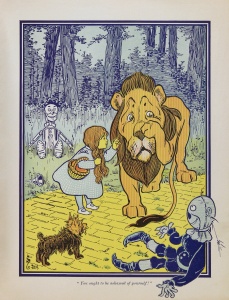
I’ve not run into the term “distributed mentorship” before, but I’ve used it time and again to learn new items. One-on-one mentorship isn’t available very often in life. You can wait around forever for your boss to notice you among the dozen or so other employees the middle manager is overseeing in between writing reports and attending meetings with the bigger bosses. Getting the special friendship that provides a yellow brick road to success is a combination of natural extrovert friendship and luck.
Neither of which most writers have in abundance.
Reading Ms. Becks article on “What Fan Fiction Teaches The the Classroom Doesn’t“, I discovered the term “distributed mentorship”. And Fan Fiction is the perfect example. By putting your stuff out there in a friendly, open environment, you can get feedback (nearly all positive). When you reading for some real constructive criticism (concrit), you can ask for it and suddenly people who have been practicing for year break out their expert hats and can tell you things like – don’t be too nice to the characters and need more description – in between sending you hugs and happy thoughts.
Wizard of Oz, original artwork 1900. In public domain.
What do new writers need most? (1) Something to write about that they are interested in. (2) Not getting caught up in worldbuilding, but do actual writing instead. (3) Get lots of support. (4) Get little bits of where to improve at a time instead of the firehose an editor uses. (5) Receive suggestions with multiple ways to improve, in case the solution presented isn’t the one for them. (6) Write for an audience. (7) Read stuff in the genre they are writing.
In short, the fan fiction environment.
A distributed mentorship environment where someone will have time one-on-one with you for a few minutes. And maybe tomorrow, someone else will have a different suggestion. And a third person tells you, you have done the best THING E.V.E.R. with their favorite character and could you pretty please continue your story.
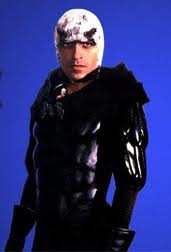
Hawk – Publicity Materials for Buck Rogers
I’ve never gone the fan fiction route. By the time fan fiction was on the internet, I had moved beyond that stage of my life. (Though before then in my daydreams/writing, I walked beside Dorthy in Oz, operated the communication panel on the Enterprise, and got my first kiss from Hawk on Buck Rogers.)
Even so, I have leveraged distributed mentorship for most of my life, especially in my writing. First, attending conventions – where panel discussions are another excellent example of this type of mentorship. From there, I discovered Gail Martin‘s Thrifty Writers’ Publishing for Success Network and was lucky enough to be in a position to join. Also while attending conventions, I’ve networked into several editing jobs with publishers which in turn exposed me to different ways publishers want things.
And don’t forget just talking to person after person about writing and editing, an exchange of mentorship with suggestions, supports, and concrits shared back-and-forth.
Distributed Mentorship. Use it and share it. In your writing life, in your clubs, and in your day job.
Jim Butcher dropped by Magical Words in 2011. He explained that while a story can survive a boring hero, it cannot survive a boring villain.
What makes a good villain?
Motivation
Power
Admirable Qualities
Individuality
Want to know more. Go to the Magical Words post, because rephrasing the words of a master is an exercise in futility. Of course, the comments were equally awesome so be sure to read those as well. How to Build a Villain by Jim Butcher.
***
My Comments on Villain Creation
Attending my book club a couple months ago, the other members said “Hey, we want to play Ravenloft. You DM. Here!” Suddenly I was holding the Curse of Strahd and needed to put something together in a week. It’s been a slow game thus far with only four hours available to game per week since some members are parents. The “per week” is more like every other week because of everyone’s commitments. I seem to be one of the “free-est” of the lot, and that is saying something.
Anyway, Count Strahd von Zarovich is a villain to end all villains in the D&D world. Not because he is a tank or a Swiss army knife of magic, but because he is a master manipulator. He knows his power base and uses it like a filleting knife. His motivations include leadership and love, which are admirable qualities. But his individuality includes being bored. He knows he is playing with fire by bringing adventurers to his lands, but the best entertainment is when you got some skin on the line.
I’ve been trying to figure out the hook of how he is going to corrupt THIS particular party and finally figured it out today. He is going to hire them, something already set in motion. But not just hire them for a single mission like he has already done, but to shape them to becoming the County Sheriff and his cronies. They will become the law, dealing out all the horror for him, and bringing a new wave of terror to the land.
Most of the players are noobs, except for one. Every now and again the experienced one gets a meta moment, looks at me like “I can’t believe you are doing this and getting away with it.” If I get that look, even as his character agrees to become Sheriff, it will be awesome. That moment is several sessions away, but I think I can do it. Or, more accurately, Strahd – because he is a villain. Wizards of the Coast got this big-bad right.