
Other Cool Blogs: Medium 10/16/2021

A friend, Murray “MJ” Blehart, writes for Medium and posed a question on 10/16/2021, “With Only a Few Readers, Can I Still Call Myself a Writer?“.

This is a question approached from a dozen different angles by writers I know. Some just starting out, some suffering from Imposter Syndrome, some long-term writers through non-standard mediums, etc.

“I just write fan-fic.” — guess what, that is writing. You are a writer.

“I’ve never posted anything. I just write to write.” — Still a writer.

“I’m only self-published and only sold three ebooks outside of what my mom and best friend bought.” — Wow, not only a writer, but a PROFESSIONAL writer. (If you have ever been paid for words you made, that makes you a professional.)

Some people think writing is a straight, broad path everyone shares, but is is more like a trail system in a national park. No single path is the best or most interesting. Some people just want to go a little ways into the woods. Other people take in their survival gear. Some people stick to level ground, other people need climbing equipment. Fan-fic, podcast scripts, blogs, short stories, non-fiction articles, novels, sequential stories, hobby, distraction, income stream, – each is a different path.

Just like a hiker is a hiker, no matter the trail, just so long as they are walking – a writer is a writer so long as they are creating words. A professional writer has been paid at least once; an author has completed a manuscript.

Comparing paths between writers is like comparing trails – they are all beautiful, complicated in their own way, and appropriate for exploration – but saying one is more “right” than another is like comparing a sunset to a cloudless day.

But, central to the question MJ is asking, is how does Readership impact being a Writer. In my opinion, it doesn’t. I write because I enjoy it. Most people do. Reading adds an interaction to the writing and helps me improve my writing – just like taking a trail with another hiker will point out things you have never seen before.

On the other hand, Readership is a business question. I have mentioned before the hats a Professional writer needs to wear. Once writing is chosen to be more than a hobby, and instead an income stream, consideration of Readership (not just readers) comes into play. Switching hats from the word-smith to the word-seller, what is “selling” (bringing in the money) must be considered. Only a few readers means not making enough to “earn a living” or at least covering the cost of writing (my goal). I will write a future blog about finding Income Streams in the Writing Trail System.

Read the original article and write comments below on what you think. Again, the link to the original post is here: https://mjblehart.medium.com/with-only-a-few-readers-can-i-still-call-myself-a-writer-ae754b2db012

Other Cool Blogs: Magical Words 5/18/2012

Photo by Molly Blackbird on Unsplash

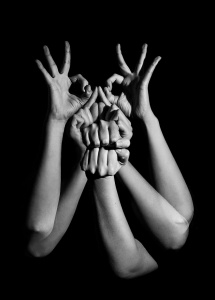
What Maketh a Monster?

In Magical Words, A.J. Hartley explained on May 18, 2012 how he created monsters for his middle grade series Darwen. Being middle grade, he avoided human monsters and, instead, dug deep into the traditional sense of monsters.

An Unsettling Hybrid – two things melded together when they shouldn’t be. Not chocolate and peanut butter; more like pizza and pineapple. The example he gives is Frankenstein’s monster assembled from multiple bodies. The monster doesn’t have to be evil (though it helps), the creature just needs to be feared – troubling our human sensitivities.

And, for Mr. Hartley, it can’t be familiar. Vampires have become habitual. Shifters typical. True monsters make your stomach drop and twist because they are wrong, wrong, wrong. Yet one thing, one horribly right thing, puts them in this reality.

 You can review more on the topic here: (and remember to read the comments for additional ideas)

My take-away is monsters, even human monsters, need something unsettling about them. What makes them a danger to humans beyond simple “they could kill me”? What about being around them makes the human brain skitter and squeal “not right, not right, not right”?

Other Cool Blogs: Liana Brooks (8/1/2019) – Subplots

Photo by Waldemar Brandt on Unsplash

For flashes, things are short and sweet. Only one story arc, one plot is needed.

For better short stories, a character development change and a plot makes a full narrative.

For novellas and novels, a sub-plot or two is needed on top of the narrative plot and the character development plot.

As you know, one of my favorite authors is Liana Brooks. Recently she has been reading author backlists. It’s something I do too. I don’t recommend it for everyone, but seeing the first attempts to explore an idea or writing genre can be instructive on how to make your own writing better. If nothing else, it helps you realize that “best-seller” spent 20 years learning the craft – which can really help if you are comparing where you are right now to someone with twice times your experience. You don’t expect a new hire to do what someone with 20 years experience will do; don’t beat yourself up with these comparisons.

But, I digress. What Ms. Brooks discovered is the earlier manuscripts didn’t have subplots, but the later products did. Experience led to stronger stories … which need subplots because they support the slower part of the story.

Need the thriller tension to slide back a couple notches, then have the parent-child family dynamic come out – a “side-quest” with the parent needing something from their adult child. Something from the side-quest may feed into the thriller later, like a car running out of gas because it had been used for the parent’s errand, or it may carry over to future books in the series, such as the parent bringing danger to our protagonists doorstep, or the subplot may just be something extra that could be cut if you book exceeds word count or pad things out is your word count is a little shy of genre expectations. The important things is to weave more into the story than just bare bones point-A-to-point-B plotting.

The full posting is here: – “It Is A Truth Universally Acknowledge That All The Great Novels Have Subplots” – Liana Brooks – August 1, 2019 – https://www.lianabrooks.com/it-is-a-truth-universally-acknowledge-that-all-the-great-novels-have-subplots-repost/