Other Cool Blogs: Magical Words – I Swear

From the Internet Hive Mind (Galaxy Quest)

Swearing

To swear or not to swear, that is the question. Whether to be G, PG, or R in the character language? Does profanity show emotion or is it a crutch? Is non-vulgar wording part of your writer’s voice, the genre expectations, or taking being politically correct so far your novel becomes a vanilla paste?

Maggie Stiefvater faced this issue when writing tween and YA books. Meeting genre expectations gave her insight to how she was using profanity. She contributed a Magical Words article on 7/31/2009 on the topic:

I found it interesting that over time her method became write the drafts with the f-bomb, and the remove them during the edit stage after establishing the emotional scaffolding needed to support the scene. Basically for her, the f-bombs allowed the initial ideas to flow to the paper, but once the world became completely realized, they could be removed.

Other authors, in the comments section, give suggestions of how to curse without writing out the curses. Let the readers fill in the blanks: “I think the sergeant managed to hit every curse word in the alphabet after witnessing results of privates being unsupervised for the exercise.”

Genre expectation drives some of the profanity expectations. Ms. Stiefvater wrote for a younger crowd. Other genres have other requirements. Sweet romances lack “heat” words, but eroticas use “dirty” language. Urban fantasies of the “male” variety drop f-bombs as fast as bullet casings, while high fantasies often have to twist things so the curses match the worldbuilding.

To swear or not to swear, that is the question. With this regard, and lost in the name of writing, be all my sins remembered.

 

Other Blogs: Flaming Sun 4/19/2019

As Tax Season begins to calm down, I started thinking about whether I want to participate in this year’s A to Z challenge. It makes me write more than normal, but the co-requirement of visiting other blogs is time-consuming. On one hand, I don’t have much time – on the other hand, I discover such gems as Flaming Sun. I loved this blog post she made in April 2019, discussing how she has a reoccurring character who has wormed his way into story after story.

I responded with:

Every writer should have one of THOSE characters. That character who, when you work on another book, strolls in and looks around, maybe leaving his/her imprint behind and then goes back where they come from. They never ask for their own story – they just want to meet everyone else. I have one – unfortunately he isn’t a detective, so I usually have to leave his visits on the editing floor. – Erin 

Do you have a reoccurring character who just won’t stay in their original creation but keeps showing up – crossing genres, timelines, and universes willy-nilly? Comment below on this question and/or if I should participate in the A-to-Z challenge. Is the time investment worth the production results?

Again the blog that made me think about this is: https://www.sundarivenkatraman.in/2019/04/a2z-april-challenge-2019-q-for-quirky.html?showComment=1555784793139#c7336481118263561866

And the link to the A-to-Z challenge is here: http://www.a-to-zchallenge.com/

Other Cool Blogs: Magical Words – Lasagna Backstory

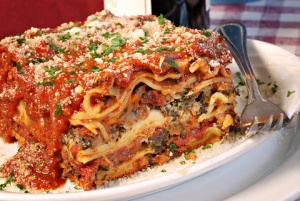
Photo 11155296 / Lasagna © Karin Hildebrand Lau | Dreamstime.com

Writing Backstory
Faith Hunter is a regular attender at ConCarolinas and one of the founders of magical words. On 7/23/2008, she shared this extremely good metaphor for how to write backstory into a manuscript (hint – not through an info dump!):

I love this explanation as much as I love my mother’s lasagna. Since I can eat mom’s lasagna as leftovers for over two weeks, I think you extrapolate how much I love this example.

Every story has worldbuilding – even contemporary romances. The characters came from somewhere; the locations existed before the characters arrived. We are only see the story through a narrow window of the narrative, not knowing who else is on the street. Some of this past may need to be shared with the readers – but (1) it’s a lot less that most authors think is needed and (2) it is boring as school history when dumped on a reader all at once.

The author is challenged to release this greater world information through a variety of means – flashbacks, dialog, or even part of the action. Getting it layered in with the other good stuff makes everything better.

Related articles
7/14/2020 – Editing Rant: As You Know Bob
11/26/2019 – Writing Exercise: Flashback
3/3/2016 – Infodump

Other Cool Blogs: Self-Publishing Formula 3/29/2019

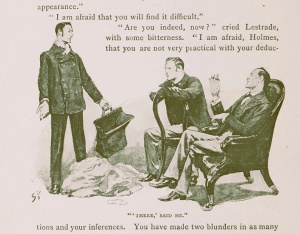
Public Domain – scanned from The Adventures of Sherlock Holmes (Date of publication: 1892; Publisher: G. Newnes )


One of the considerations when publishing is the format to deliver the story. Are you aiming for a stand-alone novel, a series of short stories scattered over various anthologies, or a high fantasy series the likes of which will rival Robert Jordan? If working in the visual medium, you would be considering a movie, commercial, or TV series.

The story and the delivery format interact. For some stories, the format is obvious. While other times the format is required by contract, and it shapes how the idea becomes fully realized. Publishing is a business, and the formats available to an author may impact the ideas chosen for writing to bring food to the table.

Multiple book deals tend to be preferred at this point in time, by author, publisher, and reader. Everyone knows what they are getting into. The question then becomes – Series or Serial?

Aren’t they the same thing? I hear some of you ask. Well, a serial is nearly always a series, but a series isn’t always a serial.

I found this cool blog/vlog post which breaks it down: Series vs. Serial: What’s the Difference (appears on Mark Dawson’s Self-Publishing Formula, 3/29/2019, written by Tom Ashford) – last viewed 3/9/2022:

In other words, The Simpsons is a series, but not a serial. Bart and Lisa don’t grow up, Homer stays the same. In one episode, the whole town might burn to the ground, but everything resets in the next episode. Similarly Sherlock Holmes short stories, released via magazines and newspapers. Individual stories were serialized, requiring readers to pick up the newspaper several days in a row. But the overall world remained the same between narratives.

Most romance series have through-plots, but most can be read as stand-alone stories. Meaning they are much more like a series (similar characters and world) than a serial (hard and fixed timeline). On the other hand, most High Fantasies are very much serials, following in the footsteps of their granddaddy, The Lord of the Rings. Science Fiction groups of narratives are mixed – some of them following the footsteps of their newspaper tradition of serials in releases, but series between narratives, The Adventures of Flash Gordon, for example. While other science fiction mixes with High Fantasy, following wide-ranging multi-planet narratives, like Dune.

Recently Amazon started Vella ): “Serial stories to read one short episode at a time”. It would be interesting to join this experiment.