Magical Words: The Five Mantras

Photo by Rachel Nickerson on Unsplash

The Five Writing Mantras of James Maxey:

  1. The worst novel you put on paper is better than the best novel you have in your head.
  2. Here. Now.
  3. To write a good novel, you must first write a bad novel.
  4. Never look back.
  5. Little by little, the work gets done.

In other words – Write it, concentrate, write to grow, perfection is the enemy of the good, climb a bit every day.

Get the full picture at Magical Words 2/19/2011 –

Writing Exercise: Which mantras do you need to work on? Which of one hit you the hardest when reading about them? Choose that one to work on this week. Make a colored card and stick it on the wall where you write with the beginning date.

Other Cool Blogs: Magical Words – Five Senses (F is for Five)

Photo by Solstice Hannan on Unsplash

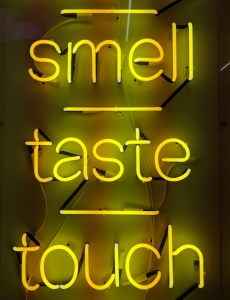
F is for Five Senses – Sight/Color, Hearing/Sound, Smell/Scent, Taste/Flavor, Touch/Texture & Temperature

I often talk “white box” writing. Drafting out a story, authors write quickly, getting dialog and thoughts on paper, moving from scene to scene until done. Then the author needs to go back and flesh out everything on the second pass – getting rid of the white box the characters are acting in.

Bringing the bigger world to life through the environment surrounding the story is one of my weaknesses. When I read novels and see all the layers people put in, I realize I must learn to do this better, integrate the action and dialog with the setting and world.

Humans have five senses to investigate the world (with some valid arguments of smell and taste being the same sense AND touch should be broken out to temperature and texture/pressure as these are reported to brain differently – but let’s stick to the five senses of school). Humans really depend on sight, so this is the go-to when expanding writing. What color things are, how bright the light is, how far can you see, what people are wearing, what is in the room. All the things the characters can see.

Hearing, the second most important sense to humans, comes second. Loud noise, soft whispers, scraps, ticks, hums, bangs. If the characters are eating, the readers might get a taste of the food – though smell is used more often.

Touch is usually only mentioned in romances. Maybe in a fight scene when being punched.

Faith Hunter did a three-blog series on using the five senses in writing during 2011. She skipped sight because everyone has a fairly good understanding on how to approach the technicolor world.

4/13/2011 – Part 1: Hearing and Sound –

4/19/2011 – Part 2: Scent and Smell –

6/1/2011 – Part 3 & 4: Taste and Touch –https://www.magicalwords.net/faith-hunter/how-to-write-description-part-3-and-4/


WRITING EXERCISE: Carry a small notebook for three days. When something hits one of your senses, record it. The voice recorder app on your phone can also work. Transcript the results to a folder used to remind you of things to keep in mind when doing the second draft. Maybe even use some of the descriptions you created in your current Work-in-Progress (WIP).

Writing Exercise: Making It Your Business

Photo by Sharon McCutcheon on Unsplash

Writing as a Business

If you are writing for fun or passion, you can skip this post. Today, we are talking about Writing as a Business.

Mindy Klasky, a best-selling author, wrote an amazing series about “Making it Your Business” for Magical Words back in 2011 and most of it still applies. Creating a Strategic Plan helps you focus your energies on what works.

I have a great example of why it works from when I took some business courses. Most businesses know their business – so they know the direction they want to travel. But accounting works from the tradition of keeping costs as low as possible no matter what (pulling the company a little to the right); and sales knows that they need to sell, so they promise whatever will make the sale (twisting the company hard to the left); and the custodian is totally turned around and been counterproductive because his instructions on OSHA cleanup requirements haven’t been adjusted to the industry specifics of the company (a U-turn every day, erasing about two people’s worth of effort). Everyone in the hundred-person company is mostly aimed in the right direction, but a little off here and there. Lots of swerving. Basically 100 people are producing 78% of the time what the company needs. Good, but not perfect.

A Strategic Plan gets rid of the swerves. A force multiplier, each part of the company is examined and re-aimed to shoot true, straight ahead. OSHA requirements are examined for best course. Accounting doesn’t nitpick everything because they know what the company needs to create the best product possible. Sales no longer making promises outside of the company’s core business. 100% from 100 people.

Same holds true for an individual business like writing. Writing for passion gets you words. Writing with a strategic plan in place – to direct that passion gets you income. The difference is “I feel like writing something romantic today” to “I feel like writing romance today, and I know a romance anthology is looking for fairy tale spin-offs.”

Making It Your Business isn’t ignoring the muse, but harnessing it. Muses ride the writer enough, turn about is fair play.

Ms. Klansky’s Strategic Plan implementation appears in the following Magical Word postings:

  1. Mission Statement (1/20/2011) –
  2. Setting Goals (2/17/2011) –
  3. Developing Strategies (3/17/2011) –
  4. Specifying Actions (4/21/2011) –

WRITING EXERCISE: Create your Strategic Plan for either your life or for your art (writing, editing, or other creative endeavor).

My attempt

Mission Statement: Make a difference in the world by creating more stories showing healthy relationship choices, while making half the income I need to sustain my lifestyle.

Setting Goals, Developing Strategies, Specifying Actions: Wow, this is involved, but exactly what I need to shake of the pandemic paralyzation … I will need a few days to complete. I will be posting it as a 5th week blog. Link will be provided once it is up.

Other Cool Blogs: Magical Words – I Swear

From the Internet Hive Mind (Galaxy Quest)

Swearing

To swear or not to swear, that is the question. Whether to be G, PG, or R in the character language? Does profanity show emotion or is it a crutch? Is non-vulgar wording part of your writer’s voice, the genre expectations, or taking being politically correct so far your novel becomes a vanilla paste?

Maggie Stiefvater faced this issue when writing tween and YA books. Meeting genre expectations gave her insight to how she was using profanity. She contributed a Magical Words article on 7/31/2009 on the topic:

I found it interesting that over time her method became write the drafts with the f-bomb, and the remove them during the edit stage after establishing the emotional scaffolding needed to support the scene. Basically for her, the f-bombs allowed the initial ideas to flow to the paper, but once the world became completely realized, they could be removed.

Other authors, in the comments section, give suggestions of how to curse without writing out the curses. Let the readers fill in the blanks: “I think the sergeant managed to hit every curse word in the alphabet after witnessing results of privates being unsupervised for the exercise.”

Genre expectation drives some of the profanity expectations. Ms. Stiefvater wrote for a younger crowd. Other genres have other requirements. Sweet romances lack “heat” words, but eroticas use “dirty” language. Urban fantasies of the “male” variety drop f-bombs as fast as bullet casings, while high fantasies often have to twist things so the curses match the worldbuilding.

To swear or not to swear, that is the question. With this regard, and lost in the name of writing, be all my sins remembered.


Other Cool Blogs: Magical Words – Lasagna Backstory

Photo 11155296 / Lasagna © Karin Hildebrand Lau | Dreamstime.com

Writing Backstory
Faith Hunter is a regular attender at ConCarolinas and one of the founders of magical words. On 7/23/2008, she shared this extremely good metaphor for how to write backstory into a manuscript (hint – not through an info dump!):

I love this explanation as much as I love my mother’s lasagna. Since I can eat mom’s lasagna as leftovers for over two weeks, I think you extrapolate how much I love this example.

Every story has worldbuilding – even contemporary romances. The characters came from somewhere; the locations existed before the characters arrived. We are only see the story through a narrow window of the narrative, not knowing who else is on the street. Some of this past may need to be shared with the readers – but (1) it’s a lot less that most authors think is needed and (2) it is boring as school history when dumped on a reader all at once.

The author is challenged to release this greater world information through a variety of means – flashbacks, dialog, or even part of the action. Getting it layered in with the other good stuff makes everything better.

Related articles
7/14/2020 – Editing Rant: As You Know Bob
11/26/2019 – Writing Exercise: Flashback
3/3/2016 – Infodump