Other Cool Posts: Magical Words January 31, 2011

Temple In Sunset Stock Photo

Image Courtesy of pakorn at FreeDigitalPhotos.net

Vernor’s Law

I’ve been going through the Magical Words archives, making certain I have made a copy of everything before it hits the seven-year disappear mark. And I found it! Vernor’s Law. No, not the one of “If the technological singularity can happen, it will.” but the one useful for writers.

(please note this is paraphrased) At any given time while writing, at least two of the three should be happening in a scene, preferably all three. Otherwise your writing has stalled.

  1. Develop character
  2. Advance plot
  3. Fill in necessary background information.

The most commonly known version of breaking this law is an information dump. On the other hand, the most common weakness of a new writer is the character description which just describes the character like they are in a police lineup.

David B. Coe goes into a series on descriptive passages helping writers to sharpen their descriptive skills so nothing is just an information dump. The series includes the following (with the comments being nearly as useful as the blog postings):

Part I: Settings

Part II: Character

Part III: Action

Part IV: Dialogue

WRITING EXERCISE: After reviewing the above, write 200 words or more description from your present WIP using one of the following prompts: a setting building toward action, a secondary character as described by the main character, an action scene from someone other than your typical POV character limited by that characters experience and language, or a dialogue which is particularly about character building and background information.

Other Cool Blogs: Magical Words June 16, 2016

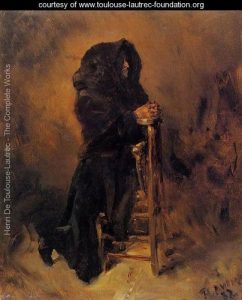
Woman-in-Prayer

Painting entitled: Woman in Prayer
Shared under the Creative Commons attribution

Worldbuilding: Gods

Everywhere we look religious is steeped into our culture. How the days of the weeks play out, the days off, holidays, how people dress, quotes, country boundaries, and dozen of other expectations. To write a world without religion, whether horror, science fiction, or fantasy creates an unreal world.

I loved how steeped Babylon 5 was in religion: Stephen Franklin’s Foundationism, Susan Ivanova’s Judaism, the Mimbari government being lead partially by their priesthood, and G’Kar’s fanaticism. Every character is on Bab 5 was driven partially by belief in something greater, including Londo’s ties to his people. Without the religious overtones, Babylon 5 would have been the typical bland sci-fi we normally see. Instead it constantly was asking questions.

Magical word’s Diana Pharaoh Francis covered the topic in “God-Fearing Woman”. The list of questions to ask when creating a religion are especially important. I lightly touched on religion in the flash Joelie and Sarah’s Last Day last month. Joelie is an ongoing character for me; I especially love the religion I created for him. The Tester is neither good or evil, benevolent or petty, but a smith shaping materials to be the best they can be – sometimes the hard hammer and sometimes the gentle hands.

WRITING EXERCISE: Pick three characters from your present work-in-progress. Create one prayer for each they might say at the beginning or end of a day.

READING EXERCISE: Think of your present read-in-progress. How does religion impact one of the characters? Does their beliefs drive any of their goals?

Other Cool Blogs: Magical Words May 9, 2016

Hand Of Woman Is Pulling Fire Alarm On The Brick Wall

Image Courtesy of num_skyman at FreeDigitalPhotos.net

Inciting Events

 ConCarolinas starts tomorrow; the convention which was my inciting event to stop thinking about writing and start actually doing it. Going through life you may have several inciting events – times when the phrase “So things continued as they had been until such time as they no longer did” would appear in your autobiography.

Two major events may occur in a story – the inciting event sets to story in motion while the key event draws the character into the story. In many genre fiction stories these two events overlap. In my recent “The Telling of the Myth of Hariti“, the inciting event is when all the villages in all the world no longer could handle the loss of their children. The key event is when the elders approach the Buddha, drawing him into the story. Until he entered the story, no permanent change took place.

To learn more about inciting events, read the May 9, 2016 Magical Post by Faith Hunter: The Inciting Event.

Other good posts on this subject include:

WRITING EXERCISE: For your present work in-progress (WIP), define your inciting event and your key event. Do you have both, are they the same event, and where are they located in your book?

READING EXERCISE: For your present read in-progress, can you figure out where the incident and/or key event in the book occurred? Did you become more or less engaged when the event milestone occurred?

Other Cool Blogs: Magical Words 5/2/2016

The only place a writer signs a check is on the back

Image acquired from www.cafepress.com
“store” owner is 
James Macdonald, originator of Yog’s Law
If interested in the T-shirt of like products go here:


Yog’s Law – Money flows towards the author.


A mantra I have heard long and often as I have dipped my toes in the publishing industry, ran away, came back, researched the industry, had life, came back, attended cons, moved, came back … Well, nigh on twenty or more years now.


It made sense, back before Amazon and eBooks, when the publishers ruled. At that time they paid for the marketing, covers, editing, everything. If a writer was paying an agent to “proofread” or a publisher “for marketing costs”, a scam was occurring. 
James Macdonald became “radicalized” (his word) after talking to one poor new writer who fell for the scammers and likely lost everything. The story is here: https://www.sff.net/people/yog/. At the time Mr. Macdonald Message-board (yes, it is that old – when only message boards were the primary communication) name was Yog. Thus Yog’s Law was born.


But publishing has changed in the last twenty, last ten, heck … it changed from yesterday. A writer is often self-published until an agent or publisher gets interested. During this time the author is writer, marketing, and publisher. And while the writer should never pay, when the publisher’s hat goes on money flows out for the cover art, editing, and marketing just like in the old days under big presses. An author may be able to cut corners if they know art, or website production, or any of a number of skills. But each time the author is working under a hat other than writing, they are not writing. 


Having a press take 35-70% of the income from writing isn’t bad when adding up the actual expenses of wearing the publisher’s hat. In fact after the first successful publish, if an author continues to self-publish,  I would recommend putting 75% aside from each royalty check until the next book and then use that portion as the “publisher expenses”. That should cover all the overt expenses; there are still a lot of passive expenses, such as time not spent writing.


Excellent blogs to better understand the law can be found below:

Gail Z Martin – Magical Words – “Yog’s Law—It’s More of a Guideline” – 2/24/2016
John G. Hartness – Magical Words – “Making Money Mondays – Yog’s Law” – 5/2/2016

Other Cool Blogs: Magical Words Posting April 29, 2016

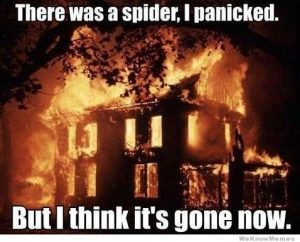
House Burning

Image acquired from the Internet Hive Mind, in particular “We Know Memes”

Ever heard of a Copula Spider? … yeah, neither had I under I read Melissa Gilbert’s April 29, 2016 post on Magical Words. A copula is a linking verb – with the worse offender being “to be” … or in editing the dreaded “was”. 

Read about them in the blog (link below) and then burn them from your writing!

Side note, Melissa Gilbert’s publishes under the name Melissa McArthur.