Other Cool Blogs: Magical Words 6/3/2010

Photo by Chip Vincent on Unsplash

Cliffhangers

Love ’em, hate ’em. Cliffhangers are a sales consideration. On one hand, some people want to dive right into the next book. On the other, some readers thought they were signing on for a completed narrative and get angry when they realize after 100 pages or 400 pages that the story hasn’t ended and they need to buy yet another book. In both these cases, the book needs to be available, otherwise the readers are going to be lost.

Cliffhangers work in a rapid release strategy. “Tune in next week” is okay – “Tune in next year” is not. TV serial vs. a Movie series. The screams around the nation when a TV series ends their season on a cliffhanger! Even three months is an eternity (especially this year). With books, where it can take years to meander through the publishing pipeline of writing, editing, and production, cliffhangers are cruel unless they are all written and ready to come out at once. But to do that, either the writer (and editing team) needs to work like the wind, or be willing to put income on hold for months to years until the series is complete and ready to come out as one book a month.

To Hang a Cliff or to Not Hang a Cliff was a blog written by Diana Pharaoh Francis for Magical Words on 6/3/2010:

She had a story whose ending demanded a cliffhanger. (Always do what is right for the story.) The comments give more insight to considerations for this type of narrative conclusion, so be sure to read them.

Other Cool Blogs: Magical Words 7/24/2010

Magical words for today’s other cool posts – The title says it all: They’re Not Rules, They’re Price Tags.
Edmund Schubert, an incredible short fiction editor, explains why breaking the “rules” needs careful consideration. A truth I abide when I edit – for example, I allow a lot more rules to be broken in dialog than in narrative. Why? Because humans break grammar, punctuation, and spelling (letter pronunciation – wod’r vs. water) rules all the time when talking. But the more a speaker breaks the rules, the harder they are to understand. What is the price tag for the rule that needs breaking?
More importantly, does it help the narrative, or is just a darling to explore?
The link is:


Other Cool Blogs: Magical Words 3/18/2011

Photo by Sarah Mae on Unsplash

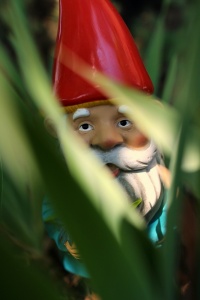
The preposition gnome stared at me through the grass. His evil stare hinting, daring me to stand up and run away. But, no, I shall prevail over his grammatical limitations and make my writing gleam.

Kalayna Price has given me the understanding to build the weapons in her Magical Words post “The Preposition Gnome” on 3/18/2011:

Look, I’m not an English major. Understanding what prepositions are, and how to use them best to make lean exciting writing isn’t easy. Ms. Price’s blog gave me insight to this grammar word division.

Other Cool Blogs: Magical Words 8/28/2010

Photo by Jaredd Craig on Unsplash

One of my favorite things is coming up with titles. The poetry of it, capturing the essence in a few words. Like modern painting where a few strokes of a brush captures the movement of a dancer.

Glass Ceiling Policy; Red Mug; Scrimshaw; Roulette Leadership; I was never there; Small Fiddle; Waking up Dead; Lost Doorknobs

The title needs to be unique, yet accessible. Understandable by the reader, but not lost in a library search.

          Memorable.

                    Applicable.

                              Common

                                        and also uncommon.

Edumund Schubert tackles this topic on Magical Words 8/28/2010 “How to Title Your Story – Or Not”:

Other Cool Blogs: Magical Words 6/2/2009

Photo by Justin Luebke on Unsplash

Big Changes Required

Editing is a mix of making sure the story is the best it can be without imposing your personal voice on the author’s voice. Like a sculpture where you take stuff away until the art of the marble is there. And sometimes that means telling the author a HUGE chunk of their story needs to be rewritten.

This happened with prolific author C.E. Murphy, and she shared her feelings on Magical Words 6/2/2009 in “A Conversation with my Editor”:

I think most telling about the process is in her comment (6/3/2009 at 1:06 am) to Faith, David where she wrote:

y’know, I really didn’t feel like she was asking for something huge. Maybe because I wasn’t comfortable with how the beginning of the book fit with the rest of it,

She knew something was wrong with the book; it had been eating at her on some level. I’m betting the editor coming back with the reason and a solution was something of a relief (after getting over the shock of needing to rewrite 20% of her manuscript to fix the issue). I don’t normally ask for big changes from my authors when I edit, but the few times I have, they have been really happy when they responded after a couple days – usually with “I knew something was wrong but couldn’t figure it out”. Once it was a nearly immediate “THAT’S IT!!! Thanks.” – and I didn’t hear back from the author for two months.

First hint: Take a couple days after getting the editing letter back to mull on the issues.

Second hint: Ask questions.

If you notice Ms. Murphy asked questions and discovered a deeper problem. The editor didn’t gel with the main character. The romantic element being front-loaded into the novel kept the main point-of-view character’s relationship with the reader from fully forming. The problem wasn’t so much about the romantic elements existing, but the room they took away from other elements.

Again the Magical Words link is: