Other Cool Blogs: Magical Words Posting April 29, 2016

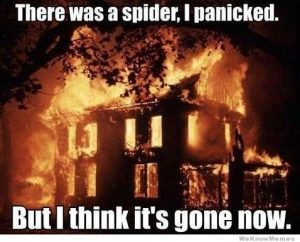
House Burning

Image acquired from the Internet Hive Mind, in particular “We Know Memes”

Ever heard of a Copula Spider? … yeah, neither had I under I read Melissa Gilbert’s April 29, 2016 post on Magical Words. A copula is a linking verb – with the worse offender being “to be” … or in editing the dreaded “was”. 

Read about them in the blog (link below) and then burn them from your writing!

Side note, Melissa Gilbert’s publishes under the name Melissa McArthur.

Editing Rant: Distances

Map Of Brazil Stock Photo

FreeDigitalPhotos.net photo by Gualberto107

Distances.

Please for the love of goodness know where things are located and how long it will take you to get there with various transportation methods. Normally my rant of this type is about medieval or regency romance type settings in England where a distance can vary from one hour to several days … by horse – to the same location in the same story – when the map says 20 miles on smooth roads originally installed by the Romans.

Today edit is a British author writing about America (rather than the other way around). Atlantic Ocean to Chicago by horseback is NOT five days. Horseback is not that much faster than walking when going through forested areas. And doing it while dodging zombies … well, let’s just say more like five weeks than five days.

Maps are your friends – USE THEM!

Please.

WRITING/READING EXERCISE: If your present work-in-progress or you present read is set in the real world, review distances for things.

Humans walk about 3 miles an hour, 4 miles an hour is a brisk walk and not sustainable over distance (except for infantry on a forced march). Horses go about 4 miles an hour steadily. And travel for both is usually limited to daylight hours – summer has much longer travel time than winter. Caravan and large groups need to start and end the day sooner than a couple of lone travelers. Bikes go 10 to 15 mph, and cars, when they first came out went the ridiculous speed of 20 miles per hour – equal to an easy day’s walk in an hour! (Scientist were worried about our ability to breath at those speeds.)

Editing Rant: Naming Things

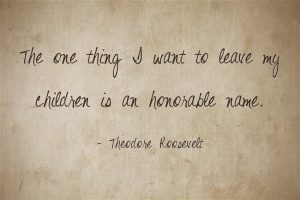
Quote: The one thing I want to leave my children is an honorable name.

Naming Things
So you are a writer and you have things to name – people, places, countries, animals, monsters, wars, machines, magic spells, conspiracies, historical events, future prophecies. The list goes on and on.

Hints
1) Avoid the name “Will” because it will constantly come up in grammar check as a verb showing up where a noun should be. Just make life easier and avoid this common name. “Bill” works just as well and doesn’t have the issues. (I’ve edited two books with this name so far. Ugh!)

2) Don’t have main character with the same first and last letter in their names. When reading, Ray and Rey ending up looking the same – in addition, this becomes very hard to edit especially when the two characters are talking to each other. Unless you want the characters to blend in your readers mind, try to have everyone start with a different first letter.

3) Make things pronounceable in the language you are writing. Do not just randomly put together letters to create a word – for example “Xchotlogz”. Break out the dictionary and play with real words. This makes the grammar and spell checks easier, and also gives your audiobook voice actor some chance of pronouncing things.

4) You don’t need to be really unique for all the things you name. Remember we have things named “fireplace” and six towns in the state of New Jersey are named “Washington”.  Things are often named after people and enter the language as a word – Sandwich for example – others can be found here – ). Have fun, but don’t sweat it if you name something “Looking Glass” or “Unihorn.”

THINGS NOT TO DO … be overly cute with naming characters.

REASON FOR THE RANT (this time) – Names for men in the menage a trois erotica: Mr. Hardwood and Mr. Woodsman. The woman is Ms. Amor.

Some winking at the reader is allowed … but there is a line.

WRITING EXERCISE: Write down five words or names and research their origins. Example – Wendy (name), Fireplace (item), South Fork River (location), Unicorn (monster/animal), elevator/lift (machine – and why is it different in America vs. UK). This will help give you some ideas of how things have been named in the real world.

READING EXERCISE: Go through the five most recent books you read and choose the three strongest characters of each. How are the names different within the book (spelling and pronunciation and syllables); are the name easy to pronounce based on the spelling; and how well do you remember each character uniquely? Compare the five books – did the names of the three strongest characters impact you ability to read and REMEMBER the story?

Blog: The Genders of Urban Fantasy

Bonus blog today. I figured since I waxed poetic, or at least ranted and pooled information from a lot of other bloggers and websites, about the uneven treatment of genders within genre, I should touch base on Urban Fantasy. This fantasy sub-genre focuses on fantastical activity (werewolves, psionists, vampires, elves, spellcasters, etc.) in a contemporary setting, usually in a big city like New York. Some sub-sub-genres include Historical Urban Fantasy (Thieftaker Chronicles series by D. B. Jackson starring a wizard set in revolutionary Boston) and Suburban Fantasy (Witch Way to the Mall(an anthology) edited by Esther Friesner). Closely related to Urban Fantasy is Near-Future Sci-Fi, where a story is set in nearly modern times but the fantastical elements have a scientific bent.

I love Urban Fantasy, but have found it to be very gender-divisive. While some series are “generic”, for example the Dresden Files series by Jim Butcher and Deadly Curiosities series by Gail Z. Martin, most are either clearly “female” or “male” sub-genres. The female subgenre has romance (or at least heavy sex), usually with two love interests, the woman kicks-ass, rarely needs help, and has magical powers of her own. Nearly all males of the story are defined by their relation to the main character, often portrayed sexy but needing the woman through some mystical link. (An example would be theAnita Blake series by Laurell K. Hamilton.) The male version usually has one female love interest, but the true love is guns and explosives. The stories have lots of violence. The lead character is larger than life, but came from “every-man” beginnings like accounting before magic intrudes on his life. All women are defined in their relationship to the main character, and the first description is not about personal competence but what they look like…how sexy they are. (An example would be the Deacon Chalk Bounty Hunter series by James R, Tuck.)

Both versions have a lot of wish-fulfillment, feature loners, and are unrepentantly sexist. The male version read like old westerns or spy novels and the female versions read like supped-up bodice rippers and, again, traditional spy novels. And everything about them is a guilty pleasure.

Sometimes the authors take the sexism too far. When none of the women in the Male Urban Fantasy have agency (the ability to act on their own) and all exist as sex objects, and the story is basically glorified gun porn, plus the Alpha Male walks over everyone in the story because his mission/opinion is the only one that matters, nothing about the story is likable or identifiable. In the female version of bad Urban Fantasy, when all of the men are weak and let the female treat them like crap, the story is basically self-empowerment of one female who belittles or demeans even her female friends, and magic solves all issues, again the story becomes unreadable.

Am I going to stop reading “female” version Urban Fantasy? Not likely, but then I will also continue to read the “male” version and the “generic” version as well. I enjoy the strong agency of the females in Female Urban Fantasy and the exceptional fight scenes in the Male Urban Fantasy…and the cool magic all around. I do wish more authors could find a way to create a powerful main character without belittling the opposite sex – Ms. Martin and Mr. Butcher in their “generic” versions prove it can be done.

Any comments or thoughts on Urban Fantasy by gender split? Have you noticed the difference? Does it bother you on an emotional or intellectual level? If only one, why do you think it appeals to your emotions/intellect but bothers your emotions/intellect?
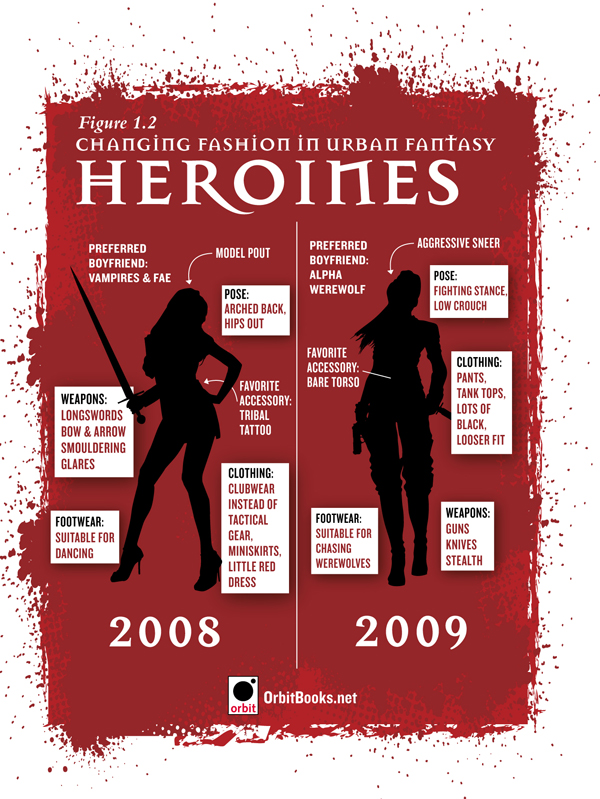
Urban Fantasy Heroines cover art breakdown

Image acquired from OrbitBooks – Link to original here