I get niggles (yes, actually a word!) in my brain when I don’t read for a while. It’s usually the worst on Friday nights, but I’ve been hitting the books pretty hard this tax season so the niggles that have been growing and growing are just demanding to be transported away in a story. They wanted to WATCH a story; be totally passive and absorb someone else’s opus.
(niggle as a noun means: a trifling complaint, dispute or criticism; niggle as a verb means: cause slight but persistent annoyance, discomfort, or anxiety)
(opus is either a collection of musical compositions OR any artistic work, especially one on a large scale)
This is a challenge because I don’t have a television nor cable, nor did I really want to commit the time and money to go to a theatre, but yesterday (Friday … always a Friday), went looking for a TV show to watch. Even five years ago, that was possible on many of the network websites (like SyFy), but now they are all behind cable sign-up paywalls. I finally found tubi.com, and then proceeded to watch four movies back-to-back. Hopefully satisfying the niggles for a while.
While watching, my inner editor did not go passive. She was mostly turned off, but every now and again she went – “oh, that is good!” And this morning while waking up, she started going – “and this is bad.”
Below are my Movie Reviews for the four movies I watched. They were all genre action-oriented. I made sure to choose recent movies (within a decade) to help keep my finger on what is happening NOW. The Reviews are more an editing, tearing apart the story to see what makes it tick than the normal is it a good movie.
 Hitman: Agent 47 (2015, rated R)
The establishing scene shows a hitman competence while a voiceover gives us an infodump. Hitman is based on a series of video games so for the dates getting dragged into the movie, the infodump fills them in quickly. Lots of glossy action, quickly to get you hooked. Hitman definitely meets genre writing expectations of dumping you in the middle of the action. At the end of the scene, the goal of the movie is established in big clear letters: find the girl and she will lead you to the creator. The Hitman needs to do this before the bad guys who want to reactivate the Hitman Project.
Next scene introduces the “girl”. Throughout the movie she continues to be referred to as the “girl”. (When the movie was released, Hannah Ware was thirty-two. My fingers are pinching the bridge of my nose right now. Big Sigh.) The daughter of the geneticist who created the Hitman Project, Katia is looking for the father who abandoned her. Her “normal” is established next (the Hitman’s normal was the action-pack opening scene). Katia is in a repository of knowledge trying to find clues. She talks with another woman.
Editing brain kicked in. Great – a woman-to-woman scene … and we are only talking about a man. (Another sigh.) Bechdel Test fail.
(Bechdel Test – To pass the Bechdel test, an fictional opus (usually a movie, but the test can be applied to books as well) must feature (a) at least TWO women, (b) the women must talk to each other, and (c) their conversation must concern something other than a man.)
The Bechdel Test is not a hard one – a movie or book can be 90% male characters, just so long as it has two female characters talking to each other about anything other than a male. How hard can that be? In 2022, 30% of all movies (45 of 153 movies on the Bechdel website) still fail the test even after being created in 1985 (https://bechdeltest.com/?list=all).
Back to the movie, this morning I scrambled in my head for any other women in this movie. We have the mother on the elevator with her husband and child; we have the woman Katia bumped into to steal her medicine, and we have Agent 47 handler. So five women in the entire movie. Elevator woman and medicine woman are “sword carriers”, scenery people. There might have been a couple more scenery women, but nearly everyone in the Hitman was male.
This is likely related to the original source material being a shooter assassin story centering around Agent 47. The target audience was male and the target audience for the movie were fans of the game, so again male.
We never see Agent 47 take off his shirt, or, if so, I didn’t notice. He takes off his jacket so we see his guns sometimes. Katia, on the other hand, goes swimming in a bikini, changes into a ribbed white shirt with no bra so her nipples show, has her undressing and the camera staying in the room, etc. Yes, it was noticeable and annoying. Why? Because Katia was the ONLY person in the entire movie sexualized. And they kept calling her “girl” … grrrr.
Aside from the Bechdel Test failure, the other Editing Mind moment was admiring the scenery. The location scout for Hitman did an outstanding job, using Berlin and Singapore for a glossy, shiny backdrop, with just enough dirty and dim to make the tech-shine that much brighter. The scene in the arboretum is outstanding location-wise – a combination of Gardens by the Bay, The Cloud Forest, and the OCBC skywalk. I also loved the scene cut to the subway. Again, glossy and yet darker for being underground (with the required fight around trains).
Takeaways from the movie:
- Be aware of the limitations of the source material.
- When writing a book, choose locations that fit the material.
- Watch out for sexualizing when it is not needed, or if you want the flesh pop & sizzle, give male and female equal time in the risqué viewing.
For action, Hitman: Agent 47 clicks all the tick boxes. For visuals, really clean, crisp and easy to see.
 Freaks (2018, rated R)
Let’s check off the Bechdel test right off the bat. Freaks totally, totally passes. It helps that the main character is a seven-year-old female, Chloe. She talks to her mother, the child across the street (Harper), the mother of the child across the street (Nancy Reed), the girls at a slumber party, and also the special agent hunting the Freaks. Being so young, Chloe is an extreme narcissist, everything is about her. Yes, sometimes she cares about her dad, but mostly it is all about her: her wants and her needs. That being said, of the characters listed on the imdb (https://www.imdb.com/title/tt8781414/), 11 of the 17 (64%) are male. All the “sword carriers” are male.
The location scout wasn’t quite as out of the ballpark as Hitman, but the outside of the home where Chloe and her father are squatting, is beautifully rundown. The sets for inside the house fit well.
What hit the Editing Brain on this one was the beautiful integration of the backstory. Everything was seamless. No info dumps to be found, but you can get everything from contextual clues.
The first time the backstory made me sit up and go “wow” was going past the TV, where the anniversary of the loss of Dallas (or was it Detroit?) is shown. It’s easy enough to put together superpowers needing to hide with the destruction of a major city to understand what happened. And any adult would understand the fallout from there. A seven-year-old, not so much.
A little less pretty in its integration, is Chloe being indoctrinated by her grandfather into certain actions and then her mirroring those actions later. Chloe, as a child, models her behavior off of those around her, and she is a quick learner. Her father would have been better off raising Chloe among other children, so she would have seen compassion, compromise, and care-giving modeled instead of just hiding, fear, and demands. Back to the circle of action: someone doing an action, then Chloe doing it. It was too exact in the modeling; unlike the backstory smoothly revealed, the learning to kill then killing was a club to the head. But very Hollywood in the mirror aspect, and acceptable for the genre. Just disappointing given how well done the other reveals were.
Having a story anchored on a child is never easy, especially a young one, but the actress who played Chloe is Lexy Kolker and has been acting since she was a toddler. She deservingly got a lot of recognition for her efforts in this role; she has been in nine movies and four TV series. (https://www.imdb.com/name/nm7652057/?ref_=tt_cl_t_5) The limitations on hours, and with nearly every scene centered around her, made a lot of the reaction shots be done in extreme closeup. That way for the adult reactions, Lexy wouldn’t have needed to be on set. As a minor between six and nine, she is limited to six hours, with one hour of rest and recreation required. ) Basically a good director would shoot everything for her in the long distance, and all her closeups, and then send her home with her parent/guardian (who also has to remain on set the entire time she is present). The adult actors then get to do more long hours once the child has left.
As with Hitman, Freaks does an opening scene to define the “normal” for the characters. In Freaks, I think it ran a little long – but the screenwriter and director worked so hard on Show Don’t Tell, and that always takes longer. Voiceover cuts down on establishments scenes, for the Hitman. Freaks instead has to take the time to show us and let us figure things out.
For example, we see the father cry a blood tear and he tells his daughter to tell him if she ever starts leaking blood from her eyes. We also see him cough a lot. And this “bong” effect. None are explained directly. As we go on, we learn that using the powers make blood tears, and if you really push your powers, you might end up in coughing fits. We discover how long and how the father kept his child safe; how much he pushed his powers. But all of that comes from inference, no one turns to face the screen and goes “When one uses the powers, one cries red tears.”
One way to bring out how important this is, we inference from watching the hypervigilance of the normal humans and their immediate, crazed reactions to seeing blood running from eyes. The combination of the loss of a city and how really powerful everyone with powers actually is, makes the overwhelming reaction by the normals understandable, and yet, still horrific. Again, SHOWN how this works, not TOLD.
We, the watchers of the movie, discover the mother being alive, how the family across the road get roped into things, the ice cream truck. Everything is this wonderful Show Don’t Tell reveal method throughout the movie.
I think part of it is we are seeing and understanding everything from the child’s point of view. She isn’t being told things; she is discovering them. And each new reveal rocks her world – and changes her emotions. She loves her father and hates him, wants a mother but angry when she isn’t loved immediately. Every emotion is out there and flips fast. For a seven-year-old, the emotions are matching action – but in an adult, we would have been like “you can’t change this fast”.
Takeaways form the movie:
- Backstory integration can be seeded throughout.
- Point of View (POV) can drive how the story is presented.
- Make sure any heavy-handed tropes match the genre expectation.
Slower than most of the recent blockbuster superpower stories, this movie delivers everything from unique powers to strong worldbuilding to believable characters. It strays a breath into the horror genre.
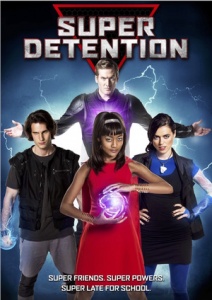 Super Detention (2016, TV-PG)
After two movie theatre movies, I switch to a “Disney” show. Basically teenagers with silly adults. Why do we make children movies with incompetent adults? Is it because we can’t have children realize that adults can’t protect them all the time, so we have to make the movies be pure farce? Kids today face active shooter drills, they can handle a little less farce in their life.
Bechdel Test is easier when you have an ensemble cast. The six supers in detention are three females and three males. Two of the females have a “cat fight” … yes, the males call it that while it is happening (fingers pinch nose again). But that fight counts as meeting the Bechdel Test.
Now let’s dig a little deeper. One of the three females sleeps most of the movie – she ends up being integral to resolving the Big Bad situation, but is kept quiet, to the side, before the big reveal. Her underutilization is sad, but I understand her power is needed for the surprise twist.
Therefore, the main cast is two women and three men. They split up the large team often into two groups – one female in a group of two, and one female in a group of three. The bad guys are made up of a lead bad guy, and his female support assistant, and bodyguards of two males and one female. (Again the two to three ratio.) The adult support of a male principal and a male superintendent continues the lean into the preference for male roles.
Other character comments. In Hitman, no real people of color are shown even though set in Singapore. In Freaks, two cops were of color – basically sword carriers. In Super Detention, we have one of the main five, a female be of African descent, and the secret weapon female is Latino. Everyone else, especially those higher in the political totem pole, are white, and usually male. I don’t think Liv and Lunam actually talk to each other – so the PoC Bechdel test is not passed, but this is the first of the three movies where it was even possible.
(PoC Bechdel Test – this I made up, it’s basically the same as Bechdel, only its (a) two PoC appear in a movie; (b) they talk to each other; (c) about something other than white people.)
More caricature than characters, especially the adults, the acting is very made-for-TV-movie level. The plot is simple and straight forward.
Now on to the Editing Brain. The constant clapping in the auditorium made no sense, and all the children willing to stay there from the beginning of school to nightfall without food or bathroom breaks is more of a fantasy.
We had a full moon hitting at sunset – Yay! Correct timing with that.
We had isolation of the school actually making sense (though the parents not coming to get their kids when school ended didn’t). That is one of the challenges of writing a story where the children have to be the heroes; why aren’t the parents doing their thing? Why are the adults not helping? This movie explained it adequately. A bit of a fantasy level in isolation, especially in an age of cell phones and every classroom wired for wi-fi, but I’m willing to spend a belief coin on that.
(Belief Coins – I’ve used this term in the past within my blog, but for those new, basically it is the amount of good will you have with your readers to break outside the “normal” but to keep the story “true” and “real”. Depending on the genre, some things are cheaper. For example, in a romance “love-at-first-sight-and-instant-trust” is one coin. But in a mystery, it might be five or six. You got a finite amount to spend. So in the genre of children-in-danger-but-saving-the-day, defining why adults aren’t part of the save usually is only one belief coin. The non-stop clapping and the children staying still for hours with just one person guarding them, and no one killed or injured to convince them to stay put, that was more like three or four coins in this farce – and in a thriller, I wouldn’t have accepted it at all.)
The superpowers had a nice mix to them, and each had an occasion to shine. I really enjoyed Déjà vu as a character, because even with all his multiplying power, his true strength was political (not tactical) leadership. He knows how to play the game at a level equal to the adults in his life; yes, Déjà vu made some mistakes, he is still a kid, but you can see him winning governor twenty years down the line.
Bad continuity included burning the edge of the table and the next scene, it is fine. Just keeping that damage in would have been great, but likely the “broken firey scar” was just CGI and they didn’t keep it going. One plus to writing rather than video storytelling, you don’t have to worry about a CGI budget.
Another CGI mistake was when the puppet master, who kept her hand up correctly for it, didn’t have the line to the character’s head she was controlling.
Really the CGI creators on this one sucked. I can handle bad CGI, but when it breaks continuity, that is on the CGI company and the director.
The one scene (aside from the bad continuity), that made my Editing Mind sit up, is when Principal Hughes uses his powers. A level one, he locks and unlocks things. We first see it in action when he locks the kids in detention and no one can leave. When the bad-guy minions attack him, and he locks them in position, the power really starts taking off. And it’s important in the final scene. With all the pieces in place, I figured out what was going to happen the minute I saw the principal on stage all tied up. That part was good storytelling.
One theme for the movie is everyone has an ability, and they are all worthwhile.
All the powers are needed to get to the Final Confrontation, and nearly all are needed to actually win the battle.
The movie has several expected beats – breaking up of the party, the individuals failing (and succeeding), the villain monologue, the big fight at the end, the VERY quick ending tying up everything (including the clever use of Déjà vu against the superintendent). And, of course, the establishment scenes at the beginning to show the “normal”. These scenes do double duty of (a) showing each power in action, (b) defining what drives each character, and (c) setting all the students aside in detention.
For the location, the school is brightly lit, colorful, and open. Clothing/costumes of the main group work well individually, but not as good together (three dark and three light in the final scene actually looked bad enough to make me notice and wince).
The pattern to filming scenes was fairly clear – the long time in the auditorium was likely a single day shoot – don’t need to pay that many actors for more than a day. I would say this movie shoot took a week, maybe two, with another week or two for CGI. When you are kicking out movies to TV, you can’t spend a lot of time on each. Just like a TV show takes a week, a two-hour movie needs to take two.
Takeaways from the movie:
- Continuity is important. Don’t break things unless they are going to stay broken. Especially when they are a plot point.
- Make superpowers visible whenever possible, and show their versatility as well.
- Have Powered people be more than their powers; show their strengths and weaknesses outside of the power.
- For Young Adult, make the locations be generic, for Adults, make them far-flung. This way the children can put themselves in the story, and adults can escape. (Comparison of Detention to Hitman)
- Make sure things are believable whenever possible, so that when you have to break that guideline, you got the belief coins to spend. Even in a farce.
Super Detention is a farce superhero school story in the made-for-TV Disney tradition. It’s a good watch and forgettable entertainment.
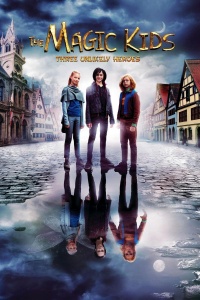 The Magic Kids: Three Unlikely Heroes (2020, foreign)
Filmed in Germany, Die WolfGang was released first in Germany and Austria and is based on a book series by Wolfgang Hohlbein. The version I watch was dubbed into English and renamed for the American audience.
I tried watching another foreign movie Friday night which had subtitles, but I wasn’t interested in reading, just watching. I enjoyed the dubbed for the most part, but sometimes the words and the lips didn’t match up.
Two of the movies I watched were translations from other mediums, Hitman and The Magic Kids, and the other two were original productions. Changing mediums means that while you get a plus from a ready-made audience, you have to meet the expectations of that audience. Meaning, you can’t change the characters too far from what they originally appeared to be in the other medium.
The first thing that struck my Editing Brain was how painfully close Magic Kids tried to match the Harry Potter format for certain visuals, down to the red-headed boy. The school’s principal was a flamboyant witch. And the three “best friends” (note the period of the movie is less than three days, the BFF vibe grabbed a belief coin or two from my purse) are two boys and one girl.
So onto the Bechdel Test. The main family unit is a father-and-son, most of the talking is between them. The bad guy has a female assistant. The red-head child has a mother and father. And I *think* the female friend has a mother-and-father set, but we never really interact with them. We do see Faye initially with her two BFF female friends, but they are little more than sword-carriers and quickly turn on her when she has a problem and drops in popularity. The talking of the fairy set vs. the pig set clearly show the preference of male speaking parts. When the fairies do talk to each other, it is about helping a boy.
I don’t think there is a scene where two females talk to each other for real. Again the lack of main female parts preclude that, and the fact most bit parts, like the bicyclist, are written for male actors doesn’t help. (A quick fix would have been make the constable or the custodian-mentor be female.)
Again, we see the ratio skewed to the male. One in three of the children group are female (vs. the two in five for the teens in Detention). In all the movies but Freaks, the Big Bad was male and if they had a female in the mix, she was a loyal assistant. Freaks, the Big Bad was the system, but the face of the system was a female agent trying to capture the child – though NONE of the other people in the system interacting with the female agent was female: not cops or the TV reporter.
Big take away from movie night – more women in stories are needed at every level; we writers got to start writing stories about women for all ages. And be aware the ratio of male to female in the world is 1:1 – fifty percent of the characters in movies should be female, and not just mothers and assistants. In addition, females shouldn’t just be defined in their relationship to males. The ratio shouldn’t 33% to 40% among the lead characters. We as creators needs to change this, whether writing novels to be made into movies, creating the screenplay, making video games, or directing television show and movies. It’s up to us to make representation matter.
(Related: People of Color – really!!!! They need this even more than women. Though statistically, the split is less obvious.)
After the limited people and costumes in the last three movies, the expansive sets chocked full of people in costumes, really hit me. They would have had three days of shooting I think, maybe one, if they moved fast, because that was a lot of makeup and costume. One is the initial scene arriving to town, one is the school auditorium when the seven years are being check in, and finally is the watching the solar eclipse scene. A producer wouldn’t want to pay for all that makeup and costume work more than once; they had a tight schedule for a few days on the shoot.
Speaking of the solar eclipse, my Editing Brain loved seeing a sliver of the moon in the one night still going “yay, not a full moon”. But this morning, when I added the solar eclipse in the mix I went Double Yay! Because the next day within the story was the solar eclipse, and that can only happen on nights of the New Moon. They got the moon cycles right, and that hardly ever happens.
The thing I would fix for this movie is make the father scenes less farce. I understand the “there is no danger here” vibe they were going for the children book remake, but I would have really loved to see the father be … better? I guess. He is a single dad, a three-hundred year old vampire. Make him more … well, more.
Again, one of the big things when children have to be the heroes, is how to dump adult support. In this movie, the children all had good relationships with their parents. Parents who didn’t always understand them, but always supported them. When the children figured out enough to clearly articulate the issue to the parents, they agreed to go and tell the adults – splitting up to head home. Then the moment that made my Editing Brain go “Wow!” with magic sparkles is the Reverse Curse spell, making the children say the opposite of what they want.
Instead of “There is a great danger” out comes “Everything is fine and I’m fine.”
Beautiful (sniff).
The children couldn’t tell the adults. They wanted to, they turned to them, but they couldn’t.
The presentation of that issue was farce, but the dealing with the fallout wasn’t.
The isolation was well done and spent NO belief coins. I was really impressed. The isolation from adults added to the danger, was integrated into the story, and had only a minuscule info dump needed to pull it off.
The scene I would have fixed is when dad showed up (late) to rescue the children from fighting the big bad, I wouldn’t have made that part a farce. He had scratches – I would have made the damage more … that he fought tooth and nail to be there for his son and his son knows it. But then, I’m not a fan of farce. The world is both much more scary and more amusing than most main-stream producers of entertainment present.
Takeaways from the movie:
- When isolating children for YA hero setup, try to integrate the isolation into the story.
- Get the science right.
- You can make a movie with a ton of magic while spending very little belief coins, if you make the characters real.
That last one is key to this movie. The three main characters are believable pre-teens. When faced setbacks, there is an amazing transition scene with each of them crying in bed – turning over (and transitioning to the next child). They think about running away. They make friends and face their fears.
The only farce aspects with the children is when manifesting their magic – especially the werewolf and the vampire. A lot of the adult interaction is farce, but very little of the children interaction is.
Summing Up
I think my brain was right in wanting to watch rather than read, and I’m hoping the niggles back off, because I can’t do this too often.
I did learn a lot about storytelling last night.