 RECIPE: LIBUM (An Offering)
Roman Recipe – Cato (180 BC), recipe 75
Libum hoc modo facito, Casei P. Il bene disterat in mortario. Ubi bene destriverit, farina siligneae liram, aut, si voles tenerius esse, semlibram semilaginis eodem indito, permiscetoque cum caseo bene. Ovum unum addito et una permisceto bene. Inde panem facito, folia laurea subdito: in foco caldo sub testu coquito leniter.
Translation – Giacosa p. 169
Make a libum thus: Thoroughly grind 2 librae of cheese in a mortor. When it is well ground, add 1 libra of fine flour or, if you want [the loaf to be] softer still, ½ libra of finest flour; mix well with the cheese. Add 1 egg and mix well. Then form a loaf, placing bay leaves beneath. Cook slowly under a testo on a hot hearth.
Cookbook Interpretation can be found on Giacosa pp. 169-170
My Interpretation: For 16 people at a Feast
Equipment
| Oven | Mixing Bowl | Mixing fork |
| Baking Sheet | Measuring cup (dry) |
Ingredients
| 2 cups of Ricotta (15 ounces, since that is an easy purchase) | 2 cups of Flour | 2-3 bay leaves (fresh or dry, dry worked fine for me) |
| 1 Egg |
Process
- Mix together cheese and flour.
- Add egg and mix well.
- Form into one, two, four, or eight small loafs.
- Place bay leaves on baking sheet and loafs on top.
- Bake at 350 degrees for 30 minutes.
Comments
- Next time I need to attempt without the self-rising flour. Forgot that was all I had in the house. (grumpy stomp)
- The flavor is light and fluffy with just the hint of bay leaves. Very nice.
- Broke easily into four separate small loaves. They crumble easily. Serving two of the four per table at a feast would work well.
Bibliography
Giacosa, Ilaria Gozzini, Translated by Anna Herklotz. A Taste of Ancient Rome. The University of Chicago Press: Chicago and London. 1992.
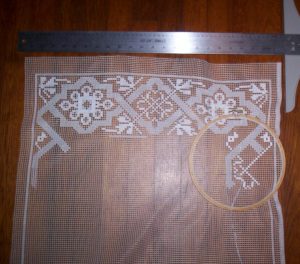
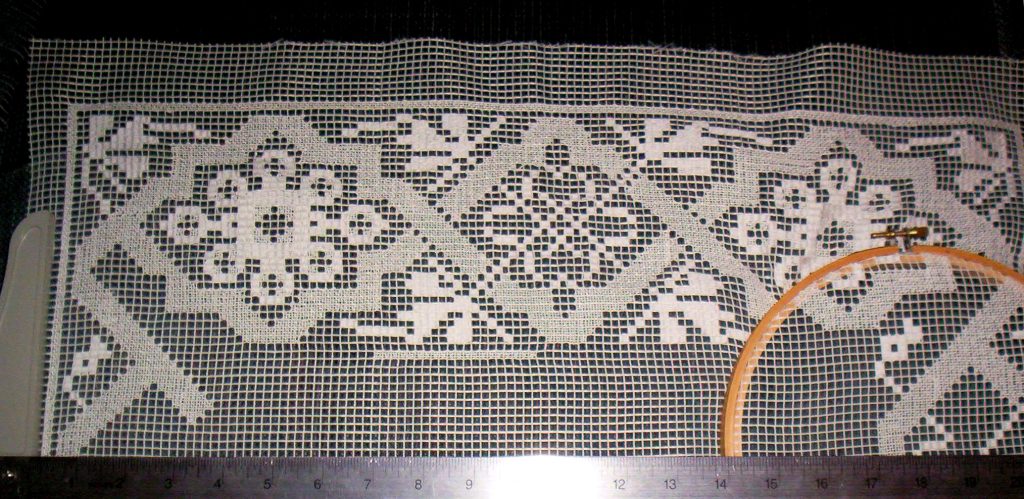
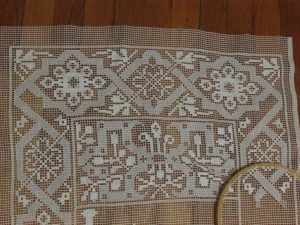
 The full pattern for the Lady’s Room is 127×378 squares. The pattern has 8 major segments including the top and bottom borders, plus the right and left borders which are being completed as I work my way down the design. I actually started the first wall hanging in May 2011 and completed the top border in September 2011.
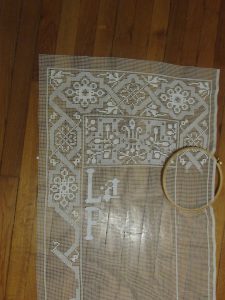 The project then was set aside as I worked on other things, like writing, moving, job hunting, etc. In March 2017, I have decided to make a concerted effort again on the project and put a week of 2 to 3 hour nights into it after doing taxes. So after 20 more hours, I got a second border section done. At this rate, it I don’t get distracted again, I should have this completed in mid-June and can start work on the Lord’s Room door hanging. (I got distracted – so it has stalled out again.)
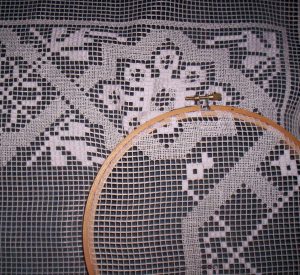
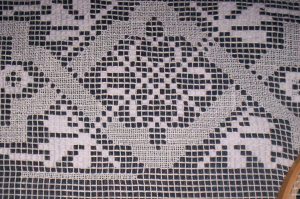
 Completed on the September 23, 2017, the “J” scroll was inspired a 1410 Italian manuscript, The Prayer Book of Michelino da Besozzo.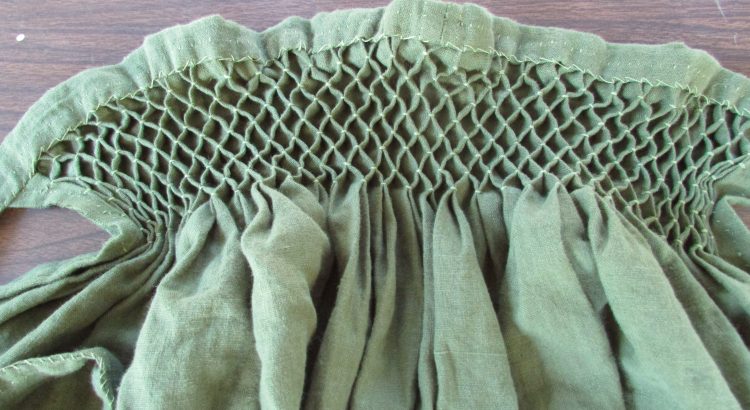


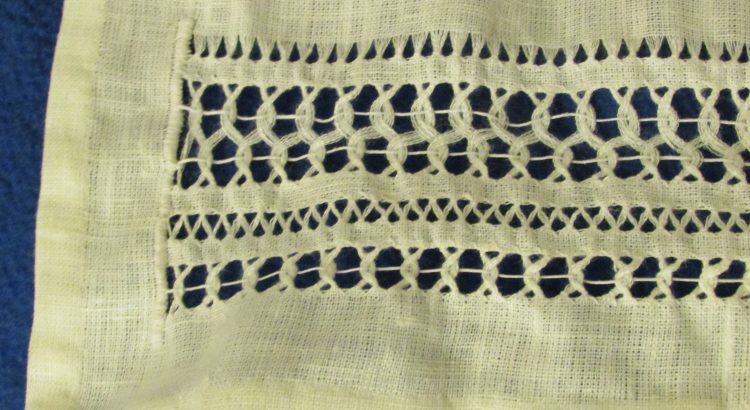
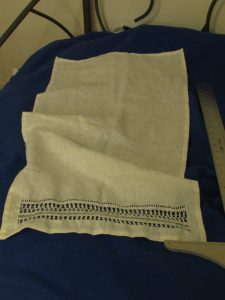 First towel completed (May 19) – 15 hours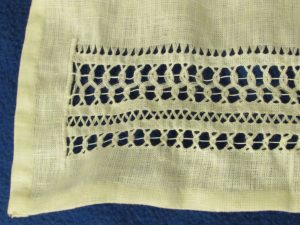
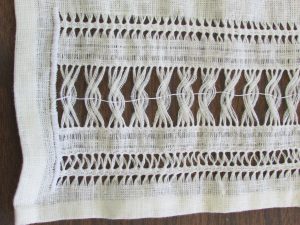 Second towel completed (May 26)