Blog

Other Cool Blogs: Five Common Dialogue Mistakes

Image courtesy of Stuart Miles at FreeDigitalPhotos.net

I keep coming back to dialogue, don’t I? That is because there is a limited amount of ways to present information to the reader – the narrative, the backstory, the action, and the dialogue. Dialogue is where narrative and action meet, and concentrates on what 50% of your audience thinks is the most important part of the book – the character. The other half think the plot is the most important part – and this well-research scientific statistical split which I just made up has a slide bar for each reader and each genre.

Today the way-back machine returns us to October 2015 on Xterra Web – Five Common Dialogue Mistakes Writers Make – written by Kelly Hartigan (an editor).

She starts off with one of my biggest peeves on her list of five mistakes: Every character sounds the same.

Some people are over-educated, other people got expelled from the school of hard knocks, and still others are pedantic within the speech patterns. Where they lived, what jobs they held, who they are talking to, and why the discussion is taking place all have impact. 

“Yeah, Jay-Jay be a handful at times. All you gots to do is text me and I’ll whoop his ass for you when he gets home. I’m 100% behind you Teach. Hell, me and the old man ain’t working mornings, waitressing tips best at dinner and he got third shift after I get home. If you need classroom help, we can be there when we drop the boy off.”

“I don’t understand why Jerard’s grades dropped this semester. His last teacher gave him all ‘A’s’ in first grade. Maybe I should take this up with my friend on the school board, Ms. Stiles? I know you are new to teaching and may not have a grasp of who deserves special attention.”

Dialogue matters. How much of a picture do you have of these two mothers? How about the teacher they are talking and the teacher’s facial expression and mannerisms and thoughts – even though there is no narrative clues whatsoever?

There is a really cool graphic about five positive dialogue traits and five negative dialogue traits which you might want to download. Again the weblink is here:  http://editing.xterraweb.com/writing-tips/five-common-dialogue-mistakes-writers-make

WRITING EXERCISE: Write a dialogue-only scene. No speech-tags, no narrative.

Writing Exercise: Movie Retrospect

Image courtesy of digitalart at FreeDigitalPhotos.net

A friend of mine Facebooked a question of what movies to show to her teenage daughter. You often see these requests on social media.

It is an interesting exercise to see what you value. In previous writing exercises, I have suggested assembling a list of  childhood favorite books to see what common threads draw you into a story  and a review of things you have written to see what your personal writing style is, specifically what skills you use and what you need to work on.

Movies are a different medium than writing on several levels: (1) Writing usually involves one person (not counting the editor); (2) Dialogue can be nuanced with the voice in movies; (3) Visual really makes a difference. But at the heart, both books and movies are still about story and characters.

WRITING & READING EXERCISE: Assemble a list of movies which you have watched and would recommend to others for enjoyment, not educational purposes. What are their common themes? Do these match fictional books you enjoy and/or your personal writing style? What would you like to take from them to enhance your writing? How is your movie watching and your reading different?

***

My initial recommendation to my friend: Big Trouble in Little China (1986), Bugsy Malone (1976), and Johnny Dangerously (1984). What do all these have in common? They created new and consistent worlds, had amazing characters and even more amazing dialogue, and solid humor based on just being alive.

Johnny Dangerously had some meanness to it. Another Michael Keaton movie also is humorous, character-driven, and crazy-worldbuilding, but the meanness crosses the line and I never really enjoyed it. You may have a different opinion about Beetlejuice, but I would not recommend the movie. Comparing these two movies side-by-side you can see where my personal line of “meanness in humor” is.

After my initial recommendation, I had a long drive and come up with several more selections:

GENERAL MOVIE: Beverly Hill Cop I & II (1984, 1987), Ferris Bueler’s Day Off (1986), Who Framed Roger Rabbit (1988), Cool Runnings (1993)

FANTASY/SCI-FI: Star Wars: A New Hope & Empire Strikes Back (1977, 1980), Indian Jones: Raiders of the Lost Ark (1981), Dark Crystal (1982)

MUSICAL: Sound of Music (1965), Chitty Chitty Bang Bang (1968)

Grouped together, the world building screams out. While I have seen several character-driven movies, I need world-building before character building kicks it into the next level. On the other hand, having an amazing world is not enough – if the characters and humor don’t work, for example, The Matrix is an amazing world but the characters and humor are lacking. As always creating a writer’s exercise has taught me a lot about what I value – upbeat, hopeful, smiles, and a working world.

Happy holidays, everyone.

Flash: Chich-a-whoo Feathers

Image by saphatthachat at FreeDigitalPhotos.net

“You know hon, you really should wear pants if you are going to take taxis in this part of town.” The rhino driver commented in conversational tones, when looking over her shoulder as they approached the noble’s stop, hoping not to be heard. “Or, at least, underwear,” she muttered under her breath. She did not need to know what designs the woman trimmed into her short hairs.

“What?” The noble mouthed unheard over the animal’s stamp through the wide streets set aside for transport. She likely stated in the lackadaisical accent they all adopted to imitate the spacers from the far-flung worlds of the Empire.

Saba kneed Mai-mia to a halt. “We are here, Your Eminence.” The driver quickly crawled up the steps, adjusted her skort, a combination of shorts for modesty and skirt as required by Lavinian law, thankful once again for the length exemption granted to drivers. Otherwise, with her caste, she would be covered from head to foot, long-sleeves, scarves, hat, and full undivided-skirts – who wanted to live that restricted?

Helping her client stand on the steady animal, Saba got another eyeful of boobs and butt she could have done without. She helped the Important Person down the primary steps to where the ladder started. In deference to the stature of her passenger, Saba snapped down the secondary when something startled Mai-mia, sending them both stumbling.

Saba held onto the woman’s waist, swinging her around. Using the strength she with which she could control the rhino when Mai-mia got cranky, Saba pulled her back on the animal instead of the woman falling and getting trampled. They both fell forward onto the animal’s head, with Saba spread eagle over the noble.

The weight and touches on the head behind the ear told Mai-mia to move at a trot. “Don’t move!” Saba yelled at the white dressed woman.

Of course, the noble started struggling, trying to free herself. Mai-mia interpreted the movements to run. “Don’t move!” When the woman continued, Saba sat up, straddling the woman at the waist and slugged her several times until she went unconscious.

Keeping the limp body on the rhino took every bit of skill Saba had developed transporting the morning vegetable to all the vendors on Hiss-Hot alley.

“Just like Bindle’s daily bag of melons.” Saba muttered, while touching and maneuvering around Mai-mia’s head until the animal came to a stop. Once still, Saba took in her surroundings. They were nearly to the Markers’ farm, just outside the gates. Taking out her crop, she looped both ends around the rhino’s ears indicating it should remain still, like she should have done the first time. She had gotten lazy; Mai-mia and her had been together a long time.

Once satisfied the rhino would remain in place, Saba carried the woman back to the patron seat and tied her in. Sometime her older clients and the extremely young needed the additional support. And the drunk. Mostly the drunk. Lots of drunk on her runs. Saba looked over the damage. The woman would have a black eye and several bruises across her chin, but no scratches and she shouldn’t have any scars. Most importantly, the woman was still breathing, and not coating the hooves of the rhino.

Climbing down, Saba did an even more through examination of the rhino, finding two darts, with the gray-blue-purple feathers of the Chich-a-whoo bird. The darts smelled of Hurt, the best antiseptic on the planet that lived up to its name during initial administration no matter what method was used in its application and the doctors tried everything: suave, injection, oil. The initial sting was blinding in pain, but two second later, the injury site would be numb and healing. Nearly half of the population passed out from the pain, the other half vomited. A rare individual was immune to the pain, but Saba had never met one.

“I’m so sorry, Mai-mia.” Saba rubbed her rhino’s sensitive horn. Unlike the Earth’s version of the rhino, the horns on Lavin rhino provide them the ability to predict weather, migrate, and communicate over distances. The animal moo’ed and snick’ed back, seeking comfort from its human and asking forgiveness. “I know, I know. It wasn’t your fault. Not your fault.”

Swimming up to the head seat, Saba removed the halt-crop and slid back off the animal to guide Mai-mia to a balboa grove about two hecto outside of town, the one with a pump well her caste could use for their animals. Two dramas, something that looked like a cross between a dromedary camel and a llama from old Earth, were being watered by the four youngest Marker children, between water fights.

When they ran to Mai-mia in greetings, Saba stepped between them and her animal. “Careful, she’s had a fright. Move slowly, like around old Grissizzie.”

“Someone scared Mi-mi?” Dhruv asked, the second youngest, eyes so round they barely fit in the head.

“Scared and hurt her. She needs some water.”

“We can help.” Prisha gathered her younger siblings around the pump and they all quickly went to work, as only farmer children could when things were serious. The lever swung high enough to pull the youngest two from the ground, but the combined might of the four children too young to attend school, at least for their caste, had water gushing before Mai-mia had settled enough to drink.

Climbing up her animal, Saba set the halt-crop between the ears once again, then went to inspect her passenger. Wiping the blood and grime from the noble’s face using a cloth she had wet before climbing up brought the woman around. Her eyes tracked quickly and the only reason the noble didn’t attack Saba were the restraints.

“How dare you, you banthie?!? I will have you killed for this! Do you know who I am?”

“Not a clue, Your Eminence, but next time you are on a taxi’s head and the driver say ‘Don’t move,’ I would recommend not moving.” At this point, Saba was sure she was dead, in fact, she had accepted the outcome while she was pulling the woman back to the rhino, but she hoped she could save Mai-mia to be sold to another owner and not be put down.

“You kidnapped me.” The woman pulled on her restraints.

“I did no such thing, Eminence.” Saba studied the woman’s face, neck, and exposed skin – so much exposed skin, even for the highest of castes, the woman had to be a slit-slip – for bruises; all the ones she thought would develop were developing, plus one on the arm where she vaguely remembered grabbing the woman, and one on the leg which matched the one Saba could feel on her knee where the driver had landed on the split-slip when they both tumbled onto Mai-mia’s head.

“Then, what did you do banthie?” She spat.

“Saved your life, Your Eminence.” Saba pulled the darts from where she tucked them into her belt and opened her hand so the fetching would be visible. “Might this lowly Bane of Lavin ask why the blessed creature we are on was injured in your service.”

The noble prostitute examined the damning fletching, used exclusively by the Unclassed Guild, her rare blue eyes shining with intelligence and consideration. A careful frown, one which would not add wrinkles, turned down the edges of her painted lips.

(Words 1228; First published 12/22/2019)

Geeking Science: Architecture

Photo by Meriç Dağlı on Unsplash

Fighting White Boxes (mentioned in Septembers writing exercise) can be an uphill battle. One of the ways to win the war is think about the architecture of the building.

Ready for Geeking the Science of Construction?

Let’s start with a life hack which I find very helpful. Electric wiring and plumbing are expensive and time consuming, and architects and construction crews like to put all of that together for several reasons. Less cost of running wires and pipes. But also so they can get on the business of building while waiting for the government inspectors to sign off so the walls can be closed. Which means bathroom, kitchen, and elevators are all going to be in close proximity to each other. Going to a job interview and want to have one last bathroom trip before sitting in the reception area waiting for the interviewer to free up, look for the elevators – the bathrooms will 90% of the time be somewhere in that core column. Just walk around the “block” until you find them. At a house party and trying to find the downstairs bathroom, find the walls adjacent to the kitchen. Likely the bathroom is near there, that or the stairs. If the downstairs bathroom is full because the party is already full swing, go to the second story and find the space directly over the other bathroom or the kitchen.

There is so many cool things about architecture!

Photo by Diana Davolyte on Unsplash

How about pagodas? These tall delicate buildings made completely of wood with their large overhangs look like a strong breeze will destroy them. They are also one of the most earthquake resistant building styles in existence. The wide eaves, the wooden central column, the box-style construction, all contribute to a building which sways and stays. If you would like to see related videos, check out the link in the Bibliography under Kalovic. The wide eaves also contribute to controlling heat entering the building during the summer, but the shallow nature likely allows the low angle winter sun in for warming the building during the cold months.

Talking about controlling heat and cold without massive amounts of air conditioning and heating – which those big monster skyscrapers with their glass sides require, let’s take a stroll through the north and south. In old school Philadelphia, the buildings are close together – row homes in fact. These retain heat making winter bearable. They are not meant to be lived in during the summer – that is what porches and parks are for.

In the south (and throughout the world in warm climates), houses and entire towns are built to catch prevailing breezes. Multi-story buildings make use of the “heat rises” principals and pull air flows through from the bottom to the top of the house. Awnings and porches are welcomed additions in the summer, and can even double the house footprint. The porches on my house in the Carolinas add 20% to my modest living space during the warm months (my house is about 900 square feet, so I love my porches).

Image courtesy of Witthaya Phonsawat at FreeDigitalPhotos.net

The push to be “modern” (read, European materials), can be counterproductive when one forgets the past. The “air cooler” (see DiStasio – warning, some of the physics are suspect. They might be looking at the wrong reasons for the benefits they are seeing.) which everyone talked about in 2016 and 2017 of forcing airflow through small holes to make the inside of a house cooler amused me because, well, Ottoman architecture. Have you seen the widows with the small deep holes? Combined throughout the house, heat can change easily but slowly when the indoor/outdoor are different, averaging out extremes of a cold night and hot day.

Mr. Holland (see Bibliography) collected a lot of examples of how returning to study native buildings can give a better idea of using less imported materials, making the buildings more responsive to the local environment, and more sustainable for maintenance and climate, all the while being aesthetically pleasing for the culture. Things like curved roofs protect against cyclones (hurricanes), using reeds with hollow stems for their insulating properties, circular buildings to protect against monsoon rains, and window placement to collect solar heat and create cross-ventilation. 

The geeking science list for architecture goes on and on. Flying buttresses, keystones, spiral staircases, …. add them to your writing to make the world more real. Tie the environmental problems people face to the houses they choose to live in. In Urban Fantasy, does the person live in a shotgun house or a penthouse? In a fantasy, is it a “Winter is Coming” or “Afternoon Siesta” culture? For a science fiction, how long does it take them to abandon the old colony ships and build their own places? Break the white box.

Bibliography

DiStasio, Cat. “The amazing Bangladeshi air cooler is made from plastic bottles and uses no electricity.” Inhabitat.com. https://inhabitat.com/this-amazing-bangladeshi-air-cooler-is-made-from-plastic-bottles-and-uses-no-electricity/ – last viewed 11/12/2019.

Holland, Oscar (CNN). “What traditional buildings can teach architects about sustainability” CNN.com. https://www.cnn.com/style/article/vernacular-architecture-sustainability/ – last viewed 11/12/2019.

Kalovic, Alen. “Shinbashira – pagoda’s exceptional earthquake resistance.” Medium.com. – last viewed 11/12/2019. (Author deleted the article in 2022.)

Kipnis, Nathan. “Natural Cooling Strategies.” Mother Earth News. https://www.motherearthnews.com/renewable-energy/other-renewables/natural-cooling-zm0z11zphe – last viewed 11/12/2019.

Author Spotlight: Michael G. Williams

Amazon Cover

Around the time I wrote the Author Spotlight on Michael G. Williams back in 2017, my publisher asked me if I knew Mr. Williams and would be interested in editing a book by him. Seems the boss had picked up the series which I discussed in the blog post, plus would be publishing the last of the series. If I was available, he would assign it to me.

Oh my goodness, oh my goodness, OMG, OMG!!!! Squeal!

After I calmed down, I worded a reply – deleted that one as being way too fangirl – did another after I calmed down again. Finally I managed something along the lines of: “I have enjoyed his work and believe I can fit another book into my schedule.” Hit send on the email, then finger out and take a sip of tea. So professional. While quivering in excitement.

One book turned into two, then three, and now I am his go-to editor at Falstaff. (He does get some of his short work published elsewhere.)

My mantra when editing his work is “Don’t pull a J.K. Rowlings with Mr. Williams.” I want his work to be the best possible, which means he must get edited completely. Unlike Ms. Rowlings, whose books clearly had editing slack off as her editors changed into fans, I had to remain an editor. No matter how much of a fan I am.

And if I stay good, I get to see his work before anyone else!

That’s a big incentive to stay on the straight and narrow red editing line.

This year Falstaff Books put out three of his novels/novellas.

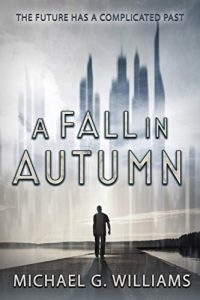
First one happened back in January 2019, A Fall in Autumn. In fact, it was Falstaff’s first publication of the year as well as the first book in a science fiction series about a detective. It’s amazing! The central conceit of the SF aspect is organic manipulation, not the typical military and spaceship story.

Second happened in June, Nobody Gets Out Alive, concluded the Withrow Chronicles. (I.touched.it. I.got.to.make.this.series.better.) The final cross-genre for the vampire series was War Chronicles. I had to dig deep to remember what I knew about the tropes of that genre, but I truly feel that the conclusion delivers on the promise of the series. Not an easy thing to do for a five-book opus.

Amazon Cover

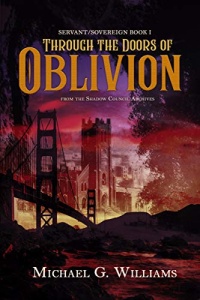
Third, and last one, published this year, Through the Doors of Oblivion, the first of a new series in the Quincy Harker/Shadow Council universe. This is perhaps his best story yet, mixing in so many of his passions. Mr. Williams love of San Francisco bleeds through every page. In fact, most of my editing felt like: “Pull back. This scene doesn’t fit this story right now. I know you love it, but save it for later books.” This time the urban fantasy focuses on witches vs. a demon, with a lot of the City by the Bay history thrown in.

Each book published this year had a different focus, a different sub-genre, and yet his author’s voice dances throughout even as the series voice and character voices adjust. He is an amazing writer.

And I get to edit him! (squeal, hands clapping)

Read his stuff. Give him a reason to complete the next book of the Fall in Autumn and the Servant/Sovereign series. I can’t wait to see them.

You can follow him at: http://www.robustmcmanlypants.org/perishables/