Blog

Flash: Be Ninja

Acquired from the internet

Working late night pizza shift is interesting. The 12:21 am request gave me a challenge, but fortunately my parents always stored a ton of masks in the car from the COVID days, like a pandemic might break out at any moment over a decade later.

I pulled down the stocking cap against the cold and pulled up the mouth protection mask / neck garter. The electric car idled silently, wanting for the key to be back within its four-doors.

Five tween boys, and one very harassed male teenager who looked very much like two of the others, quietly answered the door after I tapped on the window. The buy-two-and-get-one-free special would not make it to morning with that lot.

The truly fun part was teleporting back to the car while they were busy juggling the pizza after I took it out of the insulated bags. My ability to hear the space I just left for ten minutes after a teleport made it perfect. I waved from the car before pulling out as the ten-year-olds muttered “Ninja” in awe.

(words 178; first published 4/30/2022 – created from Facebook writing group prompt)

Other Cool Blogs: Geeks of Color (4/6/2017) – Racebending

Photo by ActionVance on Unsplash

Against the backdrop of COVID, cracks in American culture have broken wide – the most obvious being the racial divide of privilege.

Within the publishing industry, People of Color (PoC) have fought an uphill battle – most opportunities within writing and editing are available by networking. Networking happening at conventions – which require free time and excess money. Outside of conventions, networking happens among friendship circles based on where people live and how they meet up. Since the establishment for publishing is white since, like, forever, breaking-in means breaking through the white barrier of privilege – jumping historic redlining and the restricted availability of extra cash within a family structure.

The same is true for the other storytelling medium of movies. Portrayers of Characters (actors) must network – not only to get the job, but to get the RIGHT job for their body-type. Whitewashing is argued from the money-side – “we must choose (name actor) to get blockbuster cash”. Never mind that putting a new actor in the role, if the story is a good story and the actor is even better, will still create a blockbuster. The money-people don’t like depending on the story or unproven talent.

Doing research about culture and PoC, I ran across a Geeks of Color post from 4/9/2017 by Tevin Murphy “The Incomparable Differences between Whitewashing and Racebending”. I hadn’t run into the concept of Racebending under that name before, the deliberate choice of placing a PoC in a role which would normally be considered white.

From my time growing up in New Jersey my category for “white” skin color includes Hispanic, Italian, Indian, and mid-Eastern, as well as traditional Anglo-Saxon and Germanic and Slavic looks. For stories where the culture of the character is inherent to the character, I feel every effort should be made to match things up. But if the character is generic background, then color doesn’t matter and Racebending may be desired.

I’ve often talked about don’t do GENERIC. What I really should say is don’t do GENERIC by ACCIDENT. I have written several stories where I’ve deliberately omitted color and gender considerations to open up the story to a wider audience and let the reader place themselves within the character. Most of my character choices are wide-ranging in culture, and I try having personal attributes of those cultural differences feed aspects into the story. Porter (Porter Weaves) is deliberately created with kinky hair, and Escaleras de Muertos draws on Hispanic culture. But when I don’t indicate physical appearance, except for the shortest of stories where appearance doesn’t fit, my choice nearly always is deliberate.

Should any of my works ever make it off the page to a screen – I would be delighted to see Racebending occur. (bolded for emphasis)

Everyone should have the Privilege to see themselves in a book or on screen. The only way to heal the cracks of society is to cross the divides.

WRITING EXERCISE: Filling a White Room (The Power of Point of View Part 4)

Photo by Zachary Keimig on Unsplash

Most people have a handle on either dialogue or narrative descriptions. The last few months we’ve been exploring a scene with three people. I’m betting for most people, that meant a lot of dialog was written since the emphasis was exploring on how a point of view (POV) style and character changes a story and plot.

POV also changes the narrative description. A farmer might notice that a soil is dry, while a potter remarks on the porcelain white clay properties. A vegetarian might find the smell of a cooking meat dish offensive, where a hungry person’s mouth waters.

WRITING EXERCISE: For the last three months of exploring POVs, three different scenes have been created. The focus during those writing exercises was on the people, now let’s look at the room.

Review them for the scene descriptions. How did the scene change each time? For the different POVs, did each character have a different aspect to the room focused on during their time in the spotlight? For the singular POV, how did the world narrow or expand? Did sight, scene, or smell rise in prominence? When changing genre, did the palate/color scheme change – did the world get brighter or dimmer? Did the furniture and/or landscape become harsher or softer?

With these considerations in hand, pick one of the three previous scenes and increase the narrative description, filling in the white box. Word count should increase by at least 10%. If one hundred words, the rewrite should be 110. If a thousand, at least 1,100 words should result.

Why did you pick that particular scene to work with? Comment below.

This is the conclusion of a four-part series on the Power of Point of View. Each part can be explored as a stand-alone exercise.
Part 1 – March
Part 2 – April
Part 3 – May
Part 4 – June.

Flash: Rules

Acquired from the internet hive mind

“Karen at 10.” Brad glanced at his co-worker, whose unfortunate name actually was Karen, though her hairstyle and tattoos (carefully covered by the company shirt) indicated her rebellion against the establishment and its rules. “When you turn forty, do the hair saloons automatically start cutting your hair that way?”

(words 49, first published 3/28/2022, from a FB word prompt (Rules) for a writing group I belong to)

Geeking Science: When the Stakes are Small

Image courtesy of renjith krishnan at FreeDigitalPhotos.net

Ever look at a beaded drop of water and go, that’s really weird? You can touch it, and it will rock back and forth and not move. And falling into water HURTS. Yet swimming is fun. Why is the matter-state between gas and solid so strange?

I mean – how is this even possible?
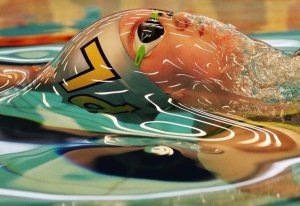
Bow Wave because of Water Properties – “Perfect shot” by Brian Taffy

Seems that the EDGE of water has different properties than the large mass of it, nano-size rules kick in – how molecules and atoms are structured. Studying this difference of properties become really important for anything that requires water to be moved at the small level.

Things like medicine.

We used to think water acted like water all the way up and down the scale. It doesn’t. Not even close. For example, water is a pretty good solvent. We use water wash things up because it interacts with things easily, lifting materials. It has a “dielectric constant” of 80. Dielectric constant being the polarizability of the atoms – meaning can it stick to things and stuff like that. Think how drenched you get in the rain.

At the three atom deep level, the dielectric constant is 2 – it goes from clinging to everything to teflon level – sticking only to itself. (Lowe 2018)

Water tension. Where you can touch a water bead and it doesn’t get absorbed into the skin or cling to your finger.

Applied to medicine at the protein cell level – like the construction blocks of our meat suits – you are working at the three atom level, not immersing in a bathtub. Without the understanding of how water works on the extremely small scale, figuring out how to care for our “bags of mostly water” takes on a level of difficulty leading to a lot of guess work. How do you get medicine from outside a cell into a cell? Should it be a water-soluble medicine or will a different delivery system work better?

Properties at the molecular level impacts other things as well. Water with gas in an average glass creates bubbles that float up and burst. Soda rocks!

Get a narrow enough glass, like a tube, and the bubbles stop moving. Time to call a plumber. That teflon-type “film” on the top of the water surrounds the bubble of gas, making it hard to move. Virtually stationary. (Ecole 2019)

We know how that plays out in the house. It’s called sewer backing up.

How will it play out in a spaceship with no gravity creating an up and down? How much worse will the tubing issues become for moving water around if an air bubble forms and doesn’t move? Scientists need to investigate how small the tubing can go to avoid the immobile gas bubble level.

And you thought quantum physics could be left to the physicists.

Chemistry, biology, medical science, space travel. Geeking science, dude!


Bibliography

Ecole Polytechnique Federale de Lausanne. “Student solves a 100-year-old physics enigma.” phys.org. 2019 December 2. – Last viewed 12/12/2019.

Lowe, Derek. “Water Isn’t Water Down There.” Science Translation Medicine. 2018 June 26. https://www.science.org/content/blog-post/water-isn-t-water-down-there – Last viewed 12/12/2019.

Taffy, Brian. “Perfect shot.” imgur. 2019 June 29. https://imgur.com/gallery/TJqhB2v – Last viewed 12/12/2019.

USGS. “Surface Tension and Water.” USGS – science for a changing world. (not dated). https://www.usgs.gov/special-topics/water-science-school/science/surface-tension-and-water?qt-science_center_objects=0#qt-science_center_objects – Last viewed 12/12/2019.